
The debate surrounding the feasibility of Financial Independence, Retire Early (FIRE) has resurfaced following a reader critique questioning whether the movement’s foundational advice remains relevant in a post-pandemic economy defined by soaring home prices and elevated interest rates.
The discussion was sparked by a comment left on a prominent personal finance blog by a reader who argued that the modern path to financial independence has grown increasingly out of reach for a new generation. According to the commenter, much of the prevailing advice relies on outdated assumptions—namely, that aspiring retirees worked in the tech sector decades ago, secured six-figure salaries, and purchased real estate for a fraction of today’s costs prior to 2019.
The reader pointed out that common strategies promoted to younger demographics, such as house hacking or purchasing fixer-uppers, are heavily constrained by current market realities, restrictive local zoning laws, and prohibitive borrowing costs. This sentiment reflects a broader anxiety among younger adults attempting to navigate wealth-building in an economic climate vastly different from the one that propelled early FIRE proponents into retirement.
Examining the Core Assumptions of Mustachianism
When confronted with the critique, financial independence advocates were forced to evaluate whether core principles of the movement are becoming obsolete or if the pushback stems from external economic friction and systemic pessimism. While the economic landscape has undeniably shifted, analysts note that debates over the viability of FIRE are hardly new, having evolved through various market cycles over the past two decades.

The primary friction points highlighted in recent discussions center on two major economic pillars: elevated baseline salaries, particularly in technology and specialized fields, and the dramatic appreciation of real estate values and interest rates over the last four years.
Regarding high compensation, proponents argue that while earning potential varies significantly across industries, chasing ever-higher incomes is rarely the primary solution to financial distress. Historical observations suggest that high earners—including software engineers and medical professionals—frequently struggle with financial stress late into their careers if spending scales proportionally with income. From a mathematical standpoint, sustaining a high income for decades without accumulating substantial savings indicates chronic, high-level consumption rather than an income deficiency.
Consequently, the core philosophy of the movement remains focused on curbing wasteful spending and optimizing resource allocation. Streamlining consumption to maintain a high quality of life without lifestyle inflation is presented as an essential skill across all income brackets, gaining even greater importance as individuals move down the income ladder.
The Real Estate Reality: Evaluating Housing Costs
The more pressing concern raised by critics involves the housing market. Federal Reserve data indicates that inflation-adjusted home prices have surged roughly 25 percent relative to average wages and general consumer goods since the beginning of 2019. Interestingly, this places current prices only about 10 percent higher than the previous market peak reached in early 2006, marking an eighteen-year span of relative stability when adjusted for broader economic inflation.
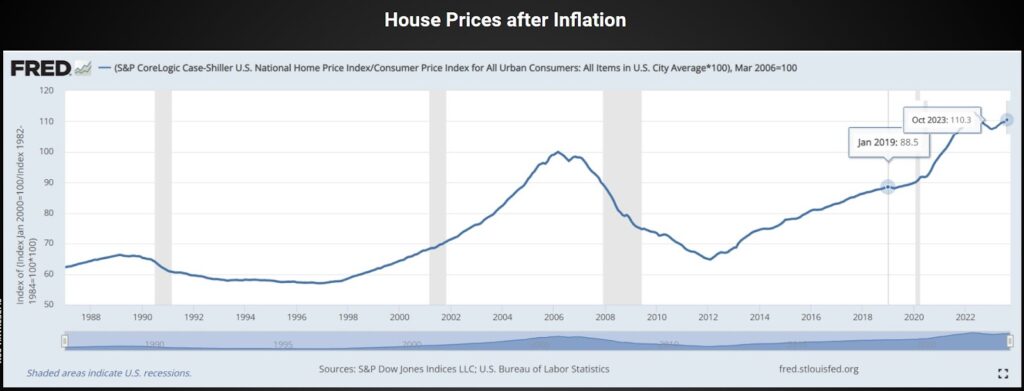
However, nationwide averages often mask severe localized spikes. In popular mid-sized markets and high-demand regions, median home prices have doubled or tripled relative to local wage growth, pricing out many prospective buyers who lack prior equity.
Rather than viewing these conditions as a permanent barrier to financial independence, financial commentators argue that housing must be approached as a consumer product governed by supply and demand, rather than an entitlement tied to one’s birthplace. Just as proximity to a major technology company does not guarantee a steady supply of luxury electronics, growing up in a specific municipality does not ensure local homeownership is financially viable under prevailing market conditions.
When evaluating housing, individuals are encouraged to run comprehensive financial analyses to weigh the ongoing costs of renting versus buying or exploring alternative living arrangements. For those finding their local markets prohibitively expensive, the conversation inevitably turns to geographic arbitrage—relocating to regions where the cost of living aligns more favorably with local earning potential.
Geographic Arbitrage and the "Nice for the Price" Scale
The reluctance to relocate is a major psychological hurdle for many aspiring homeowners. Strong community ties, family connections, and familiarity often bind individuals to high-cost areas, creating an irrational distribution of housing prices nationwide. Markets in certain regions command extraordinary premiums, while other areas offer robust amenities, favorable climates, and high standards of living at a fraction of the cost per square foot.
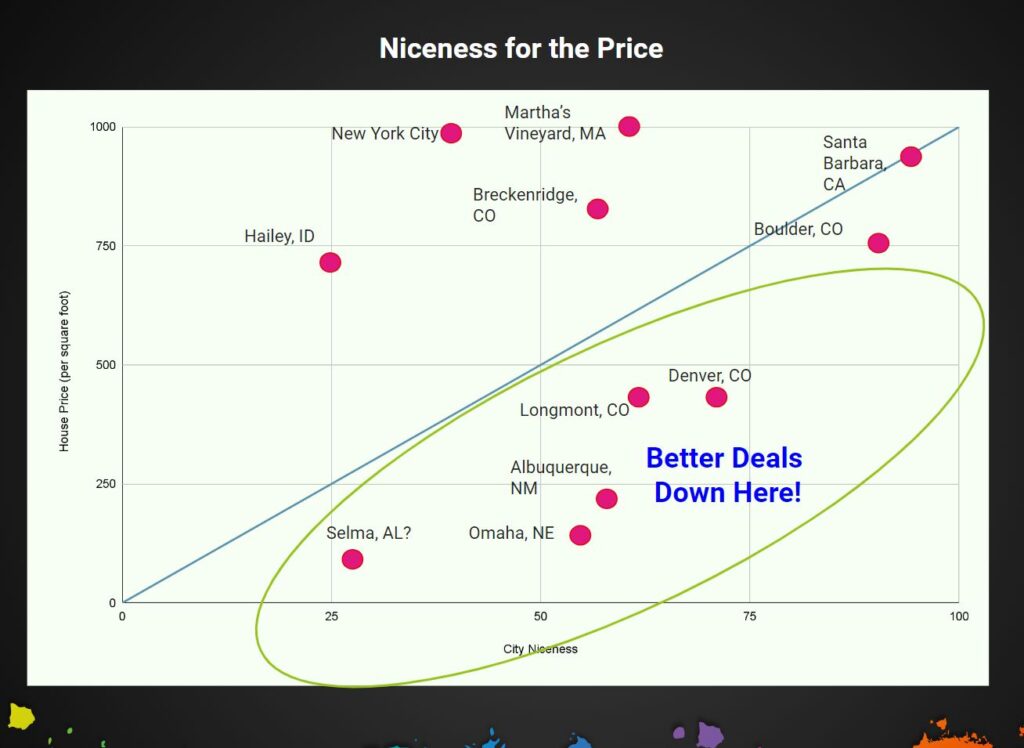
Data compiled from Federal Reserve economic databases on metropolitan housing costs reveals stark disparities in price per square foot across the United States. While coastal hubs and high-amenity mountain towns command top dollar, numerous mid-sized metro areas maintain housing costs hovering near historical averages.
For example, comparing regional housing markets reveals that cities across the Sunbelt and the Midwest frequently offer significantly lower per-square-foot costs compared to major tech and financial hubs. Analyzing these metrics allows prospective buyers to plot cities along a "nice for the price" continuum, balancing climate, recreational access, and urban amenities against financial constraints.
Utilizing specialized relocation databases and cost-of-living comparison tools enables individuals to cast a wider net when planning their long-term living situations. Exploring regions with moderate population sizes—ranging from 50,000 to 200,000 residents—often uncovers hidden value, providing robust community infrastructure and cultural amenities without the inflated real estate valuations found in primary metropolitan centers.
Expanding the Horizon: International Relocation
For those willing to look beyond domestic borders, international relocation offers an even broader spectrum of financial opportunities. Cost-of-living calculators tailored for expatriates and early retirees highlight numerous international destinations in North and South America where housing and daily expenses require a fraction of the budget demanded in the United States.
While moving internationally introduces logistical challenges—such as navigating foreign immigration laws, securing legal residency, and adapting to unfamiliar administrative systems—advocates frame these hurdles as manageable puzzles rather than insurmountable obstacles. Successfully executing a cross-border move requires basic administrative competence: conducting digital research, submitting paperwork, and completing required appointments.
Proponents of this approach argue that the temporary friction of international relocation pales in comparison to the long-term cost of remaining in an unaffordable environment or extending a career by over a decade solely to support inflated living expenses. By treating location as a flexible variable rather than a fixed constraint, individuals can significantly accelerate their timeline toward financial independence.
Ultimately, the evolving discourse surrounding FIRE highlights that while macroeconomic conditions change, the fundamental principles of intentional spending, resource management, and geographic flexibility remain powerful tools. Whether through localized adjustments or broader lifestyle restructuring, the path to financial independence relies heavily on an individual’s willingness to critically evaluate choices and adapt to changing economic landscapes.