
For anyone who feels a familiar wave of irritation upon spotting the spectral glow of pumpkin spice or Halloween decorations during an 85-degree week in September, solace can be found in the kitchen. There is a distinct frustration in being rushed toward months of shivering, longing for heavy stews, and facing wool-coat advertisements before the calendar truly demands them. For those who find themselves mentally shouting that there is still a full week of summer left to enjoy, refusing to acknowledge the encroaching chill until it is absolutely unavoidable, the kitchen remains a sanctuary of resistance.
The mission is simple: to embrace summer cooking for precisely as long as peak summer produce remains available, with a particular focus on tomatoes. The absence of these vibrant ingredients throughout the long winter months makes it difficult to cast them aside the moment the first autumn apple arrives. This attachment to the season’s bounty is not, despite what outside observers might cynically suspect, an elaborate psychological projection of complicated parental feelings regarding one child starting middle school and another entering their senior year of high school. Not even a little.

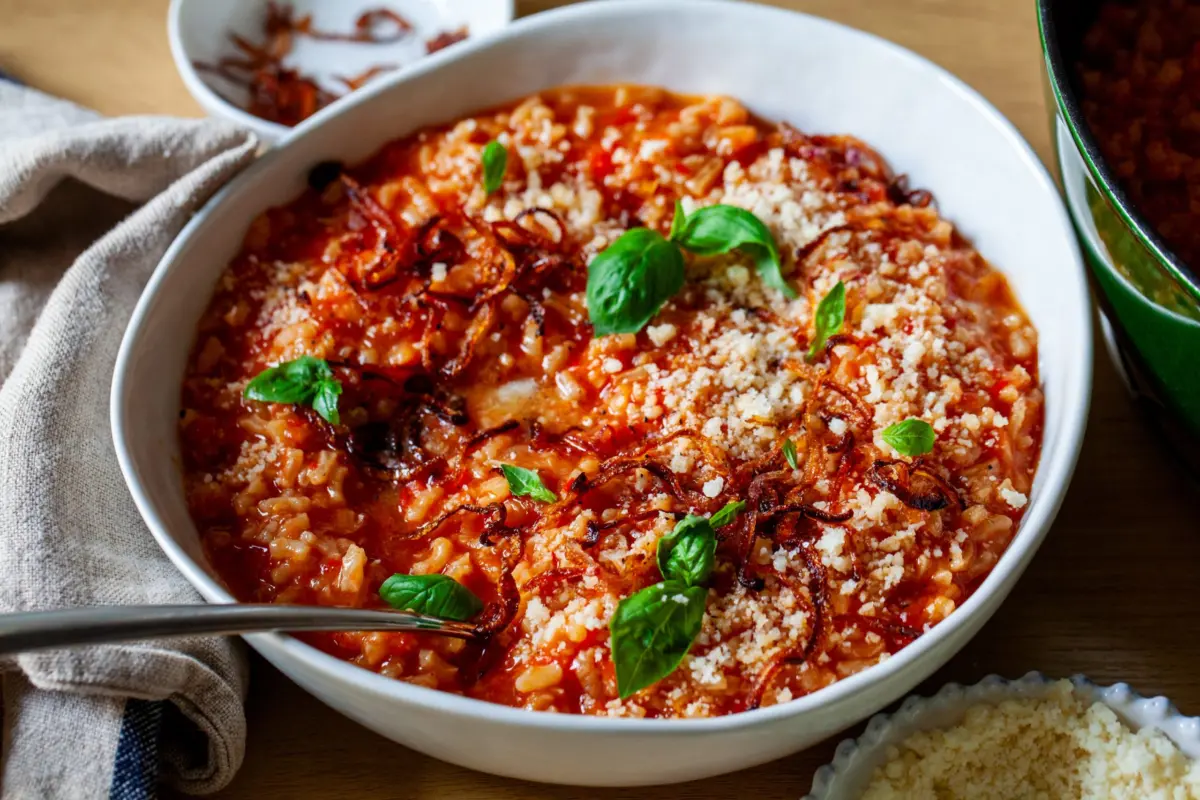
Instead, this culinary stubbornness stems from a deep appreciation for classic flavor combinations that refuse to fade quietly. Consider, for instance, the timeless concept of rice-stuffed tomatoes, where short-grain rice absorbs a pure, clear-noted tomato sauce that lingers in the culinary imagination. That craving can serve as the inspiration for a standalone dish: a simplified, uncluttered tomato risotto that relies on grated tomato pulp, a touch of onion and garlic, and a generous splash of wine. To ensure the risotto tastes authentically and intensely of fresh tomatoes, the recipe foregoes traditional broth entirely in favor of simple water.
This minimalist approach bends traditional rules of Italian cooking. Risotto dogma has long dictated a rigid adherence to specific methods, including the mandatory use of warm broth, continuous and tireless stirring, and mountains of butter and cheese. Yet, as home cooks and food writers have increasingly demonstrated, many of these supposed rules are flexible guidelines rather than unbreakable laws. By stripping away the constant stirring and complex liquid management, the process becomes remarkably streamlined without sacrificing depth of flavor.

The final flourish comes from a desire for a crisp topping that breaks away from the usual suspects, such as pan-crisped prosciutto, salami, or bacon. Thinly sliced red onions, "frizzled" early in the cooking process in olive oil, provide an unexpected and compelling texture. Half of these crispy onions are folded directly into the baked risotto, while the remainder are reserved to be sprinkled across the top just before serving. They impart a distinct fragrance, comforting depth, and a gentle hint of cooler, savory flavors that anchor this dish firmly in the transition between seasons.
The dish can be customized to suit various dietary preferences. It can be finished with traditional torn basil leaves, freshly grated parmesan cheese, and a final knob of butter or a drizzle of olive oil. Alternatively, it can be kept entirely plant-based using only olive oil, fresh basil, and the frizzled onions. The natural concentration of flavors ensures that nothing feels missing, regardless of the chosen finish.

Tomato Risotto with Frizzled Red Onions
The preparation begins by preheating the oven to 350 degrees Fahrenheit. To prepare the core ingredient, halved tomatoes are pressed cut-side down against the large holes of a box grater, extracting the fresh flesh and juices while leaving the outer skins behind to be discarded. This process yields approximately two and a half to three cups of vibrant tomato pulp.
A four-quart Dutch oven or a deep, oven-safe saucepan with a fitted lid is placed over medium-high heat with three to four tablespoons of olive oil. Thinly sliced red onion is added to the pot and cooked, with frequent stirring, until it begins to soften. The cooking continues until the onion pieces transform into a deeply golden brown and achieve a mostly crisp texture, which typically takes about eight to ten minutes. Half of these crispy onions are then transferred to a paper towel-lined plate, seasoned lightly with salt, and set aside.

Minced garlic is introduced to the remaining onions in the pan and cooked for roughly one minute, seasoned with salt, freshly ground black pepper, and a pinch or two of red pepper flakes. Uncooked rice is added directly to the pan, gently toasting in the fragrant oil, onion, and garlic mixture for about three minutes. A splash of wine follows, cooked down until it completely evaporates.
The grated tomato pulp is poured into the pot, immediately followed by two cups of water. The mixture is seasoned generously—starting with two teaspoons of kosher salt, adjusted to taste, along with numerous grinds of black pepper. The entire contents of the pot are brought to a gentle simmer before the heat is turned off.

The pot is sealed with its lid and transferred directly into the preheated oven. The risotto bakes undisturbed for twenty-five to thirty minutes, or until the vast majority of the liquid has been absorbed while maintaining a slightly moist appearance. Checking the pot halfway through the baking time ensures the liquid is not disappearing too quickly; if the contents look dry, an additional half-cup of water can be added.
Once removed from the oven and placed on a counter trivet or cooling rack, the lid is removed, and the mixture is stirred vigorously for two minutes until it develops a creamy, classic risotto consistency. The seasoning is tasted and adjusted with additional salt and pepper as needed. Two to three tablespoons of butter, or an equivalent amount of olive oil, are stirred in to finish the dish. Finally, the risotto is scattered with toppings such as parmesan cheese, torn basil leaves, and the reserved frizzled red onions before being served immediately.