
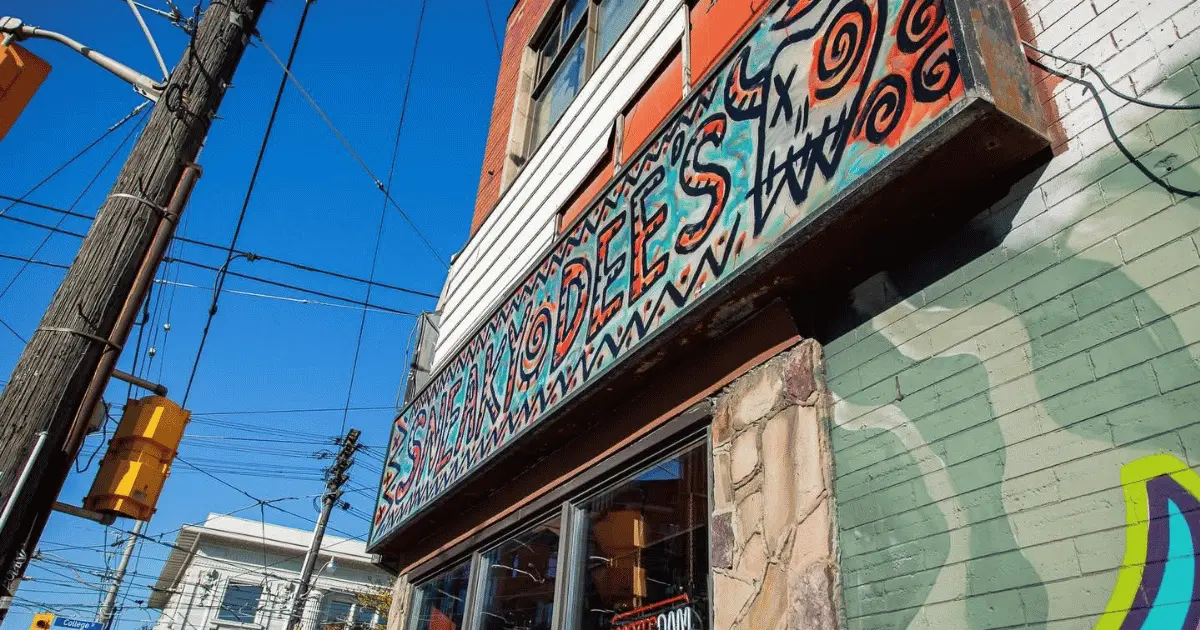
The fight to save Toronto’s iconic Sneaky Dee’s bar has sparked a broader conversation about urban development, highlighting a disconnect when developers propose projects that threaten long-standing cultural institutions and the unique character of a neighbourhood.
Located at the bustling intersection of College Street and Bathurst Avenue, the beloved venue recently found itself at the center of vocal public backlash. The controversy arose after a developer submitted plans for a 16-storey mixed-use residential building directly on the site, a proposal that immediately mobilized local residents and patrons who cherish the area’s distinct cultural footprint.
However, the high-rise proposal was ultimately derailed due to a logistical hurdle involving an adjacent property. Plans for the new development included an attached RBC bank branch next to the bar, but the financial institution publicly stated that it had not approved the site’s use for the project. Following this roadblock, the developer, Goldberg Group, subsequently withdrew its official application, offering a temporary reprieve for the historic site.
Local real estate agent Ralph Fox, who has lived in the surrounding neighbourhood for more than 20 years, notes that Sneaky Dee’s has maintained a presence in the community for a long time, fostering a deep, genuine connection among Torontonians. At the same time, Fox points out that public sentiment is far from monolithic. Some community members view the punk-rock, graffiti-adorned venue as an eyesore, expressing frustration over the litter and weekend noise generated by its patrons.
"People have mixed feelings towards it," Fox said. "It definitely has a feeling of nostalgia and it really is a part of the neighbourhood’s identity and culture, for better or worse."
A fight over more than one bar
The immediate threat to the venue begs a larger, more complex question for a rapidly growing metropolis: should similar cultural institutions be aggressively protected and preserved, or do they ultimately hold a neighbourhood back from essential growth and urban evolution?
Fox readily admits that the corner of College and Bathurst could genuinely benefit from increased density and a thorough clean-up. Yet, he cautions that completely erasing staples like Sneaky Dee’s risks rendering the intersection entirely generic, particularly if replaced by standard corporate storefronts like a drugstore or a vape shop. For prospective homebuyers considering a move into the area, Fox emphasizes that local character and authenticity remain vital, irreplaceable factors.
Over the past couple of decades, Toronto has watched a steady stream of cherished cultural institutions close their doors to make way for modern infrastructure. Recently, the historic Imperial Pub at Yonge and Dundas streets shut down permanently to clear the path for a 21-storey Toronto Metropolitan University (TMU) student residence. Similarly, the legendary discount department store Honest Ed’s at Bloor Street and Bathurst Street was demolished, replaced by a massive mixed-use complex.
Given Toronto’s spotty historical track record of building soulless condo towers—properties that have begun to lose their luster among modern buyers—Fox understands why local residents remain inherently wary of new developments. Those cookie-cutter towers were largely constructed during an era when investors aggressively snapped up real estate with minimal regard for functional floor plans, driven entirely by skyrocketing demand. With market conditions shifting, Fox observes that developers are now exercising much greater care to cultivate genuinely liveable spaces and cohesive communities.
A shift toward liveable, purpose-built communities
Pointing to the newly emerging Mirvish Village development, which has begun welcoming vibrant local businesses such as Pizzeria Badiali, Fox suggests these projects are successfully "breathing a lot of life" back into the area. He also expresses enthusiasm for the upcoming activation of Honest Ed’s Alley, a space creatively modeled after traditional Tokyo streetscapes featuring micro-shops.
Furthermore, a notable market shift is underway as developers increasingly pivot toward constructing purpose-built rentals rather than condominiums. By acting as long-term landlords, these developers hold a deeper, more enduring investment in the health of the surrounding neighbourhoods. This dynamic stands in stark contrast to traditional condo developers, who historically operated with a transactional "get-in-get-out" mindset, according to Fox.
"(The conversation) needs to be far more about the liveability of a neighbourhood and understanding its roots than what we’ve seen in the past," he said. "And I think we’re starting to see that shift in some of these conversations."
Lessons from Vancouver’s Rio Theatre
Cities across Canada grapple with similar tensions between modernization and cultural preservation. Corinne Lea, founder and CEO of the historic Rio Theatre in Vancouver, understands intimately how crucial these institutions are to a neighbourhood’s enduring character. Opened in 1938, the Rio operates as a single-screen cinema deeply embedded in the city’s artistic ecosystem.
In 2018, Lea spearheaded a high-profile campaign to rescue the Rio Theatre from being sold to a commercial developer, successfully raising $8 million to mount a competitive counter-offer for the property.
"They just don’t make them like this anymore," she said. "Once one of these buildings gets torn down, it’s not coming back."
At the same time, Lea acknowledges the immense financial and regulatory challenges involved in preserving cultural spaces within major urban centers like Vancouver. Her property taxes are calculated based on the "highest and best use" of the land, resulting in an annual tax burden of approximately $70,000. She notes that such steep expenses can easily crush smaller arts venues, effectively signaling that municipal policies often incentivize towering new developments over the preservation of historic cultural hubs. Toronto maintains a similarly structured property tax approach.
Safeguarding these spaces frequently requires an uphill battle driven entirely by passionate local residents, demonstrating just how deeply communities value their cultural infrastructure, Lea explained.
"This place you can come in as you are and feel welcome," Lea said. "When you travel, your favourite streets aren’t ones with towers on them."