

Nearly nineteen years into an early retirement that many would envy, financial independence blogger and author known as Mr. Money Mustache has arrived at a surprising personal realization: the complete freedom of this lifestyle can easily become a double-edged sword.
For nearly two decades, the upside has been clear and well-documented. Having total control over one’s time allowed him to raise a son from birth straight through to adulthood without the compromises demanded by a traditional 9-to-5 career. It provided thousands of hours to dedicate to family, health, friendships, outdoor adventures, construction projects, and writing. By conventional standards, it is an idyllic existence centered around self-actualization and intentional living.

However, even within this nearly ideal framework lies a subtle, paradoxical flaw: the absolute absence of mandatory obligations. When every hour of the day belongs entirely to you, you never truly have to do anything you do not feel like doing.
To the average commuter or corporate employee trapped in a rigid daily grind, this sounds like the ultimate dream—a perpetual playground of freedom and financial security. Yet, reality proves more complex. Freedom and accumulated wealth ultimately act as a magnifying glass, revealing an individual’s true strengths and underlying weaknesses. On one end of the spectrum, absolute autonomy can lead to stagnation, excessive comfort, and unproductive distraction; on the other end, it can drive individuals to launch philanthropic foundations, fund scientific research, or build enduring community enterprises.
For the first decade of his retirement, the author found balance naturally. Being an intensive, hands-on father occupied a significant portion of his schedule, but he still managed to build and renovate multiple neighborhood homes, embark on strenuous expeditions, produce videos, and publish hundreds of analytical essays.

In recent years, however, the pace naturally slowed down, and maintaining self-discipline became increasingly difficult. Instead of maintaining laser focus on a keyboard to finish an article or constantly moving on a construction site, afternoons began yielding earlier retreats to the couch. Seeking passive distraction through a smartphone, he found himself wishing for the internal energy and focus required to tackle more fulfilling, albeit demanding, activities.
Seeking a remedy, he turned to the growing body of literature surrounding health, wellness, and neurobiology. He began studying daily habits, the dangers of excessive comfort, and the physiological mechanics of focus and motivation. While these insights proved genuinely effective, a recurring pattern emerged. He would incorporate a useful strategy, enjoy a temporary period of success, and then gradually allow his brain to invent plausible excuses to abandon consistency. The result was a widening gap between accumulated knowledge and actual daily accomplishment.
Ultimately, he recognized a subtle form of self-sabotage: he was utilizing his freedom to actively avoid tasks that required mental friction. Freedom is undeniably valuable when it liberates an individual from spending hours commuting to a restrictive office environment. Yet, that same freedom is effectively squandered if it simply leads to passive consumption while essential, fulfilling endeavors are pushed aside. Without a deliberate commitment to channel that freedom into pursuits more meaningful than the job left behind, total autonomy offers little genuine advantage.

This avoidance manifested most clearly in physical fitness. Acknowledging that weight training yields a remarkably high return on investment in terms of overall health and daily vitality, a predictable internal negotiation would typically unfold. The desire to complete a robust workout would immediately collide with the psychological resistance of anticipating physical exertion. Attempts to engineer the perfect conditions—waiting for ideal weather, peak energy levels, or meticulously setting up a home gym the night before—often backfired. On busy weeks, workouts dwindled to two or three sessions, or were rationalized away by substituting casual walking. Recording progress in a journal frequently revealed that more than a week had elapsed since the previous training session, resulting in predictable stagnation.
The turning point arrived with a shift in psychological framing. Instead of engaging in a drawn-out, conditional dialogue about whether conditions were optimal for exercise, the approach was simplified into an immediate countermeasure against self-sabotage. Recognizing the moment of hesitation for what it truly was—a mental trigger designed to avoid discomfort—the response shifted from negotiation to immediate physical action: lacing up shoes and heading straight to the gym, regardless of transient motivation.
This behavioral pivot proved transformative, extending far beyond physical training. By actively monitoring for moments of hesitation and treating them as direct instructions to act rather than excuses to delay, the author successfully increased his frequency of running, revived social and professional visits at a local coworking space, and re-established a sustainable writing routine. While internet success and digital labor can easily become counterproductive, finding a balanced level of creative output requires immense discipline precisely because easier, more immediate distractions constantly compete for the same hours.
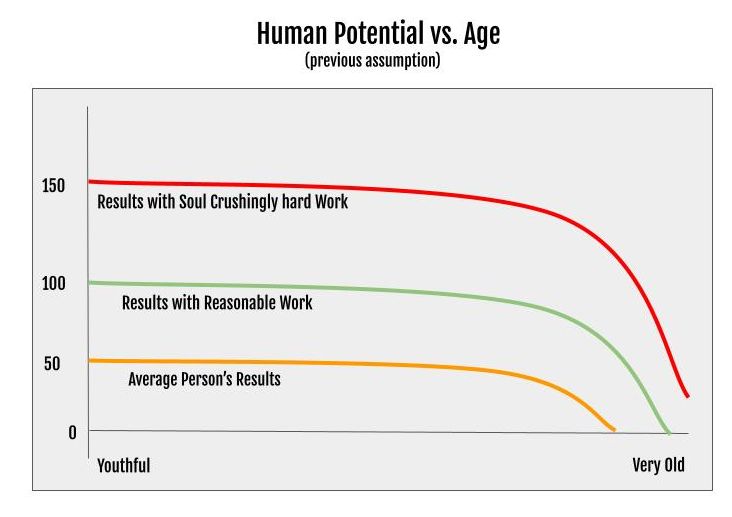
To reinforce this mental shift, the author sought inspiration from extreme examples of human endurance and discipline, notably listening to podcast interviews and audiobooks featuring ultra-marathoner and former Navy SEAL David Goggins. Best known for pushing his body and mind through unimaginable hardships—ranging from grueling military selection processes to running hundreds of miles without sleep and setting pull-up world records—Goggins represents the absolute outer limit of self-imposed pressure.
While acknowledging that such an extreme lifestyle is neither desirable nor necessary for the average person, exposure to such intense dedication helps reframe ordinary mental barriers. Rather than viewing personal capacity as a fixed ceiling shaped by external circumstances or luck, the realization that most perceived limitations are entirely psychological opens up a vastly broader perspective on daily potential.
Inscribing a concise takeaway from Goggins—reminding himself that he already knows what needs to be done—and placing it on a bathroom mirror created an immediate catalyst for action. The practical results followed swiftly. Within the first four months of applying this relentless approach to daily workouts, the author added ten pounds of lean muscle mass, regained the strength and flexibility of his mid-twenties, and reported a renewed physical vitality.
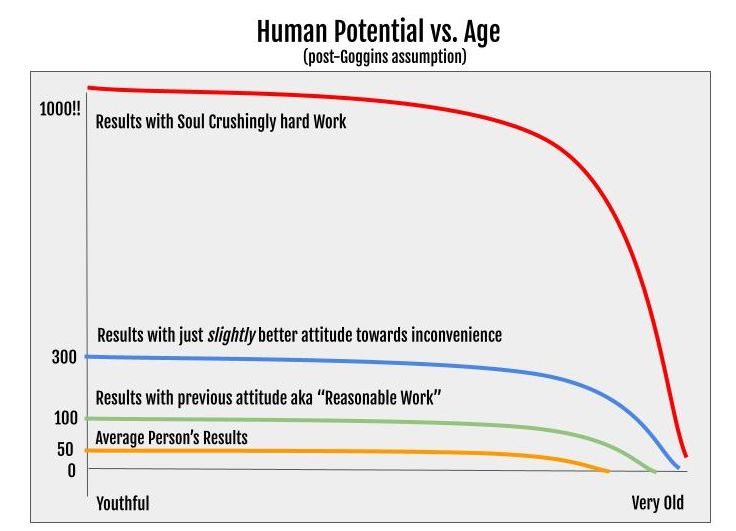
By continuing to draw inspiration from rigorous health and leadership figures such as neurobiologist Andrew Huberman, physician Peter Attia, and retired commander Jocko Willink, the author emphasizes the value of absorbing actionable principles while discarding unnecessary excess. Finding sources of motivation that encourage reaching a little higher remains an effective strategy for navigating the later phases of early retirement, proving that absolute freedom is most rewarding when paired with the discipline to embrace daily challenges.