
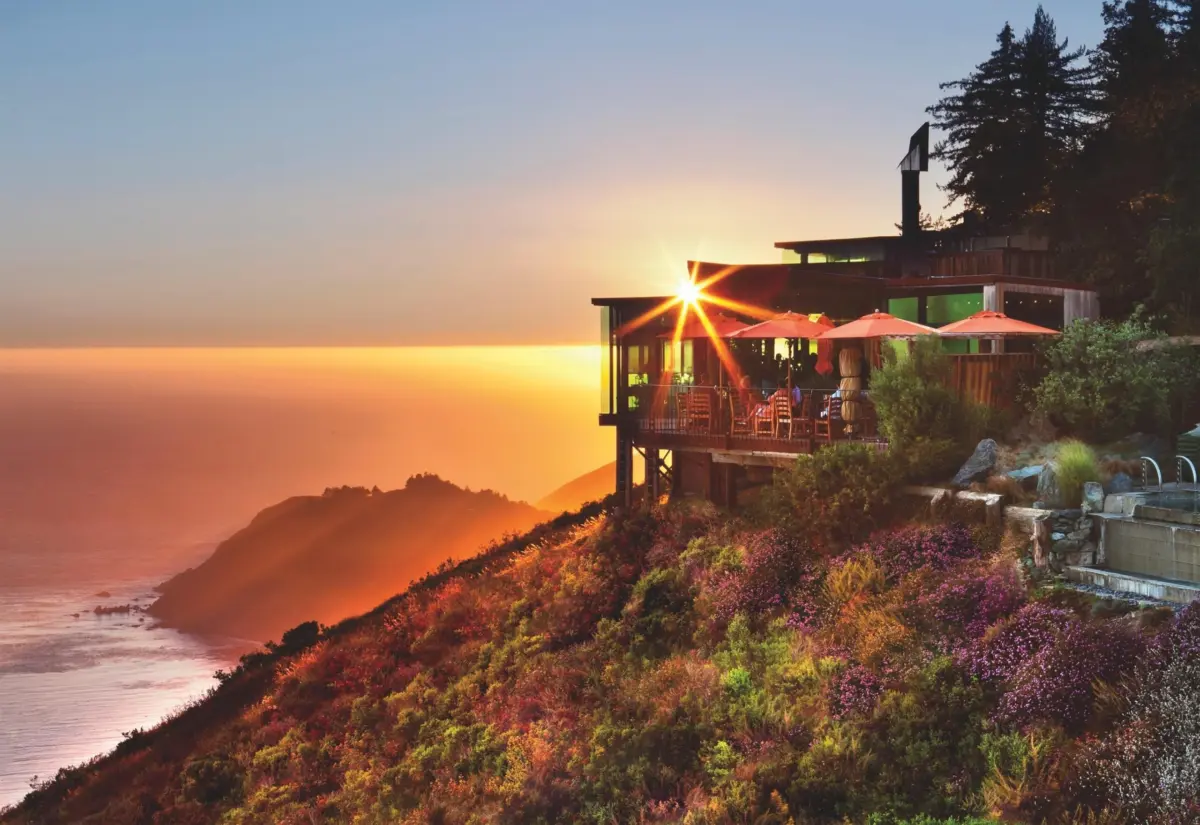
It is a brilliant fall day on Carter’s Creek in Irvington, Virginia, and a small group is hauling baskets of heavy, brine-kissed oysters from the brackish waters. They are not traditional Chesapeake watermen earning a living on the bay; they are guests of the historic Tides Inn, and this hands-on harvest has become the ultimate way for them to press pause on the relentless noise of their everyday lives and become fully present in a landscape defined by water, marsh, and sky. Meanwhile, miles away across the country in the dappled, golden light of a Big Sur, California, forest, a solitary meditator takes in deep lungfuls of crisp eucalyptus and salty ocean air, grounding themselves in the natural rhythms of the Pacific coast. At the base of a nearby, ancient live oak sits a freshly foraged frilled chanterelle mushroom, plucked from the earth and destined for preparation later that evening at the Post Ranch Inn’s award-winning restaurant, where landscape and culinary arts seamlessly merge.
These contrasting scenes point to a broader shift in the travel landscape, driven by a new generation of travelers who are eager to hit the road, check in, and genuinely destress from the complexities of modern existence. However, these vacationers are approaching luxury resorts entirely on their own terms, demanding authenticity, connection, and mindfulness without ever having to compromise when it comes to world-class cuisine or rich cultural engagement. Whether an ideal escape looks like an immersive maritime experience on the historic shores of the mid-Atlantic or a cliffside contemplative retreat overlooking the vast expanse of the Pacific Ocean, there is now a resort tailored precisely to those desires. Furthermore, the often-daunting logistics of planning such a getaway no longer have to induce anxiety, as industry experts and hospitality insiders continue to assemble the essential pro tips travelers need to ensure the entire experience is effortless, memorable, and ultimately worth the journey.
The modern vacationer’s relationship with leisure has undergone a profound transformation over recent years. Where previous generations of travelers might have sought passive relaxation—lazing by a pool or following rigid, pre-packaged tour itineraries—today’s resort guests are searching for active rejuvenation that engages all the senses. This desire for meaningful engagement explains the growing popularity of immersive property-led activities, such as working alongside local watermen to harvest oysters or joining an expert naturalist on a foraging expedition through coastal redwoods. By participating directly in the local ecosystem and culture, travelers are able to disconnect from digital screens, professional obligations, and urban congestion. They are trading the superficial comforts of standard luxury for experiences that ground them in a specific sense of place, fostering a deeper appreciation for the environment and the local communities that host them.
This evolution in traveler expectations has required iconic properties like the Tides Inn and Post Ranch Inn to continuously adapt their offerings. Rather than simply providing a place to sleep, these destinations function as gateways to their surrounding environments. In Irvington, Virginia, the Tides Inn leverages its prime position on Carter’s Creek to connect visitors directly with the storied maritime heritage of the Chesapeake Bay region. Guests are encouraged to step beyond the traditional boundaries of resort leisure and engage directly with the water that has sustained local communities for generations. In a similar vein, the Post Ranch Inn in Big Sur capitalizes on its dramatic natural setting atop the cliffs of California, offering an environment where solitude, nature, and gastronomy intersect. The inclusion of freshly foraged ingredients, such as wild chanterelle mushrooms, directly into the evening’s fine dining menu exemplifies how contemporary luxury resorts are bridging the gap between the natural landscape and high-end culinary arts.
Despite the growing desire for effortless escapes, the initial phase of organizing a trip can frequently introduce its own brand of stress. Booking the right accommodations, aligning travel dates with desired seasonal activities, and navigating the vast array of available resort packages often demand careful consideration. To combat this hurdle, travel specialists and hospitality veterans have emphasized the importance of advance preparation and clear communication with resort concierges. By identifying personal priorities early—whether a traveler seeks quiet meditation, outdoor adventure, or culinary exploration—guests can work with property staff to curate an itinerary that eliminates guesswork upon arrival. These professional insights are designed to streamline the planning process, ensuring that the transition from the pressures of daily life to the tranquility of a resort destination is as smooth as possible.
Ultimately, the changing face of resort travel reflects a deeper cultural shift toward intentional living and mindful consumption. People are investing their time and financial resources into trips that offer emotional resonance, personal restoration, and a temporary escape from the hyper-connected nature of modern society. Whether hauling oysters from the brackish waters of a Virginia creek or meditating beneath the ancient canopies of California’s central coast, today’s travelers are discovering that the true value of a vacation lies not just in the luxury of the accommodations, but in the depth of the experiences shared and the lasting peace brought back to everyday life.