
In previous eras of National Hockey League history, having a defenseman lead a team in scoring usually told a cautionary tale. More often than not, it indicated a roster that was severely lacking in offensive firepower up front, forcing the team’s rearguards to shoulder an unsustainable burden in the offensive zone. While there are still isolated instances where that rings true today, the overarching narrative of the position has shifted dramatically. Today, there is no denying that the league’s crop of high-end blueliners is taking offensive production to unprecedented new heights, fundamentally altering how modern NHL rosters are constructed and how the game is played from the back end.
Producing offense in the world’s top hockey league is inherently difficult, but elite defensemen around the NHL are currently making it look remarkably effortless. Across the league, the stars on the blue line are driving play, orchestrating transitions, and finishing scoring chances with the creativity and poise traditionally reserved for elite forwards.
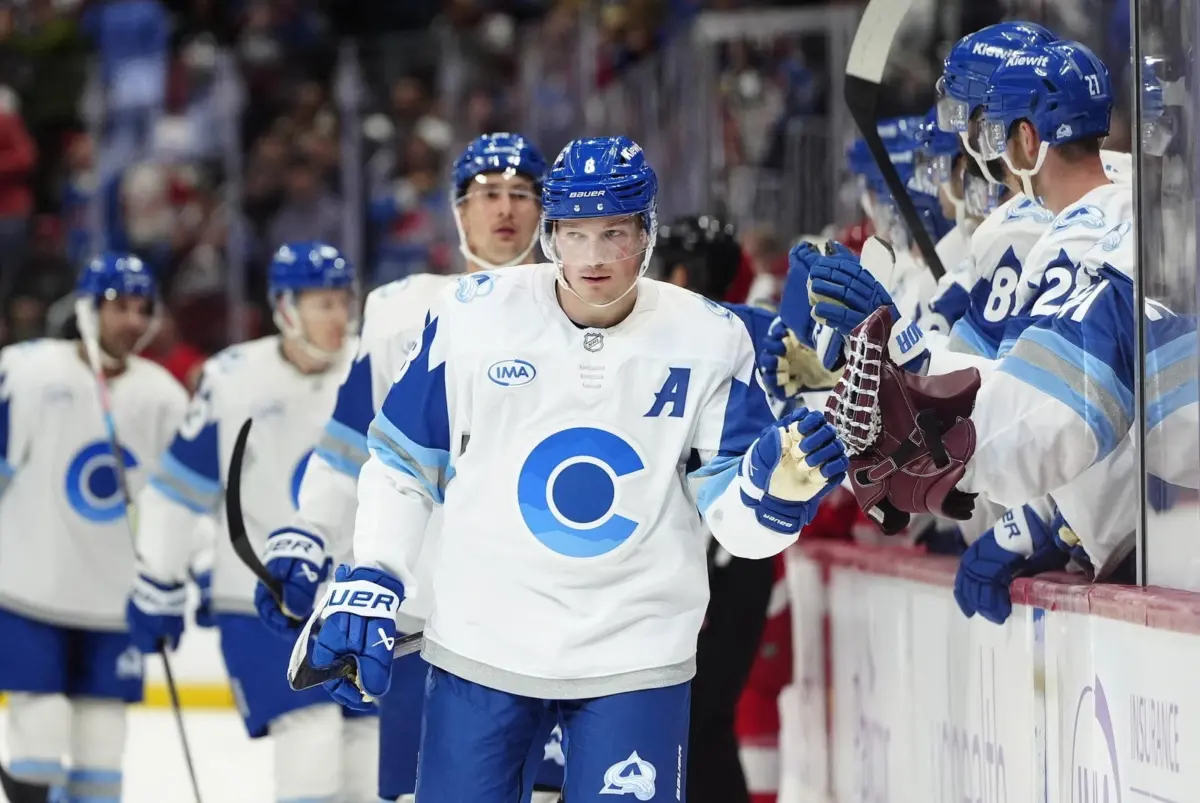
The rare defensemen who do not currently lead their respective teams in scoring are, for the most part, simply surrounded by an embarrassment of riches—the absolute upper echelon of forward talent in the NHL. Think of Evan Bouchard anchoring the high-powered Edmonton Oilers, Cale Makar engineering chances for the Colorado Avalanche, or Quinn Hughes dictating the pace of the game. These players aren’t lacking offensive support; rather, they are the main engines of already terrifying offensive attacks, complemented by superstar forwards who benefit immensely from their vision and distribution.
In bygone eras, a defenseman leading a team in scoring likely signaled a severe depth problem elsewhere on the roster. In some cases, that dynamic still persists, such as with select defensemen carrying heavy loads for squads still searching for forward depth. However, having a dynamic defender who can produce consistently from the back end and genuinely drive play has transformed from a luxury into an absolute necessity for building a well-rounded, competitive offense in the modern NHL.
The statistical correlation between blue-line scoring and team success is increasingly difficult to ignore. Looking back at the top 10 scoring teams from last season, an overwhelming eight of them featured a defenseman who eclipsed the 60-point threshold. That figure surely would have been a perfect 10-for-10 had Shayne Gostisbehere of the Carolina Hurricanes—who notched 50 points in just 55 games—and Jake Sanderson of the Ottawa Senators—who collected 54 points in 67 games—managed to stay fully healthy throughout the campaign.
While it is true that high-scoring teams are statistically more likely to house defensemen who produce at an elite level, hitting the 60-point mark remains a lofty benchmark. Last season, that milestone was reached by just 13 defensemen across the entire league. Even that exclusive club omitted a talented crop of blueliners who are widely regarded as high-end talents by fans and analysts alike, including players such as Jackson LaCombe, Mikhail Sergachev, and Josh Morrissey, among others.
While the current hockey calendar continues to showcase unprecedented offensive numbers from defensemen, this ongoing evolution of the position should not come as a total surprise to observers of the game. Several key factors are converging to create a golden age for offensive-minded rearguards.

Chief among these factors is the state of league-wide goaltending. The overall league save percentage has dipped to .891, a level not seen since the 1976-77 season. With goaltending efficiency experiencing a notable downturn, players across the board are capitalizing on more scoring opportunities and finding the back of the net with greater frequency. Furthermore, the top blueliners in the NHL routinely log the most ice time of anyone on their respective teams. As the primary quarterbacks of their units’ top power-play formations, they are gifted an abundance of high-value opportunities to rack up points over the course of an 82-game schedule.
Yet, even with these structural advantages, the current campaign has elevated scoring from the back end to heights previously unseen. Across the league, there are currently 14 defensemen who find themselves on an early-season pace to accumulate at least 70 points. While it is statistically unlikely that all of them will maintain that blistering pace over the grueling stretch run, the baseline offensive bar is undeniably being raised by the league’s premier defenders in a manner that redefines the position.
More of these dynamic playmakers are emerging with each passing season, and front offices have countless analytical tools at their disposal to quantify just how vital they are to their respective teams. However, perhaps the most effective way to illustrate the immense value of a true top-pairing, point-producing defenseman is by examining the organizations that currently find themselves without one.
The Toronto Maple Leafs serve as a prime example of this predicament. While the arrival of Darren Raddysh may alter their fortunes on the back end, Morgan Rielly’s tenure as a high-end offensive producer was brilliant but brief. As it stands, the Maple Leafs may well be the only team in the fiercely competitive Atlantic Division operating without a bona fide number-one defenseman capable of consistently driving play.
Similarly, the Philadelphia Flyers have experienced a prolonged drought in this department, having not rostered a defenseman reach the coveted 60-point mark since Gostisbehere put up 68 points during the 2017-18 season. Looking at their current roster construction, it is difficult to envision Jamie Drysdale or Cam York eventually scaling those same offensive heights.
Meanwhile, rebuilding franchises like the San Jose Sharks and the Chicago Blackhawks have been searching for this exact archetype of player for quite some time. The Blackhawks have notoriously struggled to successfully develop an elite offensive defenseman in essentially two decades. While the Sharks boast several promising young talents developing in their organizational pipeline, a true play-driving force of the caliber they previously enjoyed has not emerged in the wake of Erik Karlsson and Brent Burns’ departures.
Game-changing blueliners who can dictate the pace of play, escape forechecks, and rack up points are remarkably difficult to come by. There is a very good reason why a talent like Cale Makar commands the kind of historic financial investment that makes him one of the highest-compensated players in the sport. As the NHL continues to evolve tactically and athletically, possessing a true offensive weapon on the back end is rapidly becoming the definitive line between keeping pace with the league’s elite and falling hopelessly behind.