
Does anyone truly have a healthy relationship with their phone? Outside of a few polished digital wellness advertisements or carefully curated social media feeds, evidence of a balanced, harmonious coexistence with our pocket-sized computers remains remarkably difficult to find. For many adults who remember a time before ubiquitous connectivity, the smartphone is undeniably useful, yet it still feels stubbornly like a foreign object planted in the palm of the hand.
This sense of alienation is brought into stark relief the moment children are old enough to pick up a screen. To the younger generation, a tablet or phone offers an enticing, comforting, and even productive space. It is not necessarily healthy, strictly speaking, but it is entirely familiar—their native habitat. For adults who crossed the technological divide later in life, however, the device often feels alien: ground zero for a daily cultural battle against the erosion of attention, the threat of cognitive distraction, and the slippery slope of reality itself. Simply put, smartphones stress people out.
A much-needed perspective on this modern dilemma recently surfaced in a long, thoughtful essay by Karl Ove Knausgaard, the acclaimed Norwegian writer renowned for his uncanny ability to observe the world in meticulous, unvarnished detail. Writing in Harper’s Magazine, Knausgaard helped articulate a personal struggle that stems directly from the most influential formative years of a generation’s life—the era before the smartphone took over society.
“To understand a man, you have to know what was happening in the world when he was twenty, Napoleon is supposed to have said,” Knausgaard writes. “The quotation is probably apocryphal, but that doesn’t mean it’s not true.”
For those who hit their formative prime in the 2000s—shortly after the advent of Facebook, but right before the iPhone became a permanent fixture in every pocket—the world operated on a fundamentally different rhythm. For Knausgaard, who is 56 years old, the internet barely existed when he was twenty. He readily admits that he has spent the decades since actively ignoring the fundamental, sweeping influences of such technological advances.
“Not once in those forty years have I turned my attention to technology and tried to understand it,” Knausgaard writes, reflecting on his own blind spots, “how it works in itself, how it works in me. It’s as if I had moved to a foreign country and not bothered to learn its language, as if I am content with not understanding what is happening around me and just settling for my own little world. This lately feels like serious neglect.”
This sentiment resonates deeply across a generation of parents and professionals. While many adults spend considerable time and mental energy trying to understand, monitor, and control the impacts of screen time on their children’s developing brains, they rarely pause to interrogate their own digital consumption. What are adults actually doing when they check for emails, Slack messages, and texts with the repetitive conditioning of lab rats? What compels them to scroll through news feeds and social media platforms at every conceivable moment of down time, getting lost in endless Instagram and YouTube rabbit holes? More importantly, what can and should be done about it?
In his quest for technological insight, Knausgaard traveled to Athens, Greece, to converse with James Bridle, an author and artist who specializes in nonhuman ways of thinking, ranging from artificial intelligence to what humans can learn about politics from observations of orangutans. In Bridle’s view, modern technology fundamentally gets in the way of direct human experience. Sounding much like a passionate advocate for unmediated, physical reality, Bridle argues that the modern individual’s primary duty is to live through things firsthand.
“The only thing you can do is experience it and do it yourself,” Bridle suggests. “You have to do it, you have to experience it, it has to happen to you. Bodily, physically—because you’re part of the world.”
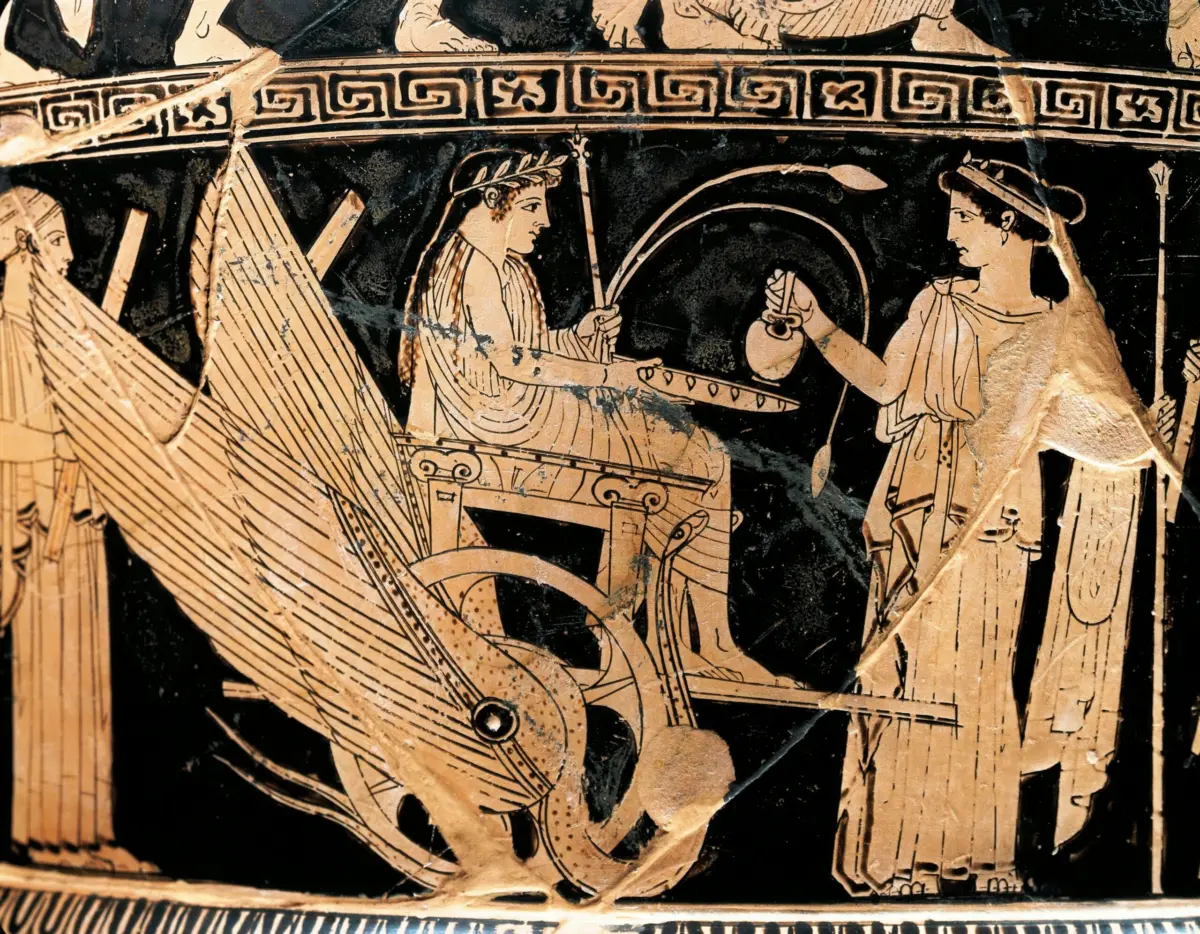
Bridle deepens this philosophical inquiry by drawing an analogy to the ancient Eleusinian mysteries, a secret cult of antiquity in which initiates were led into a dark room and exposed to a whirlwind of impressions, sights, and sounds without anyone telling them what they were seeing or what it meant. They were left entirely on their own to interpret the sensory overload. The following year, those same initiates were shown the ritual from the outside. Only then, when the internal, subjective gaze was complemented by an external, objective perspective, was the ancient initiation truly completed.
This historical metaphor serves as a powerful mirror for the modern digital condition. Humanity is currently trapped on the inside, staring endlessly at the overwhelming whirlwind of the internet with very little personal control, emotional distance, or true understanding. Yet, a growing number of people are attempting to step outside of this digital bubble—seeking to unmask the hidden mechanisms and puppet masters at play so they can consciously choose to walk away.
There is a widespread recognition that society is never going back to 2006, that innocent, analog year before the iPhone was introduced to the world. Nor should that be the ultimate goal. The technology that has reshaped human existence over the past two decades is incredible, immensely powerful, and forms a major pillar of modern human progress. But despite its utility, it remains a poor substitute for the real-world lessons, spontaneous connections, and grounding realities that emerge the moment a person finally puts down the phone and experiences life, unfiltered.