
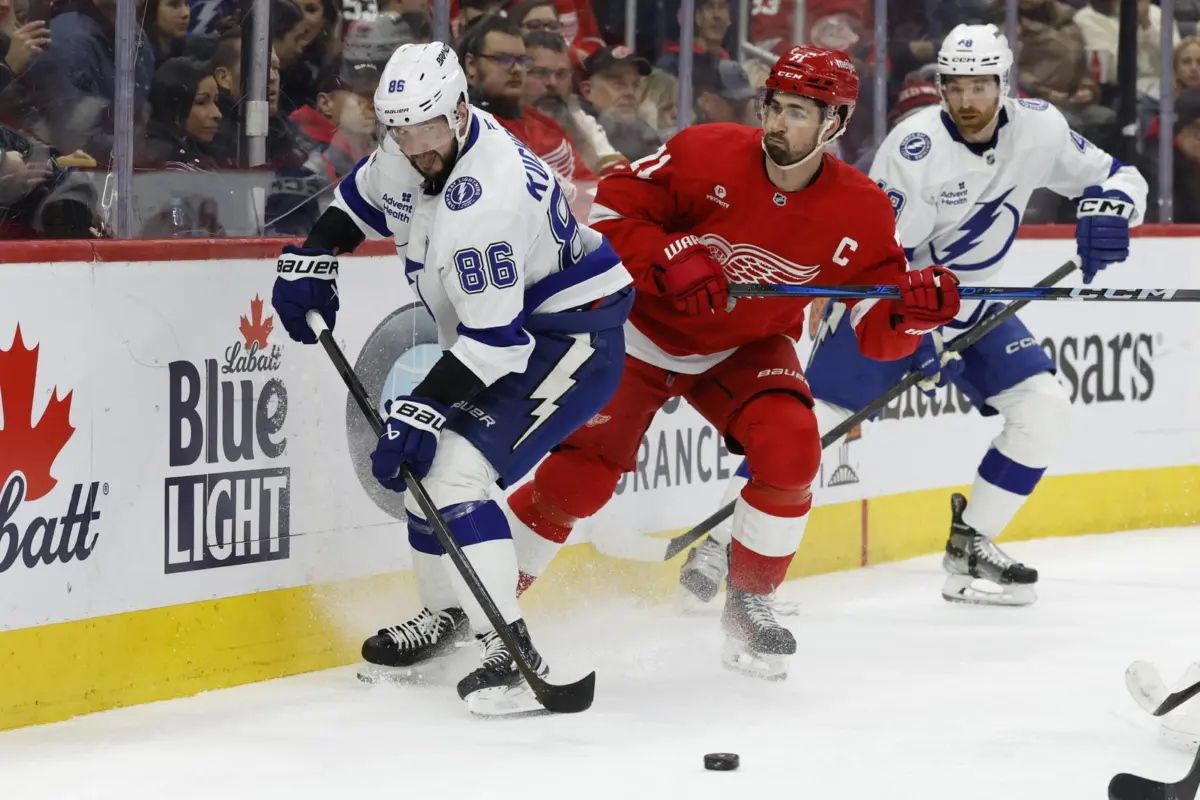
If you have been around the game long enough, you know that aging can present some significant, unavoidable challenges. For a professional athlete who has performed at an elite level for decades, the reality of growing older means there is really no telling when your impact on the ice will dip below your own high standards—or when you might reach a point where you can never quite recapture that previous magic.
The National Hockey League is certainly no different from any other major sports league in this regard. As the hockey world moves past the 10-percent mark of the 2026-27 regular season, a number of prominent veterans, including a few true superstar talents who have defined the sport for a generation, are currently struggling to replicate their career-long success as game-breaking, needle-moving forces.
Indeed, some absolute brand-name NHLers find themselves on an early-season pace for the least productive years of their storied careers. Whether these legendary figures are officially past their prime or simply enduring a routine early-season slump is a complex question, one that observers and analysts must answer on a careful, case-by-case basis.
Sidney Crosby, C, Pittsburgh Penguins
For starters, let us look at one of the greatest players in hockey history: Pittsburgh Penguins icon Sidney Crosby. The legendary center, now 39 years old, has posted just seven points through his first 13 games of the 2026-27 campaign. That translates to a point-per-game pace of 0.54, which sits drastically lower than his illustrious career point-per-game average of 1.23.
Despite the noticeable dip on the scoresheet, Crosby is logging an average of 19 minutes and 17 seconds of ice time this season, a figure that is essentially identical to the 19:14 he averaged over the course of last year. Pittsburgh Penguins coach Dan Muse is not artificially overloading Crosby with too much heavy work, but hockey observers can clearly see the veteran center pushing through his early-season offensive drought with the expectation that he will eventually emerge on the other side of it.
Interestingly, the Penguins roster provides a perfect counter-example of a seasoned greybeard star still finding high-end success in veteran center Evgeni Malkin. The remarkable 40-year-old Malkin has racked up 11 points in his first 12 games of the season, maintaining a solid point-per-game production rate. What makes Malkin’s run even more fascinating is that he is accomplishing this feat with even fewer shifts than at any other point in his storied career, averaging only 16 minutes and 59 seconds of ice time per night. This raises the distinct possibility that a measured, less-is-more deployment approach could end up working wonders for Crosby, too, as the rigorous schedule of the regular season grinds on.
Patrick Kane, RW, Chicago Blackhawks
Meanwhile, Chicago Blackhawks star winger Patrick Kane is also finding it difficult to produce the offensive numbers to which he and his fans have grown accustomed over nearly two decades. The 37-year-old Kane currently leads a struggling Blackhawks squad in scoring with nine points through 14 games, but that modest production masks underlying concerns. Kane has scored only one goal thus far this year, and he sits at a team-worst minus-15 rating.

Part of this usage equation stems from the fact that Kane remains Chicago’s second-most-utilized forward, logging an average of 18 minutes and 35 seconds of ice time per game. Based on his current trajectory, Kane is on pace to produce 51 points over an 84-game schedule, which would represent a noticeable drop from the 57 points he managed with the Detroit Red Wings during the previous season.
When examining the underlying details, the decline becomes even clearer. Kane accumulated those 57 points in just 67 games last year, meaning his overall offensive production is taking a notable hit in the early going of this campaign. While a player of his supreme offensive intellect and pedigree will likely never fall completely off the radar as a point-producer, there is no absolute guarantee that Kane will ultimately rediscover his trademark elite "A" game and dominate the offensive zone the way he has consistently done since breaking into the league back in 2007.
Claude Giroux, RW/C, Ottawa Senators
Similarly, 38-year-old Ottawa Senators forward Claude Giroux is not exactly thriving on the offensive side of the puck this year. Giroux currently has two goals and eight points through 14 games—while these are certainly not disastrous numbers for a bottom-six forward, they are nowhere close to his peak playing years when he routinely generated a dominant point-per-game pace, a feat he last accomplished during the 2022-23 season.
At the same time, the broader landscape of veteran performance features some notable exceptions who continue to defy the aging curve. For instance, elite forward Steven Stamkos has compiled 15 points in 13 games this season, a sparkling pace that would project out to 97 points over an 84-game schedule. The 36-year-old sniper has not produced offense at quite that elite level since the 2021-22 campaign, when he famously racked up 106 points in 81 games with the Tampa Bay Lightning.
In a similar vein, while 36-year-old center John Tavares has spent time dealing with an injury, he has proven to be a reliable point-per-game player when healthy, collecting seven points in as many contests to start the year. Tavares’ remarkable consistency as a reliable offensive contributor is nothing short of extraordinary, especially given that he has performed at or near a point-per-game standard every single season going back to 2011-12.
The overarching bottom line is that National Hockey League superstars inevitably see their point production slow down as the calendar turns and the physical toll of the sport catches up with them. Yet, more than a few A-list players continue to prove themselves as ageless wonders, enjoying extended periods of high-end play well into their late thirties. While some of these fluctuations in early-season numbers can certainly be chalked up to standard variance and sheer puck luck, there is simply no questioning the fierce competitive determination of star players who want to dictate the terms of their own departures. Betting against legends finding a way to adapt and succeed remains a risky proposition.