
All this week, the Eater Today newsletter is dedicated to editor Hot Takes, a way to release the pressure valve of crankiness that comes with sweating your way through the end of summer. This story was previously published as part of that series. Subscribe to Eater Today to see more of our editors’ boldest opinions about dining culture writ large.
There was a time, long before we’d ever conceived of the phrase “shoppy shop,” when nothing brought more joy than visiting a specialty grocery store. “Bougie grocery store” was a phrase spoken with genuine affection and not an ounce of judgment. These were the little markets beloved by chefs, where one could reliably find locally made, small-batch, and niche products that weren’t yet available anywhere else, all framed by delightfully corny graphic design on the shelves.
Visits to destinations like Eataly offered a reliable cure for boredom, built on the trust that a new discovery lay waiting to spark desire and culinary inspiration. Even when walking out empty-handed, a trip through the aisles offered a temporary escape from the doldrums of daily life simply by picking up a small piece of obscure cheese, a jar of something never seen before, or a fancy bag of chips. These shelves fostered a deep sense of curiosity, functioning almost like micro-capsules of the wider world. They displayed products absent from standard supermarkets, transporting shoppers into a vision of a different self—someone more learned, more cultured even without traveling, and more artistic simply by virtue of having an interesting ingredient to play with.
Something fundamental has shifted in the landscape. Today, entering fancy grocery stores—a retail category that now seems larger and easier to find than ever—often brings about a feeling closer to disdain, and occasionally legitimate disgust. In the place of earnest specialty shops with heart, character, and lovingly quirky Comic Sans labels, there is now a relentless slew of ripoff Erewhons: sleek, streamlined, and heavily capitalized. The core issue is less about the aesthetic of the “shoppy shops” and much more about the rise of the “luxury grocers.” These establishments sell premade food and precut vegetables at price points that routinely prompt audible gasps from shoppers. Their shelves present a tasteslopped barrage of buzzword-heavy products, ranging from “microplastic-free salt” to tallow-fried tortilla chips.
The fancy grocery stores that once offered a welcoming sanctuary felt distinctly like places built for food lovers. They were environments where burly, bearded cheesemongers sang the praises of ultra-funky washed-rinds as though they didn’t smell like actual feet. By contrast, what sits on these postmodern shelves is food driven less by genuine curiosity and creativity and more by underlying fear. Fancy grocery stores have transformed into a nexus for laundering conservative ideology under the compelling guise of pantry goods that look aesthetically pleasing on social media. Sourcing in these spaces seems to matter more for the granularity of what a product explicitly excludes—such as seed oils—rather than any real, foundational investment in agriculture, farmers, or local economies. The value of the small farm is reduced to the fact that it is more likely to sell raw milk.
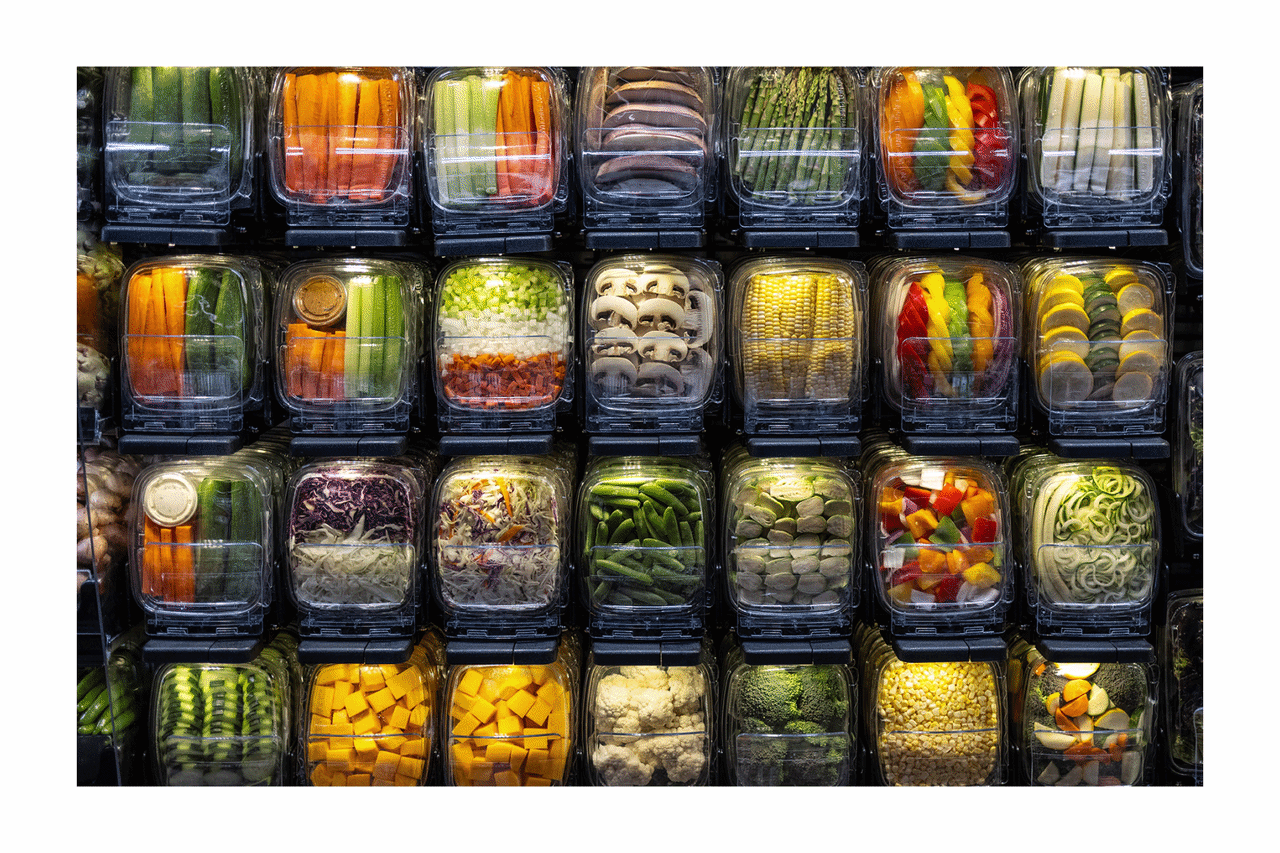
These contemporary grocery stores feel thoroughly winnowed of passion and even self-involvement. They operate as spaces where a handful of Brussels sprouts, pre-cut and sealed in plastic, commands a $17 price tag, catering to consumers who view food primarily as a form of “optimization,” social status, or table decor for a TikTok "Day in My Life" video. For those who want food to feel fun, hedonistic, and pleasurable, these environments instead cultivate a fraught and neurotic atmosphere that feels like a one-stop shop for orthorexia. The relationship between the consumer and the modern fancy grocery store now resembles a couple who have been together forever but inch further away from each other in the bed at night, their lived experiences, future goals, and senses of self having diverged too much to bridge.
It is difficult for a food lover to feel any other way when fancy grocery stores have evolved primarily into playgrounds for people with means but very little taste or common sense. Consider that “microplastic-free” salt literally comes packaged in plastic. The fancy grocery store today serves as a venue for consumers with ludicrous levels of disposable income to flex their wealth through purchases like $32 ice and $45-per-pound tuna salad from a cold case.
There is an argument to be made that some moral rot is involved in normalizing this cultural shift, particularly when many Americans are simultaneously buying fewer groceries simply because they can no longer afford to purchase as much as they once did. Much like buying a Birkin bag, exclusivity remains the entire point in a retail climate that has seen the production of $250-a-jar, limited-edition celebrity honey, single-sourced from the gardens of public figures like Will Ferrell or Ai Weiwei.
The ironic and illuminating aspect of this evolution is that the Erewhonification of fancy grocery stores coincides directly with the broader democratization of Whole Foods. For a long time and for countless shoppers, Whole Foods once represented the absolute pinnacle of unnecessarily luxurious grocery store spending. While this shift is clearly tied to the company’s acquisition by Amazon—which has arguably diminished the quality of both the available goods and the overall shopping experience—there is something jarring about the reality that the store once nicknamed “Whole Paycheck” now offers the cheapest everyday grocery option in multiple categories in cities like New York. The entire dynamic feels sinister, as though affluent consumers required a more exclusive retail option once Whole Foods became too accessible to the general public.
This is not to suggest a total rejection of the phenomenon. It is entirely possible to find oneself transfixed in the aisles of an Erewhon, marveling at how water can command a $12 price tag, while fleetingly fantasizing about the dewy, optimized, supplemented self that might emerge from developing a habit centered around kelp noodles and cold-pressed juice. Fond memories persist of vacations to Los Angeles, where—while sipping a Hailey Bieber smoothie and feeling genuinely entranced by its hyper-concentrated strawberry flavor—it was possible to momentarily rationalize the purchase by remarking that $21 for a smoothie isn’t all that ridiculous when standard cocktails cost the same amount and are actively bad for health.
The allure is undeniable, yet the urge to resist its absolute ubiquity remains strong. Let Erewhon be Erewhon. The central hope is simply that everywhere else can remain normal.