
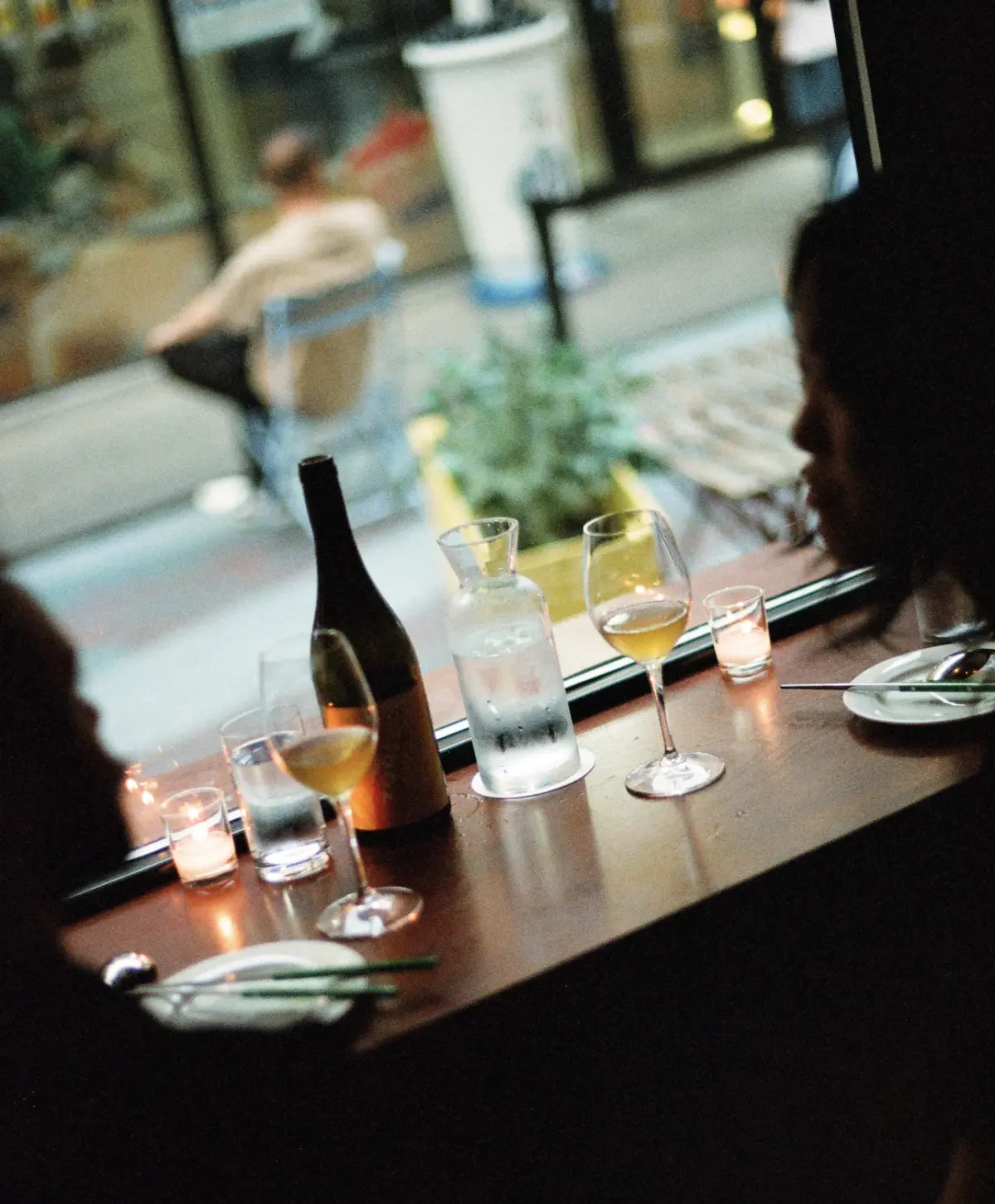
All this week, the Eater Today newsletter has been dedicated to editor Hot Takes, serving as a pressure valve for the specific brand of crankiness that tends to accompany sweating your way through the tail end of summer. As part of that ongoing series, the conversation has turned toward the unspoken rules of restaurant decorum, the minor anxieties of dining out, and the specific joy of breaking convention. While most diners take comfort in following strict rituals—such as dressing up for the occasion, waiting obediently at the host stand to prove they are not demanding, or taking on the martyr-like role of reorganizing the table as small plates arrive—one particular behavioral taboo continues to divide the culinary world.
That taboo is the act of side-by-side dining.
When the option arises for a seating arrangement where companions sit next to each other rather than directly across the table, it is frequently met with skepticism or outright dismissal. Naysayers often label the setup as corny, cringe-inducing, or even an example of codependent dining—a perceived act of public displays of affection that sits just a tier or two short of fully making out at a cocktail bar. Yet, for those willing to embrace it, side-by-side seating offers an entirely different kind of restaurant experience, one that trades formal distance for comfort, conspiracy, and genuine connection.
The stigma surrounding the practice became apparent during a recent evening out at a cocktail bar. When a partner and I opted to sit next to each other rather than across a small table, the server couldn’t resist a pointed observation, remarking, “Oh, so you’re side-by-side people.” While the comment was likely harmless, it scratched at the underlying shame associated with choosing to sit next to your dining companion, whether the relationship is romantic or platonic.
To the haters and skeptics, the question remains: Haven’t they ever given in to the corniness of love? And that love does not necessarily have to be romantic; it can stem from the liberating realization that perhaps one shouldn’t care so much about what other people think or how they choose to sit. It is about deciding that the most routine of weekday dinners deserves the same romantic energy as a couple feeding each other pasta on a sun-drenched beach in Italy.
This sentiment was reinforced during a recent visit to Cynthia, a seasonal tasting-menu restaurant nestled in New York City’s West Village. There, seated on a plush settee alongside Eater colleague Nadia Chaudhury, the benefits of the layout became immediately clear. The couch and table were sized just right for two people, and chic curtains suspended from the ceiling half-obscured the sides of the table, creating a heightened sense of privacy within the room’s unique architectural layout.

The design choice was not accidental. According to Cynthia’s founder and general manager, side-by-side seating is a personal preference that translates directly into the hospitality space. Explaining the motivation behind the layout in an email, the founder noted that they and their partner try to sit side by side in virtually every restaurant they visit. Consequently, the restaurant’s layout naturally incorporated these intimate little cubbies, serving as a clever merge of spatial constraints and the desire to build the absolute ideal table for a meal.
When the topic was later brought up among colleagues on Slack under the banner of defending side-by-side dining against claims of corniness, the response was surprisingly supportive. Staff members weighed in on the undeniable practical advantages of the arrangement. Chief among them is acoustics: in a notoriously loud modern restaurant, sitting next to a companion makes it possible to actually hear what they are saying without having to shout across a wide expanse of candlelit wood or marble.
Furthermore, Eater editor-in-chief Stephanie Wu pointed out an unexpected aesthetic benefit for the modern diner. For anyone who belongs to the tribe of people that meticulously documents every course with smartphone photography, sitting next to your companion ensures they—and their casual attire, such as a vintage corporate team-building t-shirt—won’t accidentally photobomb the background of every single food shot.
Tracing the origins of this dining room prejudice points back to cultural roots that lean heavily on propriety and distance. The steely, buttoned-up legacy embedded in certain cultural histories tends to frown upon physical closeness in public spaces, whereas dining cultures in places like France have long embraced more relaxed, communal, and shoulder-to-shoulder configurations.
When sitting next to a friend or partner at a restaurant table, the dynamic shifts entirely. One is no longer operating as an isolated island of rigid propriety. Instead, companions feel more like a united team, evoking the spirit of the two old men from the balcony in every Muppet movie who serve as a witty, observant Greek chorus. The experience transforms from a standard meal into an act of being in cahoots with someone else. And in the grand scheme of things, that dynamic feels infinitely more rewarding.
Ultimately, as the late rapper Coolio once observed, life is far too short not to have fun, especially given our brief window of existence relative to the sun, the moon, and the wider universe. Whether facing down the judgment of a server or the lingering societal skepticism toward public affection and closeness, embracing a side-by-side table is a small reminder to prioritize comfort, connection, and joy over rigid dining room norms.