
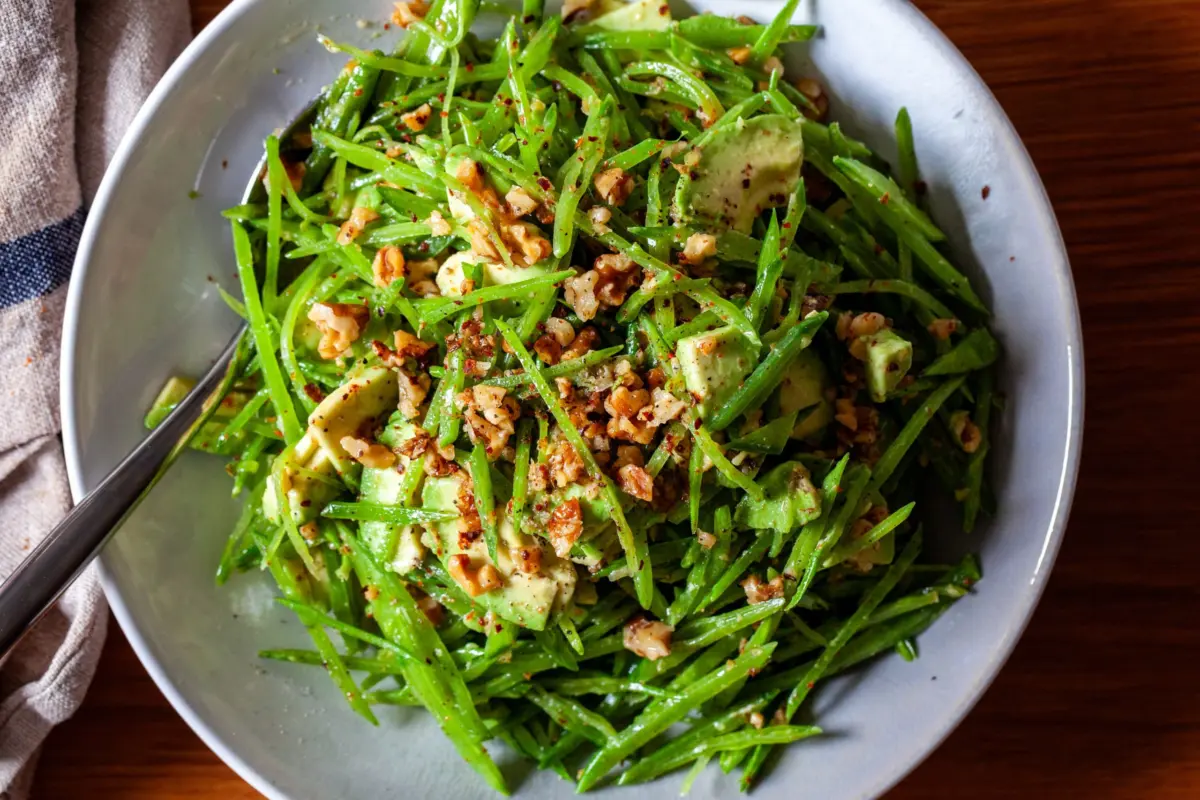
For home cooks and food enthusiasts alike, certain ingredients become permanently pigeonholed by culinary convention. Snow peas, bright and crisp, are almost universally destined for the sizzling environment of a wok, tossed alongside aromatics and proteins in a classic stir-fry. But culinary creators and home-cooking advocates are beginning to challenge that assumption, finding inspiration in unexpected places—such as the memory of a defunct, highly regarded restaurant—to reimagine everyday produce in remarkably simple, uncooked formats.
The latest culinary pivot making the rounds in home kitchens centers precisely on this premise: shifting snow peas from the stove to the salad bowl. Drawn from a long-running fascination with raw vegetable preparations, this updated dish strips away complex cooking techniques in favor of raw textures, bright acidity, and minimal effort, striking a resonant chord with cooks who find themselves running on fumes as the demanding final stretch of the school year or the stifling heat of approaching summer sets in.
The inspiration traces back to a memorable dish once served at the late NoMad restaurant, an establishment celebrated for elevating humble ingredients through precise, unexpected combinations. While a previous variation of this concept was featured in the cookbook Smitten Kitchen Keepers—incorporating sharp pecorino cheese and rich walnuts—recent, distinct kitchen cravings prompted a streamlined revision. This latest iteration ditches the cheese entirely, focusing instead on a minimalist trio of textures and flavors that rely heavily on the natural characteristics of the produce itself.

At the heart of the dish is a striking textural interplay. Snow peas are sliced lengthwise into delicate, slaw-like ribbons, creating a base that is both crisp and tender. This green crunch is paired with the rich, buttery softness of ripe avocado, which provides a cooling, velvety contrast to the bright bite of the vegetables. Tying the composition together are crunchy, toasted walnuts, adding a deep, nutty warmth that grounds the lighter elements of the plate.
The dressing is similarly unfussy, functioning more as a cohesive glaze than a heavy sauce. It relies on a straightforward emulsion of freshly squeezed lemon juice and quality olive oil, seasoned simply with kosher salt, freshly cracked black pepper, and a pinch of chile flakes for a subtle, warming kick. When the ribboned snow peas and tender avocado are tossed in this vibrant mixture, the result is a dish designed for immediate, enthusiastic consumption—often described by those who make it as dangerously easy to inhale in a single sitting.
For those navigating the heavy fatigue of late spring or bracing for the inevitable heat waves of summer, the appeal lies not just in the flavor profile, but in the near-total lack of required exertion. When the thought of preparing a meal with more than three main ingredients feels utterly insurmountable, dishes that demand minimal active time while delivering high-impact flavors become an essential part of the home cook’s rotation.

Executing the salad requires attention to a few foundational techniques that elevate raw ingredients without complicating the process. Culinary experts consistently emphasize that nuts—walnuts in particular—undergo a remarkable transformation when toasted. Placing them on a small sheet pan in a 350-degree Fahrenheit oven for just six to ten minutes, until they turn slightly darker and release a fragrant aroma, unlocks their full depth of flavor. Allowing them to cool while the remaining components are prepped ensures they maintain their crucial crunch rather than softening when introduced to moisture.
Preparation of the snow peas involves a crisp-refreshing step: soaking them in a large bowl of ice water for ten to twenty minutes, though longer immersion poses no issue. Once drained and thoroughly patted dry with a towel, the peas are gathered into small, manageable stacks and sliced lengthwise into the signature thin ribbons that define the salad’s unique mouthfeel.
Assembling the dish is designed to be swift and direct. The toasted walnuts, once chopped into rubble-sized pieces, are placed directly into a large bowl alongside the olive oil, lemon juice, kosher salt to taste, generous grinds of black pepper, and chile flakes. Whisking these elements together first creates an evenly distributed base before the snow peas are added and tossed until thoroughly coated. The sliced avocado is introduced last, folded in gently to avoid breaking down the soft pillows of fruit before the salad is brought straight to the table.

Timing, however, is a critical factor in the preparation. Because the high acid content in the lemon juice dressing tends to discolor the vibrant green snow peas over time, advance preparation requires a slight adjustment. For those planning ahead, the walnut dressing is best kept separate and tossed with the vegetables right before serving, ensuring the dish retains its striking visual appeal alongside its fresh, crisp profile.
This focus on simplicity, seasonality, and the reinterpretation of familiar produce aligns with a broader, long-standing archive of seasonal recipes that have captured public interest over the years. Looking back through culinary timelines reveals a consistent rhythm of approachable, inventive dishes tied to the changing calendar. From autumn’s rich pumpkin basque cheesecakes and spring-forward ditalini with peas to asparagus chimichurri, strawberry lemonades, and double chocolate chip muffins, the emphasis has consistently remained on practical, rewarding food that fits seamlessly into everyday life.
As the warmer months take hold and daily routines shift toward lighter, more effortless eating, the raw snow pea and avocado salad offers a timely reminder that culinary innovation often requires nothing more than looking at a familiar vegetable through an entirely new lens.