
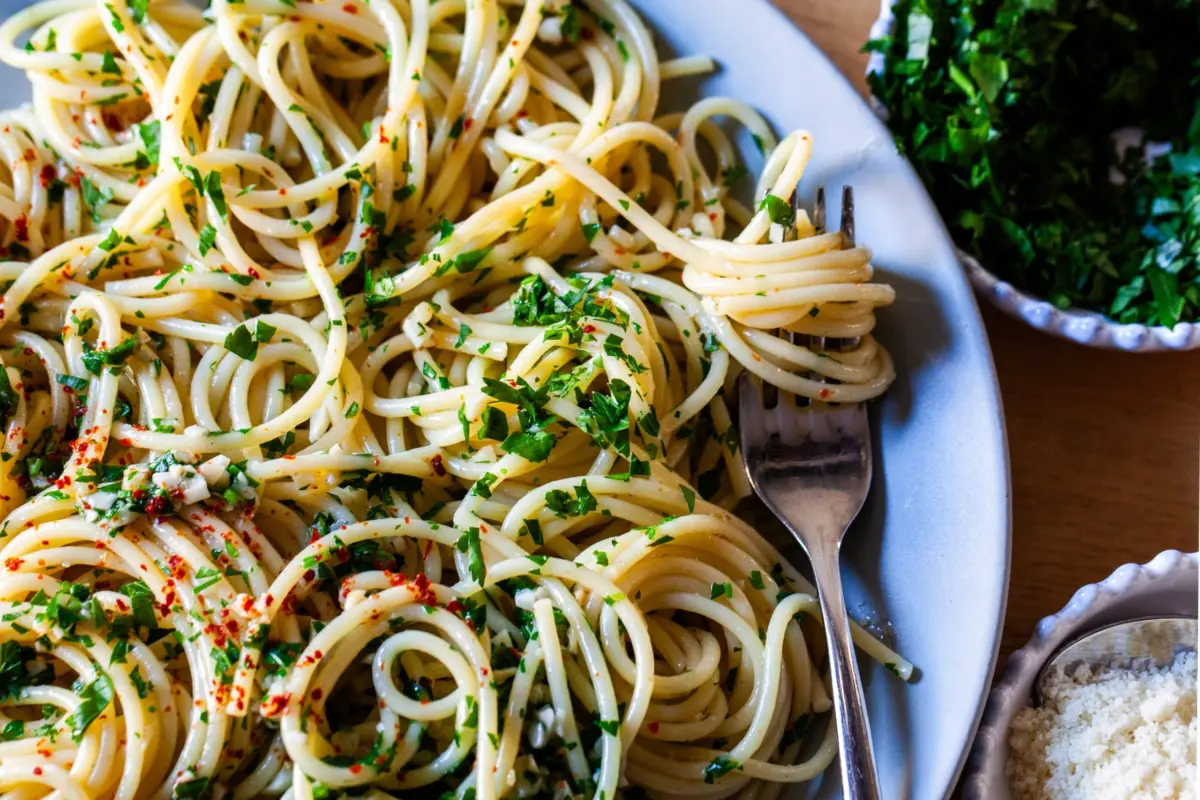
As the dog days of summer reach their peak, home cooks everywhere face a familiar, exhausting dilemma. When energy reserves are depleted, the kitchen pantry looks sparse, and the sheer thought of executing a complex recipe feels insurmountable, a universal question arises. Do you ever look around at the ingredients available to you, the energy you have to give to the cooking process, or perhaps the sheer amount of patience you have left in your emotional reserve, and simply decide to boil spaghetti, toss it with garlicky olive oil, and call it a night?

For many, that exact scenario has led to a culinary epiphany, though it might occasionally test the patience of family members. As one exhausted cook recently explained to a medium-sized child shortly before becoming uninvited from future family events, the level of enthusiasm available for elaborate meal preparation can sometimes shrink down to virtually nothing. In moments like these, turning to the most basic pantry staples is not just an option; it is a necessity.
Fortunately, there is an actual, official name for this humble masterpiece, and it is spaghetti aglio e olio. There is truly no time quite like the peak of summer, or those challenging days spent at the mercy of an ill-equipped vacation rental house kitchen, to serve as a stark reminder of a culinary truth. It simply does not matter how many sophisticated, complex dishes an individual might know how to prepare. Nothing quite compares to the aromatic wizardry of garlic sizzling in olive oil when it comes to getting people to look up from their screens, rouse themselves from post-beach slumbers, and wander into the kitchen with piqued interest, asking that timeless, hopeful question: "Ooh, what’s that?"

Originating from the vibrant coastal city of Naples, Italy, spaghetti aglio e olio has steadily accumulated legions of devoted fans among exhausted home cooks far and wide. Its enduring appeal lies primarily in its remarkably short list of ingredients—items that most people likely already have tucked away in their pantries—and the disproportionately high amount of flavor and genuine comfort yielded from them.
For many culinary enthusiasts, this classic preparation serves as an invaluable back-pocket recipe that remains reliable year after year. It is a dish that easily adapts to whatever circumstances the kitchen presents. It can be enjoyed strictly on its own accompanied by a crisp, simple green salad, paired with whatever fresh produce looked appealing at the local market that week, or utilized as a clever vehicle to rescue a scattering of diced roasted vegetables that were previously lingering on their last legs in the crisper drawer. For those looking to add a bit more substance, the dish serves as an exceptional canvas, easily topped with lemony grilled shrimp or succulent chicken thighs.

Yet, despite its versatility and reliability, many cooks admit to forgetting that the dish even exists for months at a time. Then, invariably, a sudden memory of its warm, garlicky embrace resurfaces, and households are invariably thrilled to welcome it back into the regular meal rotation. As the lazy days of August encourage everyone to work a little less hard both inside and outside the kitchen, rediscovering this classic preparation feels like a timely and welcome nudge.
Spaghetti Aglio e Olio

To understand the magic of the dish, one must look at the straightforward mechanics of its preparation. The process begins by bringing a pot of well-salted water to a boil, where the spaghetti is cooked until it is roughly one to two minutes shy of its final desired texture. Before draining the pasta, a crucial step involves setting aside one cup of the starchy cooking water, after which the remainder of the water is drained away.
Returning to the empty pan, the foundation of the dish is built by combining olive oil, sliced or minced garlic, and red pepper flakes all at once, before turning the heat up to a medium setting. Starting this mixture cold is an essential technique to prevent the garlic from cooking too fast or turning bitterly burnt. The ingredients are then cooked together, with continuous stirring, until the garlic just begins to take on a warm, golden color.

At this stage, the drained pasta is introduced to the pan alongside roughly half of the reserved cooking water. The mixture is heated together while being stirred vigorously, allowing the starchy pasta water and the garlic-infused oil to emulsify and create a glossy, clinging coating that thoroughly envelops the spaghetti. Additional reserved pasta water can be added as needed to maintain a loose, fluid consistency—with many cooks finding they utilize the entire second half-cup. Finally, a generous amount of fresh parsley is tossed in along with any final adjustments to seasoning, and the dish is served immediately. While finishing the plate with a final extra drizzle of olive oil is standard, and adding Parmesan cheese on top may not be strictly traditional, the prevailing philosophy in most home kitchens remains simple: your house, your rules.