
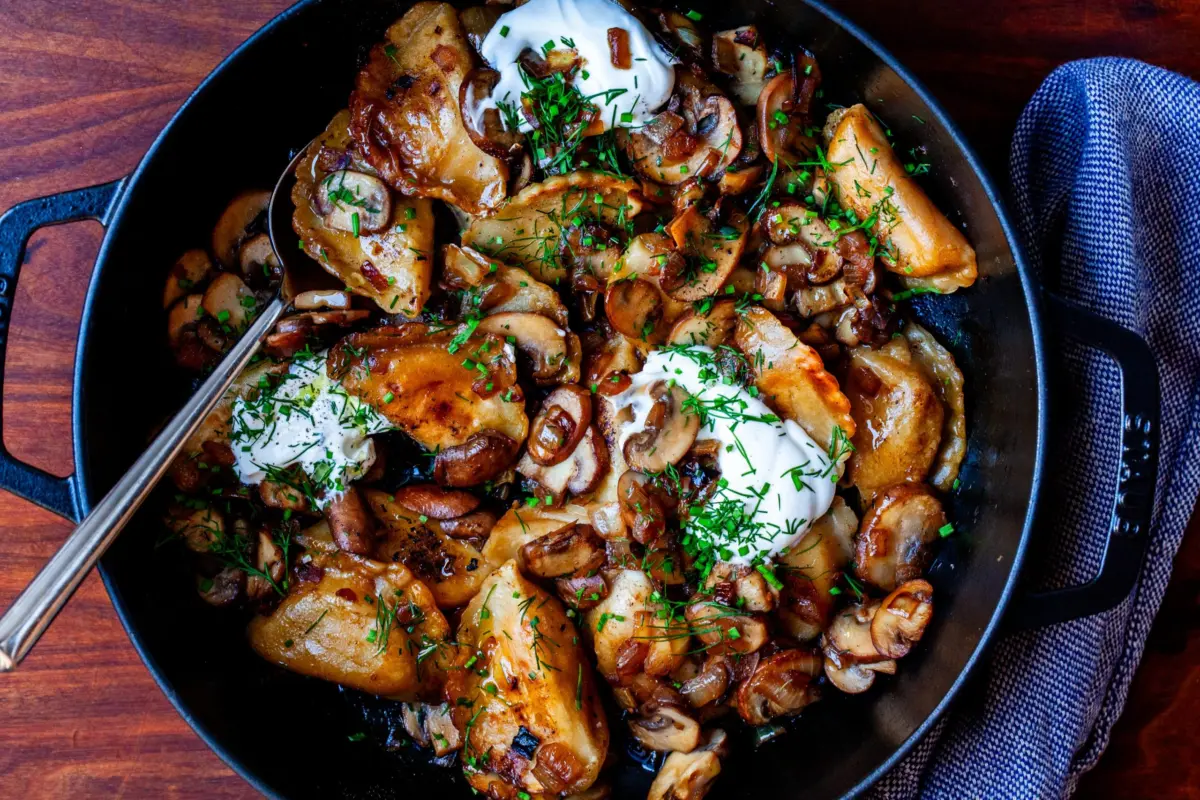
As the autumn season settles in with its deceptive warmth, the perennial human craving for hearty, carbohydrate-rich comfort foods remains entirely unabated. For home cooks navigating the hectic whirlwind of autumn schedules—juggling college applications, school adjustments, and the demanding timelines of creative projects like writing a new cookbook—the intersection of convenience and culinary satisfaction is a rare and precious territory. Whenever a complete, deeply satisfying meal can be assembled in a single pan without feeling compromised or joyless, it immediately earns a permanent spot in the weekly dinner rotation. A new recipe featuring skillet-fried pierogi paired with earthy mushrooms and caramelized onions has firmly established itself as a weeknight favorite, proving that speed and flavor do not have to be mutually exclusive.
The technique behind this comforting dish flips the traditional preparation of pierogi on its head. While these beloved potato-stuffed dumplings are most commonly prepared by boiling them first and then briefly sautéed to finish, this one-pan approach reverses the order with remarkable results. The process begins on the stove with the vegetables, developing deeply savory flavors through almost-caramelized onions and aromatic, garlicky mushrooms. Once the vegetables achieve their rich color and flavor profile, the pierogi are introduced to the skillet straight from the freezer, where they develop a golden-brown crust before being steamed to tender perfection with the addition of a measured splash of water.

Brought back together in the final moments with a dash of sharp vinegar, generous dollops of cool sour cream, and a vibrant fistful of fresh dill and chives, the dish delivers a masterclass in contrasting textures and temperatures. The resulting meal features dumplings with shells that are partly crispy and partly chewy, encasing soft, fluffy potato centers surrounded by buttery, earthy mushrooms, all elevated by the cold, tangy, and fresh finishes. The entire culinary feat is accomplished in less than thirty minutes using inexpensive, accessible ingredients, leaving the cook with minimal cleanup consisting of just a single pan, a cutting board, a fork, and a knife.
This streamlined approach to comfort food builds upon a growing lineage of clever one-pan weeknight strategies that combine frozen starches with fresh vegetables. Similar culinary triumphs in this category include crispy tortellini tossed with peas and prosciutto, as well as skillet ravioli cooked alongside spinach. These dishes reflect a practical philosophy of modern home cooking: maximizing flavor and minimizing dishwashing without sacrificing the comforting qualities that make home-cooked meals so rewarding at the end of a busy day.

Skillet Pierogi with Mushrooms
When shopping for the ingredients, home cooks are advised to look for smaller pierogi, which cook more quickly and evenly directly in the skillet. While pierogi serve as the readily available standard in most grocery stores, traditional Ukrainian vareniki remain an exceptional alternative for those seeking a slightly different texture. Vareniki typically feature a thinner, softer dough and a more delicate, smaller size, offering a delightful variation for potato-and-dough enthusiasts willing to try a homemade approach.
The cooking process begins with the preparation of the vegetables. A large, deep skillet, ideally one equipped with a matching lid, is heated over medium-high heat. Butter and a tablespoon of olive oil are added to the hot pan. Once the fats are thoroughly heated, chopped onions are introduced, seasoned with salt and pepper, and cooked until they soften and begin turning golden at the edges, which takes approximately five minutes. Minced garlic is then added to the pan, cooking for just one minute more before the mushrooms are introduced.

The mushrooms are seasoned with additional salt and pepper and allowed to sear in the skillet without being stirred, developing a rich brown crust on the underside over the course of four to five minutes. Once properly browned, the mixture is stirred continuously until any liquid released by the mushrooms has completely evaporated. At this stage, the onions and mushrooms are transferred out of the pan to a plate, bowl, or cutting board to rest while the dumplings are prepared.
The second phase of the cooking process focuses entirely on the pierogi. The remaining tablespoon of olive oil is added to the pan and warmed, after which the frozen pierogi are arranged in a single, even layer. They are allowed to cook undisturbed until the bottoms turn golden brown, taking roughly five minutes before each piece is carefully flipped. Water is then added to the pan to generate steam, an action that requires caution due to the immediate burst of steam. The pan is quickly covered with its lid, and the heat is reduced to medium.

The pierogi steam and cook through for five to eight minutes, with the cook checking the pan a few minutes in to ensure the liquid has not entirely evaporated, adding a few tablespoons of water if necessary. Once a pierogi is tasted and confirmed to be hot and thoroughly cooked through, the core cooking phase is complete.
To bring the dish together for serving, the reserved mushrooms and onions are returned to the skillet and stirred briefly to rewarm alongside the dumplings. The pan is then removed from the heat and finished with a distinct drizzle of white vinegar, followed by strategic dollops of sour cream and a generous scattering of freshly chopped herbs. The entire skillet can then be brought directly to the table for immediate serving.