
For generations, the Brussels sprout has endured a polarizing reputation in the culinary world, frequently battling unfair stereotypes rooted in memories of overboiled bitterness and uninspired preparation. Yet, modern home cooking and professional gastronomy alike have long since redeemed the miniature cabbage, proving that with the right technique, it can achieve remarkable heights of flavor and texture. Traditionally, culinary wisdom has dictated that a simple slick of oil and a generous sprinkling of salt are all that a Brussels sprout truly needs to shine, allowing the natural, earthy sweetness of the brassica to emerge through high-heat roasting. But contemporary food culture thrives on innovation, and a new viral technique is elevating the humble vegetable into the belle of the ball by introducing a crispy, golden-brown Parmesan skirt that changes the texture game entirely.
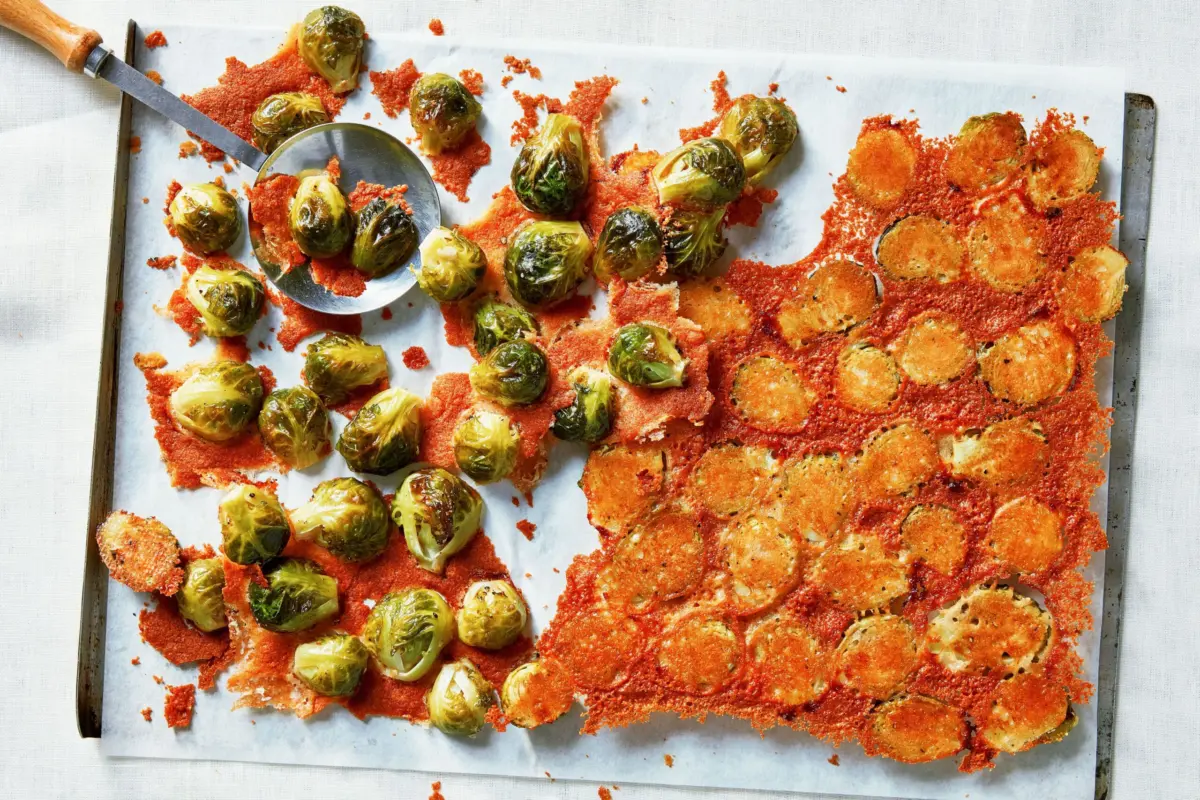
This striking culinary trick, featured as part of the popular recipe series "It’s That Simple"—known for highlighting dishes with remarkably brief ingredient lists, laid-back techniques, and outsized flavor payoffs—takes standard roasted vegetables and turns them into a dramatic centerpiece. The core of the method relies on a clever deployment of cheese. By roasting the Brussels sprouts while they are nestled snugly into a continuous blanket of grated Parmesan cheese, something magical happens in the heat of the oven. As the cheese renders and cooks alongside the vegetables, it melts into a unified, crispy, frico-like sheet that aggressively clings to the individual sprouts, surrounding each one in a delicate, lace-like halo of savory crispness.
The result is a side dish that makes a serious statement on the dinner table, marrying the tender, caramelized interior of the roasted sprout with a shatteringly crisp, salty cheese crust. It is a presentation that manages to be both rustic and sophisticated, appealing directly to fans of playful, textural eating who appreciate when familiar ingredients are reimagined in unexpected ways. Food enthusiasts who have experimented with the technique note that if the vegetables are roasted correctly and the culinary stars align just right, a diner can actually unpeel the entire cheesy sheet off the baking pan in one swift, satisfying swoop, presenting the creation as the genuine culinary masterpiece that it is.
The appeal of this approach lies heavily in its effortless execution, defying the complexity that its dramatic appearance might initially suggest. The "It’s That Simple" series was specifically designed for recipes so straightforward and approachable that a cook could theoretically execute them with their eyes closed, relying on tiny ingredient lists and minimalist methods rather than tedious, multi-step procedures. In an era where weeknight cooking often competes with demanding schedules, the demand for high-impact, low-effort dishes has never been higher. Home cooks are constantly searching for ways to elevate everyday produce without investing hours in prep work or specialized equipment. By relying on the natural chemistry of melting cheese and high-heat roasting, this method achieves a restaurant-quality presentation using staples that are likely already sitting in the refrigerator and pantry.
The technique also taps into a broader cultural fascination with frico—the traditional Friulian cheese crisp made by melting and frying cheese until it turns wafer-thin and crunchy. While making standalone cheese crisps requires careful monitoring on a stovetop, embedding the cheese directly into the roasting pan beneath a layer of halved Brussels sprouts streamlines the process entirely. The moisture released by the roasting sprouts interacts with the melting cheese, creating a dynamic environment where the Parmesan can set into a sturdy, cohesive web without burning immediately. Once removed from the oven, the cheese hardens rapidly into that coveted skirt, ensuring the structural integrity required for the dramatic one-piece reveal.
Culinary observers point out that variations of this cheesy roasting method have steadily gained traction across food media, sparking widespread conversation online about the best ways to maximize the potential of cruciferous vegetables. Articles and digital galleries dedicated to finding the absolute best Brussels sprouts recipes consistently emphasize texture as the ultimate differentiator between a mediocre vegetable side and an unforgettable one. While steaming or boiling mutes the flavor and softens the vegetable uniformly, high-heat oven roasting caramelizes the exterior leaves while keeping the core tender. Adding a blanket of grated Parmesan takes that textural contrast and amplifies it exponentially, introducing a sharp, nutty umami note that cuts through the earthy bitterness of the sprout.
For home cooks looking to replicate the effect, the process requires minimal intervention. Halved Brussels sprouts are placed cut-side down onto a layer of finely grated Parmesan spread across a baking sheet, ensuring that the pieces make direct contact with both the pan and the cheese. As the oven does its work, the fat renders from the cheese, frying the edges of the sprouts while simultaneously fusing the individual piles of dairy into a single, cohesive sheet. The visual impact when served is undeniable, offering a rustic elegance that feels right at home at a casual weeknight dinner or a more festive gathering where presentation matters just as much as flavor.
Ultimately, the enduring popularity of recipes like this underscores a shift in how home cooks approach vegetables. Rather than masking unwanted flavors with heavy sauces or drowning them in cream, modern techniques focus on enhancing natural attributes through smart pairings and physics-driven cooking methods. By allowing simple ingredients like olive oil, salt, and Parmesan to interact under high heat, cooks can unlock entirely new dimensions of taste and texture with virtually no added complexity. For anyone seeking a fun, low-stress addition to their culinary repertoire that delivers maximum visual and sensory impact, this cheesy-skirted approach proves that even the most classic vegetables still have plenty of room for surprise.