
With more than 90 percent of Gaza’s population displaced amid an unrelenting Israeli bombing campaign and ground invasion—resulting in more than 81,000 reported Palestinian deaths since the October 7, 2023, attacks led by Hamas—Palestinian refugees fortunate enough to have the financial means to leave face extraordinarily limited options. While a small fraction of individuals manage to secure medical clearance or successfully relocate to countries where they hold dual citizenship, the vast majority attempt to cross the border into neighboring Egypt.
Yet, for many of those who make it across, the journey does not lead to safety or stability. Instead, they find themselves trapped in a bureaucratic and legal limbo, frequently lacking formal refugee status or recognized legal protections while grappling with severe medical, financial, and administrative hardships. More recently, some individuals who successfully crossed into Egypt have encountered such insurmountable barriers that they ultimately made the painful, desperate decision to abandon their pursuit of safety abroad and return directly to the active combat zone of Gaza.
Among them is Omar, a 36-year-old audio engineer who once coordinated sound production for live concerts across the Gaza Strip. Omar fled his home last year after paying thousands of dollars to an Egyptian broker, only to find himself forced to return late last summer. To protect his safety and out of fear of potential reprisals by Israeli authorities, Omar spoke exclusively to journalists under a pseudonym.
Like thousands of other Gazans, Omar evacuated the strip through the strategic border city of Rafah in the spring of 2024. His departure occurred just before the Israeli military seized operational control of the Palestinian side of the border crossing and shut it down indefinitely. According to the United Nations Office for the Coordination of Humanitarian Affairs, that military seizure effectively blocked humanitarian aid from entering the besieged enclave while completely trapping remaining residents inside.
"I didn’t want to return to Gaza," Omar recalled, explaining that his ticket out of the territory involved paying a staggering $5,000 USD to an Egyptian firm known as Hala Consulting and Tourism. "I made the decision when I lost hope of travelling abroad."
Upon arriving in Egypt, Omar settled in a district in eastern Cairo. To survive, he found employment in a garment factory manufacturing sportswear, working long hours to earn enough to rent a modest room for $150 USD a month—roughly equivalent to the average monthly salary of a garment worker in the bustling Egyptian capital.
For the next two years, Omar worked tirelessly to balance his own survival expenses while attempting to send a portion of his meager earnings back to his struggling family in Gaza. Maintaining this dual financial burden, however, proved to be an impossible feat without making crushing personal sacrifices. Earning sufficient funds to support both households was exceedingly difficult, and as time pressed on, Omar realized he lacked the financial means and institutional pathways to successfully apply for visa programs to Canada or other European nations.
Furthermore, he observed that many compatriots who had managed to apply were trapped in an endless cycle of administrative delays. Thousands of Gazans seeking to reunite with family members in Canada faced unusually prolonged processing times for temporary visas. Others, he noted, spent more than two years waiting for a decision, only to have their applications abruptly rejected on the basis of poorly substantiated claims linking them vaguely to terrorist activities.
"Due to my family’s difficult circumstances, I was forced to go back," Omar said, reflecting on the heavy emotional toll of his situation. "I felt hopeless and saddened because I was unable to travel to a European country or Canada to help my family. I decided to return to Gaza to assist them there."
In February, Israeli authorities partially reopened the Rafah border crossing under strict regulations, allowing a limited number of displaced individuals to travel back into the territory. By September 2026, more than 5,700 people had used the crossing to return to the strip. Under the enforced guidelines, only Palestinian residents of Gaza who were already stranded in Egypt were permitted to make the return journey through Rafah. In August of this year, Omar became one of them.
"It was an extremely difficult and arduous journey," he recalled of his passage back into the enclave. "You are subjected to thorough security searches and long waits."
At the Regavim checkpoint, where Palestinians returning to the Gaza Strip from Egypt are processed by authorities, Omar recounted strict confiscation policies. The few meager snacks he had brought with him for the journey—including pastries, cheese, and juices—were entirely confiscated. While he was permitted to keep his mobile phone, his phone charger and wristwatch were seized.
"You cannot speak to them," he said, describing the powerlessness felt at the checkpoint. "There is nothing that can be done."
He added that returnees were subjected to strict luggage limitations. "Only a 20-kilogram bag was permitted. Any other devices, food items, or therapeutic medications were prohibited," Omar said. "I felt a loss of hope."
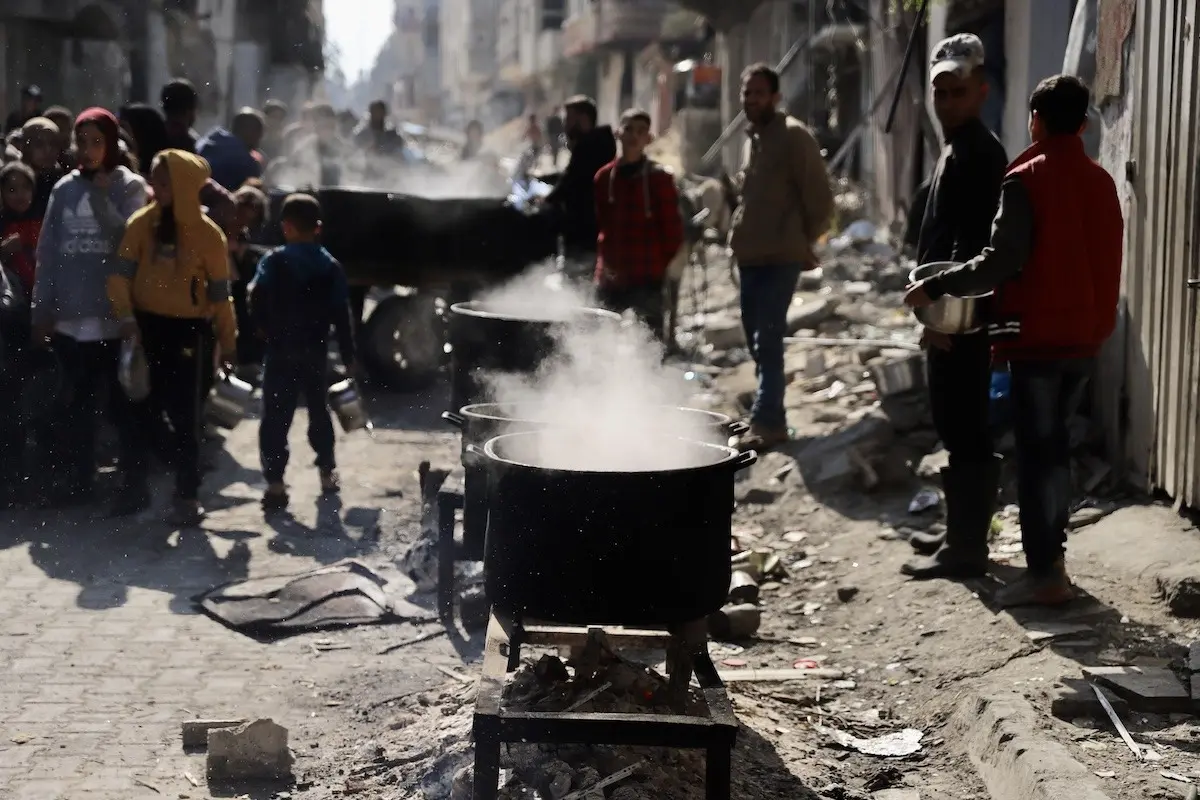
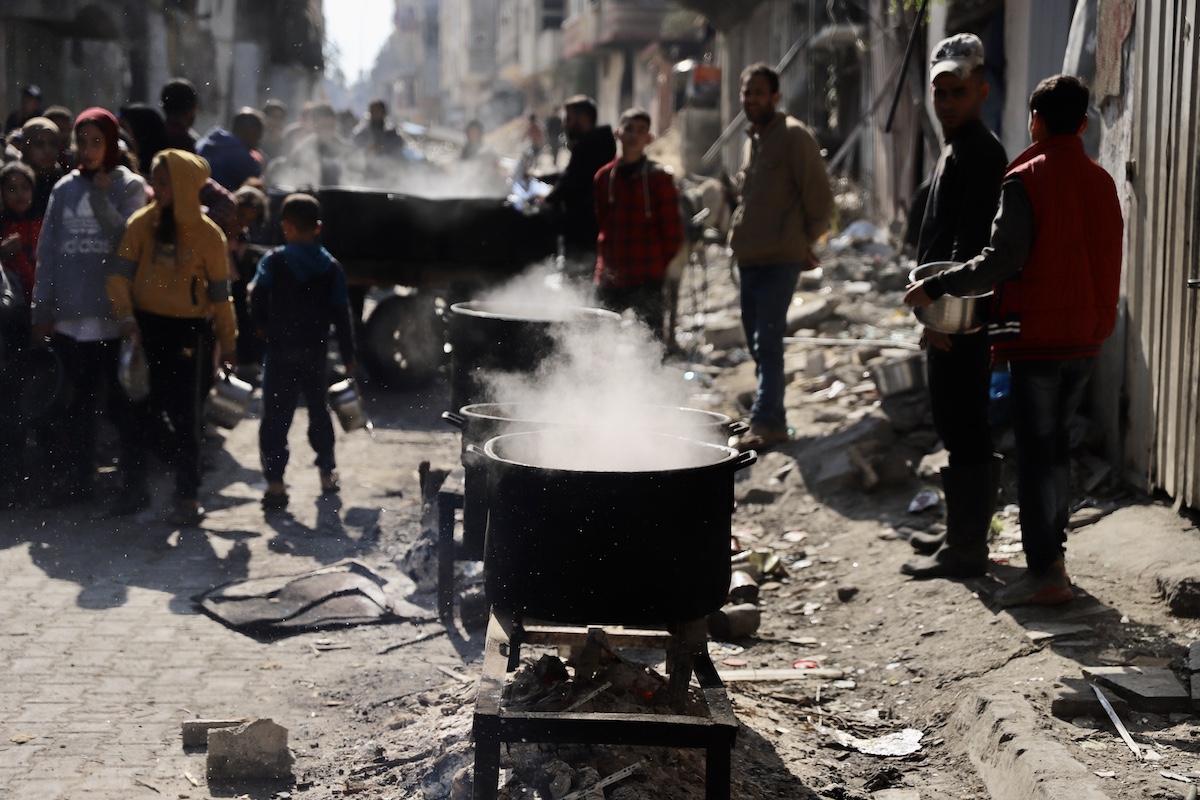
Upon returning to Gaza, Omar found that little had changed for the better during his absence. The landscape remains defined by continuous desperation, with residents regularly rushing to search for scarce food, queuing up in grueling, endless lines simply to secure basic provisions like bread and water.
Those fortunate enough to have anything edible to cook must resort to gathering wood to build fires. The acrid smell of woodsmoke frequently drifts into the crowded tent that Omar now shares with his parents and siblings, both of his parents being in increasingly frail health.
Every day, he steps outside into a sobering reality dominated by rows of dilapidated tents. "I see the look of desperation in people’s eyes, their gazes devoid of any hope or purpose," he said, accompanied by the ceaseless, echoing sounds of nearby bombs and artillery fire.
Though he had originally hoped that returning to Gaza would allow him to provide tangible support to his relatives on the ground, the reality of the situation quickly shattered those expectations. "Unfortunately, I am unable to do anything," he admitted. "I, too, have started to reach a state of despair. There is no life, no work, no electricity, no potable water, and no goal whatsoever."