
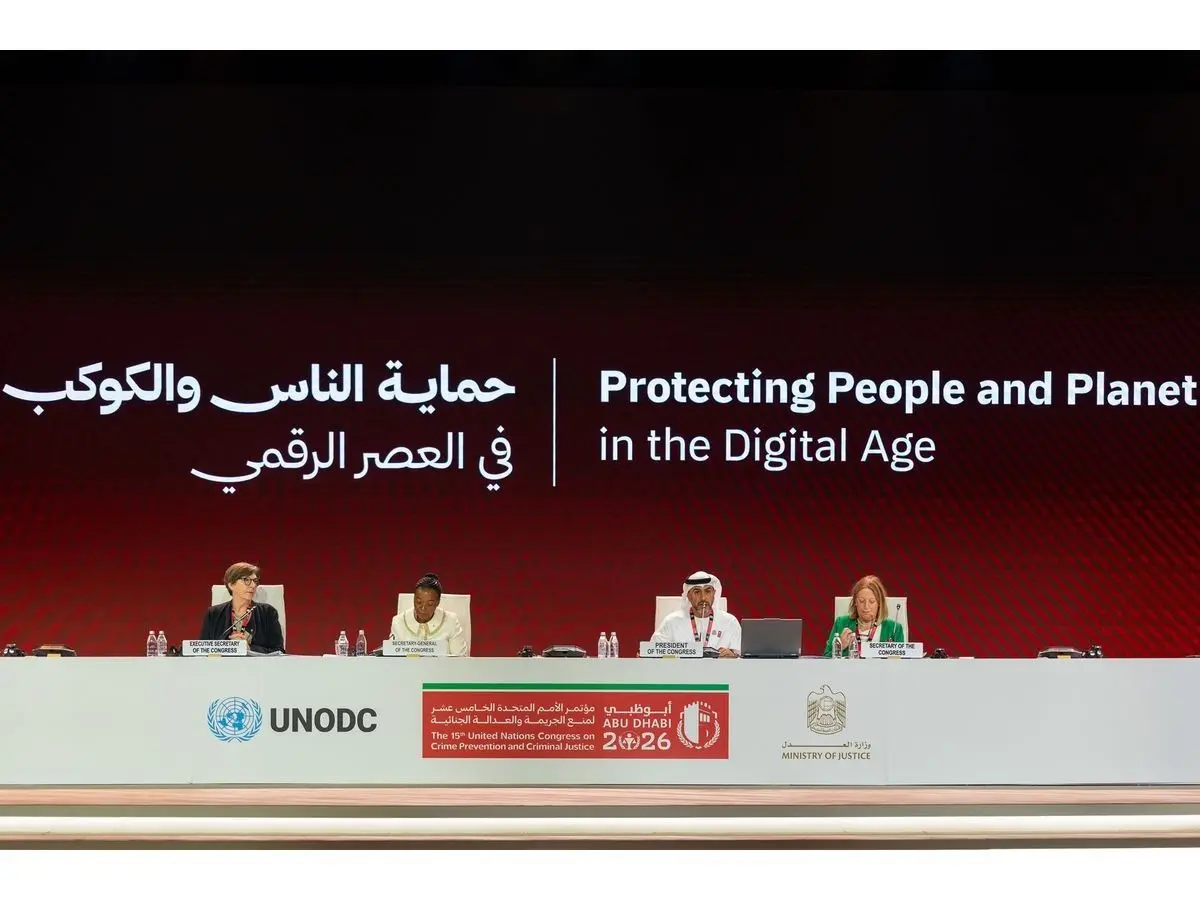
ABU DHABI, United Arab Emirates — The 15th United Nations Congress on Crime Prevention and Criminal Justice convened in Abu Dhabi on Saturday, inaugurating a major international gathering dedicated to setting the global agenda for law enforcement, judicial reform, and legal cooperation for the next five years. Hosted at the ADNEC Centre Abu Dhabi and scheduled to run through October 1, the high-level summit has assembled official delegations from more than 97 countries, including a ministerial contingent of more than 32 ministers of justice and interior ministers, alongside judicial leaders, public prosecutors, criminologists, international policy specialists, and youth representatives from every region of the world.
The commencement of the Congress was marked by the formal adoption of the Abu Dhabi Declaration during its opening plenary session. The document stands as the primary political and strategic outcome of the gathering, establishing a comprehensive multilateral roadmap intended to guide international priorities, institutional reforms, and cross-border cooperation in crime prevention, criminal justice, and the rule of law through 2031. Adopted by consensus at the outset of the proceedings, the Declaration reflects an international commitment to modernizing justice systems and reinforcing multilateral mechanisms against an increasingly complex landscape of global criminality.
Architecturally, the Abu Dhabi Declaration is structured around four foundational pillars designed to address both traditional and emerging dimensions of global justice: prevention and resilience, justice and the rule of law, evolving and converging criminal threats, and innovation and cooperation. These four overarching themes are elaborated across 18 distinct articles and 67 operational paragraphs that together constitute the text of the agreement. Through these provisions, member states have articulated shared responsibilities to build institutional preparedness, enhance judicial transparency, and establish actionable pathways for cross-border alignment among domestic legal jurisdictions.
A defining characteristic of the new declaration is its integration of several priorities championed prominently by the host nation, the United Arab Emirates. Foremost among these designated focal areas are the rights and well-being of women and children, the ethical governance and application of artificial intelligence, and the protection of the environment. In articulating these priorities, the Declaration acknowledges that modern justice systems must extend their purview beyond conventional law enforcement functions to encompass the preservation of ecological systems, the protection of the most vulnerable members of society, and the oversight of advanced algorithmic technologies that are rapidly transforming everyday life and state administration.
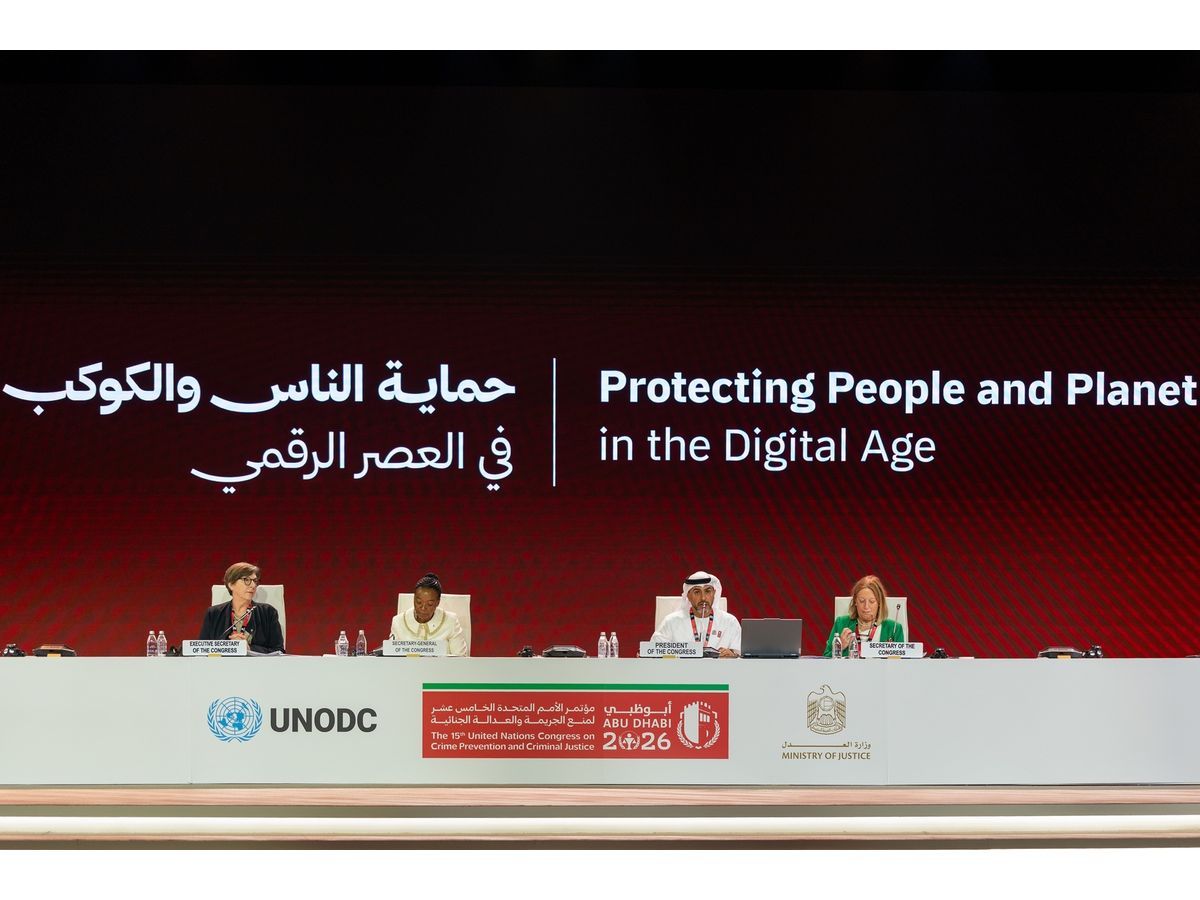
The treatment of artificial intelligence and emerging digital technologies forms a significant component of the Declaration’s modernizing agenda. Recognizing the dual-use nature of digital tools, the document outlines standards for the responsible and rights-respecting utilization of artificial intelligence within criminal justice frameworks, including judicial decision-support systems, biometric tracking, predictive analytics, and evidence processing. Member states affirmed that the deployment of technological innovations in justice administration must strictly preserve human dignity, safeguard procedural rights, ensure algorithmic accountability, and avoid exacerbating existing institutional biases. Concurrently, the text establishes a unified international commitment to combating malicious uses of technology, with focused attention on countering sophisticated cybercrime networks and mitigating converging criminal threats that exploit digital infrastructure.
Complementing its technological focus, the Abu Dhabi Declaration addresses an extensive array of systemic criminal threats that require coordinated international responses. Among the core issues codified within the text are measures to dismantle transnational organized crime syndicates, curtail corruption, and suppress illicit financial flows that undermine national economies and state stability. Member states committed to strengthening mechanisms for cross-border asset recovery, facilitating the tracing, freezing, and repatriation of stolen public funds and criminal proceeds to their countries of origin. The document similarly places heightened emphasis on revitalizing traditional tools of inter-state legal collaboration, calling for streamlined procedures regarding mutual legal assistance, extradition treaties, and reciprocal information-sharing frameworks to prevent jurisdictional arbitrage by illicit actors.
Human-centric justice forms another core structural element of the Declaration, particularly regarding the rights of victims, witnesses, and vulnerable populations navigating legal proceedings. The text includes specific commitments to bolster child-sensitive justice systems, requiring legal environments that are age-appropriate, trauma-informed, and protective of young people in conflict with the law or testifying as victims and witnesses. Furthermore, the Declaration places high priority on advancing the direct participation of women across all tiers of the criminal justice system—from law enforcement and prosecutorial services to the judiciary and ministerial administration—while simultaneously establishing stringent international approaches to combat gender-based violence, support survivors, and eliminate impunity for crimes committed against women and girls.
To bridge the gap between high-level diplomatic consensus and tangible operational outcomes, the opening ceremony served as the platform for the formal launch of Pledge4Justice. Conceived as a dedicated operational mechanism, Pledge4Justice is designed to translate the strategic priorities and political commitments articulated within the Abu Dhabi Declaration into funded, practical initiatives on the ground. By establishing a dedicated framework for voluntary contributions, project matching, and implementation monitoring, the platform seeks to ensure that the resolutions negotiated by diplomats are converted into direct technical assistance, legal training, and institutional capacity-building programs across participating states.
Serving as the inaugural contributor to the new platform, the United Arab Emirates announced the initiative’s foundational pledge, committing up to USD 5 million to support the implementation of the Congress’s mandate. The funding will be disbursed through structured annual contributions of up to USD 1 million spanning the five-year implementation cycle from 2026 through 2031. The multi-year financing structure is intended to provide sustained, predictable resource flows for international technical assistance, institutional development, and justice system reform, with a strategic focus on helping developing jurisdictions strengthen their legal infrastructure and ensure the Congress’s outcomes achieve durable, long-term impact within local communities.
The 15th Congress convenes under the official theme, “Accelerating Crime Prevention, Criminal Justice and the Rule of Law: Protecting People and Planet and Achieving the 2030 Agenda in the Digital Age.” The thematic focus directly links the strengthening of justice institutions to broader international development frameworks, recognizing that the United Nations Sustainable Development Goals—specifically those concerning peace, justice, environmental preservation, and institutional strength—cannot be achieved without secure, equitable, and transparent rule of law structures.
Reflecting this broad and interdisciplinary scope, the Congress’s extensive official agenda features 15 major thematic events and will present perspectives from 93 global speakers across high-level plenary meetings and interactive panels. In parallel with the formal intergovernmental negotiations, the venue is hosting more than 200 side meetings organized by national delegations, international entities, non-governmental organizations, academic institutions, and professional legal associations. These sessions provide specialized forums to examine niche technical issues ranging from wildlife trafficking and environmental law enforcement to the procedural rights of defendants in digital proceedings and restorative justice frameworks.
In addition to the diplomatic and academic assemblies, the ADNEC Centre Abu Dhabi features an international exhibition comprising 38 institutional stands. The exhibition space serves as an operational showcase for national justice ministries, law enforcement agencies, international organizations, and technological developers to demonstrate practical methodologies, specialized training curricula, digital casework tools, and capacity-building models developed to modernize legal administration.
As deliberations continue through October 1, working groups and national delegations are set to engage in specialized committee reviews and technical discussions based upon the newly adopted Abu Dhabi Declaration. The ongoing proceedings in the UAE capital represent a central pivot point for international criminal justice policy, establishing the operational boundaries and cooperative mechanisms through which member states intend to confront the evolving landscape of global crime over the remainder of the decade.