
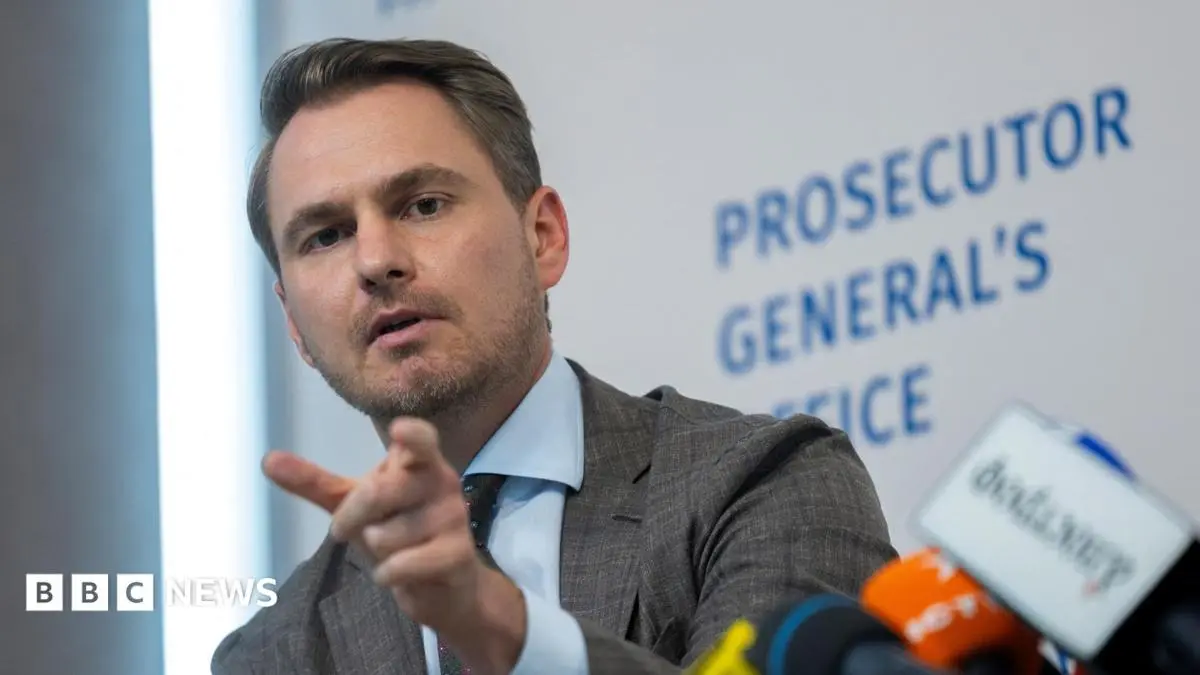
Ukraine’s chief prosecutor, Ruslan Kravchenko, has formally resigned from his position following a high-profile corruption investigation that tied his office to an illegal network of fraudulent call centres and extensive money-laundering operations. The resignation marks one of the most significant judicial and political disruptions in Kyiv in recent months, following intensive search operations conducted over the weekend at his official headquarters by the country’s top independent anti-corruption authorities.
The investigative raid was carried out jointly by Ukraine’s National Anti-Corruption Bureau (NABU) and the Specialised Anti-Corruption Prosecutor’s Office (SAP). According to official statements released by both law enforcement agencies, investigators uncovered evidence detailing a sophisticated financial scheme operated directly by a senior official within Kravchenko’s office. The network reportedly received illegal payments in exchange for shielding criminal call centre operations from police intervention and judicial prosecution.
The illicit operations at the heart of the investigation involved subterranean call centres that executed wide-ranging telephone scams aimed at defrauding victims. According to details established by NABU and SAP, these scam operations generated immense illicit revenues and successfully laundered millions of dollars in assets through clandestine financial channels. Anti-corruption officials stated that the funds obtained from protecting these fraudulent operations were subsequently used to acquire high-value physical assets, including luxury residential property, expensive jewellery, and other high-end valuables meant to disguise the criminal origin of the wealth.
In the immediate wake of the weekend raids, Kravchenko mounted a firm public defense in an effort to maintain his standing. Releasing a public statement on Sunday evening, the chief prosecutor dismissed the claims brought forward by anti-corruption investigators as "completely unsubstantiated." In his initial response, Kravchenko categorically denied any personal wrongdoing or involvement in unlawful activities, insisting that the accusations leveled against his office lacked any factual foundation.
However, less than twenty-four hours after issuing his rejection of the charges, Kravchenko formally submitted his resignation on Monday. In his official resignation letter, the outgoing chief prosecutor referenced his earlier statements rejecting the allegations as unsubstantiated, but explained that stepping down was necessary under the circumstances. Kravchenko stated that he did not wish for his continuing presence as chief prosecutor to be converted into a "tool for political confrontation" during an already fragile political climate.
Upon tendering his resignation, Kravchenko publicly expressed his gratitude to Ukrainian President Volodymyr Zelensky and members of the Ukrainian parliament, thanking them for the "trust" they had placed in him throughout his tenure as head of the prosecutor’s office. Despite the serious nature of the allegations and the high-profile standing of the official involved, President Zelensky has not yet issued any public comments regarding Kravchenko’s resignation or the ongoing anti-corruption proceedings targeting his former office.
The sudden downfall of the chief prosecutor highlights the deep-seated challenge that corruption continues to present to Ukraine’s state apparatus, even as the nation remains engaged in a bitter war against Russian aggression. Throughout the course of the ongoing war, persistent scandals involving allegations of financial misconduct and institutional graft have periodically disrupted Kyiv’s political establishment. These frequent revelations have kept government operations under intense public scrutiny, particularly as several accusations of illicit financial activities have reached into the elevated circles of President Zelensky’s administration.
The primary oversight bodies leading the present investigation—NABU and SAP—were established more than a decade ago as part of a national effort to dismantle systemic corruption and institute transparent, democratic governance. Designed to operate independently of executive and political influence, both anti-corruption agencies were provided with extensive statutory authority to investigate, prosecute, and dismantle high-level financial crimes occurring across government departments, judicial bodies, and public enterprises.
Despite more than ten years of operational history, graft remains a persistent and structural problem across various levels of Ukrainian governance. The recurring emergence of major financial schemes within state institutions underscores the continuing friction between independent anti-corruption investigators and established political interests, keeping the urgency of anti-corruption reform at the center of domestic political debates.
This delicate balance between executive power and anti-corruption independence reached a major crisis point in 2025, when widespread public discontent erupted into nationwide protests across Ukraine. The political unrest was sparked by attempts from President Zelensky’s administration to implement legislative reforms designed to curb and restrict the operational freedom and independence of both NABU and SAP. Citizens gathered in large numbers to protest the proposed measures, viewing any reduction in agency independence as a severe blow to democratic accountability and institutional transparency.
The domestic unrest over anti-corruption reforms quickly escalated into a diplomatic crisis with Ukraine’s key international allies. Ambassadors representing the Group of Seven (G7) nations issued urgent warnings to Ukrainian leadership, stating that any attempts to compromise the independence or authority of anti-corruption bodies would jeopardize international confidence. Furthermore, G7 representatives explicitly warned that weakening these watchdog agencies posed a direct danger to Ukraine’s long-term integration into the European Union.
The international implications of Ukraine’s anti-corruption performance remain critical to its geopolitical future. Ukraine was granted official EU candidate country status under the clear condition that its government deliver concrete, verifiable results in the fight against systemic graft. European officials and international partners have consistently maintained that preserving the integrity and operational autonomy of anti-corruption oversight is an absolute requirement for advancing through the formal stages of EU membership.
Faced with massive domestic protests and firm diplomatic pressure from Western partner nations, President Zelensky ultimately reversed course on the proposed legislative changes. His administration fully reinstated the legal freedoms and institutional autonomy of both NABU and SAP. Nevertheless, despite the official restoration of these protections, persistent questions and debates have remained concerning the executive branch’s ultimate commitment to root-and-branch anti-corruption enforcement.
The investigation into Kravchenko’s office follows another major financial scandal uncovered by independent investigators just last month. NABU revealed that it had successfully exposed an illicit scheme designed to misappropriate more than $3 million (approximately £2.2 million) in Ukrainian national currency. According to investigative findings, the misappropriated state funds were intended to be used to post bail for a former energy minister who was facing criminal charges related to money laundering.
That investigation directly implicated high-ranking personnel within the executive branch. A senior official serving inside President Zelensky’s own presidential office was alleged to have played an active role in facilitating the bail misappropriation plot. Following the public disclosure of the scheme by anti-corruption investigators, the implicated presidential official was swiftly dismissed from his position, further illustrating the political turbulence generated by ongoing anti-corruption enforcement.
The convergence of these high-profile cases—ranging from the illegal diversion of millions in public funds for judicial bail to the institutional protection of scam call centres operating within the chief prosecutor’s office—reflects the complex challenges surrounding Ukraine’s judicial and political structures. As independent investigators at NABU and SAP expand their probes into state institutions, the resignation of Chief Prosecutor Kravchenko serves as a clear indication of the active, ongoing confrontation between anti-corruption authorities and entrenched financial misconduct.
As Ukraine manages the combined pressures of wartime defense and the strict governance standards required for European integration, the fall of its chief prosecutor brings renewed attention to the strength and independence of its anti-corruption oversight. The ability of NABU and SAP to investigate top-tier legal officials demonstrates the reach of the nation’s watchdog agencies, even as the uncovering of money-laundering schemes within the prosecutor’s office shows how deeply rooted these operational networks remain.
With the chief prosecutor’s office now vacant following Kravchenko’s unexpected exit, attention shifts to how parliament and executive leadership will respond to the ongoing criminal probe. As anti-corruption authorities proceed with their investigation into the call centre network and the physical assets purchased with illicit funds, the absence of public commentary from President Zelensky leaves open vital questions regarding the future management of the prosecutor’s office and the broader direction of anti-corruption reforms in Ukraine.