
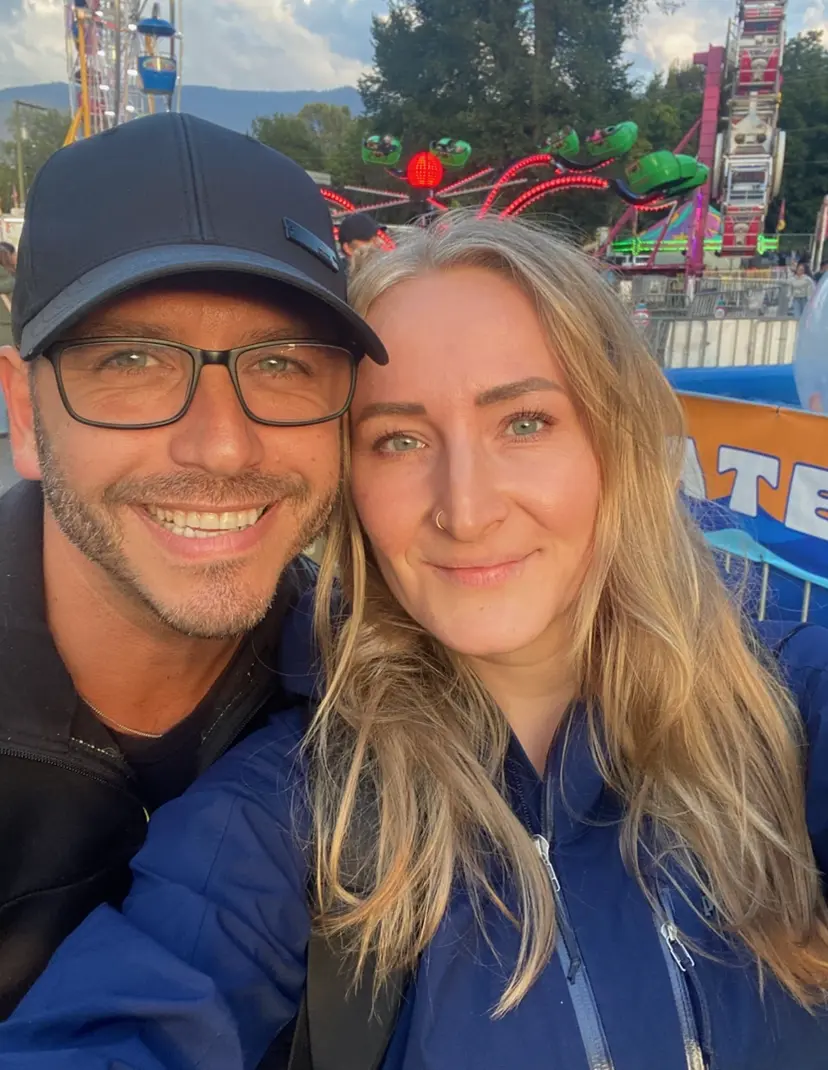
An agonizing 23-day period of uncertainty for the family and loved ones of Kyle Yrjola has come to a heartbreaking close after a volunteer dive team successfully located his body in the deep waters of Okanagan Lake. Yrjola went missing after a tranquil afternoon paddleboarding excursion with his girlfriend, Jaycee Martin, was abruptly shattered by severe weather off Fintry Provincial Park. The recovery was made possible through the specialized intervention of the Hutterian Emergency Aquatic Response Team (HEART), an all-volunteer crew from Manitoba led by Manuel Maendel that deployed deep-water sonar and adapted agricultural navigation technology to locate Yrjola in depths reaching hundreds of feet.
The tragic sequence of events began when Yrjola and Martin set out onto Okanagan Lake near Fintry Provincial Park, directly across the water from Carrs Landing. Conditions at the start of their trip offered no indication of the extreme weather that would follow. Reflecting on the outing weeks after the incident, Martin recalled how idyllic the lake had appeared when they first launched their paddleboards. It was a beautiful day characterized by completely calm waters, perfect weather, and smooth sailing without a single wave in sight.
Encouraged by the serene setting, the couple paddled out toward the middle of the expansive lake. As the sun began to set, they turned their boards around to head back toward the shoreline. They were roughly two-thirds of the way back when the environment unexpectedly shifted. The wind began to pick up, creating choppy conditions on the surface. Initially, the couple believed they could manage the turn of weather and make it back safely.
However, conditions deteriorated rapidly into extreme danger. Recognizing the impending hazard, Martin called out to Yrjola, warning him to hold on tightly as large waves began rolling toward them. Before they could react or stabilize their boards, powerful waves crashed over them, swiftly separating the couple.
The force of the water knocked Yrjola off his board and into the lake. Desperate to help him, Martin attempted to maneuver her paddleboard in his direction to offer support. However, the churning water had swept away their paddles, leaving her board drifting out of reach and rendering her unable to navigate effectively against the swell. Within moments, the turbulent lake overwhelmed the scene, and Martin lost sight of Yrjola as he disappeared beneath or beyond the waves.
Surviving alone in the rising waters, Martin made an emergency call to 911. First responders on the line instructed her to stay on her paddleboard to remain floating and visible to rescuers. Despite the directive, Martin fought against the wind and waves, doing everything within her power to move toward the shore.
Emergency responders eventually located and pulled Martin to safety on the eastern side of Okanagan Lake. Even as police brought her onto their vessel, her focus remained entirely on finding Yrjola. Convinced he might have managed to swim to land or was floating somewhere nearby, she initially resisted leaving the water. She urged officers not to focus on her rescue, emphasizing how close she was to the bank and pleading with them to search the open water for her boyfriend.
In the days that followed, an extensive search ensued, but answers remained elusive. For 23 agonizing days, Yrjola’s family and friends were left in a agonizing state of limbo. Searching Okanagan Lake poses formidable technical challenges for emergency services; in many places, the lake reaches depths of up to 600 feet. At such extreme depths, standard search and recovery methods often prove ineffective, making location efforts notoriously difficult and complex.
The trajectory of the search shifted dramatically when the Hutterian Emergency Aquatic Response Team (HEART) learned of the situation and volunteered to assist. Operating out of Manitoba, the specialized dive team drove for two days across Western Canada to reach the Okanagan, bringing with them specialized underwater detection equipment specifically designed for deep-water recovery operations.
Led by Manuel Maendel, the HEART team operates on a purely volunteer basis, providing specialized aquatic search services free of charge to families in crisis. Maendel explained that the team’s mission is deeply rooted in their Hutterite faith and community values, emphasizing that when someone is in distress, their immediate instinct is to step forward and assist regardless of the location or the difficulty of the task.
Upon arriving in the Okanagan, the HEART team met with Martin to construct a precise search strategy. Relying on Martin’s detailed recollections of the afternoon—including where they had paddled, the trajectory of their return route, and the exact area where the storm struck—the team began plotting search grids across the surface of the lake.
However, because the team reached the site near sundown, active lake scanning had to be postponed until the following morning. The delay added another painful wait for Martin, who was acutely aware of the challenges ahead. The divers carefully managed expectations, explaining that recovering a missing person in waters as deep as 600 feet is never guaranteed. Even with advanced side-scan sonar technology, deep-water searches can yield no results, or occasionally uncover evidence connected to entirely different, historical missing person cases.
To navigate the vast search area with absolute precision, the HEART team utilized an innovative technological approach that adapts commercial farming equipment for maritime search operations. The team equipped their search vessel with high-precision GPS guidance software typically used to navigate farm machinery through agricultural fields.
In farming applications, these GPS systems allow tractors to maintain precise, perfectly straight parallel lines across acres of land without overlapping or leaving gaps. Applied to Okanagan Lake, the technology enabled Maendel and his crew to steer the vessel in hyper-accurate transect lines across the surface while deep-water sonar continuously scanned the lakebed far beneath. The hybrid system was so closely tied to its agricultural roots that the electronic navigation displays inside the boat actually rendered a large farm tractor icon moving across grid maps instead of a standard vessel icon.
Early the following morning, the team launched their vessel onto Okanagan Lake with Martin on board. As Maendel took the helm, Martin and the HEART crew closely monitored the sonar displays as the boat moved slowly and systematically along the charted search lines, scanning the dark depths for any sign of Yrjola.

During the sweep, an anomaly registered on the side-scan sonar screen. Maendel pointed out the distinct shape resting on the lakebed to the team. The visual signature on the monitor was immediately striking; Martin recalled that her heart dropped instantly because the outline on the display looked unmistakably like a human body.
Despite the compelling image on the monitor, sonar scans alone cannot provide definitive visual confirmation. An anomaly detected hundreds of feet below the surface must be verified directly to ensure accuracy. To confirm the finding, the team spent hours on the water preparing and deploying a specialized remotely operated vehicle (ROV)—an underwater camera capable of descending into the deep, lightless environment of the lake floor.
The crew lowered the remotely operated camera down into the deep water toward the coordinates marked by the sonar. As the camera reached the lakebed and transmitted live video back to the surface monitors, the team obtained visual confirmation. The object on the lakefloor was indeed Kyle Yrjola.
The visual confirmation brought a devastating yet crucial end to the 23-day search, providing long-sought answers to Yrjola’s loved ones. Remembering her boyfriend, Martin spoke fondly of his character, describing him as a remarkably kind, cool, and patient individual. She emphasized his extraordinary patience above all else, calling him a wonderful partner, an exceptional best friend, and a genuinely good friend to everyone who knew him.
For Maendel and the members of the HEART dive team, successfully locating Yrjola brought an overwhelming sense of emotional resolution. Maendel expressed that being able to offer physical comfort and tangible support to a grieving family serves as the primary motivation that sustains the team’s ongoing efforts. He noted that the ability to help families find closure fuels their determination to respond whenever the next call for help arrives.
The recovery effort in Okanagan Lake highlights the vital role played by volunteer search organizations. Over the past decade, HEART has operated entirely through third-party donations and private support, offering its specialized technology and expertise to families without financial burden. In that 10-year span, the Manitoba-based volunteer crew has assisted more than 30 families across North America in recovering missing loved ones from deep bodies of water, continuing a dedicated mission of service in the face of profound tragedy.