
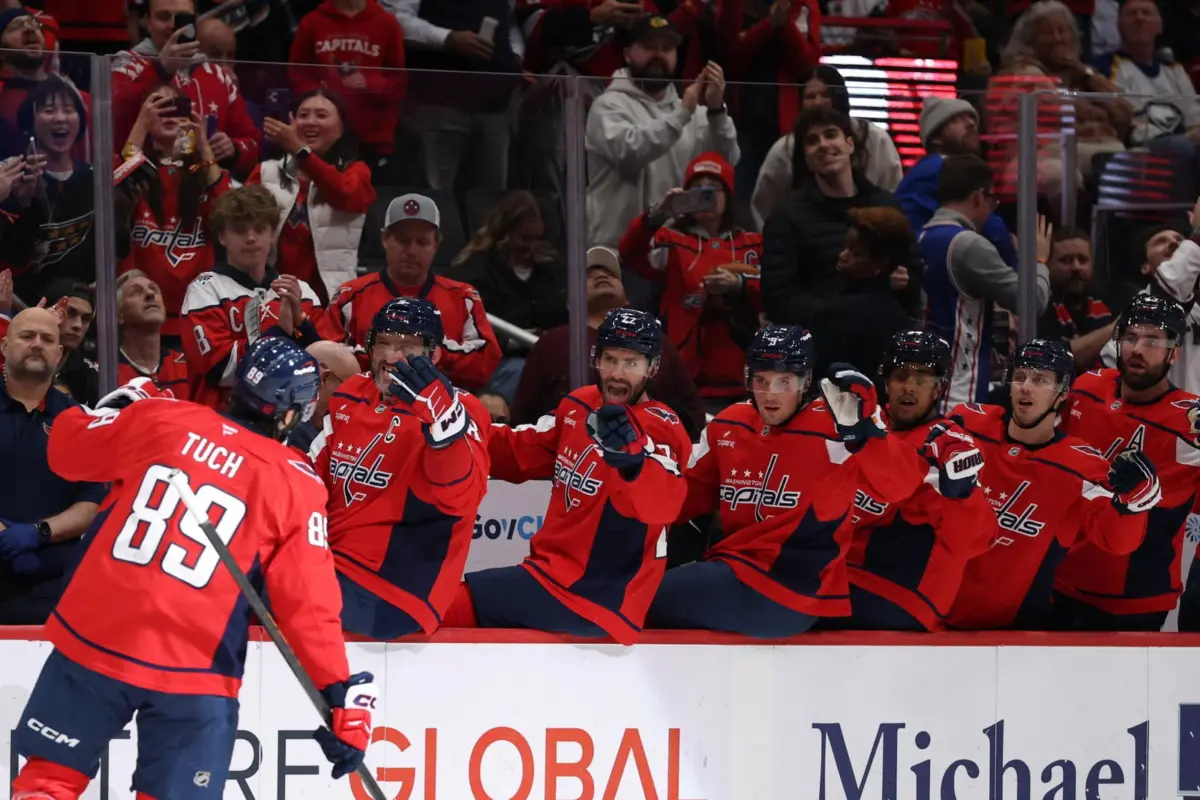
The Washington Capitals entered the 2024-25 NHL campaign carrying the weight of arguably the most impressive off-season of any franchise in the league. General manager Chris Patrick and the front office executed a series of shrewd moves designed to revamp the roster, inject fresh talent, and position the storied franchise as a legitimate force in the Eastern Conference once again. Expectations were sky-high, and for a brief moment out of the gate, the Capitals looked every bit the part of a contending powerhouse.
However, a middling and unpredictable start to the regular season has quickly brought those grand aspirations back down to earth, raising some intriguing questions about the true composition and resilience of the roster. What has been ailing the Caps during their early-season wobbles, and what adjustments do they need to make to take the next step forward in a fiercely competitive Metropolitan Division?
A Strong Start Followed by a Disturbing Crash
Coming out of the gate, the Capitals looked remarkably sharp, posting a promising 3-1-0 record to begin the year. The offense was clicking, the defensive pairings were finding their footing, and the new-look roster seemed to be gelling much faster than many hockey analysts had anticipated.
Yet, that early momentum evaporated almost as quickly as it arrived. The Capitals crashed back to earth in a concerning fashion, dropping three of their next five games—all coming in regulation time. The undisputed nadir of this early-season swoon came on October 20, when Washington suffered an uninspired 5-2 defeat at the hands of the lowly Los Angeles Kings.
The abrupt shift from a crisp, high-tempo team to a disjointed group struggling to sustain pressure left fans and analysts alike wondering why Washington has wobbled rather than firmly asserted themselves as one of the elite clubs in the Eastern Conference.
The Pierre-Luc Dubois Effect and Center Depth Concerns
One major explanation for that sudden dip in performance is health and personnel availability. Veteran center Pierre-Luc Dubois, acquired to be a foundational piece of the team’s middle-six forward group, missed all five of those games during the team’s rough patch.
Dubois was held off the scoresheet in his eventual return to the lineup against the Buffalo Sabres, but his sheer presence on the ice helped steady the ship and guide the Capitals back into the win column with a hard-fought 4-3 overtime victory. It was a stark reminder of how thin the margins can be for a team relying heavily on specific structural pieces to play their preferred style of hockey.
However, Dubois’ brief absence also highlighted legitimate, underlying questions regarding the team’s overall depth down the middle. While players like Jenner have spent time playing on the wing, the Capitals’ main center group—featuring Dubois, Dylan Strome, Ilya Protas, and Justin Sourdif—simply does not feature the same elite star power and sheer horsepower that opposing Metropolitan Division teams possess through the middle of the ice.
That is not to say those four pivots lack value or professional capability; each brings specific elements of skill, tenacity, and hockey IQ to the table. But when fans and front offices compare Washington’s center depth to what the New Jersey Devils boast with Jack Hughes and Nico Hischier, or what the Pittsburgh Penguins trot out with future Hall of Famers Sidney Crosby and Evgeni Malkin, the talent gap becomes glaring. It is precisely this disparity in elite-tier center depth that may be preventing Washington from taking that final, difficult step required to transform into a true powerhouse in the East.

Roster Balance: Wing Depth, Defensive Growth, and Goaltending Questions
While the center ice position presents structural challenges, the Capitals boast considerable depth and versatility on the wing. Furthermore, their defense corps has been noticeably strengthened by the encouraging evolution of youngster Cole Hutson alongside the steady, physical veteran presence of Jakob Chychrun. These backend additions have given Washington moments of high-end puck-moving capability and defensive grit.
Yet, other areas of the roster remain major question marks. The goaltending tandem of Logan Thompson and Charlie Lindgren has been average at best through the opening weeks of the season. Compounding matters further, Thompson is currently sidelined due to an injury, meaning Washington’s depth between the pipes is about to face a major, high-stakes test as they navigate a dense portion of the schedule.
Fortunately, the front office retains some financial maneuverability. The Caps currently possess roughly $2.3 million in available salary cap space, giving general manager Chris Patrick the necessary flexibility to explore the trade market and make at least one notable roster addition at some point down the road if the current group fails to stabilize.
Finding an Identity in a Brutal Metropolitan Division
Even with financial flexibility and trade options, it increasingly feels like Washington is going to need time to shake off the helter-stetker tendencies that have defined their early games and evolve into a consistently competitive unit.
The landscape of the Metropolitan Division offers no margin for error. Following significant roster shakeups around the league—including star goaltender Connor Hellebuyck being traded to the New Jersey Devils after a lengthy and highly publicized holdout—the competition for playoff positioning is expected to be ferocious. The Devils, along with other division rivals, will undoubtedly be battling the Capitals tooth and nail down the stretch.
By the time those crucial late-season divisional matchups arrive, Washington needs to have established a much firmer team identity. More importantly, they will need consistent, nightly efforts across every single line and defensive pairing. Nobody is going to hand them a post-season berth out of goodwill. As the Capitals painfully discovered last year, it did not take many missed points in the standings to ultimately push Washington out of the playoff picture altogether.
The primary task ahead of head coach and his staff is glaringly clear: the Capitals have to clamp down on their defensive play. Currently, Washington’s defense ranks 19th in the entire NHL, surrendering an alarming average of 3.22 goals-against per game. While a few high-flying teams around the league can temporarily mask defensive deficiencies with an overwhelmingly dominant offensive attack, the Capitals are currently built to win through structured, tight-checking hockey combined with opportunistic scoring.
Ultimately, this means Washington has to elevate their overall standard of play on both sides of the puck. Only time will tell how quickly this revamped roster develops chemistry, addresses its structural vulnerabilities, and settles onto a more successful path night-in and night-out.