
As financial markets continue to defy expectations, hitting new heights and triggering waves of anxiety among investors, the perennial question returns: How about that stock market? It is a phrase that market watchers have dusted off repeatedly over the decades as the economy continually surprises both optimists and pessimists. When stocks crash, investors panic over shrinking retirement nest eggs. Yet, when the market climbs to record valuations, a different kind of worry sets in—the lingering dread that an even larger crash is looming on the horizon, particularly when the current economic boom is fueled by the frenzied excitement surrounding artificial intelligence.
For those who remain blissfully tuned out of the daily financial drama, life goes on as usual. But for those watching the ticker tapes, the narrative centers on whether the AI mania is simply moving too fast, setting the stage for a modern iteration of the dot-com crash of the early 2000s. That particular historical boom happens to hold deep personal significance for early retirement advocate and internet financial commentator Mr. Money Mustache, whose early career was supercharged by the dot-com era before the subsequent crash nearly derailed his job and citizenship application.

Addressing ongoing inquiries about the current investment cycle, the veteran financial writer recently debuted a presentation at Camp FI Midwest, with plans to deliver a refined version at the upcoming Bogleheads conference in November. The core message of these discussions tackles a fundamental human question: Can we trust the long-term trajectory of our finances, or will the AI bubble ultimately ruin our collective retirement plans?
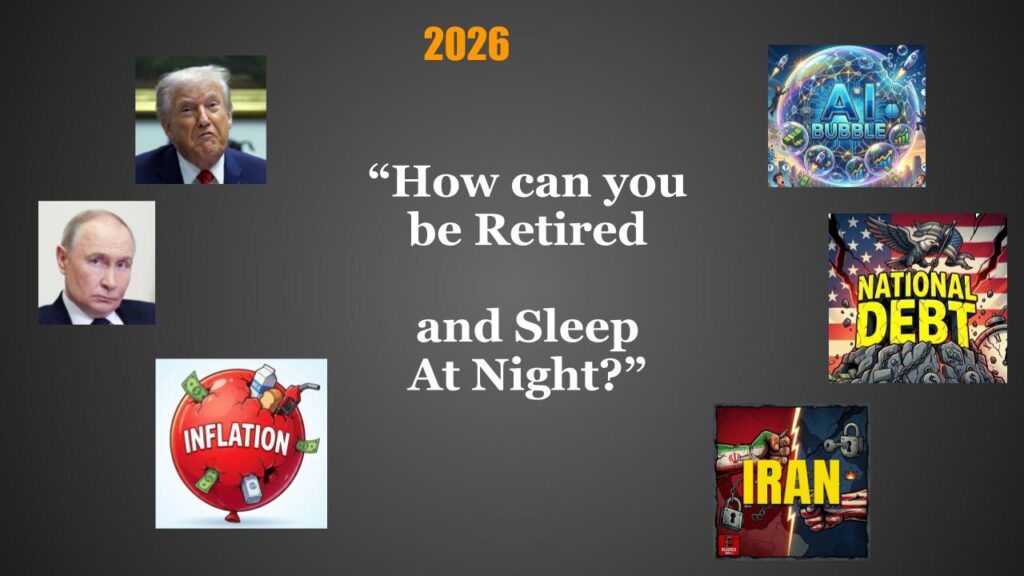
Reflecting on more than two decades of early retirement, the author notes that comfort and routine can easily be disrupted by external anxieties. Friends and colleagues frequently pose variations of a deeply unsettling question: How can anyone remain retired and sleep peacefully at night with everything happening in the world? A glance at the daily news cycle offers no shortage of alarming headlines, from international political tensions and rising national debt to inflation and ongoing geopolitical conflicts.

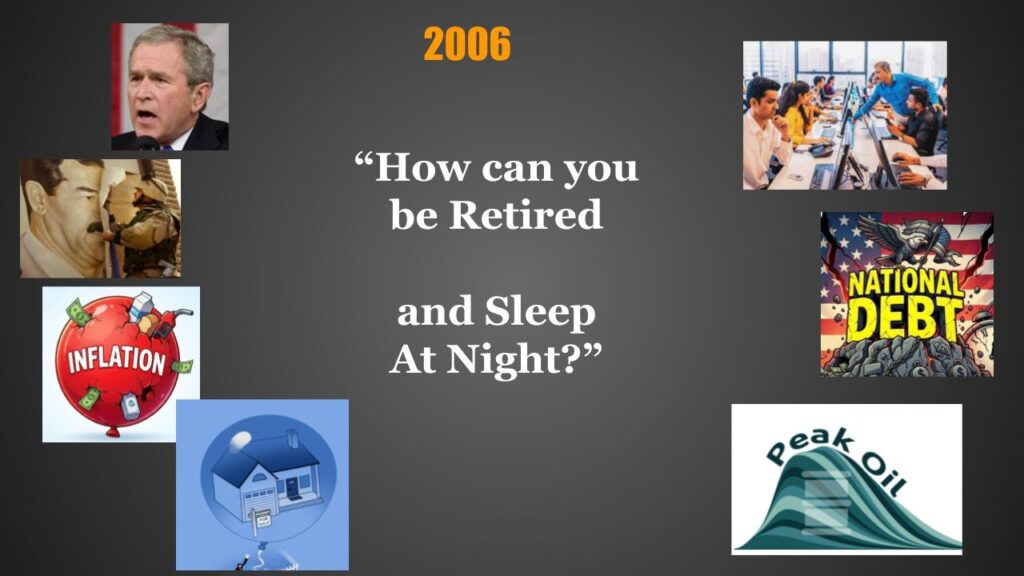
Yet, looking back reveals that human anxieties are remarkably consistent across generations. Decades ago, during the mid-2000s, society was gripped by an entirely different set of fears. Back then, people worried about geopolitical leaders, Middle Eastern conflicts, surging national debt, inflation, and an overvalued housing market that eventually triggered the Great Financial Crisis. There were pervasive fears that jobs would be permanently outsourced overseas, alongside intense debates over peak oil and the impending depletion of fossil fuels.
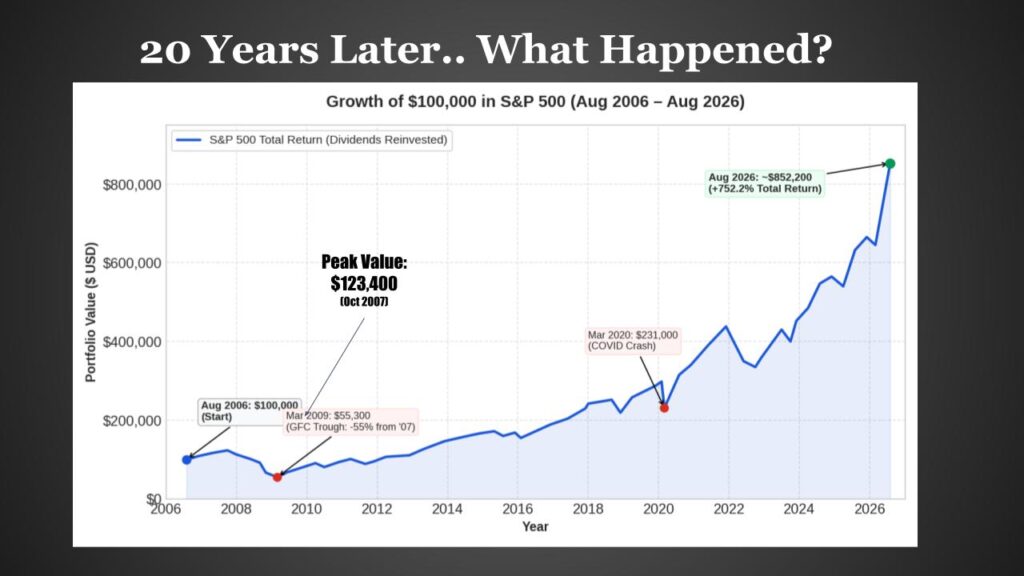
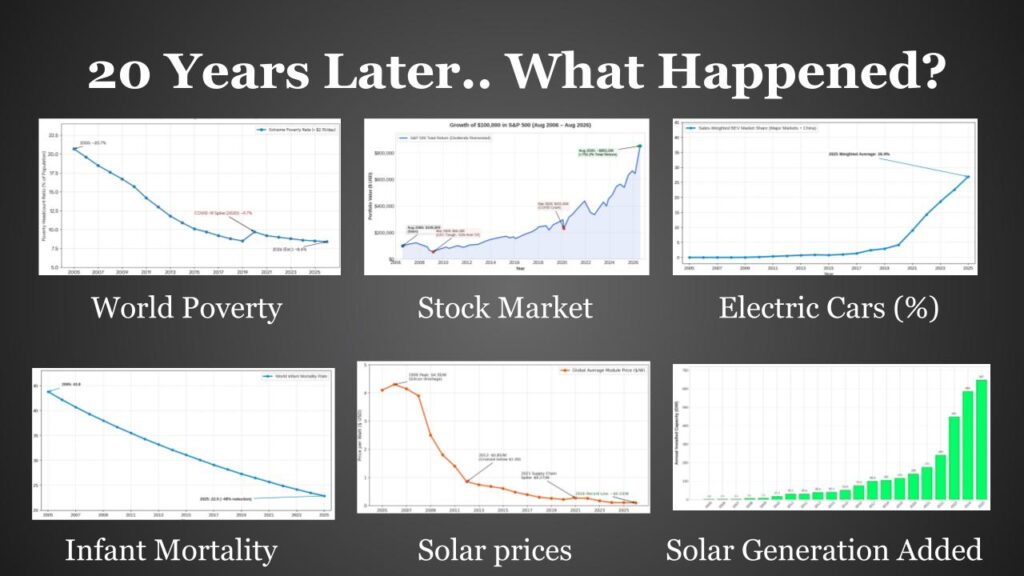
Despite the severity of the 2008 financial crisis—the largest economic downturn since the Great Depression—historical perspective reveals a startling reality. Even through the worst of the crash, and later the 2020 pandemic downturn, a foundational long-term investment in the broader market continued to grow substantially over a twenty-year horizon. Alongside financial growth, global living standards improved dramatically. Over a span of two decades, extreme poverty rates dropped significantly, infant mortality rates were cut in half, and clean energy adoption surged as the cost of solar panels plummeted, transforming solar power into a dominant source of new energy generation alongside a rapid rise in electric vehicle sales.

Examining these historical parallels highlights a recurring choice between anxiety and optimism. Financial media thrives on generating scary narratives about looming catastrophes, whether it is the US national debt, housing bubbles, or artificial intelligence spinning out of control into a malevolent superintelligence. However, these pessimistic projections often overlook a fundamental economic truth: true prosperity does not originate from abstract numbers on computer screens within the financial system; rather, prosperity stems directly from productivity.
The core principle remains that capitalism is inherently volatile and prone to wild cyclical swings. Beneath the choppy surface waves of the market, real people engage in tangible work, creating genuine innovations and practical tools. The economic system itself is a human invention, and when numbers on a ledger falter or systems crash, societies routinely adapt and rebuild. The human toolkit for boosting productivity, raising living standards, and fostering economic growth remains intact, driven by continuous technological advancement.
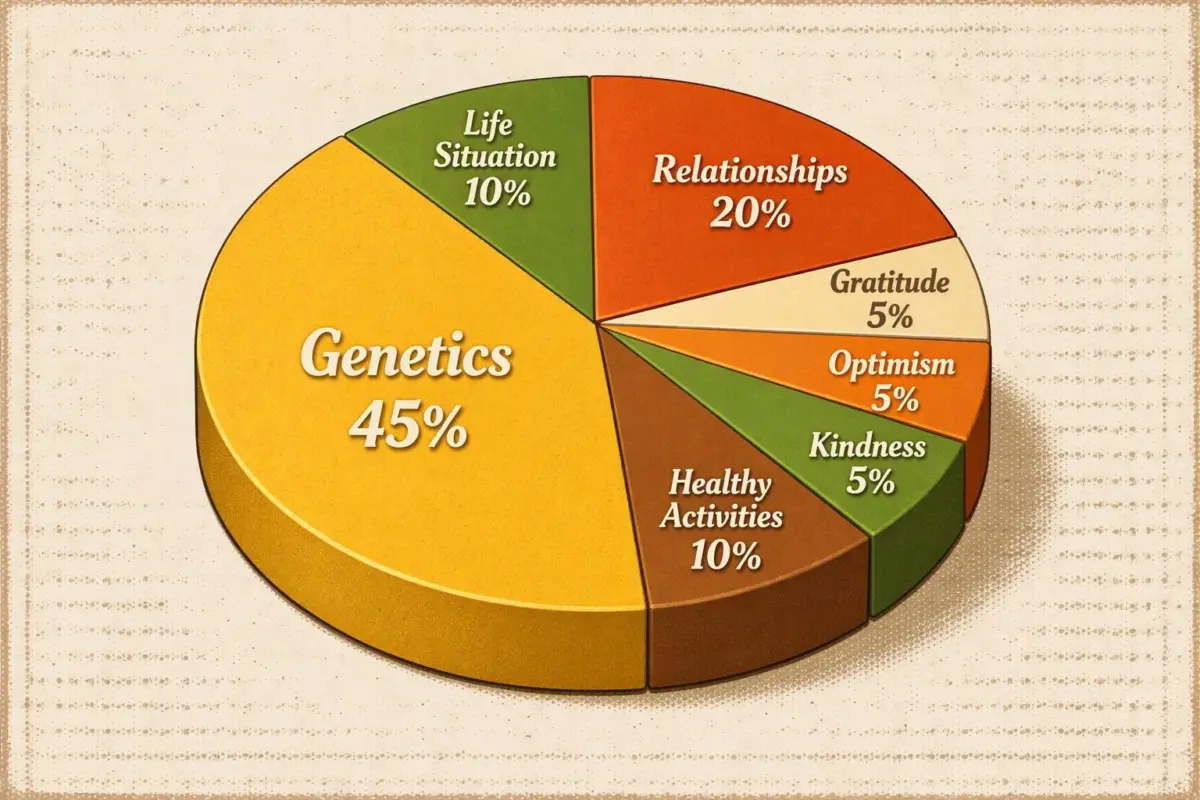
Beyond economic productivity and financial prosperity lies the broader pursuit of human happiness. In developed nations, basic material needs and minimum standards of living were surpassed decades ago. True life satisfaction depends on factors largely within personal control, such as cultivating strong relationships, practicing gratitude, maintaining an optimistic outlook, and engaging in healthy, outdoor physical activities.
Yet, even among seasoned financial independence advocates who understand these principles intellectually, a pervasive background fear often persists. Psychologically, humans are essentially sophisticated danger-detection machines. Evolutionarily, this constant vigilance served to protect early humans from predators, disease, and starvation. However, once immediate physical dangers are successfully managed, the human brain continues scanning the environment for new threats, effectively moving the goalposts of anxiety.
When basic survival needs are met, people begin worrying about social standing, community integration, macroeconomic trends, tax strategies, and even administrative regulations like required minimum distributions for individuals who have accumulated substantial retirement assets. Overcoming this cycle of persistent anxiety requires self-awareness and an understanding of personal history. Childhood experiences, family environments characterized by scarcity mindsets, or past traumas often manifest as irrational financial fears in adulthood.
Identifying these specific fears and examining worst-case scenarios through rational analysis helps demystify them. Taking concrete action is one of the most effective ways to neutralize anxiety, transforming the unfamiliar into the familiar and building genuine resilience. When individuals develop broad mental, physical, and emotional capabilities to adapt to changing circumstances, the future becomes significantly less intimidating.
Another vital step in managing financial and existential anxiety involves filtering out the daily barrage of sensationalized news media. Modern news organizations rely heavily on highlighting the most alarming stories of the day to capture attention, which can easily poison an individual’s mental well-being. True progress and positive change are driven not by passive consumption of alarming broadcasts, but by intentional, positive behaviors, physical movement, continuous learning, and supportive social connections with optimistic peers.
Viewing major life changes and macroeconomic shifts through the lens of experimentation changes the dynamic entirely. Whether addressing personal milestones like switching careers, relocating, or entering early retirement, treating life’s transitions as experiments removes much of the emotional weight.
Applying this experimental mindset to the current era of artificial intelligence reframes the technology from a looming threat into a fascinating subject of study. While AI undoubtedly represents a major, disruptive change that is already altering entry-level office roles and transportation industries, it functions fundamentally as a cognitive tool designed to enhance efficiency and productivity. Much like the internet and the mobile revolution before it, technological innovation simultaneously displaces specific tasks while lowering costs and giving rise entirely to new industries and economic opportunities.
Ultimately, artificial intelligence and broader market fluctuations present individuals with ongoing choices. Rather than succumbing to fear and doom-scrolling through negative headlines, recognizing anxiety as an internal emotional response rather than an objective reflection of reality allows for more constructive engagement. As many seasoned independent thinkers and community members observe, everything truly valuable on the other side of life—including peace of mind, financial security, and personal fulfillment—lies directly on the other side of fear.