
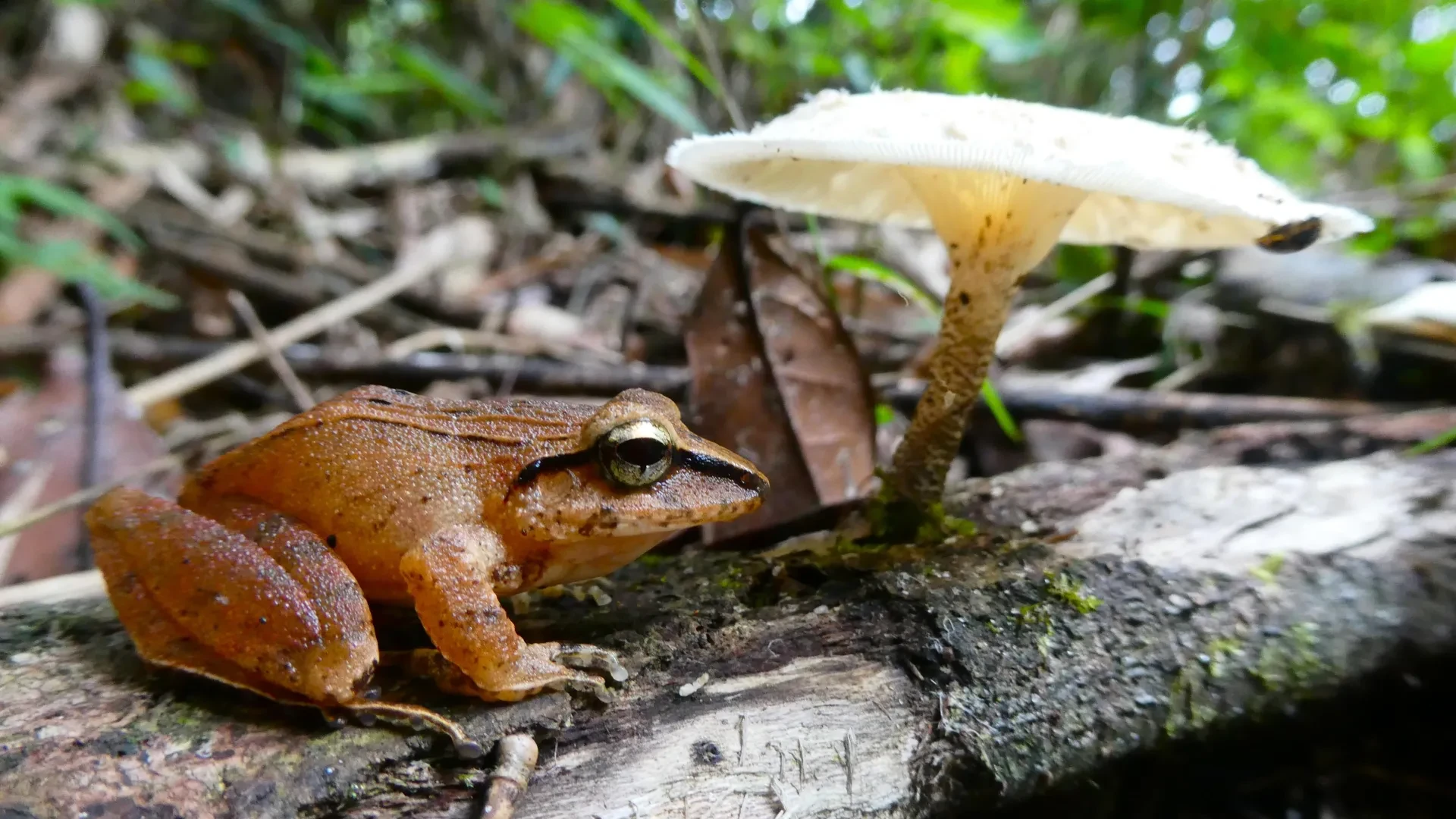
For nearly half a century, conservation scientists and wildlife epidemiologists have wrestled with a deeply unsettling ecological mystery: why did frogs begin vanishing in droves from Brazil’s Atlantic Forest, one of the most biologically rich regions for amphibian diversity on the planet? Beginning quietly in the 1970s, researchers documented severe, dramatic population declines across various species. Yet, despite decades of field observations and ecological studies, the exact trigger behind these catastrophic losses remained frustratingly elusive, transforming the event into one of the most enduring cold cases in wildlife epidemiology.
Now, a team of researchers from the Center for Conservation Genomics at the Smithsonian’s National Zoo and Conservation Biology Institute (NZCBI) and Pennsylvania State University (PSU) has uncovered compelling, long-sought evidence pointing directly to a deadly fungal disease. Their findings, published in the scientific journal Molecular Ecology, offer a definitive look into a historical ecological disaster that changed the landscape of South American wildlife forever.
The suspected culprit behind the decades-old mystery is chytridiomycosis—commonly known simply as chytrid—a devastating infectious disease caused by the microscopic fungus Batrachochytrium dendrobatidis. Scientific consensus suggests that this lethal pathogen originally emerged in Asia before spreading rapidly across the globe throughout the 1970s and 1980s. Tragically, the fungus was entirely unknown to science at the time, and it was not formally identified and described until 1999. By the time researchers even knew the pathogen existed, hundreds of amphibian species worldwide had already been pushed to the brink of extinction, with some disappearing completely before a diagnosis could be made.
Because so many populations collapsed long before the discovery of the fungus, proving causation has remained a monumental hurdle for modern researchers. "After almost 50 years, we still aren’t confident what caused many historical amphibian die-offs, making these declines some of the most enduring cold cases in wildlife epidemiology," explained Jack Boyette, an NZCBI graduate fellow and doctoral candidate at PSU who spearheaded the new research initiative.
A 50-Year-Old Mystery in Brazil’s Atlantic Forest
One of the most prominent focal points of this historical puzzle is the Boracéia Biological Station, nestled within the lush expanse of Brazil’s Atlantic Forest. It was here that local amphibian populations experienced severe, sudden declines between 1979 and 1982, baffling ecologists who monitored the region.
Over the years, various hypotheses were floated to explain the abrupt disappearance of the area’s rich frog fauna. Some researchers suggested that broader environmental pressures, such as shifting climate patterns or unusually extreme weather events, might have acted as the primary catalyst. However, the newly published findings provide robust empirical evidence that an emerging, highly aggressive fungal pathogen was actively sweeping through the region at the exact same time the populations were collapsing.
"While environmental factors could have played a role, our findings most directly implicate the chytrid fungus, revealing that regional invasion of the pathogen coincided with these unexplained amphibian disappearances," Boyette noted, underscoring how genetic data has finally helped untangle overlapping environmental variables.
To investigate the sequence of events that occurred decades ago, the research team turned to an invaluable, albeit unconventional, repository of evidence: frogs preserved in museum collections. The Smithsonian’s National Museum of Natural History houses an extensive archive of biological specimens collected by William Ronald Heyer, a former curator of amphibians and reptiles. Heyer had conducted five distinct collecting expeditions to Boracéia, meticulously gathering specimens during two separate trips in the 1970s—just before the major population declines struck—and across three trips in the 1980s, after the devastating die-offs had already taken place.
These meticulously preserved specimens provided the scientists with a rare, time-capsule opportunity to examine the ecosystem immediately before and after the mysterious disappearances. By testing specimens gathered across these different decades, the research team could pinpoint precisely when the pathogen arrived in the area and how rapidly it managed to spread through native amphibian communities. In total, the team analyzed biological samples from more than 370 preserved amphibians representing 17 distinct species, scanning them for molecular traces of chytrid infection and mapping how frequently the fungus appeared over time.
Museum Specimens Reveal a Deadly Fungal Outbreak
The laboratory results delivered a striking and clear narrative of invasion. None of the amphibian specimens collected prior to 1979 showed any physical or molecular evidence of chytrid infection. In sharp contrast, among the specimens collected during the 1980s, more than half tested positive for the fungus. This sudden and dramatic spike strongly indicates that the pathogen arrived and tore through the local amphibian community right as frog populations were experiencing their catastrophic collapse.
Yet, as the researchers dove deeper into the data, they uncovered a surprising and counterintuitive pattern. Species that had suffered the most severe population declines in the field showed no detectable signs of the infection in the preserved museum specimens. Meanwhile, other species whose populations remained relatively stable and resilient frequently carried the pathogen in their tissues.
At first glance, these findings seemed to contradict the hypothesis that chytrid was the primary driver of the disappearances. However, the researchers believe the answer lies in species-specific physiological differences in how individual animals respond to the disease. It is entirely plausible that certain frogs possessed natural biological mechanisms that allowed them to tolerate the infection, enabling them to survive even while carrying the pathogen. Highly vulnerable species, on the other hand, may have succumbed to the disease so rapidly after initial exposure that infected individuals died quickly, leaving very few or no diseased specimens behind for historical collectors to find.
"It’s important to keep in mind that not all species suffered catastrophic losses at Boracéia," Boyette said. "The species that didn’t decline may have naturally tolerated the fungus, allowing them to become infected without suffering mass mortality. By contrast, the species that declined most dramatically may have been so susceptible that infected frogs died before Heyer could collect them."
Taken together, these results paint a picture of a pathogen sweeping rapidly through a native frog population that had virtually no prior evolutionary exposure or immunity, resulting in devastating outcomes for species unable to withstand the physiological shock of the infection.
Decades-Old Collections Help Solve a Wildlife Cold Case
For Michael Campana, a genomicist at NZCBI who contributed significantly to the research, the study highlights the extraordinary, often unforeseen scientific value held within natural history museums. Biological specimens preserved decades ago frequently contain molecular evidence that scientists at the time had no technological capacity to recognize or analyze. Today, advanced genomic testing methods allow researchers to revisit historical archives and reconstruct disease outbreaks that occurred long before the responsible pathogens were even discovered by science.
"Museum collectors could not have anticipated how important their collections would be to our modern conservation challenges, but without them, we would never be able to detect pathogens that went unnoticed for decades and reconstruct disease outbreaks that would otherwise remain a mystery," Campana remarked.
Gaining a clearer understanding of these historical outbreaks does more than just solve past ecological mysteries; it equips conservationists with critical knowledge to anticipate and mitigate future biological threats. A prime contemporary concern involves another closely related fungal pathogen, Batrachochytrium salamandrivorans, which is actively threatening vulnerable salamander populations across Europe and poses a severe, looming danger to native salamander species in North America. By meticulously reconstructing how earlier fungal diseases emerged, moved across landscapes, and impacted various species differently, researchers hope to sharpen their predictive tools and respond rapidly to emerging wildlife diseases before they trigger widespread ecological devastation.
Brazil’s Frogs Show Surprising Signs of Recovery
Despite the staggering historical losses recorded decades ago at Boracéia, the team’s ongoing field research offers an encouraging glimpse of resilience and recovery. Collaborating closely with researchers from the University of São Paulo, the scientific team conducted six separate field surveys at Boracéia between 2022 and 2024 to assess the state of the modern amphibian populations living there today.
Out of the 17 distinct species documented in Heyer’s historical museum collections from the 1970s and 1980s, the researchers successfully located 12 during their recent field expeditions. The remaining five species were not found, leaving their current status uncertain and sparking ongoing concern among biologists that some localized species may have vanished from the site permanently.
Nevertheless, the modern surveys indicate that the vast majority of amphibian species at Boracéia have managed to persist and rebound in the decades following the severe declines of the early 1980s. Crucially, the fungus itself has not vanished from the environment. Chytrid infections are still detectable among local frogs today, but the prevailing pattern of infection suggests that species once heavily battered by the disease may have evolved or developed greater physiological tolerance over successive generations. This increased generational tolerance helps explain how many populations have managed to survive and recover despite ongoing, persistent exposure to the pathogen in their natural habitat.
The findings underscore a vital distinction in wildlife disease dynamics between mere infection and actual mortality. An animal species can harbor a dangerous pathogen without suffering catastrophic population losses, particularly if its members possess the physiological capacity to tolerate the infection.
What the Discovery Means for Future Amphibian Survival
While the accumulated evidence strongly implicates chytrid in the historic die-offs at Boracéia, the researchers emphasize that their conclusions apply specifically to this localized site. The results cannot be automatically extrapolated to explain amphibian disappearances across other distant regions of the expansive Atlantic Forest.
Even with these geographical limitations, the study provides a compelling, evidence-based solution to a longstanding local wildlife mystery. It demonstrates how modern scientists can creatively leverage historical museum specimens to reconstruct disease outbreaks that would otherwise remain poorly understood footnotes in conservation history.
Meanwhile, the investigation into the mechanics of these historical outbreaks is far from over. Researchers are currently analyzing DNA extracted directly from the museum specimens to identify the specific genetic pathways and mechanisms that influenced how different amphibian species responded to chytrid infections in the past. These ongoing genomic analyses could soon reveal why certain species were devastated while others managed to endure.
In parallel, separate conservation projects are beginning to utilize ancient environmental DNA to fill remaining gaps in historical specimen records. This cutting-edge approach involves searching for trace genetic material left behind by organisms in their surrounding soil and water, potentially yielding evidence of species and pathogens that were never directly collected by historical researchers. Combined, these scientific efforts are steadily building a clearer, more comprehensive history of how chytrid emerged, spread, and reshaped amphibian biodiversity over the past century. By uncovering the biological adaptations that enabled some frogs to survive and recover, scientists hope to gain invaluable insights that will aid in protecting vulnerable wildlife species from future fungal epidemics.