
Voting in the 2026 United States midterm elections has entered its final and most decisive phase, as the first polling stations closed their doors on Tuesday evening, launching a rolling nationwide count that will determine the composition of Congress and key state governments.
The earliest poll closures occurred at 23:00 GMT (6:00 p.m. Eastern Time) in eastern portions of Indiana and Kentucky. These initial closures represent the starting bell for an election night that will extend over several hours as time zones across the continental United States, Alaska, and Hawaii systematically complete voting operations.
Across the country, millions of Americans cast their ballots amidst a turbulent election day marked by widespread voter participation and significant weather disruptions in multiple regions. Severe weather systems swept through several states during voting hours, creating operational challenges for local poll workers and impacting logistics at designated polling sites. Despite these environmental factors, voters continued to turn out, forming lines at schools, community centers, and municipal buildings to participate in the democratic process.
Reporting from Leena Fraihat, Mahmoud Sayed, and Ali Mustafa highlights that while the first returns are beginning to trickle in from early-closing precincts, millions of voters in western states continue to cast their ballots as polling places remain open into the night.
Poll closures begin in Indiana and Kentucky
The official conclusion of voting began at 23:00 GMT in select eastern counties of Indiana and Kentucky, two states that straddle the boundary between the Eastern and Central time zones. Because local laws dictate that polls close based on local time, portions of both states were the very first in the nation to finish voting, while western counties in the same states remained open for an additional hour.
This staggered closing schedule is a defining feature of American presidential and midterm elections. Due to the vast geographical expanse of the United States, spanning six distinct time zones from the Atlantic to the Pacific and beyond to Hawaii and Alaska, nationwide poll closures occur in distinct waves over a six-hour window.
Following the initial closures in Indiana and Kentucky, subsequent waves of closures will roll across the Eastern Seaboard, encompassing key battleground states, before moving into the Central, Mountain, and Pacific time zones. The final voting locations in Alaska and Hawaii will complete the process hours later, long after initial returns from eastern states have begun to populate official dashboard feeds.
Election administrators in counties where polls have closed immediately shifted focus from managing voter lines to securing voting equipment and initiating the initial vote tabulation. Under state laws across the country, precinct officials must ensure that any voter who was physically in line prior to the official closing time is permitted to cast their ballot, regardless of how long the queue may stretch past the deadline.
Severe weather impacts election day operations
Beyond the political stakes, Election Day 2026 was shaped by severe weather conditions that disrupted voting operations across several states. Weather fronts brought localized heavy rain, strong winds, and severe storms to multiple regions, complicating travel for voters and creating operational headaches for local election boards.
In impacted areas, severe conditions caused temporary disruptions, including localized power outages and transportation delays that affected both voters arriving at precinct locations and poll workers managing equipment. Local election officials in several jurisdictions were forced to implement contingency plans to maintain continuous operations.
To keep polling places functional during storm-related disruptions, local authorities deployed backup generators to sites experiencing electrical outages, reassigned staff to handle long queues caused by weather delays, and adjusted building operations to accommodate voters seeking shelter from torrential rain. In regions facing severe weather warnings, precinct leaders emphasized voter safety while taking steps to preserve the integrity and security of physical voting machines and paper ballots.
Under standard election protocol, state codes provide legal mechanisms for election administrators and local courts to extend polling location hours if severe weather or emergency utility failures cause significant operational delays during normal voting hours. State election directors actively monitored weather patterns throughout the afternoon to ensure that every eligible citizen retained a fair opportunity to cast a vote despite localized weather challenges.
Atmosphere at polling places across the nation
Despite localized atmospheric disturbances and political tension, polling stations across the nation showcased traditional scenes of local civic participation. Volunteers, poll workers, and voters gathered at neighborhood sites, transforming local gymnasiums, church halls, fire stations, and public libraries into active democratic spaces.
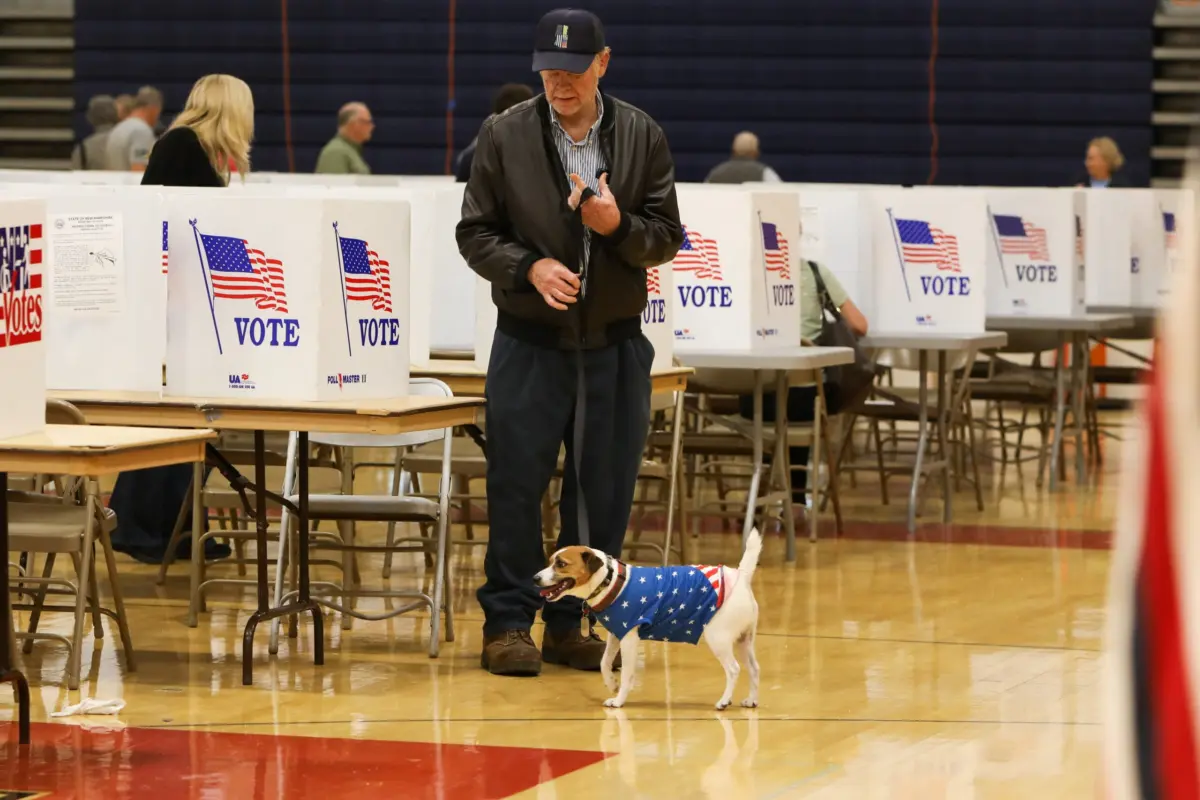
In many communities, local civic traditions were on full display. Polling locations in states such as New Hampshire saw familiar election day scenes, including voters arriving with family members and companion animals. Photographs from polling sites across New Hampshire captured voters bringing their dogs along to polling places, reflecting a relaxed, neighborhood atmosphere amidst the formal mechanics of voting.
Behind the scenes, the smooth execution of Election Day relied on hundreds of thousands of poll workers—predominantly local residents who undergo training in the weeks leading up to the election. These workers are responsible for checking voter identification according to specific state laws, issuing paper ballots or managing digital voting terminals, assisting voters with disabilities, and enforcing rules regarding non-partisan buffer zones around polling site entrances.
Bipartisan teams of election watchers and independent observers were also present at many polling facilities nationwide, observing procedural compliance and ensuring that voting regulations were rigorously maintained from the opening of doors in the early morning until the final seal was affixed to ballot drop boxes at closing time.
High stakes across congressional and state races
The 2026 midterm elections serve as a major national constitutional benchmark, coming precisely two years into the current presidential term. Midterm contests traditionally function as a dynamic referendum on the sitting presidential administration, federal legislative policies, and economic conditions across the country.
At stake in this election cycle are all 435 voting seats in the United States House of Representatives, where members serve two-year terms, as well as approximately one-third of the 100 seats in the United States Senate, where senators serve staggered six-year terms. The outcome of these congressional races will directly determine which political party holds the majority in each chamber, thereby shaping the federal legislative agenda, committee leadership, subpoena power, budget negotiations, and judicial confirmation processes for the next two years.
Beyond the federal battle for Capitol Hill, state-level elections held simultaneously carry immense policy weight. Dozens of state governorships are on the ballot, alongside elections for state attorneys general, secretaries of state, and thousands of state legislative seats. State leadership plays a vital role in setting policy on economic development, education, environmental regulations, public safety, and state constitutional law.
Additionally, voters in numerous states weighed in on ballot initiatives and direct constitutional amendments addressing key social, economic, and procedural issues. These citizen-driven measures allow voters to directly enact laws or amend state constitutions independently of state legislatures.
The vote-counting process and expectations for results
With polling locations beginning to close, focus turns entirely to the multi-stage process of ballot tabulation. Election administrators consistently emphasize that while unofficial early returns appear rapidly on public tracking portals, comprehensive and verified election results require time to process accurately.
The speed at which results are reported varies significantly by state due to differing election laws governing the handling of early voting and mail-in ballots. In some states, election workers are legally permitted to process, scan, and verify mail-in ballots days or weeks before Election Day, allowing these tabulated counts to be released shortly after polls close. In other states, law strictly prohibits processing mail-in ballots until the morning of Election Day or even until after all physical polls officially close, creating a back-log of physical paper ballots that require manual verification, signature matching, and batch processing.
As a result, initial election night leads can fluctuate as different categories of votes are integrated into official tallies. Early returns often reflect a mix of early in-person voting, mail-in ballots, and smaller rural precincts that process physical ballots rapidly. Larger urban centers and densely populated suburban counties, which handle hundreds of thousands of individual paper ballots, often take longer to complete their counts.
Furthermore, tight margins in competitive congressional districts or statewide races may trigger automatic recounts or legal review periods mandated by state statutes. Bipartisan canvassing boards will work over the coming days and weeks to audit machine returns, review provisional ballots, verify voter eligibility, and formally certify final result totals.
As the coast-to-coast vote tabulation continues into the night, election officials maintain that accuracy, security, and strict adherence to established legal procedures remain the primary mandates governing the counting process across every precinct in the country.