
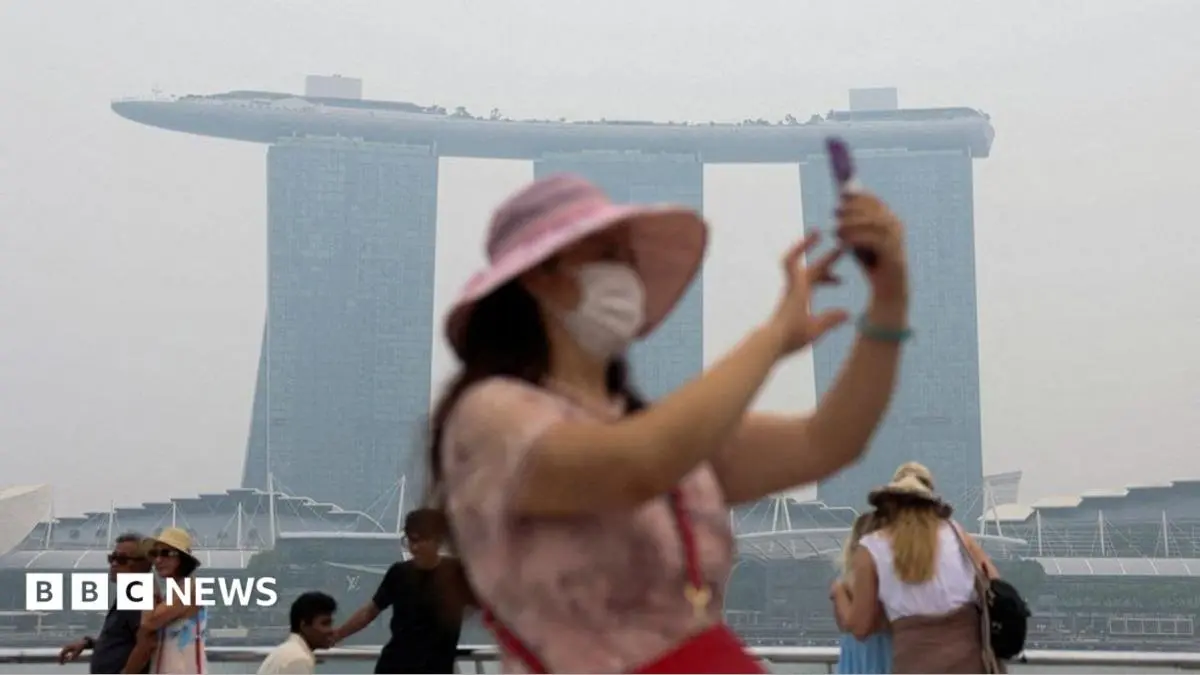
Thick plumes of toxic haze billowing from destructive wildfires across the Indonesian regions of Kalimantan, Papua, and Sumatra have swept across maritime Southeast Asia, creating a severe environmental and public health emergency. Carried by prevailing atmospheric winds, the dense smog has blanketed neighbouring Singapore and Malaysia for weeks, leaving millions of residents suffering from widespread respiratory illnesses, severe headaches, and persistent health complications. Beyond the immediate physical toll, the environmental crisis has ignited sharp political and diplomatic friction across the region, trapping neighbouring governments in a delicate balancing act between the mounting anger of their own citizens and the fragile imperative of maintaining diplomatic stability with Jakarta.
The environmental disaster has rapidly transformed from an ecological nightmare into a contentious domestic political issue for governments in the region. Across affected populations, frustration has boiled over as the acrid air lingers far longer than in previous years. Eugene Tan, an associate professor of law at Singapore Management University, noted the mounting strain on political leadership in the region, explaining that people are fed up, angry, and anxious. He pointed out that regional governments are under immense pressure to respond forcefully to their domestic constituencies, warning that if they fail to do so, what originated as an external environmental issue risks morphing into an internal crisis with significant headroom for political exploitation.
Wildfires in Indonesia are a persistent, yearly occurrence, long linked to industrial-scale "slash-and-burn" land clearing practices used to clear land rapidly and cheaply for agricultural crops, most notably oil palm. However, the blazes this year have proven exceptionally resilient and difficult for firefighting crews to tame. The situation has been drastically exacerbated by a powerful El Niño weather pattern, which has intensified drought conditions across Indonesia’s vast forest tracks and carbon-rich peatlands. While previous haze episodes impacting Singapore and Malaysia typically cleared up within a few days, the severe weather conditions this season have prolonged the crisis into a grueling multi-week ordeal, deepening public frustration and compounding the economic and physical impact on neighbouring countries.
In Malaysia, the prolonged exposure to hazardous air quality has sparked aggressive grassroots pushback and political calls for economic retaliation. Malaysian consumers have initiated public boycotts of Indonesian products to express their indignation over the recurring pollution. The public anger has been championed by prominent figures, including lawmaker Syed Saddiq, who publicly called for targeted sanctions against agricultural firms linked to the illegal land clearing. Saddiq argued that citizens across Malaysia should treat companies responsible for the environmental destruction as outcasts within the regional community, reflecting a broader refusal to accept annual transboundary pollution as an inevitable reality.
Dissatisfaction has similarly surged in Singapore, a nation-state accustomed to high administrative efficiency and proactive crisis management from its political leadership. The prolonged haze has raised sharp questions among Singaporeans regarding the speed and efficacy of their government’s response. Tan observed that a noticeable segment of the public believes the government dropped the ball in managing the crisis, particularly given that meteorological agencies had provided advance warnings about the severity of the incoming El Niño phenomenon. He stressed that Singaporeans firmly expect their government to take decisive and assertive action against the corporate polluters responsible for degrading the region’s air quality.
The escalating haze crisis has put significant political pressure on the beleaguered administration of Indonesian President Prabowo, prompting defensive pushback from officials in Jakarta. The diplomatic atmosphere worsened significantly when a senior Indonesian official dismissed external complaints, asserting that the fires were driven by forces beyond human control. The official went on to claim that the clean oxygen enjoyed by populations in neighbouring Singapore and Malaysia ultimately originates from Indonesia’s expansive forests—a remark that provoked widespread indignation across the border.
The comment drew an outspoken response from Singaporean Senior Minister K Shanmugam, marking a rare and pointed diplomatic rebuke from a city-state that traditionally prioritizes discreet, disciplined diplomacy. Shanmugam publicly characterized the Indonesian official’s statements as disappointing and factually wrong, emphasizing that the ongoing haze is seriously impacting the health of citizens and is fundamentally unacceptable. Rebuffing attempts to frame the issue as a zero-sum political dispute, Shanmugam insisted that addressing the crisis should not create bilateral friction between the nations. He highlighted that the Indonesian public is also suffering terribly from the fires and argued that it is as much in Indonesia’s interest as it is in Singapore’s to take stern legal and regulatory action against the corporations causing the damage.
The diplomatic spat deepened just days later when Indonesia abruptly announced plans to reduce its natural gas exports to Singapore, publicly attributing the decision to meeting domestic energy demands. However, the timing of the announcement led many regional analysts and observers to interpret the move as a direct political retaliation against Singapore’s firm public stance. While Indonesia has indeed experienced domestic electricity shortages in certain areas, Singaporean officials sought to minimize the operational impact, clarifying that the reduction represents less than two percent of Singapore’s total daily gas supply and will not compromise its national power grid.
Despite Singapore’s assurances regarding energy security, the political context surrounding the gas announcement remained heavily charged. The decision followed closely on the heels of warning statements from Indonesia’s energy minister, who signaled that Jakarta could halt gas supplies to nations that fail to show proper respect to Indonesia. That same day, President Prabowo made explicit remarks targeting countries that he claimed were prone to insulting Indonesia over the wildfire crisis.
Analyzing the political dynamics behind Jakarta’s posture, Tan identified a long-standing regional tension, describing it as a tired political playbook wherein Indonesian leaders utilize Singapore as an external bogeyman. He linked this behavior to the historical "abang-adik" or "big brother-little brother" dynamic—a psychological frame of hierarchy that Singaporean leaders have consistently sought to reject. Under this framework, any vocal expression of concern from Singaporean officials regarding public health impacts is defensively reinterpreted by political actors in Jakarta as an act of disrespect toward a larger neighbor, rather than a legitimate plea to resolve a shared regional emergency.
In sharp contrast to Singapore’s firm diplomatic pushback, Malaysia’s official governmental response to the crisis has remained notably cautious and restrained. Malaysian Foreign Minister Mohamad Hasan explicitly ruled out filing formal diplomatic protests with Jakarta or pursuing international legal remedies against Indonesian entities. Defense of this passive stance rested on the political risk involved; Hasan stated that pursuing aggressive legal or formal diplomatic action against Indonesia would signal a willingness to sever bilateral relations entirely—a scenario Kuala Lumpur is anxious to avoid.
Instead of confrontation, Malaysia has opted to pursue soft diplomatic channels, agreeing to explore a bilateral memorandum of understanding (MoU) with Indonesia focused on enhancing joint wildfire prevention strategies. Malaysian officials have maintained that regional problems should be mediated through existing institutional mechanisms, specifically citing the ASEAN Agreement on Transboundary Haze Pollution.
However, the efficacy of the framework established by the Association of Southeast Asian Nations (ASEAN) remains heavily criticized by regional analysts. The haze agreement, which officially entered into force in 2003 after years of negotiations, commits member states to regional cooperation to prevent and monitor land fires. Yet, experts widely view the treaty as fundamentally toothless because it lacks enforcement mechanisms, punitive measures against non-compliant agricultural firms, or legal authority to compel national governments to enact internal enforcement.
James Chin, a professor of Asian studies at the University of Tasmania, delivered a scathing assessment of the regional treaty, stating that the agreement has proven to be effectively worthless. Chin noted that the institutional framework suffers from a lack of political will, pointing out that the moment the seasonal winds shift, the smog clears, and immediate political pressure subsides, regional governments quickly revert to business as usual, setting aside systemic solutions until the next fire season arrives. This cycle of inaction was highlighted in 2016 when ASEAN nations pledged to achieve a haze-free region by 2020; when that deadline passed without success, member states simply extended the target date to 2030.
Malaysia’s cautious diplomatic positioning is further complicated by its own national economic interests. As the world’s second-largest producer of palm oil, Malaysia’s agricultural sector relies heavily on commercial palm cultivation—an industry inextricably linked to the broad slash-and-burn land practices under scrutiny. Furthermore, Malaysia has historically confronted its own localized agricultural blazes. During a severe haze outbreak in 2019, when Malaysian officials pointed to fire hotspots in Indonesia’s peatlands as the primary source of pollution, Indonesian authorities countered by claiming that a significant portion of the smog originated from land clearing fires within Malaysia’s own borders.
Ei Sun Oh, principal adviser at the Pacific Research Centre of Malaysia, underscored the deep structural challenges preventing a permanent resolution to the crisis. Oh argued that as long as regional economies place overwhelming commercial priority on palm oil production, transboundary haze will remain an inevitable, recurring disaster.
Oh further observed that Malaysia lacks the unique diplomatic and economic leverage that Singapore holds in its dealings with Jakarta. Singapore stands as Indonesia’s largest source of foreign direct investment and serves as the primary offshore financial center for wealthy Indonesian individuals and corporations. Lacking comparable financial leverage, Malaysia remains reluctant to unduly provoke its much larger neighbor. As a result, Malaysian policy effectively relies on passive containment, with the government essentially waiting for shifting seasonal winds to blow the toxic haze away from its territory.