
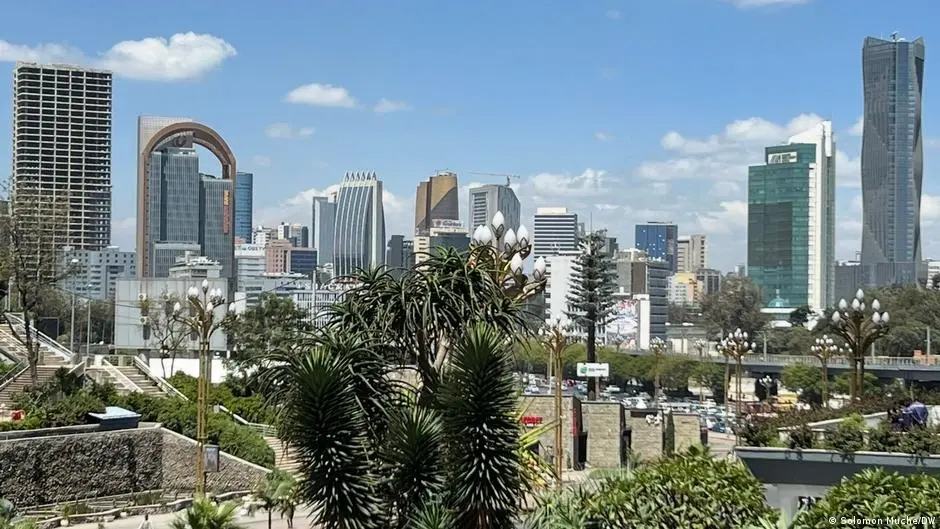
Ethiopia’s headline economic indicators tell a story of remarkable resilience. Following years of severe political upheaval and devastating armed conflict, official forecasts portray an economy expanding at a pace rarely seen in modern emerging markets. The International Monetary Fund (IMF) anticipates real gross domestic product (GDP) growth of 9.2% for the 2025–26 fiscal year, matching the 9.2% expansion estimated for 2024–25. Yet beneath this formidable top-line trajectory lies an array of compounding vulnerabilities: renewed fighting across parts of the country’s north, an enormous multi-billion-dollar reconstruction bill, climate-induced harvest failures, and deep structural macroeconomic imbalances.
For policy planners and international observers, the central question is whether these high growth numbers reflect an economy that has truly turned the corner, or whether they simply mask localized devastation and fragile public finances. London-based financial analyst Abdulmenan Mohammed cautions that the current macroeconomic dynamism remains acutely vulnerable to instability. If renewed hostilities broaden into a wider conflict, he warns, the country’s prevailing economic expansion will quickly prove unsustainable.
The Costly Legacy of the Tigray War
The current economic landscape cannot be understood without examining the immense destruction wrought by the war centered in Tigray and neighboring northern territories between November 2020 and late 2022. Over two years of heavy ground combat and aerial bombardment shattered basic utilities, crippled health and education systems, flattened logistics hubs, and forced industrial plants to shutter. In rural areas, the violence halted farming across vast tracts of arable land, creating deep food security deficits that linger to this day.
A comprehensive damage and needs assessment backed by the World Bank quantified the staggering toll inflicted by multiple conflicts across Ethiopia between November 2020 and December 2021 alone. Direct physical damage was estimated at more than $22.6 billion (€20.2 billion), with broader economic losses accounting for roughly $6 billion. The assessment concluded that repairing the damage, rebuilding basic public infrastructure, and restoring normal economic activity would require an estimated $19.7 billion. Crucially, this sum represents the total funding required under a multi-year recovery blueprint rather than an annual budget allocation, and it does not encompass the financial losses and destruction incurred by renewed escalations.
To address these needs, authorities established a comprehensive reconstruction and recovery program spanning the 2023 to 2028 period. However, securing the necessary external capital and domestic revenue to finance this plan within the designated window remains deeply uncertain. International donor appetites have been constrained, and the fiscal room available to the federal government has been severely compromised by ongoing domestic spending obligations.
Abdulmenan Mohammed observes that the true economic toll of the conflict has extended well beyond physical demolition. The loss of aggregate production capacity, combined with acute foreign exchange shortages and hyper-inflationary shocks, systematically undermined commercial activity across the country.
International trade linkages were severely disrupted during the conflict. In 2022, the United States removed Ethiopia from the African Growth and Opportunity Act (AGOA), a preferential trade agreement that had granted qualifying Sub-Saharan African exports duty-free access to American markets. The loss of AGOA struck a major blow to Ethiopia’s burgeoning light-manufacturing and textile sectors, particularly the export-oriented industrial parks that had been central to the government’s long-term industrialization strategy.
At the humanitarian level, the human cost of the conflict remains severe. Approximately 750,000 people remain internally displaced because of the Tigray war. In regions such as the Wag Hemra Nationality Administration Zone, displaced communities in Tsagamji Woreda face persistent food shortages, highlighting the unfinished task of basic stabilization and humanitarian relief.
Growth Despite the Crisis
Despite the physical and institutional destruction left by the conflict, Ethiopia’s macroeconomy recorded a notable statistical rebound following the signing of the Pretoria peace agreement in November 2022. According to IMF data, the economy grew by 7.2% during the 2022–23 fiscal year and accelerated to 8.1% in 2023–24. The fund projects output will expand by 9.2% in both 2024–25 and 2025–26, placing Ethiopia among the fastest-growing economies globally.
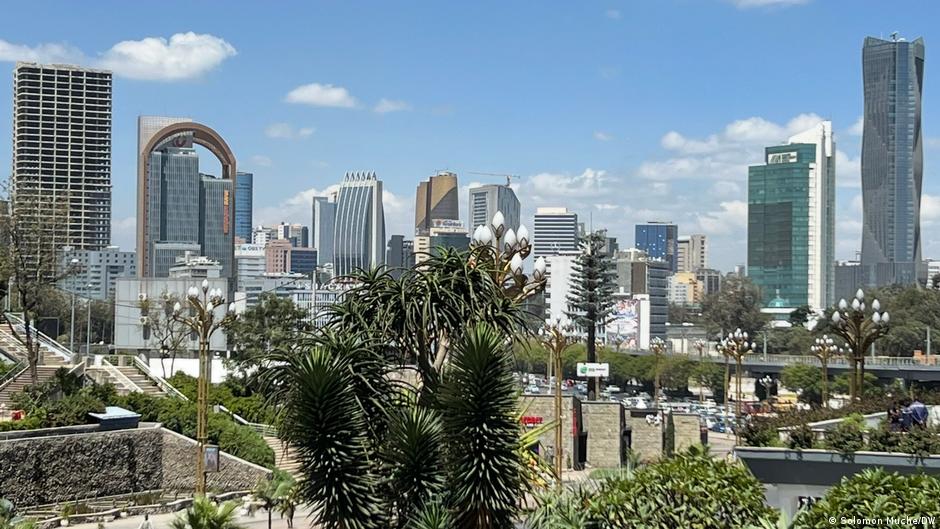
This expansion has been propelled primarily by activity in sectors largely insulated from the northern battlegrounds. Agriculture in unaffected regions, mining, and large-scale electricity generation have served as primary engines of national output.
From an economic perspective, these elevated growth rates do not contradict the devastation left by the war. GDP measures total national economic output. Consequently, when large sectors such as domestic energy generation, construction, and agriculture in central, southern, and western areas expand, the aggregate economy can post high overall growth even while specific northern regions remain economically depressed, disconnected from supply chains, and burdened by war damage.
Nevertheless, rapid headline growth has not cleared away Ethiopia’s pressing structural challenges. Reconstruction remains only partially funded, household balance sheets are battered by elevated consumer prices, and the federal treasury faces intense debt-servicing demands.
These fiscal strains culminated in late 2023, when Ethiopia defaulted on its external sovereign debt after failing to make a scheduled interest payment on its sole outstanding Eurobond. To restore macroeconomic stability and renegotiate its obligations with external creditors, the government secured an IMF-supported reform program launched in 2024. The program is designed to correct systemic structural distortions, stabilize external accounts, and rebuild foreign exchange reserves, but it requires rigorous fiscal discipline at a time when political and social pressures demand higher public spending.
Diverting Resources: Military Spending vs. Development
Renewed instability in northern Ethiopia poses a direct threat to this delicate fiscal balancing act. If clashes escalate, the federal government faces the prospect of substantial unforeseen defense outlays. Military mobilizations require significant financial resources for personnel compensation, specialized logistical networks, tactical transport, fuel, and arms procurement.
Compounding the problem, renewed fighting depresses regional commercial activities, eroding local tax collections and shrinking the revenue base available to both regional administrations and the federal treasury.
Abdulmenan Mohammed emphasizes that heightened defense allocations directly crowd out productive capital investments. A substantial portion of public financial resources, he explains, must be channeled toward operational military expenditures that would otherwise fund essential public infrastructure, educational institutions, healthcare delivery, and social protection programs. The magnitude of this fiscal displacement will ultimately depend on the duration, intensity, and territorial reach of the fighting.
A prolonged security crisis also threatens broader investor confidence. When operational risks multiply, domestic and international companies tend to defer major capital expenditures, suspend capacity expansions, or pause factory operations. Bilateral development partners and multilateral lenders, meanwhile, tend to adopt a more conservative posture, slowing the disbursement of funding for developmental projects.
Faced with urgent security imperatives and emergency humanitarian needs, state authorities are left with fewer discretionary funds to invest in long-term economic enablers such as rural electrification, regional highway corridors, and municipal utilities.

Inflationary Pressures and Hard Currency Shortages
Price stability remains another major area of vulnerability. The IMF projects an average inflation rate of 11.7% for the 2025–26 fiscal year. While this indicates a deceleration from the sharp inflationary spikes experienced during the height of the conflict, it represents a continued erosion of purchasing power for ordinary consumers.
Renewed conflict risks reversing this moderating trend. Abdulmenan Mohammed notes that an escalation of fighting would almost inevitably heighten inflationary momentum. To finance unplanned military mobilizations and sustain defense operations in the absence of robust tax revenues, the state may rely heavily on domestic debt issuance. Extensive government borrowing from the domestic banking system absorbs liquidity that would otherwise support private sector credit, crowding out commercial businesses and stifling private investment.
Foreign exchange dynamics present an equally serious risk. The defense sector requires substantial access to foreign currency to procure military hardware, specialized parts, and communication equipment from foreign suppliers. When the state prioritizes defense acquisitions, the volume of hard currency available to commercial banks and private enterprises diminishes.
This drain on foreign reserves exacerbates chronic shortages across the economy, making it harder for businesses to import essential capital goods, industrial raw materials, replacement components, and agricultural inputs.
Concurrently, intensified competition for scarce foreign currency puts downward pressure on the Ethiopian birr. A depreciating currency immediately inflates the domestic cost of imported refined fuels, basic consumer goods, and production inputs, transmitting price increases throughout the wider economy.
While Ethiopia’s status as a BRICS member state offers opportunities for diversified diplomatic and financial engagement, the real-world management of inflation will depend on export performance, monetary discipline, and external commodity prices. An acceleration of inflation is not an inevitable certainty, but it remains a primary operational risk. For lower-income households already struggling with living costs, any new round of consumer price inflation paired with stagnant wages would carry severe social consequences.
Agriculture and Tourism in the Crosshairs
Among Ethiopia’s productive sectors, agriculture and tourism face the most direct exposure to armed conflict and security disruptions.
Agriculture serves as the foundation of Ethiopia’s economy, employing a majority of the workforce and supplying crucial export commodities such as coffee. Yet, as Abdulmenan Mohammed observes, farming is uniquely exposed to regional instability because combat occurs primarily in rural, agricultural landscapes rather than urban centers.
When violence breaks out, farmers are frequently displaced, fields are abandoned, and crucial planting and harvesting calendars are disrupted. Conflict also severs rural logistics, preventing chemical fertilizers, improved seeds, and fuel from reaching farms while blocking agricultural produce from reaching consumer markets and export terminals.

These security challenges are compounded by severe environmental stresses. Erratic seasonal rainfall and localized droughts have led to poor crop yields across several regions. The resulting decline in agricultural output depresses rural household earnings and reduces national food supplies, exerting sharp upward pressure on food prices in major urban centers.
The hospitality and tourism sectors are similarly sensitive to localized conflict. The sector depends heavily on perceptions of safety and predictability. Heightened security warnings, travel advisories from foreign embassies, and international news reports of armed clashes immediately dampen leisure travel, international conferences, and cultural tours. The resulting downturn deprives hotels, tour companies, and regional transport providers of vital revenue and hard-currency income.
Regional Implications and the Question of Foreign Capital
The specter of renewed instability also complicates Ethiopia’s position as a destination for foreign direct investment (FDI). International corporations evaluating capital allocations in the Horn of Africa assess not only consumer market scale and labor availability, but also civil peace, regulatory clarity, and physical security. Heightened instability in parts of Ethiopia raises the political risk premium, prompting some global firms to pause pending investments or rethink their geographic exposure.
This dynamic has prompted speculation that neighboring economies, most notably Kenya, might absorb foreign capital diverted from Ethiopia. Kenya possesses a diversified commercial base, well-developed financial infrastructure, and an established role as an East African transport hub.
Yet financial analysts caution against drawing simple conclusions about direct capital flight. At present, there is no concrete evidence showing that international businesses are divesting from Ethiopia on a wide scale to re-establish their operations in Kenya.
Abdulmenan Mohammed underscores that Kenya does not automatically reap an economic windfall from Ethiopia’s internal friction. When multinational corporations determine where to commit investment, physical stability is only one metric among many. Corporate decision-makers also evaluate corporate tax codes, labor costs, administrative efficiency, the quality of public utilities, and the overall governance environment.
While sustained insecurity in Ethiopia creates formidable obstacles for its own domestic development and investment targets, capital reallocation across national borders remains complex, deliberate, and contingent on broader comparative economic factors.