
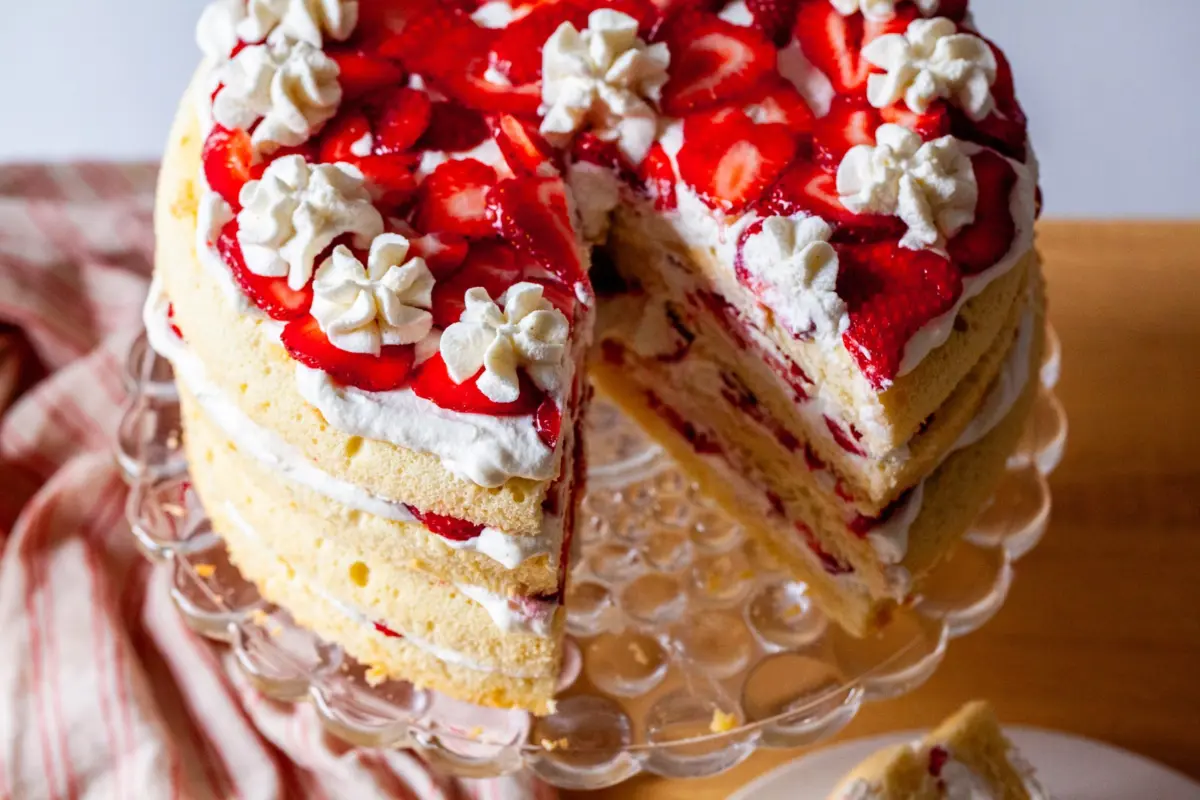
Nearly two decades after first introducing a whimsical, towering dessert to her readers, a popular food writer and recipe developer has officially entered her "Chiffon Cake Era," updating a foundational recipe that has captivated home bakers and partygoers alike. The journey to refine the original 2007 strawberry chiffon shortcake reflects both the evolution of contemporary home baking and the enduring appeal of a dessert that balances structural lightness with surprising longevity.

Back in 2007, when the website documenting these culinary experiments was still in its infancy, the original recipe for a layered strawberry chiffon shortcake made its debut. Brought along to a friend’s rooftop birthday barbecue, the towering, featherweight creation—sandwiched with freshly whipped cream and ripe summer strawberries—was an instant hit, executed despite the baker’s self-described inexperience with chiffon cakes at the time.
Yet, for many years, a complicated relationship remained with the chiffon style. While its impressive height and ethereal texture were undeniable, the traditional method felt overly rigid and demanding for everyday baking. Chiffon cakes historically carried a reputation for being fussy, requiring meticulous sifting, specialized cake flour in place of standard all-purpose alternatives, superfine sugar over regular granulated varieties, an uneven ratio of separated egg whites and yolks, and a heavy reliance on cream of tartar. Furthermore, the baking process demanded a minimum of three separate bowls just to manage the cake layers, accompanied by a notorious tendency for the centers to dip and deflate as they cooled.

Fast forward nineteen years, as the original recipe resurfaced in a periodic review queue, the motivation to streamline the process became clear. The goal was to strip away the unnecessary rigidity to create a chiffon cake recipe suited for real life, transforming a high-maintenance baking project into an accessible masterpiece. Along the way, a deep appreciation for chiffon cakes blossomed. Far from being merely a fleeting trend, the style proved its worth through its remarkable physical properties. Not only are these cakes exceptionally light and airy—making them a glorious centerpiece for summer gatherings—but their delicate layers possess an astonishing shelf life, maintaining a fresh, just-baked texture even days after preparation.
The true test of the updated recipe came recently during a birthday celebration, where a supersized, multi-layered version of the cake took center stage. After blowing out the candles, the baker stepped away briefly to walk a guest to her car. Upon returning to the party space, a surprising sight awaited: only a single solitary piece remained on the tables, surrounded by entirely untouched plates. A momentary wave of panic set in, prompting anxious questions about whether guests were still cutting slices or if anyone had managed to secure a portion.

As it turned out, the cake had not suffered from neglect; rather, the exact opposite had occurred. The moment the serving platters were set down, guests had bypassed the formalities of patience and plates, frantically devouring the dessert directly from the platters. Attendees described the creation as a weightless, melt-in-your-mouth experience, with one guest lamenting the inability to secure third helpings and demanding that future batches be doubled in size.
Strawberry Chiffon Shortcake, Perfected
The modern iteration of the recipe serves as a simplified, highly optimized update to the 2007 classic, establishing a reliable blueprint for summer fruit, cream, and custard cakes. For ambitious bakers looking to recreate the party-scale version, the recipe can be doubled to construct a towering, four-layer creation using standard baking dimensions.

The preparation begins by heating the oven to 325 degrees Fahrenheit. Unlike traditional butter-heavy cakes, chiffon preparation requires specific handling of the baking pans. The bottom of two nine-inch round cake pans is lightly coated with nonstick spray purely to anchor a fitted circle of parchment paper, while the sides of the pans are left entirely unsprayed to allow the batter to grip and climb the metal as it rises. Additionally, two cooling racks are lightly coated with nonstick spray in preparation for the cooling phase.
In a large mixing bowl, egg yolks are whisked together with lemon zest and a measured portion of granulated sugar. Although the mixture initially appears stiff and dry, persistent whisking for approximately one minute transforms the stubborn batter into a pale, thick consistency resembling frosting. Cooking oil is then whisked in, followed by water and vanilla extract. A precise balance of dry ingredients—incorporating cake flour, salt, and baking powder—is sifted directly into the wet base in alternating additions to ensure a smooth, dense batter.

In a separate large bowl, an electric mixer is employed to whip egg whites until they achieve thick, firm peaks. The remaining sugar is incorporated gradually throughout the whipping process. Once the whites hold their structural integrity so that the tips flop over slightly when the beaters are removed, a splash of lemon juice is beaten in to stabilize the mixture.
To merge the two components without sacrificing the air trapped in the whites, a quarter of the whipped egg whites is whisked directly into the heavier yolk mixture to loosen the consistency. The remaining egg whites are then gently folded in using a careful folding motion across two distinct additions, preserving the airy volume vital to the chiffon texture.

The batter is divided evenly between the prepared pans and baked for twenty to twenty-five minutes, until a wooden toothpick inserted into the center emerges clean. The moment the layers exit the oven, a counter-intuitive technique is applied: each pan is dropped a few inches onto the kitchen counter, a crucial step designed to prevent structural shrinkage. The cake layers are then inverted immediately, resting upside down on the previously sprayed cooling racks until they cool completely, which counteracts the natural tendency of chiffon centers to dip inward.
Assembly and Service
The finishing touches rely on a rich yet balanced cream layer. Heavy cream, powdered sugar, and vanilla are whipped with an electric mixer until soft peaks form. Sour cream or crème fraîche is subsequently folded in and beaten until the mixture thickens enough to hold its shape while maintaining a smooth, creamy texture free of graininess.

Once the cake layers have cooled entirely, the pans are carefully flipped right-side up. Although the tops of the cakes will adhere slightly to the sprayed racks, the application of nonstick spray ensures a clean release compared to untreated surfaces. A knife is run gently around the perimeter of each layer to detach it from the pan walls before turning the cakes out. Using a long, serrated knife, each thick layer is carefully bisected horizontally to yield four thin tiers.
Assembly proceeds on a serving platter or cake stand. The first cake layer is anchored at the base, topped with a slightly heaped cup of the whipped cream mixture, and strewn with roughly one-quarter of the sliced fresh strawberries. This layering process is repeated three consecutive times. A small reserve of whipped cream is saved and transferred to a piping bag fitted with a star tip to apply decorative finishes to the crown of the cake.

When it comes time to serve, the dessert is sliced into wedges. The delicate nature of the cake means it tends to be wobbly and resists remaining entirely upright on the plate, a characteristic embraced as part of its charm.
Beyond its immediate visual and textural appeal, the perfected chiffon shortcake offers remarkable storage flexibility. Bakers can prepare the unadorned cake layers up to five or six days in advance, keeping them securely wrapped at room temperature without sacrificing moisture or texture, while longer storage is easily achieved through freezing. Meanwhile, the fully assembled cake holds up remarkably well in the refrigerator for nearly a week, though in practice, the dessert rarely lingers long enough to test that limit.