
Fortunately, this season’s crop of new releases offers a rich array of ways to joyously embrace the colder months ahead in the kitchen. From border-traversing croissants and comforting counter cakes to Dutch ovens filled with hearty borscht, rich beef noodle soup, or savory budae jjigae, the autumn literary landscape spans a diverse spectrum of cooking styles. Alongside traditional cookbooks, this season also brings refreshing diversions, including a divorce-inspired reflection where deeply personal essays are just as essential as the recipes, and a maximalist garden almanac that reads like an immersive escape into another world. Culled together, these 12 standout selections from the fall and winter publishing season promise to inspire both avid cooking and immersive reading as the temperature drops.

Among the notable releases is Joyce Tang’s colorful and playful cookbook, created alongside Soleil Ho, which pulls back the curtain on the cuisine-bending treats that made her Oakland bakery, Bake Sum, an early adopter of the current wave of Asian American bakeries. Beginning as a pandemic pop-up in 2020 before opening its permanent location the following year, Bake Sum won a following with items like Spam-musubi-esque croissants and ube pineapple buns. In her book, Tang explores imaginative creations such as quiche inspired by chawanmushi—the Japanese savory egg custard—alongside danishes styled after okonomiyaki and aloo matar, the spiced potato and Indian pea dish. While the laminated dough recipes are ambitious, weekend-worthy projects, the book takes a progressive approach by easing novice bakers in with simpler offerings like microwave mochi and puddings before advancing through cakes and finally arriving at croissants.
For those drawn to narrative-driven food writing, Carla Lalli, widely known as Carla Lalli Music from her tenure at Bon Appétit, has catalogued the dissolution of her 24-year marriage through a cookbook. Weaving reflections on motherhood, identity, and the intersection of a restaurant background with daily life, Lalli continues a literary tradition shared by books like Tanya Bush’s Will This Make Me Happy and Rebecca May Johnson’s Small Fires, where readers are drawn as much to the essays as to the recipes. The dishes themselves—such as a flexible weeknight lamb chop special and quick beans and rice for when an avocado is ripe—offer realistic suggestions for burnt-out weeknights or moments when one prioritizes getting to the beach over meal-planning. Born largely out of a "separation summer" when Lalli adjusted to cooking and eating alone after years of family meals, these recipes and accompanying personal lists serve as practical tools for difficult days while celebrating the enduring pleasures of life.

Shifting scales from domestic reflection to unbridled maximalism, Richard Christiansen of the Los Angeles-based lifestyle brand Flamingo Estate presents Pleasure Principles. Described by Martha Stewart as "over the top," Flamingo Estate serves as the backdrop for a book that feels less like a traditional cookbook and more like an immersive exploration of a lush secret garden. Interspersing stories of the property’s development with historical detours on camellia plants and Coco Chanel, high-fashion-style botanical photography, and archival imagery, Christiansen offers a rich tapestry of garden primers, monthly checklists, and seasonal projects. Alongside these elements are recipes for pasta with sage leaves embedded directly in the dough and vegetable broth featuring lotus petals and dried skullcap, creating an escapist volume designed to make even the depths of winter feel vibrant and full of possibility.
The celebration of communal, high-energy dining continues with Meherwan Irani’s collaboration with Jamie Feldmar, a book designed to evoke the lively atmosphere of a gathering. Featuring ambitious, crowd-pleasing street foods like deep-fried vada pav—proclaimed by Irani as the greatest sandwich of all time—and crisp dosas served with coconut chutney, the book reflects the vibrant typography, bold colors, and passionate declarations characteristic of Irani’s acclaimed North Carolina restaurants, Chai Pani and Botiwalla. Whether readers are testing Irani’s bold assertion that Indian street food is the best on the planet or simply recreating the experience of tearing into seekh kebab with steaming naan while crushing cold beers, the book offers a spirited invitation to crowd around a table.

For those looking to connect with the natural world right outside their doors, Alexis Nikole Nelson, widely known online as the Black Forager, offers her long-awaited debut cookbook created with Jeanelle Hayner Olson. Amassing millions of followers with her bubbly disposition and whimsical approach to foraging, Nelson demystifies edible plants found in suburban neighborhoods and urban environments alike, balancing practicality, safety, and play. Named after her signature video catchphrase, "Happy snacking. Don’t die," the book features inventive recipes such as pine-cone-infused syrup, pickled magnolia flowers, Japanese knotweed granita, and maitake mushroom steaks, serving as a practical guide to viewing everyday landscapes through an entirely new lens.
The intersection of heritage and innovation is further explored by Dona Murad in her book dedicated to New York City’s Librae Bakery. Drawing on her upbringing in Bahrain with an Indian and Portuguese mother and a Bahraini Persian father, alongside time spent working in Copenhagen and her current life in New York, Murad embraces a third-culture culinary perspective. The bakery’s repertoire—featuring croissants scented with rose water and pistachio frangipane, morning buns with labneh and za’atar, and babka flavored with lemon curd and black lime—requires a foundational comfort with mother doughs and sourdough starters. Complete with thorough step-by-step documentation and approachable alternatives like focaccia and cookies, the book challenges bakers while pushing traditional pastry techniques into bold new flavor territories.

As autumn settles into soup season, Clara Lee and Eddo Kim provide a comprehensive masterclass in Korean soups, breaking down the fundamental distinctions between guk, tang, jjigae, and jeongol. Drawing on their experience running the cherished, iconoclastic San Francisco superette Queens before its transition into a line of pantry staples, the authors organize their recipes by speed, season, and restorative qualities. From quick-cooking weeknight bowls to slow-simmered broths, the book offers an exhaustive repertoire for home cooks looking to deepen their understanding of Korean home cooking and find creative new applications for pantry staples like gochujang.
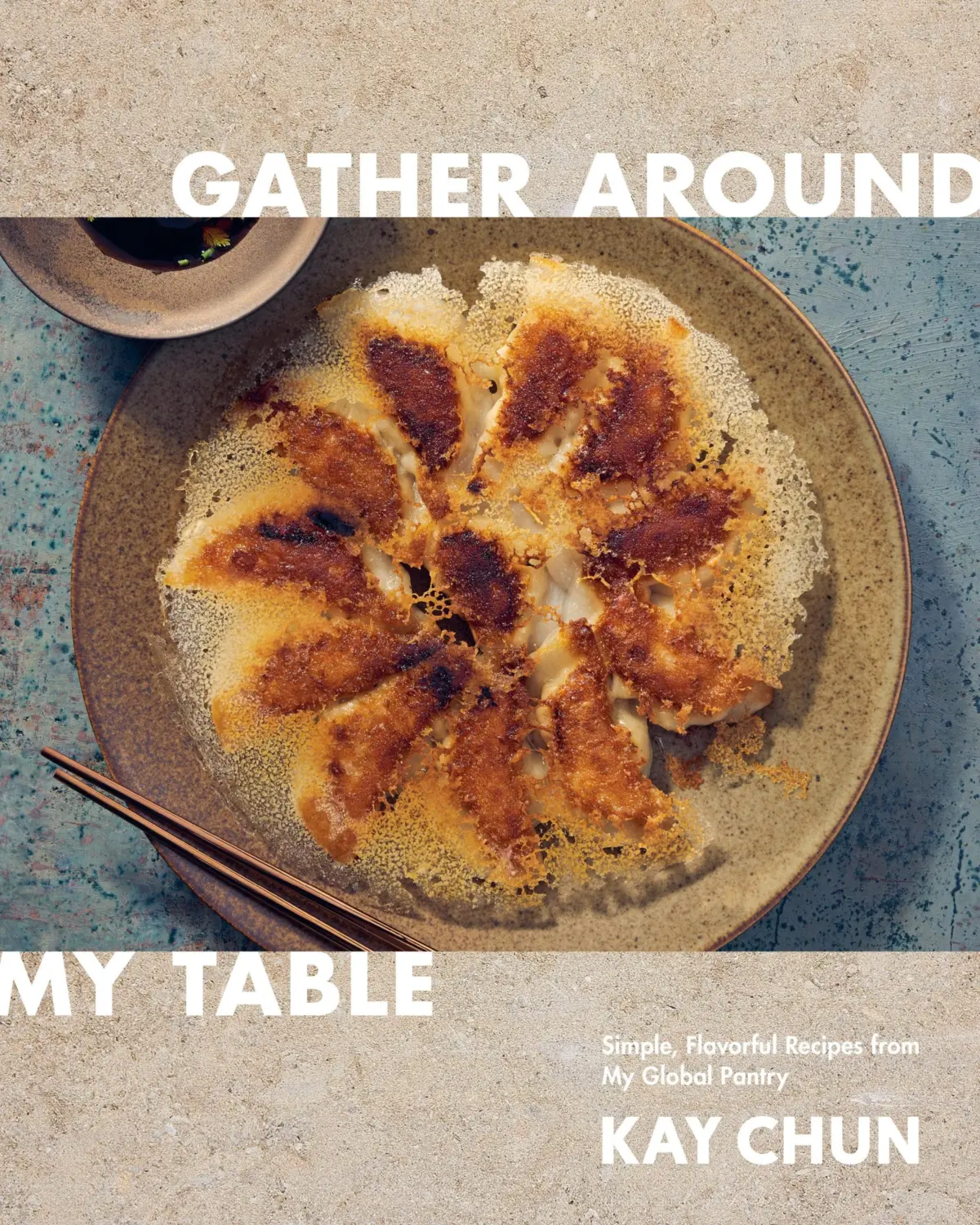
Similarly focused on accessible, everyday cooking with amped-up flavors, NYT Cooking contributor Kay Chun presents Gather Around My Table. Known among recipe developers for her low-lift yet dynamic flourishes, Chun begins with snacks and pickles, such as quickly marinated sardines for toast and gilda-esque calamari skewered with fried peppers and olives. Delivering on its promise of weeknight-friendly meals that avoid monotony, the book features dishes like soy-simmered grilled tofu adapted for both ssam and taco formats, as well as green salads elevated by wakame, shallot vinaigrette made with grated tomatoes, and mustard dressings boosted with doenjang. Notably dedicating an entire chapter to tofu, Chun consistently demonstrates how minimal effort can yield deeply rewarding results.

Shifting toward playful irreverence, chef Eric Sze of New York’s Wenwen, alongside Elyse Inamine, offers his debut cookbook, Taiwanese?. Embracing a modern, uninhibited approach to fusion, Sze explores the boundaries of Taiwanese cuisine with dishes like lu rou fan featuring the unconventional addition of peanut butter, seared zhajiang lasagna with pork and octopus, and beef noodle soup burgers. Accompanied by vivid photography documenting Sze’s exhaustive culinary crawls, the book rejects rigid traditionalism in favor of playful experimentation, welcoming readers who view culinary rules as flexible guidelines and appreciate a creative partnership with their local butcher.
For those seeking sweetness without unnecessary complexity, pastry chef Caroline Schiff presents Daily Dessert, a guide tailored for bakers who love treats but despise fuss. Formerly of Gage & Tollner, Schiff assures home bakers that steps like sifting are largely optional and that room-temperature ingredients are not always mandatory. Featuring approachable projects like a single-bowl, mixer-free giant chocolate chip cookie alongside long-keeping bakes like black-and-white coconut macaroons and a cardamom counter cake with chocolate ganache, the book advocates for a lifestyle where sweet treats are a daily, unpretentious fixture of the kitchen rather than reserved solely for special occasions.

Continuing the celebration of comforting, spoonable dishes, Alissa Timoshkina’s Lozhka offers an expansive tour of Eastern Europe through the lens of slurpable and scoopable food. Moving beyond standard expectations of soups and stews, the volume highlights regional specialties such as Slovak and Belarusian mushroom stew infused with sauerkraut brine and served with potato dough crepes, Armenian lentil soup accented with prunes and walnuts, and diverse preparations of millet, barley, and beans. Offering a rich variety of filled, drop, and steamed bread dumplings, the book provides a comforting culinary companion designed to make the colder months something to look forward to.
Rounding out the season’s releases, Lucas Sin translates his conversational and precise instructional style into his debut cookbook, drawing on his experience leading kitchens like Junzi and his deep appreciation for Hong Kong’s cha chaan tengs. Combining indulgent, transportive photography with rich cultural insights—such as the viral blogging origins of a roast pork belly and tofu skin dish known as "A Man’s Romance"—Sin offers readers a window into the vibrant diner culture of Hong Kong. As Sin tests his repertoire through popular pop-ups ahead of opening his own New York City cha chaan teng, the book serves as an inviting and accessible way to experience those celebrated flavors at home.