
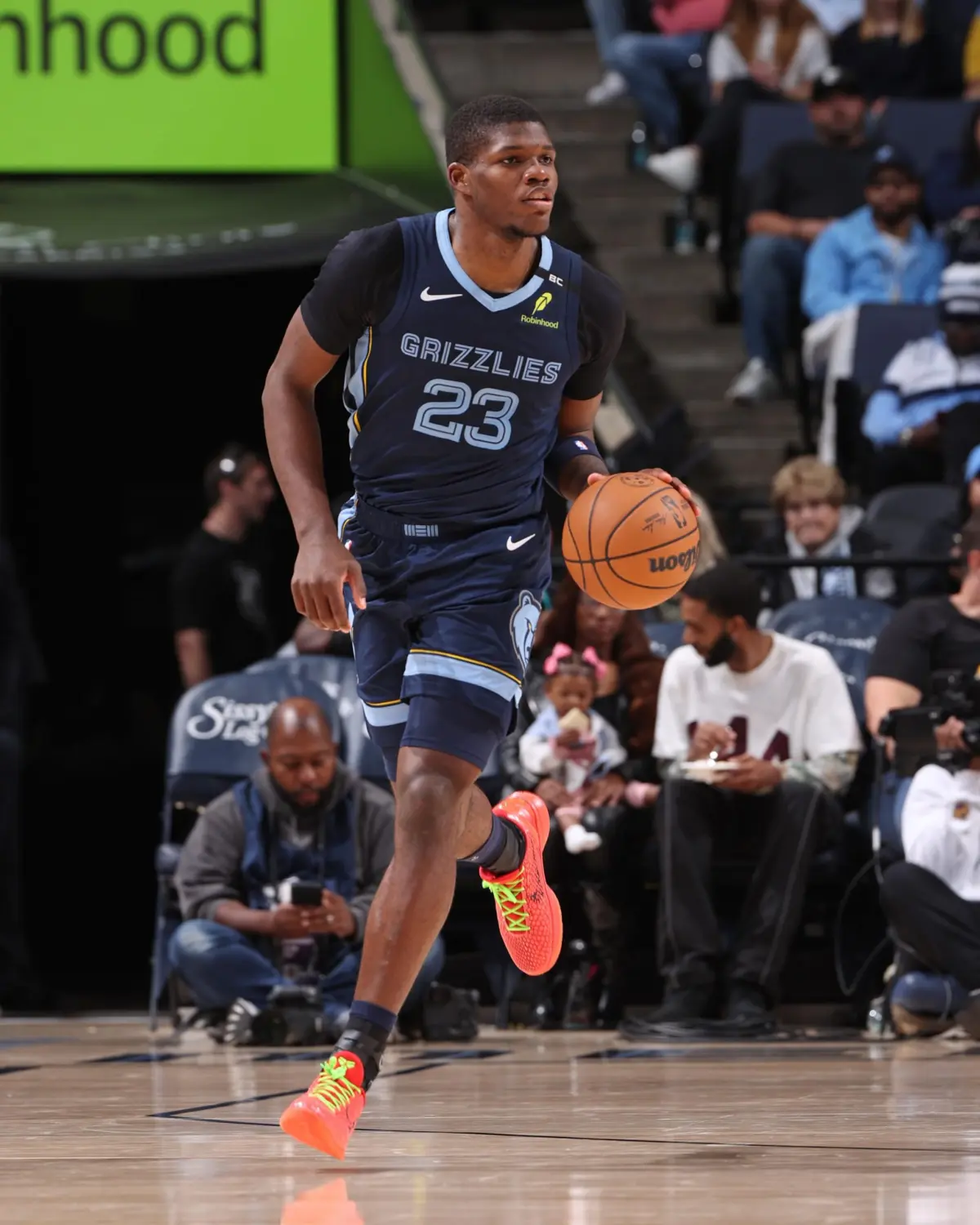
Every season in the National Basketball Association comes with its own unique twists and turns. If the trajectory of every franchise was entirely predictable, all of our offseason prediction pieces would be infallible, and there would be very little point in lacing up the sneakers and playing out the 82-game schedule. Fortunately, the current campaign has been no different, offering plenty of turbulence and early-season surprises across both conferences. Chief among all the unexpected outcomes are the Memphis Grizzlies, who, in what was widely projected to be the foundational first year of a major roster rebuild, currently sit at a stellar 7-4 record with the 10th-best net rating in the entire association.
With traditional Western Conference powerhouses like the Oklahoma City Thunder and Minnesota Timberwolves enduring significant injury crises early in the year, and others like the Denver Nuggets looking visibly older and more fatigued than in seasons past, it is increasingly plausible that the West is far more wide-open than analysts initially believed. But the primary question echoing through front offices and sports talk shows alike is simple: Is it genuinely possible for the Memphis Grizzlies to be this far ahead of schedule? Or are we merely witnessing a transient flash of brilliance that outlines what they will eventually become once their youth matures?
How the Grizzlies Keep Winning
It feels somewhat cliché to invoke the comparison given how deeply that particular team has permeated the NBA zeitgeist since their championship run, but this current iteration of the Grizzlies genuinely resembles the legendary 2013-14 "Beautiful Game" San Antonio Spurs. That iteration of the Spurs was an extraordinarily deep unit that reached the absolute platonic ideal for decision-making speed, floor spacing, and relentless ball movement. Now, under the guidance of head coach Tuomas Iisalo, the Grizzlies have firmly planted themselves on a strikingly similar developmental and tactical trajectory.
Iisalo essentially practices a form of strategic load management across his entire roster to ensure that his players remain as physically fresh as possible throughout the opening weeks of the grueling schedule. This year, an impressive 13 different Grizzlies players have logged at least 70 total minutes on the floor. To put that depth into perspective, the only other teams in the league that can claim a similar distribution are the Indiana Pacers, Golden State Warriors, Oklahoma City Thunder, and the Utah Jazz—all of whom have had to manage significant portions of their rotations through various injuries. Consequently, while those organizations have been forced to dig deep into their benches out of sheer medical necessity, Iisalo’s deployment of his reserves functions much more as a deliberate tactical philosophy.
Under this new coaching regime, the Grizzlies are relentlessly deploying a multi-layered, ball-screen continuity attack predicated entirely around pick-and-roll sequencing and crisp, side-to-side ball movement. Iisalo quite literally refers to this foundational concept simply as "flow," which feels entirely poetic considering the fluid way the offense softly cascades from one action into the next. While the fine intricacies of their futuristic style extend far beyond the scope of a standard tactical breakdown, the collective philosophy demands specific archetypes to function smoothly.
As any seasoned basketball coach will readily tell you, brilliant strategy will only take an organization so far; ultimately, you need the personnel capable of executing the vision on the floor, or it matters very little how clever the scheme is on paper. This specific offense requires skilled operators like Ty Jerome and Cam Spencer, strong interior screeners in Zach Edey, Cam Boozer, and Isaiah Stewart, versatile floor-spacers and closeout attackers such as Cedric Coward, Jaylen Wells, Jerami Grant, and Quentin Post, alongside speedy court mappers. Notably, rookie Cam Boozer may already read the floor and map open passing lanes better than almost any rookie in the history of the league.
The undeniable bottom line is that this team features a litany of legitimate, high-level basketball players. This structural competence manifests just as clearly on the defensive side of the floor, where the Grizzlies currently rank fifth in defensive rating—matching their impressive standing on offense. The defensive identity starts directly in the middle of the paint. Prior to the tip-off of the regular season, analysts widely highlighted Isaiah Stewart as one of the premier defensive big men in the entire league, and the only factor holding back similar praise for Zach Edey were lingering questions regarding his health. Edey has returned to the floor looking very much like a fringe Defensive Player of the Year candidate. When he is anchoring the interior, the Grizzlies operate in the 99th percentile in defensive rating, according to metrics from Cleaning the Glass. That elite level of rim protection comes in a league that also features generational talents like Victor Wembanyama. Between Edey and Stewart, Memphis has secured an exceptionally formidable defensive foundation.
Furthermore, Wells and Coward form a pair of remarkably rangy wings whose respective defensive skill sets perfectly complement one another, with Wells shining at on-ball containment while Coward provides a massive presence in help-side and off-ball scenarios. Grant and GG Jackson bring crucial size and length to the forward positions, while Boozer moves with an agility that defies what should reasonably be expected of someone with his muscular frame. Meanwhile, Kris Murray would likely receive significantly more praise and league-wide buzz for his defensive prowess if his offensive production were not currently experiencing such a difficult stretch.
Iisalo’s core theory regarding keeping his players’ bodies fresh has clearly come to fruitful fruition. While many veteran-laden teams around the association are operating at half-speed during the opening month, consciously conserving their energy for the long 82-game marathon, the Grizzlies are routinely moving with the frantic, high-intensity pace of a team playing in the first round of the postseason. An abundance of youthful vigor—with the Grizzlies currently standing as the third-youngest team in the entire league—undoubtedly helps fuel that relentless motor. Observers can easily spot the difference by watching the way Wells and Boozer slide their feet laterally on the perimeter, or noting the diligent rotation from Spencer to extinguish an offensive advantage.
Why the Grizzlies Aren’t That Good (Yet)
If you happen to be a die-hard fan of the franchise or are in any way professionally affiliated with the organization’s front office, you have every right to feel profoundly excited about the project currently being constructed in Memphis. Young foundational pieces like Boozer, Coward, Edey, Wells, Jackson, and Stewart are all 25 years old or younger. The long-term future in Tennessee is exceptionally bright, but for right now, a handful of underlying statistical indicators suggest that a degree of negative regression is likely looming on the horizon.
For starters, the Grizzlies currently rank second in the league in 3-point shooting percentage, while also sitting eighth in opponent 3-point percentage. Statistical history tells us that opponent 3-point percentage is almost exclusively contingent upon variables that fall largely outside a defense’s direct control, and on the offensive end, it remains highly doubtful that this specific group will maintain its status as the second-best perimeter shooting team in the association throughout the entirety of an 82-game marathon.
Additionally, metrics compiled by Dunks & Threes—which evaluate a team’s cumulative strength of schedule based strictly on the games they have already played—indicate that the Grizzlies have enjoyed the second-easiest schedule in the league to date. Their most impressive victory thus far came against a Golden State Warriors squad that was still visibly searching for its rhythm and trying to find its stride early in the year.
This underlying vulnerability was laid completely bare during their recent loss against the Indiana Pacers, which offered a front-row seat to the team’s most glaring current shortfall: guard play and reliable ball handling. Outside of Ty Jerome, Cam Spencer, and Scottie Pippen Jr.—who is currently sidelined due to an injury—the Grizzlies simply lack sufficient pressure-breakers to manage aggressive defensive traps, and none of those available guards has mastered that difficult art form at an elite level. The Pacers deployed token full-court pressure that hounded the young Memphis backcourt all evening long, forcing 20 turnovers and resulting in the Grizzlies’ lowest offensive rating output of the entire season.
This roster limitation could potentially be remedied if Iisalo chose to deploy two of those ball-handlers together much more frequently, but doing so would inevitably weaken their overall size and formidability on the defensive end of the floor. Patching up one noticeable hole in the rotation simply opens up another—a classic, telltale sign of a young and still-flawed unit.
If one were a prospective general manager given the rare luxury of choosing a ten-year tenure with any franchise in the league, it would take no more than one hand to count the destinations worth picking over what is happening in Memphis. What the front office has built here is entirely authentic, and it appears far more structurally sound and sustainable than the previous generation of Grizzlies basketball. But right now, looking at the competitive landscape of the 2026-27 season, it remains difficult to view the Grizzlies as anything more than a dangerous, fringe playoff contender as the winter months approach.