
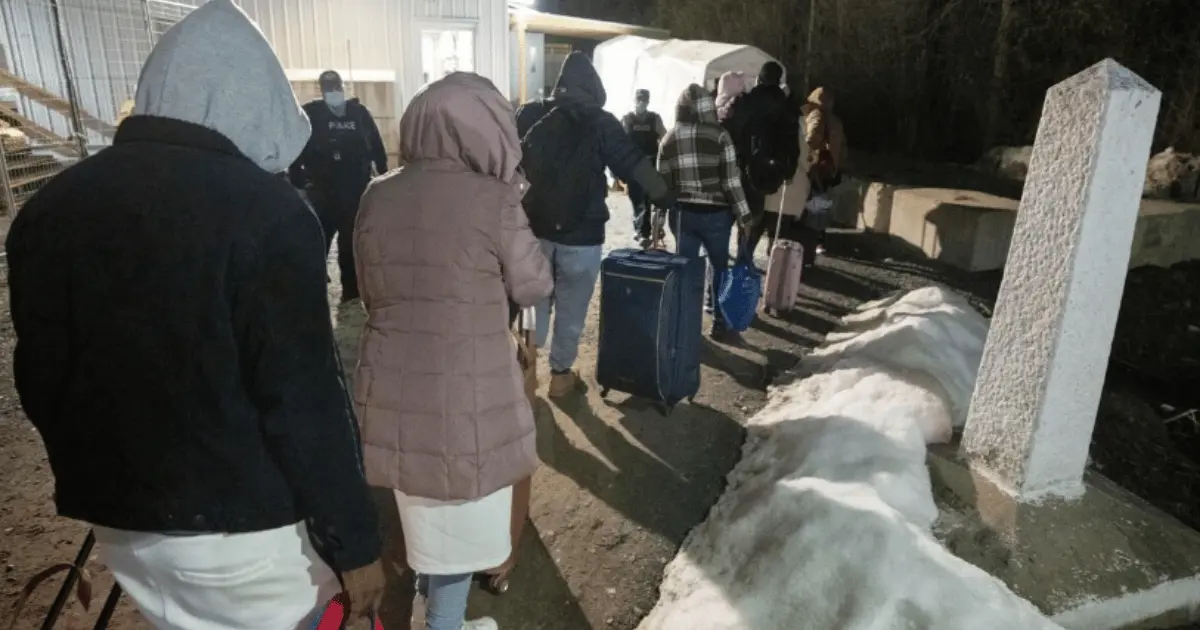
A high-stakes legal challenge regarding Canada’s refugee agreement with the United States is back in court this week, with faith-based organizations, human rights advocates, and former refugee claimants leading a renewed effort to dismantle the controversial pact.
At the center of the current proceedings is the Canadian Council of Churches, which is playing a central role alongside Amnesty International and the Canadian Council for Refugees. Together, these groups are challenging the federal government’s ongoing participation in the Safe Third Country Agreement (STCA).
Originally signed in 2002 and formally implemented in 2004, the STCA governs how
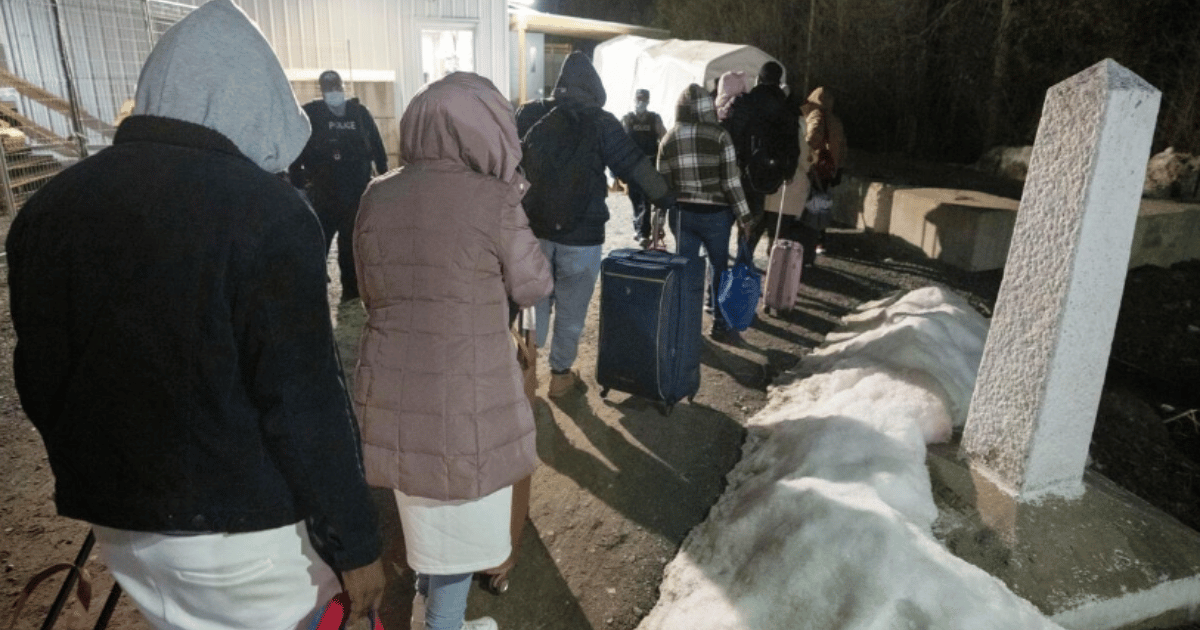
Canada and the United States handle land border asylum claims. Under the agreement, Canadian authorities are permitted to turn back asylum seekers attempting to enter the country from the U.S. at official land ports of entry. The foundational premise of the pact is that both nations are designated as safe places to seek refuge, meaning refugee claimants are generally expected to pursue protection in the first of the two countries they reach.
However, the plaintiffs in the ongoing legal challenge argue that this premise fails to protect vulnerable populations. They contend that rejecting asylum seekers—particularly 2SLGBTQ+ individuals, racialized women, and children—and sending them back to the United States exposes them to a deeply flawed and inhumane asylum system. Furthermore, the legal challenge asserts that the policy violates their fundamental equality rights guaranteed under section 15 of the Canadian Charter of Rights and Freedoms.
Ketty Nivyabandi, the secretary general of Amnesty International Canada’s English-speaking section, emphasized the gravity of the situation in a press statement detailing the organization’s stance on the agreement.
"The United States is not a safe place for migrants and refugees, particularly those who are racialized women, children, or LGBTQI+ people," Nivyabandi said.
She added that returning vulnerable individuals to the U.S. often means delivering them directly into the custody of Immigration and Customs Enforcement (ICE). "The practice of sending some of the most vulnerable people in society back to the U.S. — right into the hands of ICE — is unjust and un-Canadian. And we are in court today to make it stop," she stated.
The current Federal Court challenge follows a major ruling handed down by the Supreme Court of Canada in 2023. In that decision, the country’s highest court ruled that the STCA did not violate section 7 of the Charter, which guarantees the right to life, liberty, and security of the person. The Supreme Court reasoned that existing legal safeguards—often referred to in legal arguments as "safety valves" embedded within Canadian law—could theoretically protect individual refugee claimants from unjust treatment or risks to their security upon return.
However, while the Supreme Court upheld the agreement against the section 7 challenge, it did not entirely close the door on the litigation. Instead, the court sent the unresolved question of whether the agreement violates claimants’ equality rights under section 15 back down to the Federal Court, effectively setting the stage for this week’s renewed courtroom battles.
Building on that judicial opening, Amnesty International and the Canadian Council for Refugees filed a separate Federal Court challenge. That filing argues that the so-called "safety valves" cited by the Supreme Court are frequently unavailable, illusory, or practically inaccessible to everyday asylum seekers navigating a complex and fast-moving border enforcement apparatus. The organizations maintain that Canada is failing to do enough to monitor and protect the safety of individuals it turns away at the border.
While secular human rights organizations have driven much of the public campaign against the STCA, faith groups have also maintained a continuous and historic presence in the legal and humanitarian landscape surrounding Canadian immigration policy. The Canadian Council of Churches, in particular, boasts a long-standing history of contesting restrictive refugee frameworks and supporting displaced populations.
Rev. Janet Anstead, the general secretary of the Canadian Council of Churches, noted that her organization’s involvement in refugee advocacy dates back decades, beginning immediately after the end of the Second World War when member churches actively sponsored displaced persons fleeing a war-torn Europe.
Reflecting on the council’s ongoing participation in modern legal challenges, Anstead framed the work as a continuation of deeply rooted values. "[Our involvement] might seem sort of new, but it’s actually very much standing in this tradition of helping the stranger, helping the foreigner, helping the marginalized and the vulnerable," she said.
The council’s institutional memory regarding immigration litigation runs deep. Decades ago, the organization served as an intervenor in a landmark 1985 Supreme Court immigration case, Singh v. Minister of Employment and Immigration. That historic ruling established that refugee claimants who are physically present within Canadian territory are protected under section 7 of the Canadian Charter of Rights and Freedoms, fundamentally altering how immigration law interacts with constitutional rights.
"So what that meant is that refugees have the right to a full oral hearing of their claims before they were either admitted into Canada or deported," Anstead explained, highlighting the profound impact of the Singh decision on Canadian jurisprudence.
Drawing a direct line from past victories to the present legal struggle, Anstead expressed hope that the current court challenge will yield similar protections for marginalized populations seeking safety at Canada’s borders.
"So the challenge that is before the courts now kind of is a continuation of that commitment to making sure that people seeking asylum, seeking immigration, are treated with the dignity that our faith tells us every individual is worthy of, as every individual is created in the image of the Creator," she said.
As hearings continue this week, legal experts, human rights advocates, and government lawyers will present arguments before the Federal Court, where the intersection of national border policies and constitutional equality rights will once again be scrutinized under Canadian law.