
By Monjed Jadou
At St. George’s Greek Orthodox Church in Ibillin, a historic Palestinian Arab village nestled within Israel’s northern Galilee region, Father Saba Haj still carries the vivid memory of an encounter that took place five years ago. Stopped abruptly at a military checkpoint near Tubas while dressed in his clerical robes, the clergyman found himself staring down the barrel of a rifle. A weapon was raised directly in his face—an experience he describes plainly as a profound humiliation.
For Father Haj, that harrowing moment was neither isolated nor unique; rather, it formed part of a broader, deeply troubling pattern of subjugation and harassment that he has witnessed with mounting alarm over the years. Incidents targeting Christian clergy, properties, and communities have continued to cast a long shadow across daily life. In late September, another alarming episode unfolded when a priest in Jaffa was subjected to a deeply humiliating ordeal, culminating in his being handcuffed and placed under arrest merely for confronting a police officer.
The tension escalated further in mid-October. Father Haj points to a wave of aggression in Taybeh, one of the last remaining entirely Christian villages in the West Bank. During these incidents, masked Israeli settlers struck the village, directly targeting local residents, olive pickers, and even a visiting diplomatic convoy of European officials. Compounding the physical violence, settlers have routinely stolen olives from Christian villages—crops that hold profound religious significance, as they are harvested and pressed to produce the sacred oil used in masses, baptisms, and other holy ceremonies throughout the liturgical calendar.
When viewed collectively, the symbolism of these events runs deep, directly framing the complex calculus facing Palestinian Christians as they head to the polls. Asked about the significance of participating in the vote for the Israeli parliament, or Knesset, Father Haj cuts straight to the core of the dilemma. For him and many others, casting a ballot is not merely about partisan politics; it is fundamentally about survival, recognition, and basic human rights.
"This is about freedom of movement, about human dignity, about respect for religious symbols," Father Haj says. "Protecting holy places doesn’t mean protecting buildings alone. It means protecting people and their right to worship, to move, to live in safety and dignity."
These pressing concerns and painful experiences weigh heavily on the minds of Palestinian Christians as they cast their ballots in the Knesset elections, weighing the long-term track record of Prime Minister Benjamin Netanyahu against the daily realities of life under the current political landscape.
Palestinian citizens of Israel comprise approximately one in five residents of the country, tracing their ancestry directly to the Arab population that remained within the newly established state’s borders following the 1948 war. Within this broader minority, Palestinian Christians represent a distinct and relatively small subgroup. According to data from Israel’s Central Bureau of Statistics, approximately 184,200 Christians lived in Israel as of December 2025, accounting for nearly two percent of the total national population. The vast majority of this community resides in the northern regions of the country, with the largest urban Arab Christian populations concentrated in cities such as Nazareth, Haifa, Jerusalem, and Nof HaGalil.
A Vote, Not a Miracle
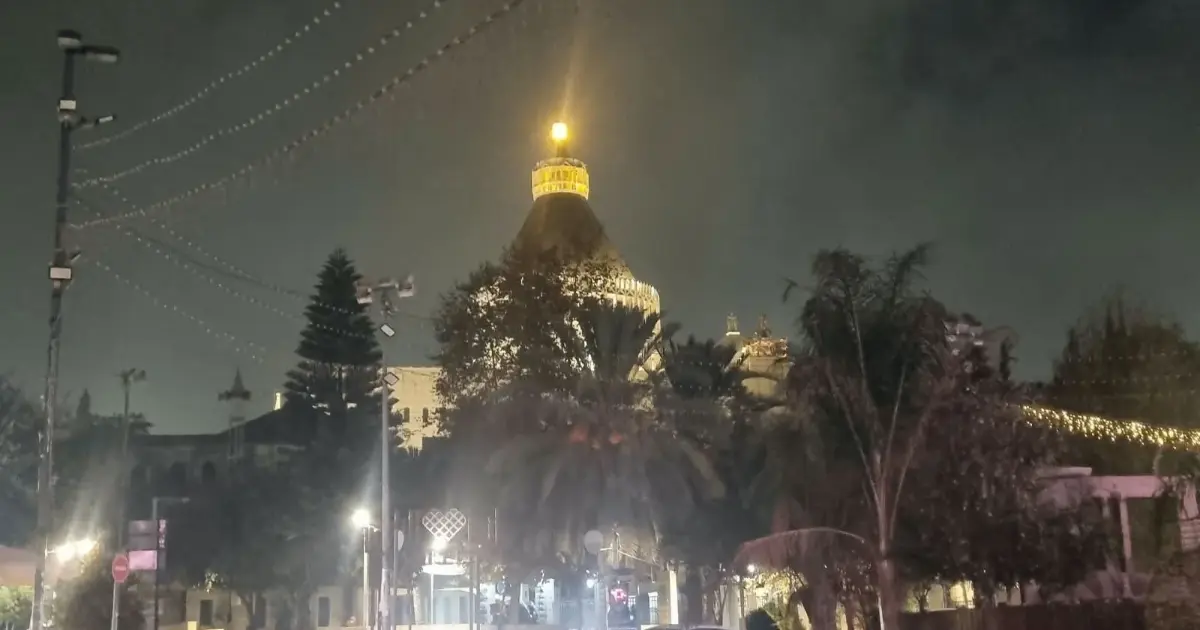
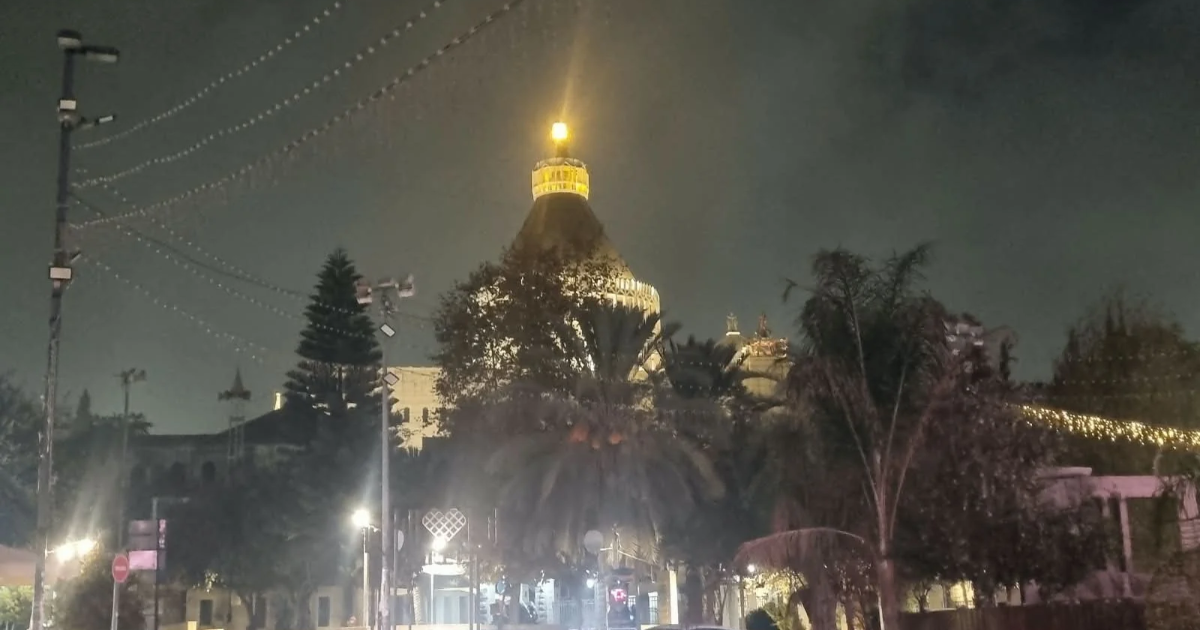
In the historic Old City of Nazareth, just steps away from the towering Basilica of the Annunciation, the enduring debate over whether Palestinian Christians should participate in Israeli elections resurfaces with the arrival of every single election cycle. It is a question as old as the State of Israel itself, touching on thorny issues of civic duty, political efficacy, and the limits of minority representation within a Jewish-majority state.
Raef Zreik, a prominent lecturer in philosophy and law from the Galilee, approaches the dilemma with a clear-eyed realism. He harbors no illusions about the immediate transformative power of the ballot box, yet he refuses to dismiss its utility entirely.
"Participation in voting is not a magic solution," Zreik observes. "But it remains one of the tools we have to influence the policies that affect Palestinians here. Our civil, political, and economic rights are tied to the state we live in, even when we know the limits of the system."
Rather than viewing the act of voting as an absolute guarantee of political change, Zreik frames it as a continuous test of engagement and leverage. The fundamental question, in his view, extends far beyond whether the mere act of casting a ballot is worth the effort; it centers squarely on whether that ballot possesses the tangible capacity to alter the legislative and executive decisions that fundamentally shape everyday life for Arab citizens.
This pragmatic perspective is shared by younger members of the community who have grown up amidst deepening political polarization. Jiana Mansour, a 30-year-old Christian artist and activist from the Galilee, maintains an unwavering commitment to participating in the democratic process, despite her profound disillusionment with the system. Having voted in every election since she first reached the legal
age of eligibility, she intends to cast her ballot once again.
"I’ve voted since I first had the right, and I’ll vote this time, because this is the cause of the people," Mansour asserts. "We are marginalized, and things are going from bad to worse for every part of our people. I have to seize the chance for change, and I urge everyone to do so."
For Mansour, her identity as a Christian does not narrow her political vision or isolate her community’s struggles; instead, it sharpens and broadens her sense of solidarity with other marginalized groups. Observing the trajectory of national politics over recent years, she notes that the policies of the far-right Israeli government have increasingly demonstrated an indiscriminate approach toward all Arab communities, regardless of religious affiliation.
"As a Palestinian Christian, what is happening makes me look beyond individual or sectarian interests," she says. "In recent years, we’ve all seen how the far-right Israeli government treats Arab communities of every faith: Christians, Muslims, even Druze. We’ve witnessed systematic attacks on monks, nuns and churches, and on Al-Aqsa Mosque. None of us has been spared."
Mansour also expresses deep frustration with external narratives that attempt to drive a wedge between Palestinian Christians and their broader societal fabric, forcefully rejecting any insinuation that Christian loyalty or belonging lies anywhere other than the land of their birth.
"Christians are from this land," she insists, her voice carrying a firm conviction. "Christ was born and lived here, in Nazareth, Bethlehem and Jerusalem. This is the land of Christ."
Faith in Wartime
The prolonged war in Gaza, now stretching into its third year, alongside escalating violations and friction across the West Bank and Jerusalem, has fundamentally altered the emotional and spiritual landscape, imbuing matters of faith with an urgent political dimension. For religious leaders and community members alike, the separation of spiritual practice from socio-political reality has become an untenable luxury.
"The Christian message cannot be separated from solidarity with the oppressed," Father Haj says, emphasizing that religious duty demands an active, vocal stance against injustice. "Neutrality cannot be an excuse for silence in the face of suffering."
Zreik echoes this sentiment, pushing the philosophical inquiry further into the realm of practical statecraft and community mobilization. The primary obstacle, he suggests, lies in translating deeply held moral and spiritual positions into concrete political and social leverage capable of effectively defending minority rights in an increasingly hostile environment.
"The challenge isn’t only expressing a moral position," Zreik notes. "It’s turning that position into real political and social power to defend our rights."
This ongoing search for security, dignity, and political efficacy takes place against the backdrop of a persistent demographic anxiety. The specter of emigration looms large over almost every conversation concerning the long-term viability and future of Christian communities in the region. According to a comprehensive 2025 survey conducted by the Rossing Center for Education and Dialogue, which examined the attitudes of Arab-Palestinians in Israel, an alarming 36 percent of respondents reported that they were actively considering leaving the country.
Father Haj points to the compounding pressures driving this trend, noting that increasingly difficult political and economic conditions have already compelled numerous Christian families from the West Bank to seek refuge and a new beginning through emigration to Spain and other European nations.
Yet, despite the formidable pressures and the temptation to seek stability elsewhere, many members of the community remain defiantly rooted in their ancestral homeland. Mansour stands firmly among those who reject departure as a viable path forward, choosing instead to confront the challenges head-on through civic engagement and steadfast endurance.
"Emigration is not the solution," Mansour declares. "This is our land, and our roots run deep in it. I will take part in the voting and work for change, as long as I’m alive."