
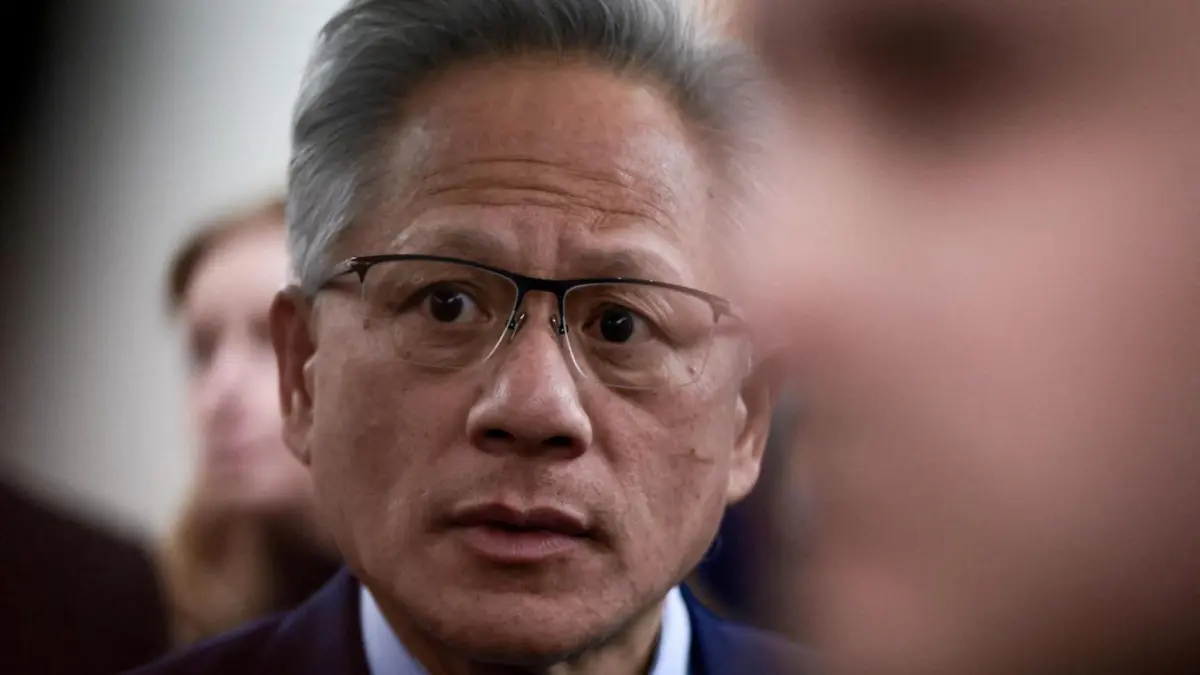
A high-profile scandal involving Nvidia founder Jensen Huang and a business executive suspected of operating as a Chinese operative out of Singapore has abruptly exposed the intricate and vulnerable mechanics of global semiconductor trade. The dramatic resignation of the chief executive of the world’s most valuable artificial intelligence hardware manufacturer has cast a harsh light on Singapore’s status as a premier global hub for advanced technology and a burgeoning conduit for covert, illicit trade routes designed to bypass international export restrictions.
Huang stepped down from his leadership post at the American technology powerhouse on Thursday following a decisive board meeting, after publicly admitting to an extramarital affair. The executive at the center of the controversy has been identified as Alice Huang, who headed Megaspeed, a Singapore-registered data center enterprise that had rapidly emerged as one of Nvidia’s most lucrative buyers of high-performance microchips across Southeast Asia.
The revelatory fallout from the executive saga has sent shockwaves through both corporate boardrooms and international diplomatic circles. For decades, Singapore has meticulously cultivated an international reputation as a highly transparent, open, and business-friendly economy. Operating as a pivotal commercial crossroads, the Southeast Asian city-state has traditionally offered multinational corporations effortless access to both Western capital markets and the vast industrial ecosystems of mainland China.
With the explosive surge in artificial intelligence technology, Singapore’s strategic positioning transformed it into an indispensable global billing and transactional clearinghouse for high-end semiconductors. Financial records underscore the sheer magnitude of this trade: during the past fiscal year, Singapore functioned as Nvidia’s second-largest billing center anywhere in the world, generating nearly a fifth of the silicon giant’s global earnings.
However, beneath those soaring financial statistics lies a structural anomaly that has drawn intense scrutiny from Western intelligence and trade regulatory bodies. Despite accounting for nearly 20 percent of Nvidia’s worldwide revenue, less than one percent of the physical semiconductor chips billed through Singapore ever actually crossed into the physical territory of the island nation. Instead, the city-state serves primarily as a corporate and transactional hub where regional and multinational conglomerates execute purchase orders, manage cross-border financial settlements, and direct shipments to secondary destinations across the globe.

This arrangement has created significant friction with policy makers in Washington. In 2022, the United States instituted sweeping export control measures aimed at cutting off mainland China and Chinese-affiliated enterprises from securing cutting-edge American semiconductors capable of powering advanced military and artificial intelligence applications. Since the implementation of those restrictions, American enforcement officials have harbored growing concerns that third-party jurisdictions—most notably Singapore—were being systematically leveraged by Chinese entities as intermediary safe harbors to maintain access to restricted hardware.
Megaspeed stood out as a prime example of these regulatory concerns. Rising to become the single largest purchaser of Nvidia’s advanced processing units across Southeast Asia, the firm fell under heavy suspicion of providing Chinese entities with unauthorized, backdoor computational access to high-end hardware. Investigations revealed that Megaspeed established extensive data center infrastructures in neighboring countries, including Malaysia, Indonesia, and Thailand, where advanced chips could be housed and accessed remotely by mainland enterprises, effectively neutralizing the territorial impact of US trade bans.
While Singaporean law does not formally enforce the unilateral export control regimes established by foreign governments, regional authorities have repeatedly maintained that companies operating within their sovereign jurisdiction are legally required to respect local business standards and uphold transparent trade documentation.
Singaporean law enforcement has demonstrated a capacity to clamp down on regulatory evasions within its borders. In a separate enforcement operation, authorities charged four corporate entities and five individuals—including several Chinese nationals—with various criminal offenses, including fraud. That case stemmed from grave concerns raised by American officials that DeepSeek, a prominent Chinese artificial intelligence company, had been illegally procuring advanced Nvidia hardware through third-party intermediaries based in Singapore and other international jurisdictions.
Yet, efforts to investigate and police Megaspeed presented Singaporean law enforcement with far more complex hurdles. In an official statement released on Thursday, the Singapore government disclosed that since February 2025, regulatory and law enforcement agencies had been actively investigating whether Megaspeed and affiliated corporate entities engaged in fraudulent behavior by submitting false customs declarations regarding data servers purchased and processed through Singapore.
According to shipping documents submitted to local customs agencies, the high-end server equipment was officially declared for final delivery and deployment to data centers in neighboring Malaysia. However, investigators in Singapore strongly suspect that the physical hardware was diverted to unverified destinations elsewhere.

To build its case, Singaporean authorities made multiple formal inquiries to American law enforcement and trade officials, seeking critical documentation regarding Supermicro—a major United States-based technology company that supplied specialized computer servers housing Nvidia chips to Megaspeed. Despite these repeated formal requests for administrative and evidentiary assistance, the Singapore government noted in its official public disclosure that it has "to date received limited information or assistance" from its counterparts in the United States.
Singapore authorities also conducted an extensive investigation into Alice Huang directly. Officials clarified that the investigation into her conduct was focused strictly on identifying potential involvement in Megaspeed’s alleged corporate fraud and customs falsifications, rather than state-sponsored espionage. After confiscating her passport and detaining her within the country for several months, investigators eventually concluded that there was "insufficient evidence" to sustain criminal charges against her. Consequently, authorities lifted her travel restrictions and permitted her to depart Singapore in February of this year.
Despite probing Megaspeed’s corporate activities for nearly two years, Singaporean authorities have yet to bring formal criminal charges against the company, its parent entities, or any associated executives. Law enforcement investigations conducted by both American and Singaporean authorities remain active and ongoing.
Suspicion surrounding Megaspeed’s operations had been quietly intensifying for years. In 2024, United States government inspectors conducted an unannounced site visit to a primary data center facility owned by Megaspeed in Malaysia. According to details reported by the New York Times, visiting inspectors discovered crates of high-end Nvidia hardware sitting unopened inside their original factory packaging, sparking alarm that the physical inventory was being staged for secondary transfer rather than active installation.
Complicating the situation further, a report by Bloomberg revealed that over the course of the previous year, Megaspeed had somehow managed to import approximately 50,000 more advanced Nvidia chips than Nvidia’s internal supply chain ledgers could account for. The massive inventory discrepancy ultimately forced Nvidia to re-evaluate and revise its own international sales and distribution records after dispatching auditors to inspect regional warehouses.
For its part, Megaspeed has consistently rejected all allegations of wrongdoing, maintaining that its corporate conduct has remained fully compliant with applicable international laws. The company stated that prior regulatory inspections by foreign and domestic agencies yielded no evidence of illicit activity. In a formal response issued on Thursday, Megaspeed asserted that it "welcomes appropriate government scrutiny" and reaffirmed its pledge to work "constructively and transparently with the US government." Government representatives in Beijing have similarly denied accusations that Chinese commercial enterprises or state institutions are systematically procuring restricted American semiconductor technology through illegal channels.

The operational trajectory of Megaspeed and Alice Huang highlights broader systemic vulnerabilities associated with Singapore’s open, globalized economic model. Over the past decade, the island nation has emerged as the premier corporate destination for mainland Chinese technology firms seeking to internationalize their operations. Major global brands such as TikTok and artificial intelligence developer Manus have established their global headquarters in Singapore. Beyond offering minimal corporate friction and strong legal protections, Singapore possesses a majority ethnically Chinese demographic that generally maintains favorable views toward mainland China, creating a culturally and commercially comfortable environment for Chinese executives.
According to Winston Ma, an adjunct professor of law at New York University, setting up operations in Singapore provides mainland technology enterprises with a strategically vital "neutral address." This corporate presence allows firms to operate close to mainland China while maintaining a global business identity that satisfies the compliance standards of international investors, banking institutions, and global customers.
However, national security analysts warn that this practice has fueled a trend known as "Singapore-washing"—a corporate strategy in which Chinese enterprises leverage Singapore’s clean commercial reputation to obscure their true origins, soften international regulatory scrutiny, and conceal illicit supply lines.
The Washington-based security analysis firm C4ADS conducted a forensic review of Megaspeed’s corporate trajectory, concluding that Alice Huang’s corporate structuring of the enterprise displayed classic hallmarks of Singapore-washing. Cross-referencing public corporate registries across mainland China, Hong Kong, and Singapore revealed that in 2019, Alice Huang sold a commercial gaming enterprise and its operational subsidiaries to 7Road, a prominent mainland Chinese gaming company.
In March 2023, a Singapore-registered subsidiary of 7Road formally named Alice Huang as its executive director. Just twenty-four hours after her appointment, the subsidiary officially filed corporate paperwork to alter its name to Megaspeed.
Huang retained her formal executive position at Megaspeed for eight months before abruptly transferring legal control and ownership of the firm to a local Singaporean national. C4ADS noted that this brief eight-month period coincided precisely with "a critical period of corporate restructuring and regional expansion" for Megaspeed. The investigative group highlighted that the company’s underlying corporate connections raised severe doubts regarding whether "Megaspeed’s Singaporean identity is genuine or effectively Chinese-controlled."

Furthermore, C4ADS concluded that even after formally transferring legal ownership to a local proxy, Alice Huang remained "practically in control" of Megaspeed’s strategic and operational direction. Corporate intelligence linked her to Megaspeed through secondary holding entities, while public professional records showed her continuing to represent herself as Megaspeed’s "chairwoman" at major international industry conferences.
These converging developments underscore the delicate diplomatic high-wire act facing Singapore’s leadership. For decades, the nation’s foreign policy framework has hinged on maintaining robust, friction-free relationships with both Washington and Beijing. Prime Minister Lawrence Wong has repeatedly articulated this non-aligned posture, stating that his administration is fundamentally neither pro-China nor pro-America, but uncompromisingly "pro-Singapore."
However, political analysts note that maintaining absolute neutrality is becoming exceptionally difficult as tech competition between the United States and China intensifies. Dylan Loh, a lecturer in politics and international studies at Nanyang Technological University, observed that Singapore’s historical balancing act "has now fast become very difficult to manage and sometimes quite fraught too," particularly as hardware supply chains become weaponized.
The Megaspeed scandal threatens to narrow Singapore’s room for maneuver even further. Chong Ja Ian, a political scientist and non-resident scholar with Carnegie China, noted that Singapore’s aggressive local enforcement actions could draw suspicion from Beijing, where officials may question why Singapore is actively policing domestic transactions to satisfy unilateral US trade restrictions.
Concurrently, Washington might interpret Singapore’s recent public statements—which highlighted a lack of timely assistance from US agencies regarding Supermicro—as an effort to deflect responsibility back onto American authorities, potentially sparking friction with the White House. Chong noted that while Singapore has adopted a clear policy position not to take sides, by attempting to remain strictly neutral, the country runs the distinct risk of being viewed by both superpowers as complicit in the other’s geopolitical agenda.
Despite these mounting pressures, regional experts emphasize that navigating complex cross-pressures is an unavoidable reality for a global trading hub. Benjamin Ho, an assistant professor at Singapore’s S. Rajaratnam School of International Studies, noted that this is neither the first nor the last time the nation will find itself caught between competing global powers. Ultimately, such friction represents the inherent cost an open, globally integrated economy must navigate whenever major international powers clash.