
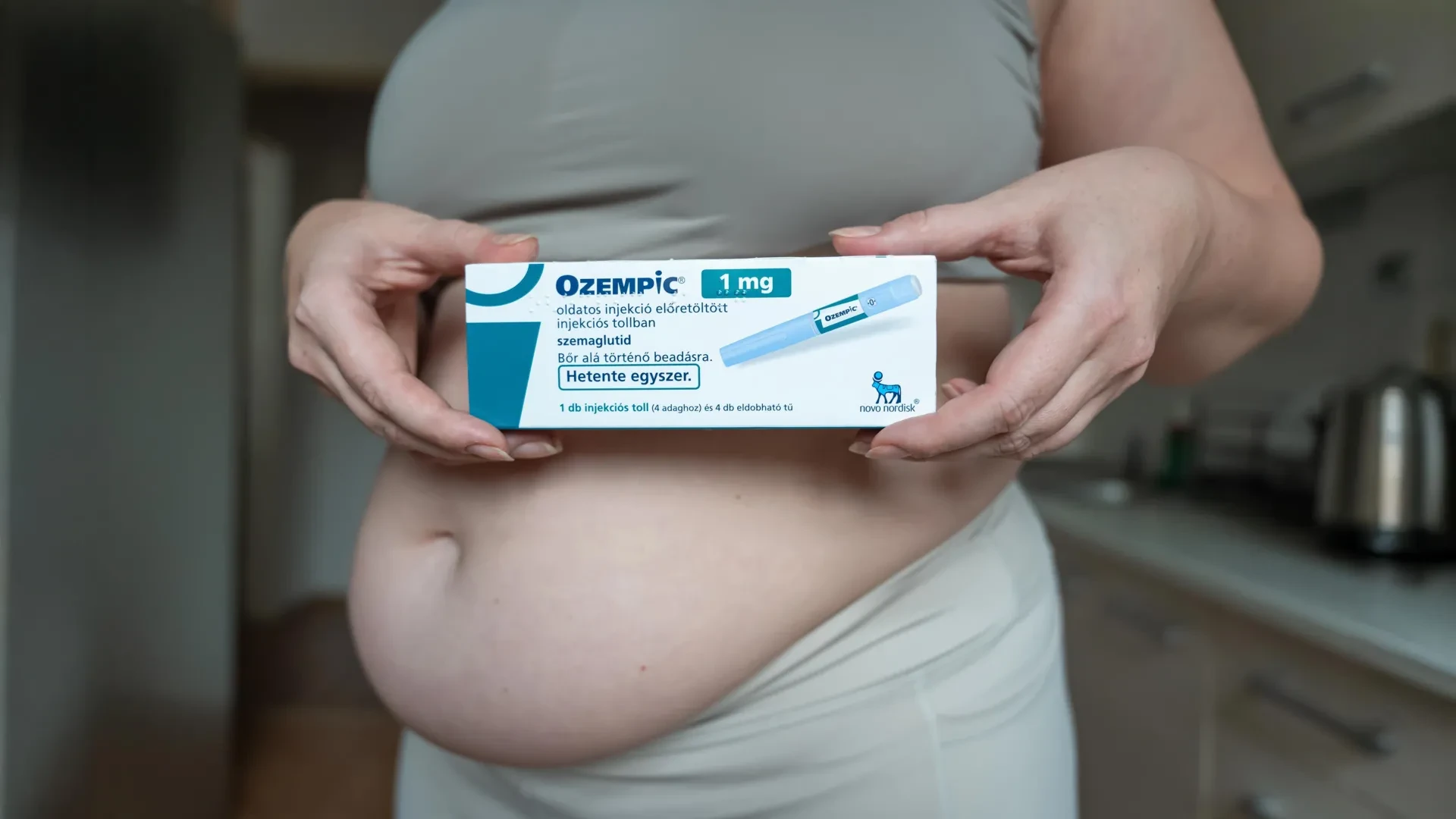
A major new study involving an exhaustive analysis of more than 750,000 pregnancies has uncovered a critical distinction in the potential reproductive risks associated with popular GLP-1 receptor agonist medications, such as Ozempic and Wegovy. The extensive nationwide research demonstrates that women who unintentionally used these breakthrough medications shortly before conception or during the delicate stages of early pregnancy faced an increased likelihood of giving birth prematurely—but this elevated risk was strictly confined to instances where the drugs had been prescribed to treat pre-existing diabetes.
Among women taking the exact same medications purely for weight management, researchers observed no statistically significant association with premature delivery or any of
the other major pregnancy complications examined throughout the investigation.
The findings strongly suggest that the underlying metabolic condition of diabetes, rather than direct pharmacological exposure to the medications themselves, is primarily responsible for the heightened risk of early delivery. Published in Human Reproduction Open, a leading peer-reviewed journal specializing in reproductive medicine, the study sheds crucial light on a rapidly growing public health concern as global prescription rates for these drugs soar.
The medications evaluated in the research include semaglutide, widely known under brand names such as Ozempic and Wegovy, alongside liraglutide, marketed as Saxenda. Both compounds belong to a heavily utilized class of pharmaceuticals known as GLP-1 receptor agonists, or GLP-1 RAs. Initially developed and approved for the long-term management of type 2 diabetes, these medications have revolutionized metabolic care by powerfully suppressing appetite and promoting significant weight loss. Despite their massive commercial success and widespread adoption, comprehensive safety data regarding their use during human pregnancy has historically been lacking.
Why Ozempic and Similar Drugs Raise Pregnancy Concerns
Professor Henriette Svarre Nielsen, who spearheaded the research at the Department of Gynecology and Obstetrics at Copenhagen University Hospital Hvidovre in Hvidovre, Denmark, pointed out that the meteoric global rise in GLP-1 prescriptions has generated an urgent medical demand for precise, real-world data regarding pregnancy exposure.
"GLP-1 RA treatment has, within the last few years, become the medication with the sharpest increase in prescriptions worldwide," Professor Nielsen explained. "Current guidance suggests the treatment should be stopped eight weeks prior to planning a pregnancy. However, this is based on early-phase model organism studies, and not real-world evidence. Nonetheless, because of its widespread adoption, inadvertent exposure in early pregnancy is inevitable, and there is hardly any evidence to guide clinical counseling when it happens."
To investigate these pressing clinical concerns, the research team set out to determine whether accidental, periconceptional exposure to GLP-1 medications was correlated with adverse events during gestation. Their analysis specifically targeted preterm birth—defined as delivery occurring before 37 completed weeks of gestation—as well as pre-eclampsia, gestational diabetes, delivering a baby unusually large for its gestational age, stillbirth, and various common placental complications.
Study Examines More Than 750,000 Pregnancies
To achieve the statistical power necessary for reliable conclusions, the research team leveraged Denmark’s comprehensive nationwide health registries. They systematically examined 756,636 singleton pregnancies involving 480,231 individual women. Every pregnancy included in the cohort resulted in a live birth or delivery between October 1, 2009, and December 31, 2023.
The researchers classified a pregnancy as having experienced possible accidental exposure to GLP-1 medications if the mother filled an active prescription for either semaglutide or liraglutide during the critical 16-week window spanning the eight weeks before and the eight weeks after the first day of her last menstrual period.
This specific timeframe captured both the crucial weeks immediately prior to fertilization, when a woman might still be taking the drug without realizing she has conceived, and the foundational stages of early embryonic and fetal development, when major organ systems begin to form. Out of the vast total of pregnancies evaluated in the study, exactly 529 individual pregnancy records indicated active prescription exposure to GLP-1 medications during this vulnerable period.
To ensure the integrity of the comparisons and eliminate confounding variables, the research team carefully controlled for a wide array of maternal characteristics known to influence perinatal outcomes. These adjustments factored in maternal age, pre-pregnancy body mass index, smoking status, geographic location, educational attainment, and pre-existing diabetic status. Additionally, the analysis accounted for the specific month and year of delivery to control for potential seasonal variations and broader temporal shifts in clinical practice over the 14-year study period.
Diabetes May Be the Key to Premature Birth Risk
The results of the analysis revealed a striking and clinically vital distinction between women prescribed GLP-1 medications for the management of diabetes and those utilizing the exact same pharmaceutical agents for weight loss.
Dr. Kathrine Hviid, the study’s first author and a doctoral student within the same department at Copenhagen University Hospital, noted that these insights will play a foundational role in shaping future clinical trials and refining medical guidance for women who inadvertently conceive while taking these therapies.
"We made some extremely important findings that have implications for future studies, such as randomized controlled trials of GLP-1 RA usage in pregnancy, and for clinical counseling," Dr. Hviid stated. "We found that these medications were associated with an increased risk of preterm birth, but the risk was only present when the medication was used for diabetes treatment, and not for weight management. This suggests that the underlying condition of diabetes, rather than the medication, may be driving this association."
Initially, raw data indicated that women with active GLP-1 prescriptions experienced several distinct pregnancy complications at higher frequencies than unexposed peers. However, the vast majority of these apparent associations lost statistical significance once the researchers adjusted for underlying maternal health characteristics and socioeconomic factors.
The sole remaining statistically significant association involved premature delivery among women who had been specifically prescribed liraglutide or semaglutide to manage diabetes. When compared against women who had no record of exposure to these medications, the adjusted odds of premature delivery were found to be 70% higher among women taking liraglutide for diabetes, and a notable 84% higher among those utilizing semaglutide for diabetes. Furthermore, accompanying institutional announcements reported estimated absolute increases of approximately 11% for semaglutide and 9% for liraglutide among women carrying pre-existing diabetes.
Crucially, this exact same elevated risk of premature birth was entirely absent when the identical medications had been prescribed exclusively for weight management purposes. This profound divergence strongly implies that the patient’s underlying disease pathology, rather than systemic exposure to GLP-1 receptor agonists, plays the dominant role in determining these specific pregnancy outcomes.
What the Findings Mean for Women Taking GLP-1 Drugs
According to Professor Nielsen, future scientific investigations must strictly differentiate between patient populations taking GLP-1 medications for chronic metabolic disease versus those utilizing them strictly for cosmetic or general weight control. Lumping these distinct cohorts together risks obscuring vital differences in baseline health profiles and true gestational risk.
"Future studies must take account of the reason a woman has been prescribed these medications, as the risks differ between women using GLP-1 RAs for diabetes versus weight management," Nielsen emphasized. "This is one of the first studies to examine GLP-1 RA exposure in early pregnancy according to the reason for prescription. As more evidence accumulates, these findings will guide clinical counseling for women inadvertently exposed to GLP-1 RAs in early pregnancy. In Denmark, about 70% of people who use weight loss medications are women and so it is inevitable that some may take it without realizing they are pregnant."
While the findings offer welcome and reassuring context, Nielsen stressed that the data do not currently justify any immediate alterations to established medical guidelines. Specifically, the results do not provide license to abandon standard clinical advice recommending the discontinuation of GLP-1 therapies prior to a planned pregnancy, nor do they furnish sufficient evidence to completely rewrite clinical counseling protocols based solely on indication.
Important Limitations of the Pregnancy Study
While the investigation derived immense statistical robustness from its unprecedented scale—encompassing health records across more than three-quarters of a million births—the study’s observational nature means it can demonstrate correlation rather than definitive causation. It remains impossible to definitively rule out the residual, compounding effects of diabetes and other unmeasured metabolic variables.
Another inherent limitation stemmed from the reliance on nationwide prescription registry data. While researchers could accurately verify whether a patient had successfully filled a prescription at a pharmacy, they could not independently confirm whether the patient physically ingested every dose.
However, the research team remains confident that actual compliance was exceptionally high, largely due to the substantial financial out-of-pocket costs associated with obtaining the medications. In Denmark, patients generally contribute significantly to the cost of GLP-1 injections, although targeted government subsidies exist specifically for diabetes indications. For context, a standard 1-milligram injection pen of Wegovy or Ozempic costs approximately 180 euros and 114 euros respectively, with the diabetes-specific subsidy reflected in the reduced pricing tier.
"Because of the high cost, we assume that compliance is very high among the women prescribed GLP-1 RAs," Dr. Hviid noted.
Experts Call for More Individualized Pregnancy Guidance
The Danish study immediately drew praise and critical analysis from international experts in the reproductive health community. In an invited commentary published alongside the primary research paper, Dr. Yeyi Zhu and Dr. Monique Hedderson of Kaiser Permanente Northern California and the Center for Upstream Prevention of Adiposity and Diabetes Mellitus in Pleasanton, California, characterized the findings as a vital contribution to the sparse literature surrounding GLP-1 safety.
They wrote that the findings successfully "complement and extend an emerging evidence base on the reproductive safety of GLP-1 RAs." Furthermore, the commentary underscored that distinguishing between diabetes indications and weight management will empower physicians to deliver far more nuanced, personalized guidance to patients who experience accidental periconceptional exposure.
"For clinicians, the study by Hviid and colleagues may inform preconception and early pregnancy counseling," the commentators wrote. "The observation that elevated preterm birth risk was confined to women treated for diabetes, and not to those using GLP-1 receptor agonists for weight management, supports more balanced, individualized discussions with patients who may have experienced inadvertent periconceptional exposure. For patients with diabetes, the study reinforces the importance of recognizing diabetes as an important risk factor for obstetric complications and prioritizing metabolic health and glycemic management before and during pregnancy."
Ultimately, the comprehensive study highlights why evaluating underlying maternal pathology is just as critical as analyzing pharmaceutical exposure when assessing gestational risks. While the findings provide important reassurance regarding accidental exposure among weight-loss patients, they do not establish that GLP-1 agents are broadly safe for use throughout gestation, leaving the door open for continued clinical research as these powerful medications become increasingly embedded in modern healthcare.