
The stock market has a persistent habit of surprising observers, whether it is plunging into a sudden crisis that rattles retirement plans or surging to unprecedented record valuations. In the current economic landscape, market watchers find themselves anxious not just when stocks fall, but also when they rise to heights driven by the frenzied boom in Artificial Intelligence. This rapid expansion has led many investors to worry that an even bigger crash is looming, mirroring the dot-com bubble of the early 2000s.

For veterans of earlier market cycles, this anxiety feels entirely familiar. The dot-com boom helped launch early careers and paved the way for early retirement for some, even though the subsequent crash nearly derailed employment and financial stability. As questions mount regarding the sustainability of the current investment cycle, financial commentators and long-term retirees are once again addressing whether today’s technological mania will ruin modern retirement plans or if the fears are simply a recurring symptom of human psychology.

Will the AI Bubble Ruin Our Retirement?
When looking back over decades of financial independence, retirees often encounter friends and peers paralyzed by anxiety about the state of the world. Conversations frequently center on whether one can sleep at night given the barrage of negative headlines dominating the news cycle. Today’s list of worries often includes volatile geopolitical figures menacing international stability, persistent inflation eroding purchasing power, the towering United States national debt, ongoing global conflicts, and the looming threat of an AI-driven economic bubble.

Interestingly, these concerns mirror those voiced decades ago. During the mid-2000s, investors similarly worried about corrupt or dangerous global leaders, ongoing conflicts in the Middle East, escalating national debt, and inflation. Back then, the overvalued stock market was attributed to a housing bubble rather than an artificial intelligence boom, and fears of job losses centered on outsourcing to overseas markets rather than automated software. There were even intense debates over "Peak Oil" and the imminent exhaustion of fossil fuel supplies.

Despite the severe anxieties of the mid-2000s, which culminated in the Great Financial Crisis—the largest market crash since the Great Depression—long-term data reveals a different story. Even when factoring in historical downturns, including the severe market shocks during the COVID-19 pandemic, patient investors who stayed the course saw substantial long-term growth. Furthermore, global living standards improved dramatically over the same twenty-year period. Extreme poverty rates dropped significantly, infant mortality rates were cut in half, clean energy adoption surged with solar panels becoming drastically cheaper, and electric vehicles transitioned from a theoretical concept to a major market share.

This historical trajectory raises a fundamental question about whether worrying about an uncertain future is more productive than maintaining a baseline of financial and personal optimism. Skeptics frequently ask if "it is different this time," pointing to record national debt levels or the unprecedented capabilities of emerging artificial intelligence. However, financial analysts note that a crucial detail often gets lost in sensationalized media coverage: true economic prosperity does not originate from abstract numbers on computer screens in the financial system, but rather from human productivity.

Productivity, Prosperity, and the Nature of Fear
Economic history demonstrates that capitalism is inherently choppy and prone to wild cyclical swings. Beneath the surface turbulence, however, real people continue to perform real work and invent practical solutions. The concept of an economy is simply another human invention; if a financial system suffers a major correction due to shifting valuations, societies have repeatedly adapted by restructuring financial ledgers and returning to work. High productivity consistently drives standards of living, economic growth, and the viability of early retirement.

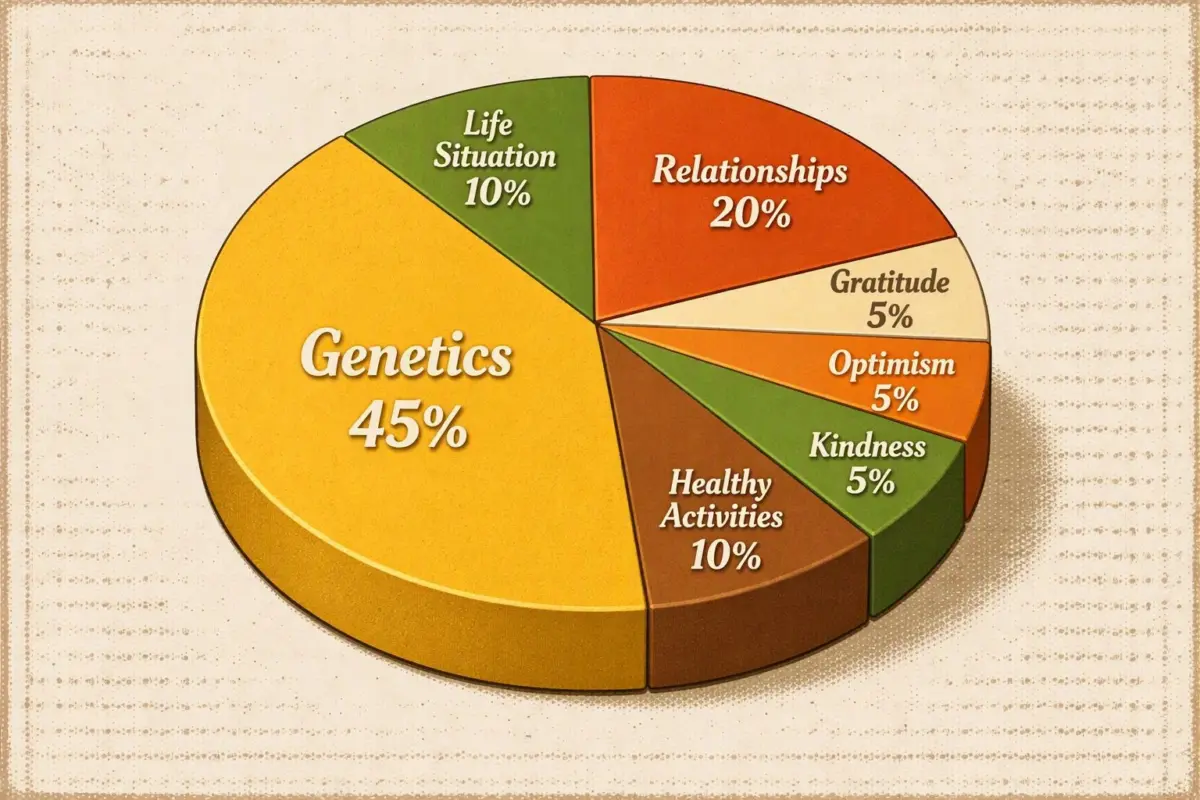
Once a society achieves a certain standard of living, human happiness tends to plateau along financial dimensions. Wealth ultimately represents only one small component of an individual’s overall life situation. Psychologists generally view genetics as the largest factor in baseline happiness, followed closely by controllable choices such as cultivating strong personal relationships, practicing gratitude, and engaging in regular outdoor and physical activities.

Despite these reassuring realities, many individuals remain intensely fearful of an unknown future. This persistent anxiety often stems from human evolution. As a species, humans evolved primarily as danger-detection machines, utilizing background fear as a protective trait against physical threats and scarcity. However, once immediate physical dangers are resolved, this cognitive machinery does not simply turn off. Instead, it frequently shifts goalposts, seeking out new worries ranging from social standing and neighborhood aesthetics to tax strategies and required minimum distributions on retirement accounts.

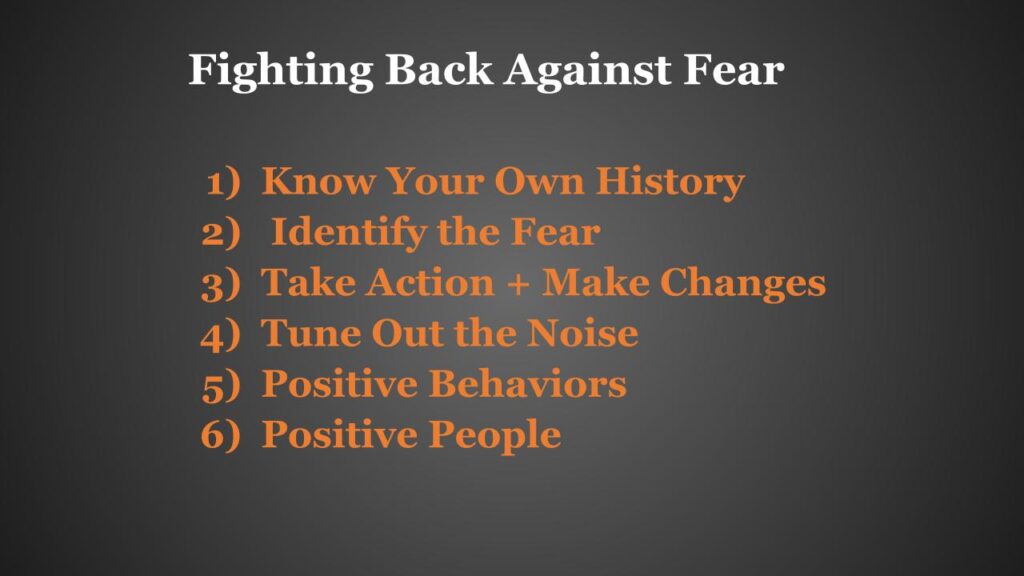
Combating this pervasive fear requires self-awareness and an understanding of personal history. Childhood environments, family attitudes toward scarcity, and past trauma can heavily influence adult financial anxiety, causing individuals to react to ghost memories rather than objective present-day realities. By identifying specific fears and analyzing worst-case scenarios, people can often recognize that even the most dreaded financial outcomes are rarely as catastrophic as anticipated. Taking concrete action helps transform the unfamiliar into the manageable, fostering resilience and confidence.

Everything is an Experiment: Navigating the AI Era
Another effective strategy for reducing anxiety involves filtering out sensationalized daily news diets that disproportionately emphasize frightening stories. Humans are biologically wired to solve physical and mental problems actively, often outdoors, rather than sitting indoors passively consuming digital anxieties. Aligning daily habits with natural human behaviors—such as continuous learning, physical movement, and surrounding oneself with optimistic, productive peers—can fundamentally alter how individuals perceive risk.
This mindset applies directly to major technological shifts, including the current expansion of artificial intelligence. Rather than viewing emerging technology through a lens of doom and panic, experts suggest approaching it as a fascinating large-scale experiment. While change can cause uncertainty, artificial intelligence functions essentially as a powerful cognitive tool designed to boost efficiency and productivity.

Just like previous technological revolutions, such as the internet or mobile computing, AI will inevitably displace certain traditional roles, particularly in entry-level administrative and financial sectors. At the same time, it will reduce service costs, lower consumer barriers, and catalyze entirely new industries. While these transitions often concentrate initial financial rewards among business owners and shareholders, they ultimately redefine how modern labor operates.

Ultimately, technological disruptions and market fluctuations present ongoing choices. Individuals can choose to view innovations like artificial intelligence as a source of paralyzing fear or as a catalyst for continuous learning, positive action, and a more engaged life. As many long-term financial independence advocates note, everything worthwhile on the other side of uncertainty requires overcoming the initial hesitation that prevents people from pursuing their goals.