
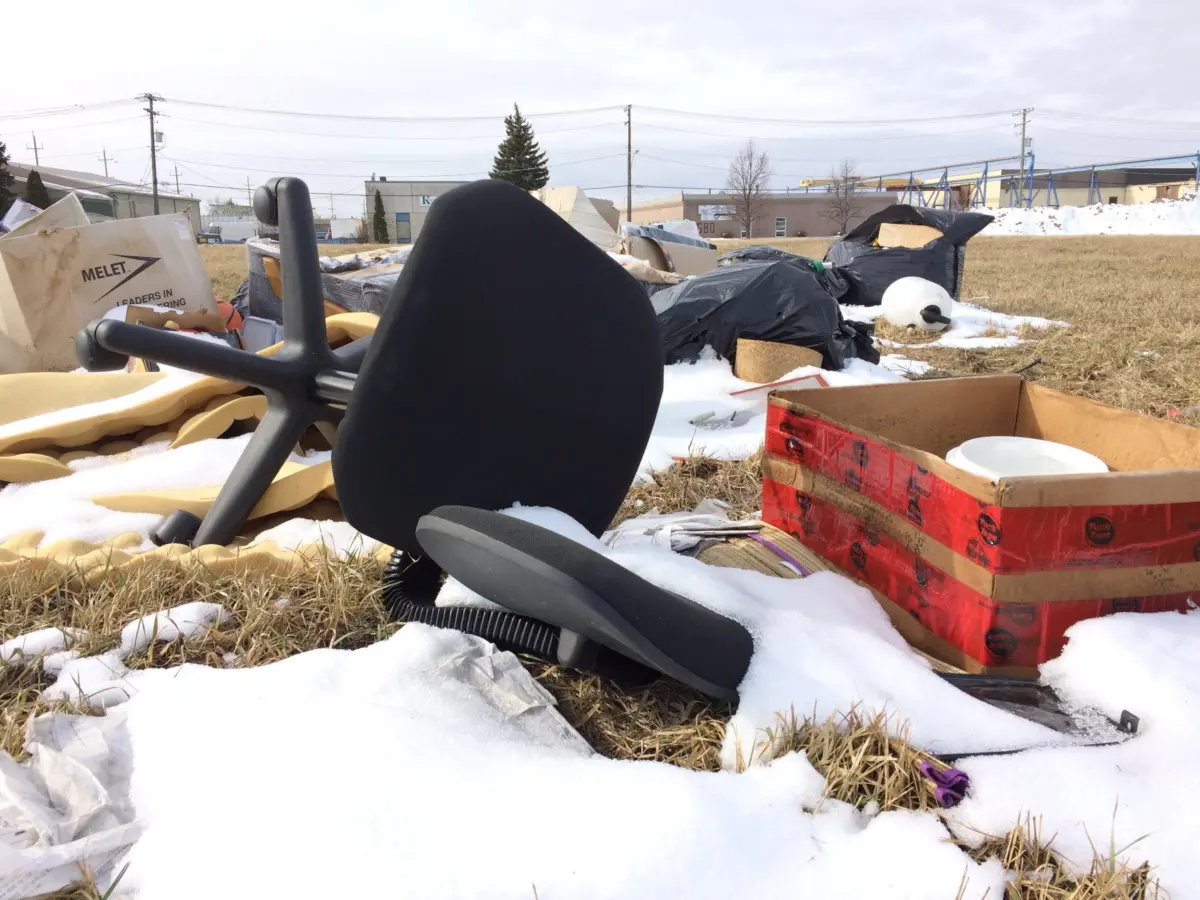
EDMONTON — In a bid to curb what provincial officials describe as a rapidly escalating environmental and financial nuisance, Premier Danielle Smith announced Wednesday that the Alberta government will introduce tough new legislation later this year to crack down on illegal dumping and the improper disposal of waste across the province.
Speaking at a press conference, Smith highlighted a worrying and growing trend of individuals and commercial operators abandoning household trash, construction debris, hazardous materials, and bulky items on public roadways, private agricultural lands, and sensitive public ecosystems. This irresponsible behavior, she noted, forces municipalities, local taxpayers, and private landowners to shoulder the significant logistical and financial burdens of cleaning up the mess.
According to the Premier, the root of the problem lies in the fact that perpetrators too often face minimal consequences. Under the current legal framework, those caught illegally discarding waste are frequently subjected to light fines that do not reflect the true cost of cleanup or the damage caused to the community. Smith emphasized that the upcoming legislation is specifically designed to reverse this trend by introducing severe, deterrent-level penalties that will make offenders think twice before abandoning their waste.
The financial toll of these activities on local governments is substantial. Smith pointed out that cleaning up after illegal dumping operations can easily cost a single municipality hundreds of thousands of dollars each year. These expenses are not absorbed by the province; rather, they are passed directly along to local residents and taxpayers through municipal budgets. Furthermore, the Premier drew attention to the severe impact this behavior has on the province’s agricultural sector, questioning the flagrant disregard shown by individuals who trespass onto private farmlands to discard their unwanted items on someone else’s livelihood.
If debated and passed by the legislature, the proposed legislation will significantly raise the stakes for violators. The government plans to double the maximum penalties currently on the books, allowing courts to impose fines of up to $100,000 for individual offenders. For corporations—which are often responsible for larger-scale dumping of commercial waste, construction materials, and industrial byproducts—the maximum penalty will skyrocket to $1 million. In the most extreme and egregious cases, the courts will also have the authority to sentence offenders to jail terms of up to six months.

To illustrate the scale of the enforcement challenge currently facing Alberta’s major urban centers, Smith presented striking statistics from the province’s two largest cities. In Calgary, the municipality logged a staggering 30,000 complaints related to illegal dumping on municipal property last year alone. Despite this massive volume of reports, the city was only able to issue 165 tickets, resulting in a mere three formal fines.
The situation in Edmonton paints a similarly challenging picture. Over a five-year period, the City of Edmonton recorded more than 600 complaints specifically concerning illegal dumping on private property. Out of those hundreds of complaints, local authorities issued 240 tickets.
Smith noted that these numbers point to a systemic issue with both deterrence and enforcement. The vast disparity between the tens of thousands of complaints filed by frustrated citizens and the handfull of fines actually handed out suggests that current enforcement mechanisms are failing to catch or adequately penalize offenders. By increasing provincial involvement and monitoring these statistics closely, the government aims to close these enforcement gaps and ensure that municipalities have the tools and backing they need to prosecute offenders successfully.

The issue of illegal dumping has become a major flashpoint for Alberta’s rural communities, particularly for farmers and ranchers whose properties border major highways or urban boundaries. Rural landowners have reported finding everything from household appliances and old tires to construction waste and hazardous chemicals left on their fields and access roads. Beyond the aesthetic blight, this debris poses a direct threat to agricultural operations. Discarded metal and wood can cause catastrophic damage to expensive harvesting machinery, while chemical runoff can contaminate soil and local water sources. Furthermore, livestock are at risk of injury or death if they ingest plastic waste or sharp debris.
Under current conditions, when waste is dumped on private land, the responsibility and cost of disposal often fall squarely on the shoulders of the farmer or property owner. The provincial government’s push to increase penalties is being welcomed by agricultural advocates who have long argued that rural properties should not be treated as free landfills for urban waste.
To address the enforcement side of the equation, Public Safety Minister Mike Ellis has officially made the crackdown on illegal dumping a top priority for provincial peace officers. Because many dumping incidents occur in remote areas, along secondary highways, or on Crown land where municipal bylaw officers have limited jurisdiction, provincial peace officers will play a critical role in monitoring high-risk areas and catching dumpers in the act. Increased coordination between provincial officers, municipal authorities, and the Royal Canadian Mounted Police (RCMP) is expected to be a cornerstone of the new enforcement strategy.

In addition to targeting individual dumpers and dishonest contractors, the United Conservative Party (UCP) government is pledging to strengthen regulatory oversight on the commercial side of the waste industry. The province plans to introduce stricter rules for waste transfer and storage facilities, which officials identify as representing a higher risk of environmental mismanagement and illegal accumulation. Under the proposed rules, operators of these facilities will be required to register formally with the province and adhere to rigorous compliance and monitoring standards. By tightening the net around these facilities, the government hopes to prevent commercial waste from being diverted into illegal channels.
The timing of the announcement aligns with a busy and highly charged political season in Alberta. Provincial lawmakers are scheduled to reconvene at the legislature in Edmonton on October 27, 2026. This return to the legislative assembly will take place just one week after Albertans participate in a major provincial referendum on October 20, 2026. The referendum is set to feature 10 separate ballot questions, including a highly publicized and controversial question regarding provincial separation.
Against the backdrop of these significant constitutional and political debates, the UCP government’s focus on illegal dumping represents a highly practical initiative aimed at protecting property rights, supporting municipal finances, and preserving the province’s natural landscapes. As the legislative session approaches, both rural landowners and municipal leaders will be watching closely to see how the proposed bill takes shape and whether the threat of million-dollar fines and jail time will be enough to finally clean up Alberta’s roadsides and fields.