
When award-winning chef, television personality, and cookbook author Claudette Zepeda steps into a professional kitchen, her daily uniform is practical and utilitarian. Outfitted in a reliable apron and sturdy Blundstones, she wears clothes designed to handle the inevitable chaos, heat, and messes of culinary life. But stepping away from the kitchen line unveils a completely different side of her personal expression—one driven by whimsy, color, and a philosophy that rejects the conventional boundaries of fashion.
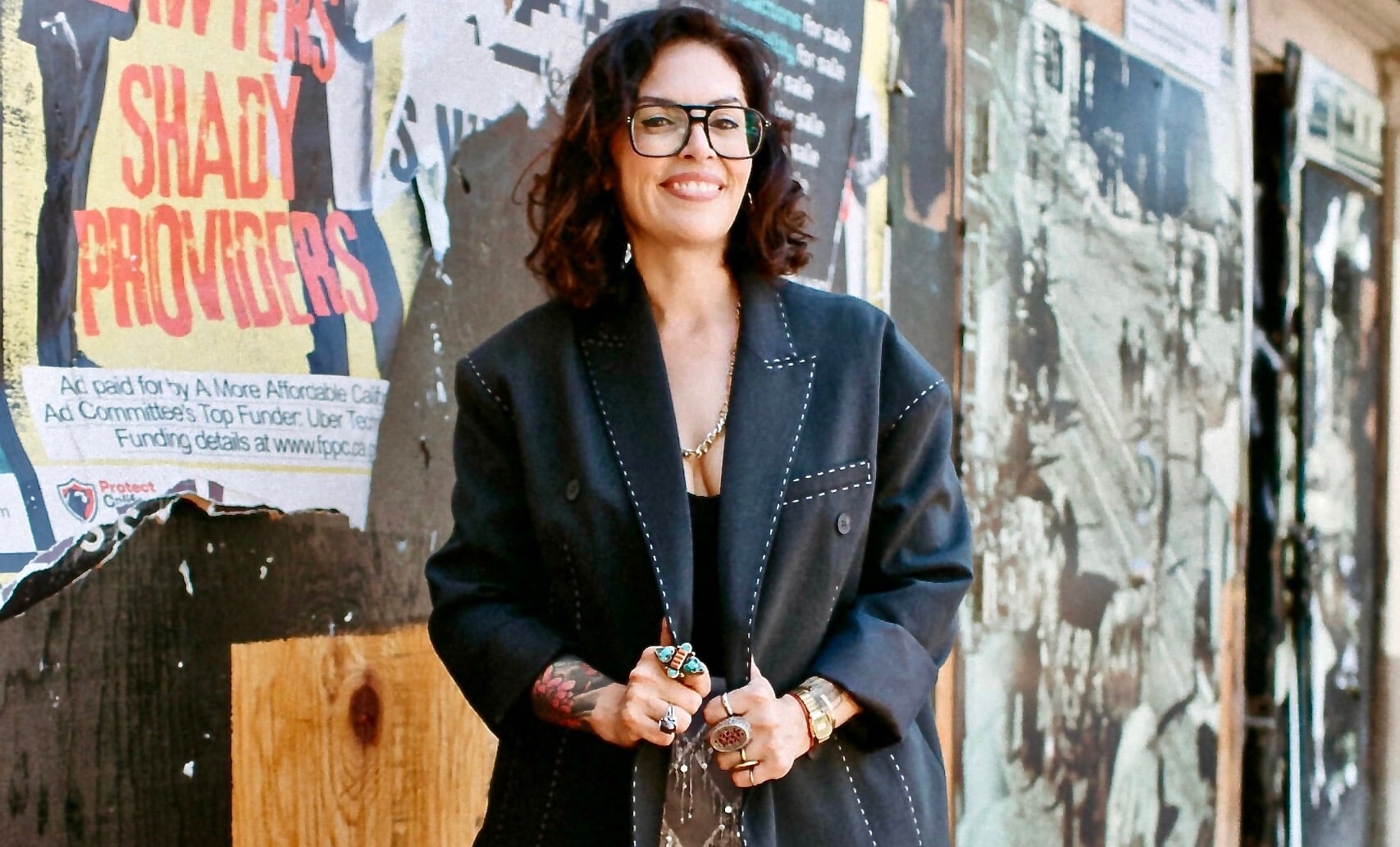
Zepeda, a prominent competitor on the Food Network series Bobby Flay’s The Line and author of the acclaimed cookbook Cooking the Borderlands, recently opened up about her dynamic wardrobe in a week-long style feature. Known for her bold culinary creations that bridge cultures and borders, Zepeda approaches her personal style with the same fearless creativity she brings to food.
"While working, I’m in an apron and Blundstones, clothes that I can get dirty," Zepeda explains. "But I love dopamine dressing, and if the day allows it, I want to look girly, fun, and whimsical."
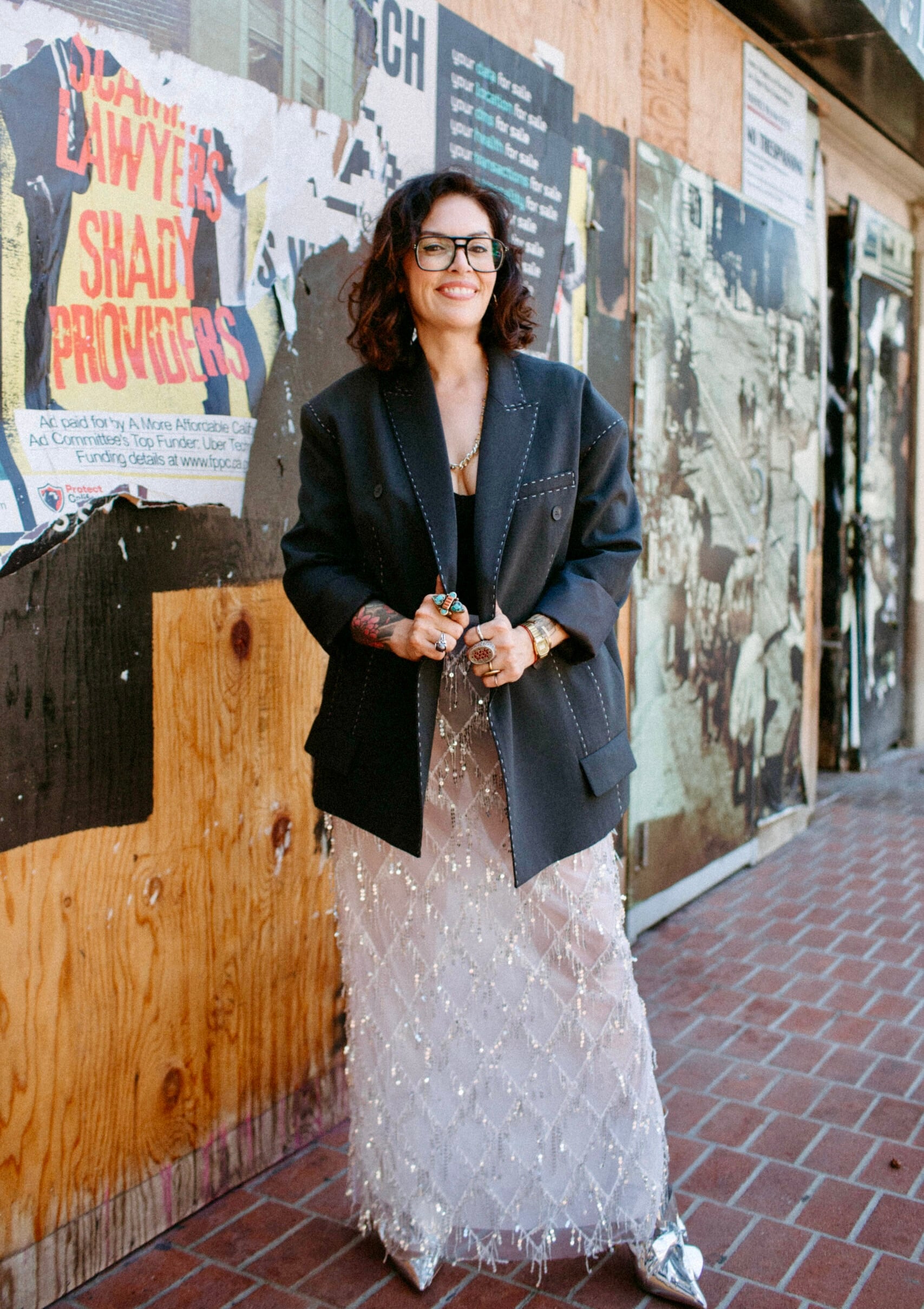
Rather than saving her favorite statement pieces for rare galas or formal celebrations, Zepeda infuses high-impact fashion into her everyday routines. Reflecting on her philosophy regarding special occasions, she recalls a question she was once asked about how she decides what to wear. Her response was characteristically bold: "Well, I’m the occasion. We’re told that certain clothes belong in certain environments, but I don’t believe that. I choose to wear my special-occasion clothes on a Monday."
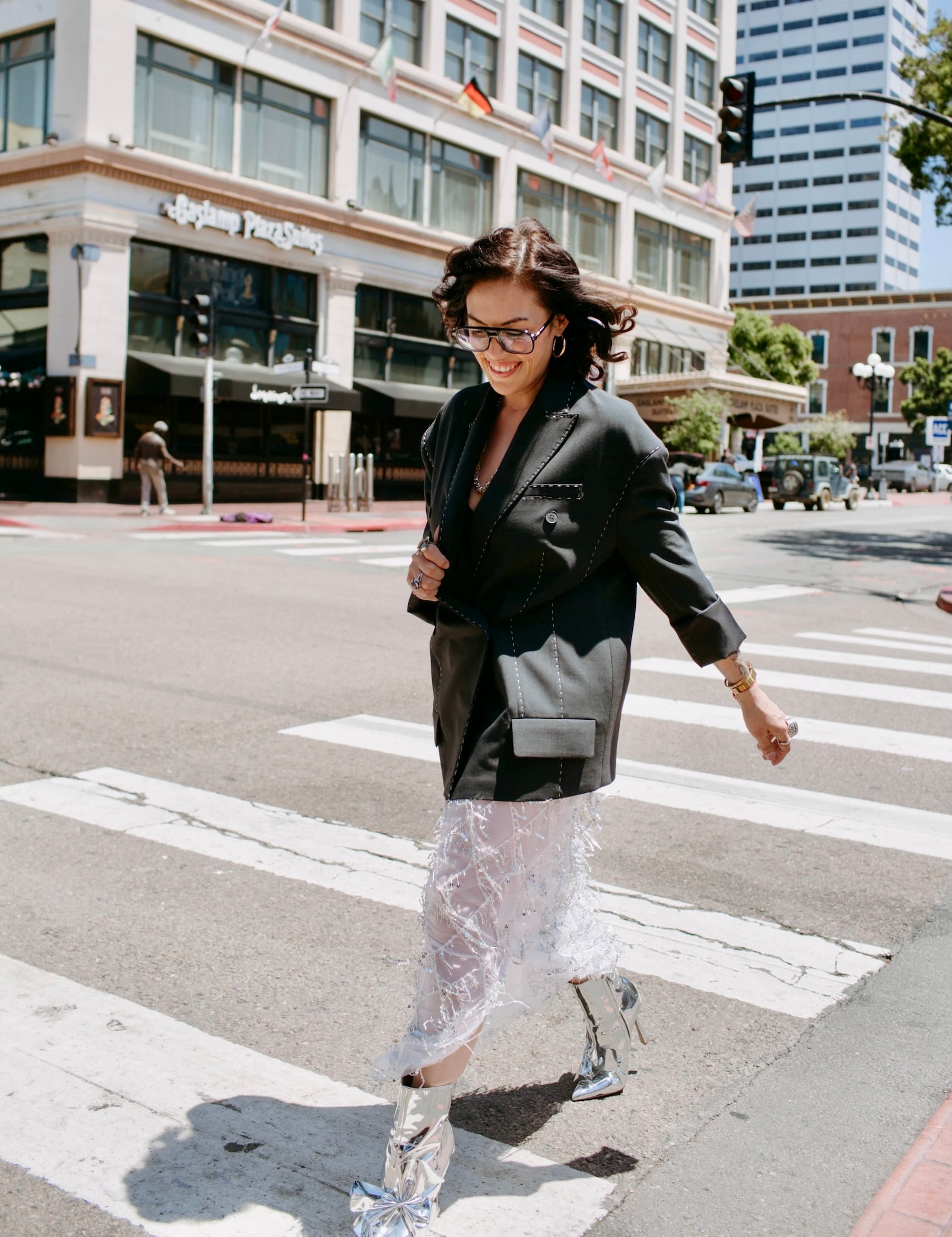
This ethos is vividly displayed across her weekly wardrobe rotations, which seamlessly blend high-street finds with secondhand treasures, sentimental garments, and cultural homages. On one day, she pairs a Zara blazer and Amazon bodysuit and skirt with Sam Edelman boots sourced secondhand, effortlessly commanding attention with an ensemble that feels both polished and daring.
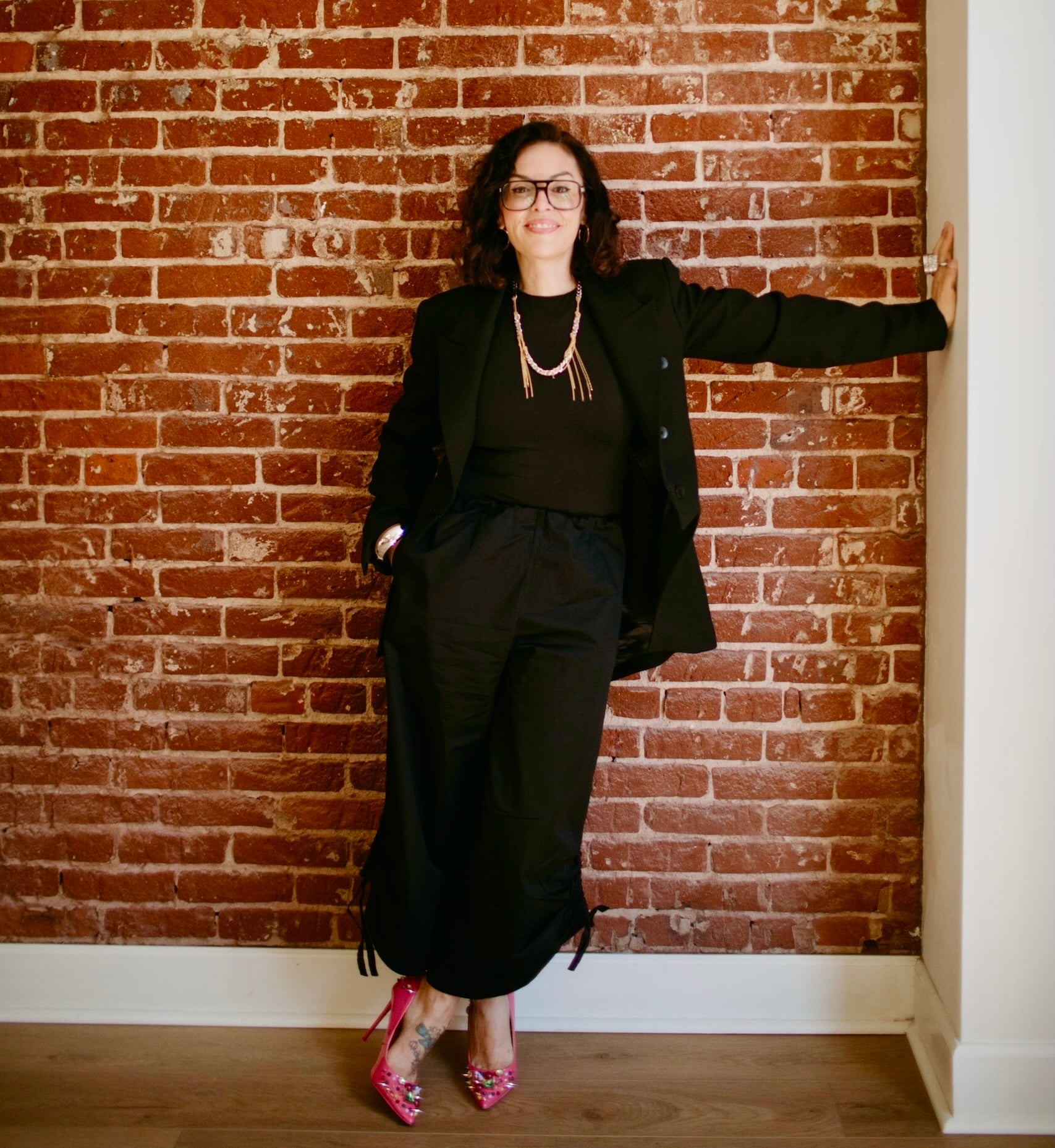
Yet, beneath her love for vibrant dopamine dressing lies a distinct appreciation for darker aesthetics and dramatic flair. Zepeda openly embraces a gothic sensibility, noting a personal affinity for the iconic fictional character Wednesday Addams. She connects this part of her identity deeply to her Mexican heritage, pointing out that Mexican culture maintains a profound, celebratory relationship with mortality—a conversation that often begins in childhood. For Zepeda, black serves as a foundational, beautiful canvas, which she frequently punctuates with unexpected, joyful bursts of color, such as candy-bright heels from Steve Madden paired with a Zara blazer, top, and pants.
This theatricality and appreciation for strong visuals are rooted in the cultural icons of her upbringing. Growing up, Zepeda was deeply influenced by the outspoken, larger-than-life women of Mexican history and entertainment. She recalls adoring Alejandra Guzmán, widely regarded as the Madonna of Mexico, alongside the high-drama heroines of Spanish-language telenovelas. In those television worlds, fashion is never understated; dresses flow endlessly, and accessories are deployed with maximum impact. Zepeda fondly notes that her hometown region even boasts an entire shopping destination dedicated exclusively to cocktail jewelry, underscoring a cultural appreciation for making an unforgettable accessory statement.
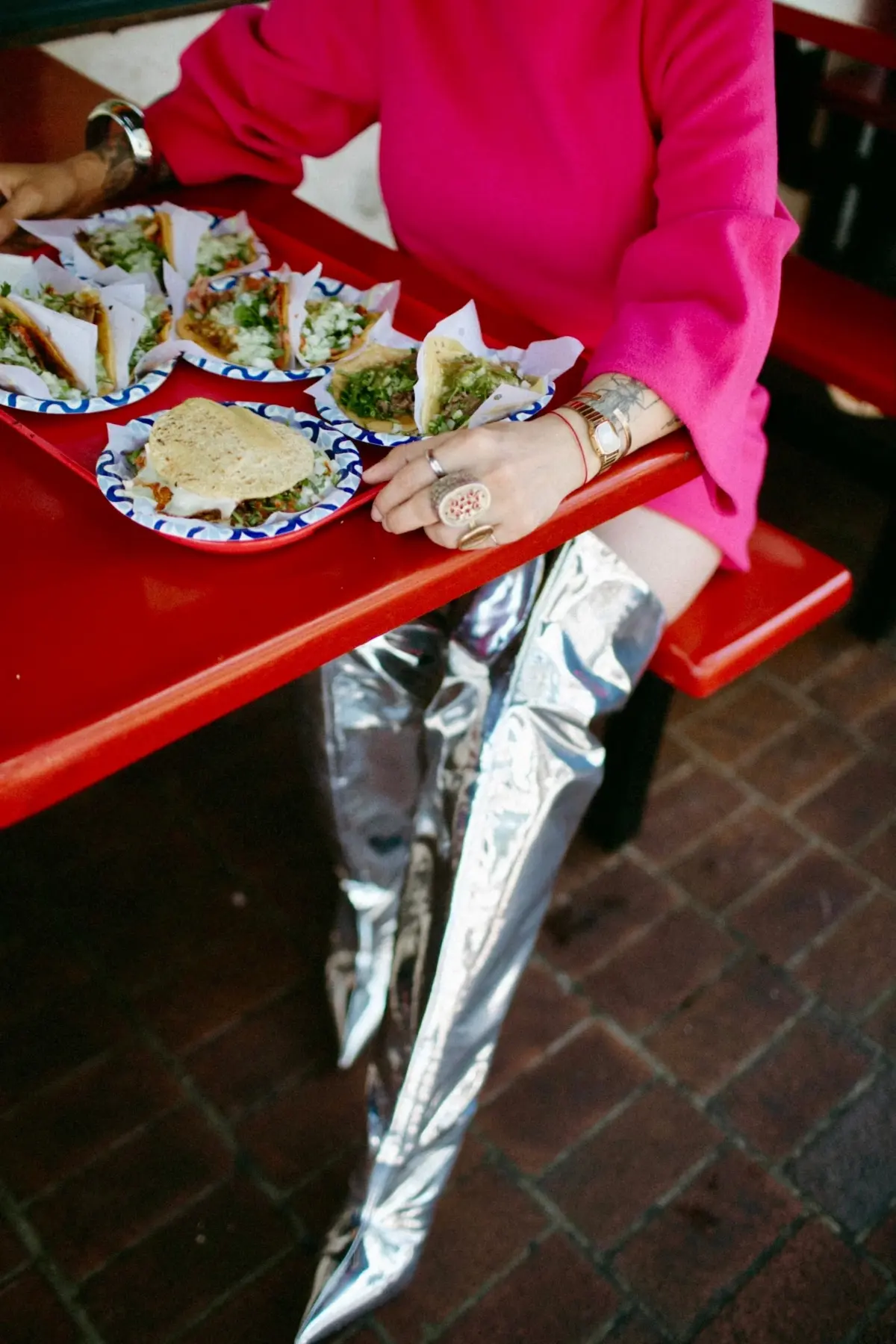
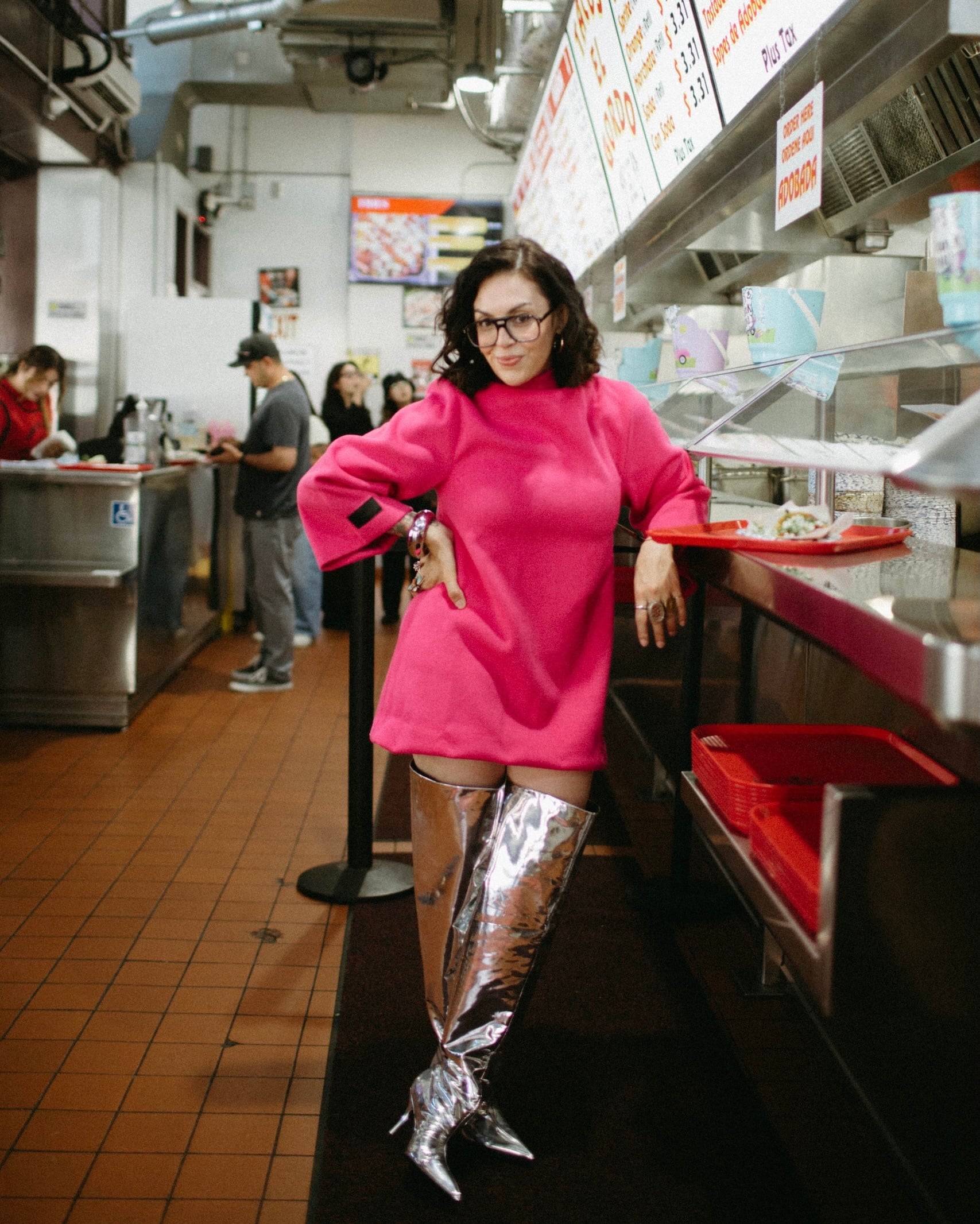
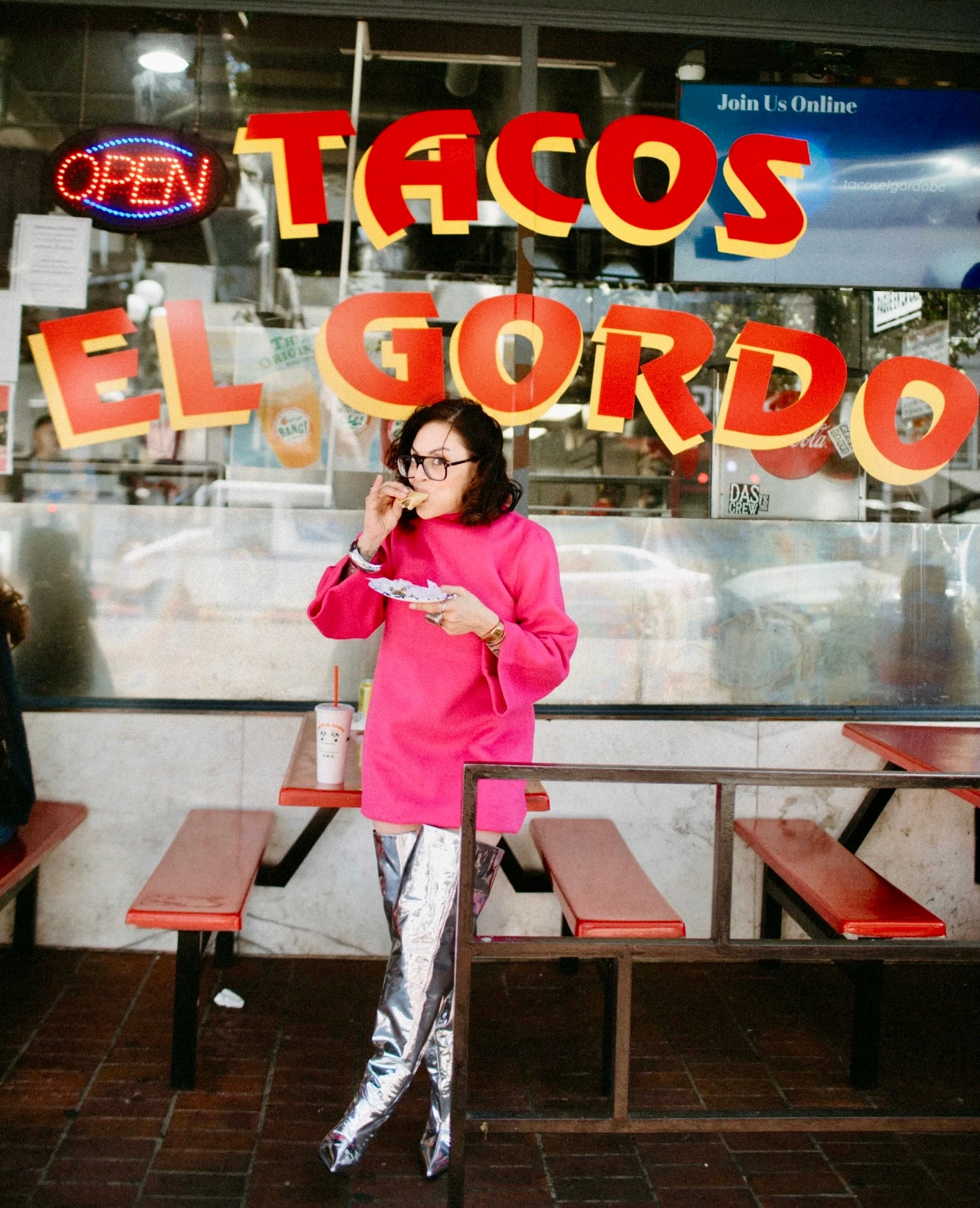
Among her rotation of standout looks, a custom piece holds a deeply personal connection. Zepeda wears a striking dress designed by her friend, who owns the independent fashion line Ada & Edith, paired with silver Amazon boots. The footwear choice carries cinematic nostalgia; as a teenager, Zepeda watched Pretty Woman and felt a visceral sense of empowerment witnessing Julia Roberts wear iconic thigh-high boots. Putting on her own version of the silver boots evokes that same rush of confidence, making her feel as though she is fully equipped to take on the world.
Practical considerations also play a role in her day-to-day style, particularly regarding eyewear. Having worn prescription glasses since the age of seventeen with severely limited uncorrected vision, Zepeda treats frames as both a necessity and a fashion accessory. Because her active lifestyle means her glasses frequently sustain wear and tear, she prefers affordable options priced around thirty dollars, recently discovering a variety of fun, expressive styles through Zeelool.

Zepeda emphasizes that dressing to turn heads is deeply woven into the fabric of her culture. Even during routine, dressed-down errands—such as walking down the street to pick up fresh tortillas from the local molino—attention to detail remains paramount, characterized by impeccable manicures and a bold red lip.
This spirit of playfulness extends to her professional meetings, where her wardrobe often challenges corporate uniformity. In one instance, she sports a statement top with whimsical, textured details that she playfully associates with the Sesame Street character Mr. Snuffleupagus. Wearing such pieces serves as a personal reminder not to take life too seriously, allowing her to playfully disrupt formal environments where everyone else might default to traditional business suits.
Reflecting on her journey, Zepeda connects her current self-assurance to the fierce independence she possessed as a child. She remembers running for student council in the fourth grade purely out of youthful gumption and being elected treasurer. Although that innate confidence experienced moments of doubt over the years—particularly during the overwhelming transitions of early motherhood—her perspective has evolved. As the mother of a young woman, she is acutely aware of the example she sets, constantly questioning how her own security or insecurity might shape her daughter’s ability to navigate the world. Whenever she requires a personal reinforcement, she turns to what she calls her "spirit army," drawing enduring strength from her grandmother and female ancestors.
That same reverence for the women who paved the way is embedded in her literary work. As the author of Cooking the Borderlands, Zepeda art-directed the book’s photography, frequently relying on what she terms "business mullets" during long shoots—maintaining a polished, camera-ready top half while opting for comfortable sweatpants below the frame. The cookbook features a chapter titled "From My Mother’s Hips," serving as a heartfelt tribute to the family recipes of her childhood and the matriarchs who taught her what it means to fully inhabit womanhood.
Surrounded by a family of dynamic women who taught her how to unapologetically take up space, Zepeda continues to celebrate her roots through both her culinary artistry and her vibrant, fearless personal style. Whether she is testing recipes on a television set, developing boundary-pushing dishes, or walking into a Monday morning meeting in statement heels and special-occasion wear, Claudette Zepeda remains her own best occasion.