
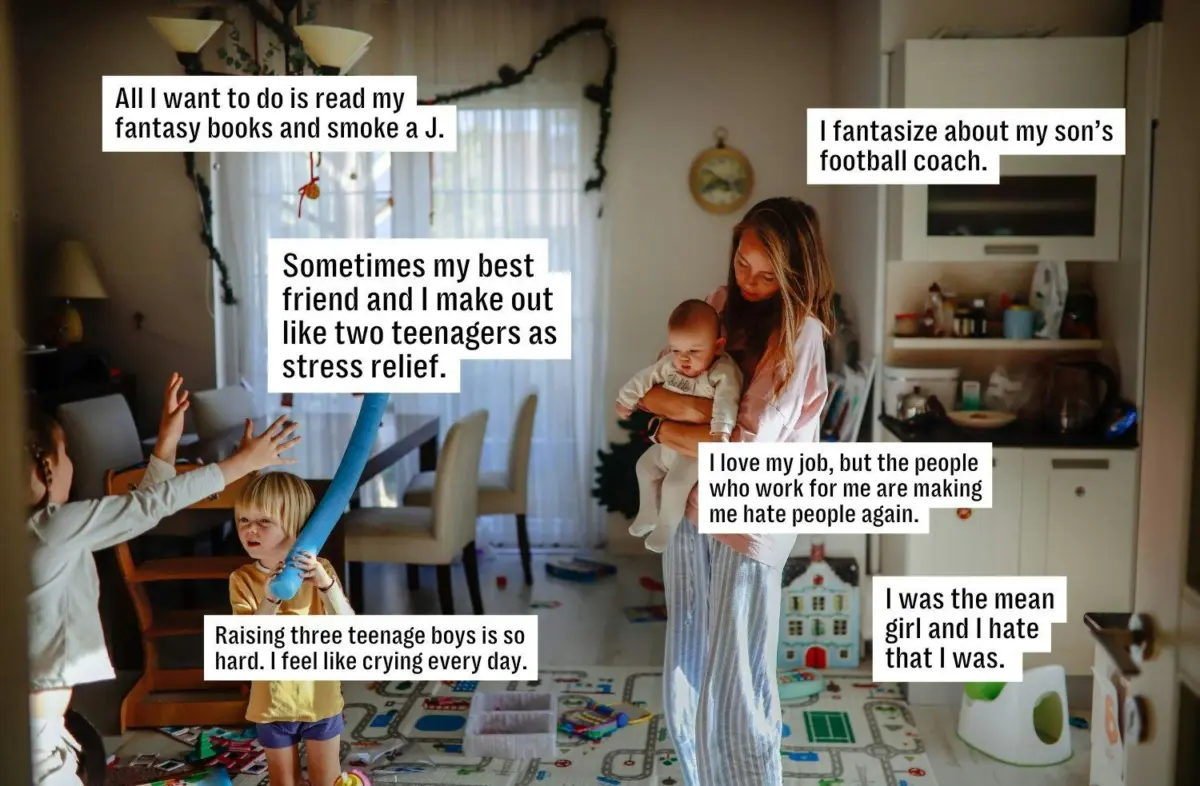
It is a universal truth of human existence that most people carry at least two distinct versions of themselves through life: the public persona that friends, colleagues, and family members know, and the private self tied to the past. This hidden identity often belongs to the person who once fell hopelessly in love with a high school sweetheart, dreamed of a frictionless and uncomplicated future, or eagerly anticipated the day they would finally "grow up" into careers, families, and steady adult routines. For many mothers, however, that hidden self represents a much more complex reality—one defined by roads not taken, private burdens, and unexpressed frustrations that clash sharply with the daily demands of parenting and domestic life.
This week’s installment of anonymous submissions offers a profound look into that hidden space. These are the thoughts, fears, and secrets that women keep tucked away because they are unsure if the world is ready to receive them, or because societal expectations demand silence. Sometimes, these secrets carry a heavy scandalous weight, such as rekindling a romance with an old flame from decades past who makes a married mother feel like her pre-family self could still exist, even when complicated by marital vows and real-world consequences. For others, it involves the quiet realization of a marriage that has mentally ended long before any official conversation has taken place, held together only by inertia or fear of disruption.
Beyond matters of the heart, a significant portion of this week’s anonymous disclosures center on the burdens that women feel compelled to suppress out of necessity. This includes the high-stress friction of enduring toxic workplaces simply to safeguard household financial security, or navigating complicated family politics and difficult extended family relationships—such as strained dynamics with mothers-in-law—while biting one’s tongue to avoid upsetting a partner.
The weight of these experiences is often compounded by profound isolation. Many mothers navigate the vast spectrum of human emotion—from responsibility and guilt to fleeting moments of joy and persistent fear—feeling as though they are carrying it all entirely alone. Platforms that allow for anonymous expression have consequently become an essential digital outlet, offering a virtual space where women can finally speak their truths aloud and share them with a faceless community of peers who understand the hidden pressures of contemporary family life.
The latest collection of submissions highlights the staggering emotional breadth of these experiences, ranging from the mundane and humorous to matters of profound grief and marital crisis. Among the entries, several focus on the complexities of modern marriage and long-term partnerships. One anonymous contributor shared the bittersweet anxiety of an impending empty nest, writing that she dreads her child leaving for sleepaway camp because it means being left entirely alone with her husband. Another candidly confessed to feeling like a mere roommate in a marriage devoid of romance and intimacy, while others expressed deep exhaustion over shouldering the lion’s share of domestic and mental labor while a partner works demanding hours.
The heavy toll of parenting children at various developmental stages is a recurring theme throughout the week’s log. Mothers voiced the daily emotional drain of raising teenage boys, the guilt associated with sending toddlers to daycare, and the profound, life-altering grief of navigating an unexpected pregnancy just days after losing a daughter to brain cancer. Other entries addressed the logistical and financial anxieties of family life, from fears surrounding major financial decisions like purchasing an RV with household savings, to the quiet pressure of managing a household on a middle-class income while struggling to find affordable childcare as a stay-at-home parent.
Career and professional identity also feature prominently among the submissions, painting a vivid picture of burnout and mid-life redirection. Several contributors—including educators expressing deep dissatisfaction with their classrooms and director-level professionals in their mid-forties—admitted to fantasizing about walking away from their careers, though they remain constrained by the need for financial stability. Health concerns, ranging from the frustrations of seeking medical validation for perimenopause symptoms to the terrifying prospect of dealing with physical illness and chronic conditions while serving as a family’s sole provider, further underscore the vulnerability present in the data.
Despite the heavy focus on stress, anxiety, and relational strain, the confessions also capture moments of triumph, humor, and resilience. Several mothers celebrated milestones, such as a daughter excelling as a freshman on a varsity volleyball team, finding unexpected joy in new dietary routines like eating beans for breakfast, or experiencing personal renewal and newfound confidence later in life. Others reflected on the enduring strength of long-term partnerships, marking decades of marriage with lingering affection, alongside the quiet, relatable desire to escape the noise of daily obligations simply by retreating into fantasy novels and moments of solitude.
Ultimately, these anonymous dispatches serve as a mirror for the multifaceted nature of motherhood, capturing the tension between public expectations and private realities. By providing an unvarnished look at the emotional landscapes of women across different stages of life, the weekly archive continues to offer a vital space for shared validation, proving that even the most isolated struggles are often shared by countless others navigating the same path.