
It takes an entire village to publish a modern media brand, spanning print magazines, websites, mobile applications, video channels, and more. Behind the seamless final product that reaches millions of readers lies a complex, meticulous editorial process designed to ensure absolute reliability, cultural awareness, and legal safety. To shed light on this hidden engine room, Bon Appétit recently introduced readers to its research director, Ryan Harrington, offering an inside look at what it truly takes to fact-check the modern food media landscape.
What Fact-Checking and Research Actually Mean in Food Journalism
For those outside the traditional journalism industry, the concepts of research and fact-checking can often seem mysterious or overly abstract. At Bon Appétit, however, every single story or recipe undergoes multiple rounds of rigorous editing before it ever becomes eligible for a comprehensive research review. Once a piece reaches that critical stage, Harrington and his dedicated team step in to evaluate the material across three major pillars.
The first and most fundamental pillar is information accuracy. This involves a painstaking process of checking the spelling of proper names and commercial brands, ensuring that descriptions of restaurant menus and individual dishes are completely up to date, and reviewing the credibility of any external sources cited within the text. The research team also verifies the accuracy of portrayals of quoted individuals, confirming that everything published in a Bon Appétit story is fundamentally true and reliable.
The second pillar centers on cultural sensitivity—a vital consideration in an industry that has historically been dominated by a narrow, privileged perspective. For generations, food media frequently perpetuated an outdated paradigm reminiscent of the Age of Explorers, where writers would "discover" new cuisines while inadvertently pigeonholing or exotifying other cultures. Harrington emphasizes that a massive part of modern research involves honoring diverse human experiences and providing a platform for different cultural voices without turning them into a spectacle.
The third pillar involves navigating complex legal concerns. The research department acts as an essential bridge between the publication’s dedicated legal team and the editorial staff on the ground. Researchers constantly monitor projects for potential liability issues, copyright infringements, food safety risks, the protection of sensitive sources, and any other matters that require direct consultation with media attorneys.
From Thoracic Surgery to Food Media: A Non-Traditional Path
For aspiring journalists wondering how one actually becomes a professional fact-checker, Harrington’s personal career journey is anything but conventional. He completed his undergraduate studies with a bachelor’s degree in chemistry before spending six years managing the daily operations of a thoracic surgery laboratory, where he focused on studying various forms of lung cancer.
Eventually, Harrington reached a critical juncture in his scientific career where he was encouraged to return to school to pursue a master’s degree or a PhD. Realizing that committing all of his time and energy to advanced academic education required a subject he felt deeply passionate about, he pointed his compass toward food media.
This realization led him to enroll in the New York University Food Studies master’s program, driven by a desire to study the profound cultural impacts of food media. Early in his graduate studies, he secured an internship at Food & Wine. During his tenure there, he consistently volunteered to assist with projects well beyond the scope of his initial internship duties. That hands-on experience shifted his perspective, transforming food media from an academic interest into a viable career path. He subsequently worked for other prominent publications, including Travel & Leisure and the late, lamented Lucky Peach.
Harrington also briefly ventured into the brewing industry, taking a job at a brewery that began in February 2020. Navigating the onset and rapid development of the COVID-19 pandemic proved to be an intense introduction to the commercial beverage sector, though it ultimately provided him with a firsthand understanding of the pandemic’s severe economic and operational impacts on the food and beverage industry.
When the research director position at Bon Appétit opened up, Harrington recognized that his diverse professional background and specialized education provided an ideal toolset to lead the publication’s research efforts. Expressing deep gratitude for the opportunity, he has now spent five years leading the department.
Bridging the Newsroom and the Classroom
In addition to his demanding role at Bon Appétit, Harrington teaches food studies at NYU, a dual-role existence that consistently informs his editorial work. Whether he is developing a new lesson plan for his university students or reviewing a complex investigative story for the magazine, he consistently strives to approach the material from the perspective of the ultimate recipient—the student or the reader. He constantly asks whether the publication is conveying the narrative clearly and what lasting impressions the audience will take away from it. Guiding individuals toward those moments of sudden clarity, whether inside an academic classroom or a bustling media newsroom, is what drives his professional passion.
Recognizing how crucial his own early internship was in launching his media career, Harrington made it an absolute priority upon joining Bon Appétit to establish a dedicated research fellowship program. Because he entered the industry without formal journalism or media training, he understands the transformative power of experiential learning and professional networking. His fellowship program is designed to pay it forward by mentoring a new generation of passionate food lovers.
Through the program, fellows learn the meticulous skills required to become exceptional research editors while retaining the freedom to pursue their own individual interests and build professional networks. Some fellows spend time inside the Bon Appétit Test Kitchen observing how culinary professionals develop and test recipes, while others pitch, write, and publish their own stories directly on the website. Additional fellows collaborate closely with the photography team to learn the nuances of styling recipes for professional photo shoots. By tailoring the experience to each fellow’s unique ambitions, Harrington ensures they maximize their time with the brand and advance their personal career goals.

Triumphs, Challenges, and Trivial Pursuits in the Kitchen
Growing up watching Alton Brown’s educational television program Good Eats, Harrington remains a scientist at heart. That early influence nurtured a lifelong desire to understand not just the mechanical "how" of cooking, but the underlying scientific "why," while simultaneously championing creativity and ingenuity. Consequently, whenever Bon Appétit produces deep, explanatory deep-dives into culinary processes—such as a popular video detailing how Dr. Arielle Johnson manufactures a chocolate bar—Harrington feels entirely in his element. (As a testament to the small world of food science and journalism, Harrington and Johnson actually served as chemistry lab partners during their freshman year at NYU.)
Conversely, the most significant daily challenge for Harrington involves stories covering wine. The subject is laden with highly specific terminology, strict international border regulations, and foreign spellings featuring diacritics that demand constant vigilance. To maintain absolute precision, he relies on a carefully curated contact list of passionate, knowledgeable experts whom he can consult when complex questions arise.
Among the more amusing rabbit holes Harrington has encountered on a research assignment was a 2021 feature on Moe Girton and her San Diego bar, Gossip Grill. During her interview, Girton discussed the local lesbian bar scene from when she first arrived in the city during the late 1990s, prompting the author to leave a note for the fact-checkers to verify the historical names of the establishments. While two of the three bars were relatively straightforward to confirm, a third establishment lacked any substantial digital footprint.
After combing through local newspaper archives, historical community forums, and online message boards yielded conflicting clues, Harrington reached back out to Girton for additional context. Although she could not recall specific details, she provided the cross streets of the former location. Harrington then methodically called businesses in that specific neighborhood one by one to determine if they had operated during the late 1990s and if they remembered a nearby neighborhood lesbian bar.
Against long odds, his persistence paid off when he spoke with the owner of George’s Camera, a photography store operating continuously since 1965. The business owner confirmed that right next door used to be Patti’s Bar, which he fondly described as a lesbian- and biker-friendly establishment. To top off the successful verification, the store owner happened to possess an authentic period photograph of the storefront complete with original signage.
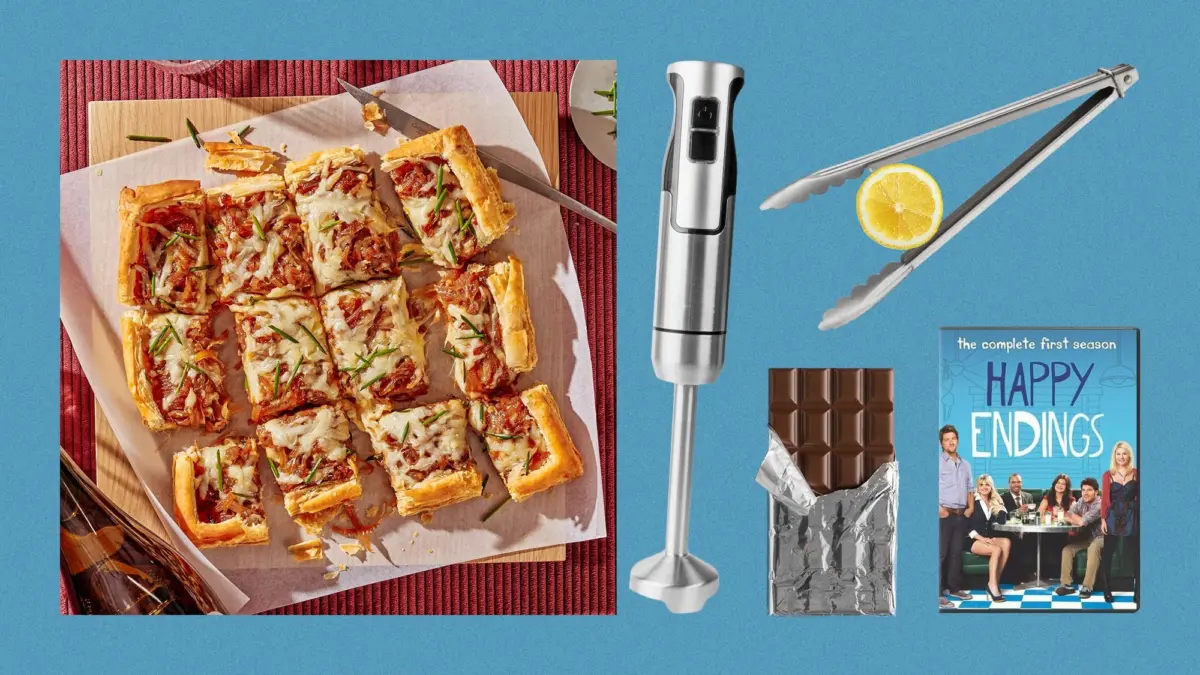
When it comes to his personal kitchen habits, Harrington frequently turns to Shilpa Uskokovic’s recipe for French Onion Tart. He praises the dish for its ability to consistently impress dinner guests by seeming remarkably fancy and labor-intensive, while in reality requiring minimal hands-on attention, offering an exceptionally high deliciousness-to-effort return on investment. Furthermore, a standard box containing two sheets of puff pastry provides a practical culinary bonus: one tart for a party, and another entirely for his own breakfast the following morning.
Harrington’s enthusiasm for food extends deep into the realm of eccentric trivia, particularly concerning the eternal debate over the definition of a sandwich. He notes with amusement that in New York State, sandwiches are generally subject to sales tax, prompting the New York Department of Taxation and Finance to maintain an official guidance page defining the classification. Under their broad administrative stance, hot dogs, burritos, and even buttered bagels are officially classified as sandwiches.
Other jurisdictions, however, maintain much narrower definitions. In 2006, the Worcester Superior Court of Massachusetts famously ruled that a burrito is not a sandwich. The legal dispute arose when a Qdoba restaurant opened in a shopping center, prompting an existing Panera Bread location to attempt enforcement of a lease clause barring competing sandwich shops. Following expert legal testimony, the presiding judge concluded that a burrito does not constitute a sandwich, allowing the restaurant to operate nearby without violating the lease terms.
Navigating Technology and Modern Kitchen Essentials
While Harrington’s career involves deep engagement with vast amounts of factual information, he does not harbor ambitions of competing on television quiz shows like Jeopardy!. As he points out, the core strength of his profession does not require memorizing every conceivable fact, but rather knowing how to locate reliable experts who can provide the answers—and noting that host Ken Jennings would likely prohibit the use of search engines during filming.
Regarding the growing intersection of technology and journalism, Harrington views artificial intelligence as a powerful tool capable of synthesizing large volumes of data, though he remains acutely aware of the significant caveats and accuracy concerns surrounding AI-generated content. While widespread blanket adoption remains premature, targeted applications offer genuine utility. Early in his editorial career, transcribing hour-long reporter interviews manually took amateur typists multiple hours. Today, AI transcription services serve as vital time-savers, though Harrington still listens to the original audio recordings simultaneously to verify and correct generated text.
In his own kitchen, Harrington counts an immersion blender as an indispensable tool, praising its ability to handle pureed pasta sauces, soups, salsas, and smoothies in his compact New York City kitchen without occupying valuable countertop space or risking spills during pot-to-container transfers. He also offers a special shout-out to a practical culinary tip popularized by Chef Frank Proto: using a pair of kitchen tongs to easily juice citrus fruits, a clever hack that streamlines everything from marinades to fresh margaritas in remote or under-equipped kitchens.
Outside of the kitchen and the newsroom, Harrington maintains a deep appreciation for the arts, citing the short-lived ABC sitcom Happy Endings as a television series he could rewatch indefinitely. Drawing structural parallels to Seinfeld, the comedy follows a tight-knit group of urban young adults navigating the unwritten social rules required to function within modern society. Harrington even explored the series in an academic paper, analyzing how the show uses and subverts the "big eater" trope across characters of different genders and sexualities to examine societal expectations and performance.
Ultimately, whether he is verifying historical storefronts, mentoring the next generation of media researchers, or debating the legal definition of a sandwich, Ryan Harrington continues to ensure that Bon Appétit delivers stories grounded in accuracy, curiosity, and cultural respect.