
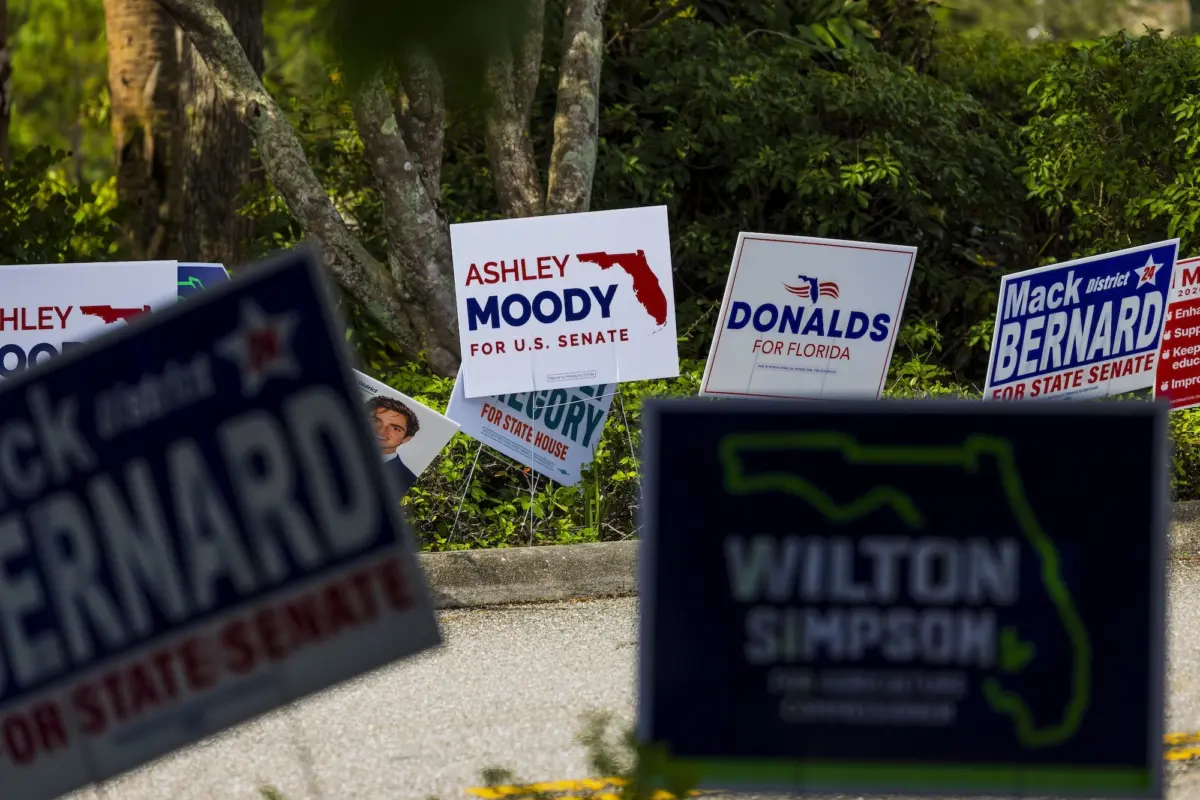
The Democratic Party appeared set to win a commanding victory in Tuesday’s midterm elections, capitalizing on widespread voter discontent over inflation, spiking energy costs, and the geopolitical fallout from the war in Iran. As of 11 p.m. Eastern on Tuesday night, election returns indicated the party was on a strong track to capture majorities in both the Senate and the House of Representatives, alongside capturing several critical state governments.
The party’s unexpected surge reached deep into traditional Republican strongholds, rewriting political calculations in states like Ohio and South Carolina. This sweeping realignment carries profound consequences for the trajectory of environmental policy and climate action in the United States, erecting a formidable legislative wall against President Donald Trump’s ongoing agenda in the White House.
Flipping control of Congress would instantly grant Democrats the legislative leverage needed to hinder Trump’s numerous attempts to dismantle federal climate policy. Throughout the first two years of the administration, Democratic congressional leaders were largely reduced to writing strongly worded oversight statements to administration officials. They stood structurally powerless to halt the suspension of clean energy funding, the systematic repeal of greenhouse gas rules governing power plants and motor vehicles, and the severe hollowing out of vital agencies such as the U.S. Forest Service and the Federal Emergency Management Agency.
Should Tuesday’s preliminary results hold through final tabulations, the balance of power shifts dramatically. Democratic lawmakers will possess subpoena power, enabling them to compel administration officials to testify under oath regarding controversial budget cuts and staff reductions. Furthermore, they could pursue impeachment proceedings against Trump administration figures over funding clawbacks that Democratic leadership has repeatedly characterized as unlawful.

With control over must-pass spending legislation, Democrats would force the White House to negotiate to prevent federal government shutdowns, opening a pathway to restore funding for energy efficiency and climate resilience programs that Republicans have spent years trying to dismantle.
The political turnover at the state level, where election officials continued counting ballots late into the night, may prove even more consequential for environmental policy. In several purple states, Democratic gains threaten to end decades of Republican or divided governance, potentially unlocking meaningful state-level climate legislation for the first time.
In Pennsylvania, for instance, state House Democrats have declared their intention to pass sweeping energy reforms designed to expand community solar, warehouse solar, and battery energy storage, while preempting local efforts to ban renewable energy infrastructure. Meanwhile, in Georgia, Democrats successfully flipped both the governor’s mansion and control of the powerful public service commission, which oversees electric utilities.
While President Trump’s approval ratings remained underwater across nearly every major public policy debate, energy prices proved to be among the most salient drivers at the ballot box. Gasoline price hikes directly tied to Trump’s military actions in Iran served as a central flashpoint, but voters in diverse regions were equally animated by localized utility pressures, such as skyrocketing heating bills in Maine and prohibitive homeowner insurance premiums in Florida. Additionally, growing public skepticism regarding the artificial intelligence boom and massive data center developments galvanized voters to oust incumbents who had previously supported the rapid expansion of tech infrastructure in states like Texas and Ohio.

Texas Elects Democratic Senator for the First Time in Nearly 40 Years
Texas joined a wave of Southern states shifting toward the political center, electing a Democrat to the U.S. Senate for the first time in nearly four decades. Senator-elect James Talarico ran on an all-of-the-above energy strategy designed to protect the state’s traditional oil and gas workforce while simultaneously fostering the growth of renewable energy. This pragmatic message resonated strongly in a state that produces over 40 percent of the nation’s total oil and gas supply.
During his tenure as a state representative, Talarico authored the Texas Climate Action Act in 2021. Although that specific measure failed to advance through the legislature, it laid the groundwork for establishing greenhouse gas reduction targets, energy efficiency standards, and localized community resilience initiatives.
Talarico defeated Republican Ken Paxton, the state’s embattled attorney general, whose long career has been marred by political scandals, including an impeachment by the Texas House in 2023. Paxton’s controversial record and perceived absolute alignment with fossil fuel interests created an opening that Democrats successfully exploited to secure a historic victory.
A Climate Hawk Survives Republican Redlining
Despite facing a newly redrawn congressional map specifically engineered to eliminate her seat, Democratic Representative Kathy Castor secured reelection among voters in Florida’s 14th congressional district.
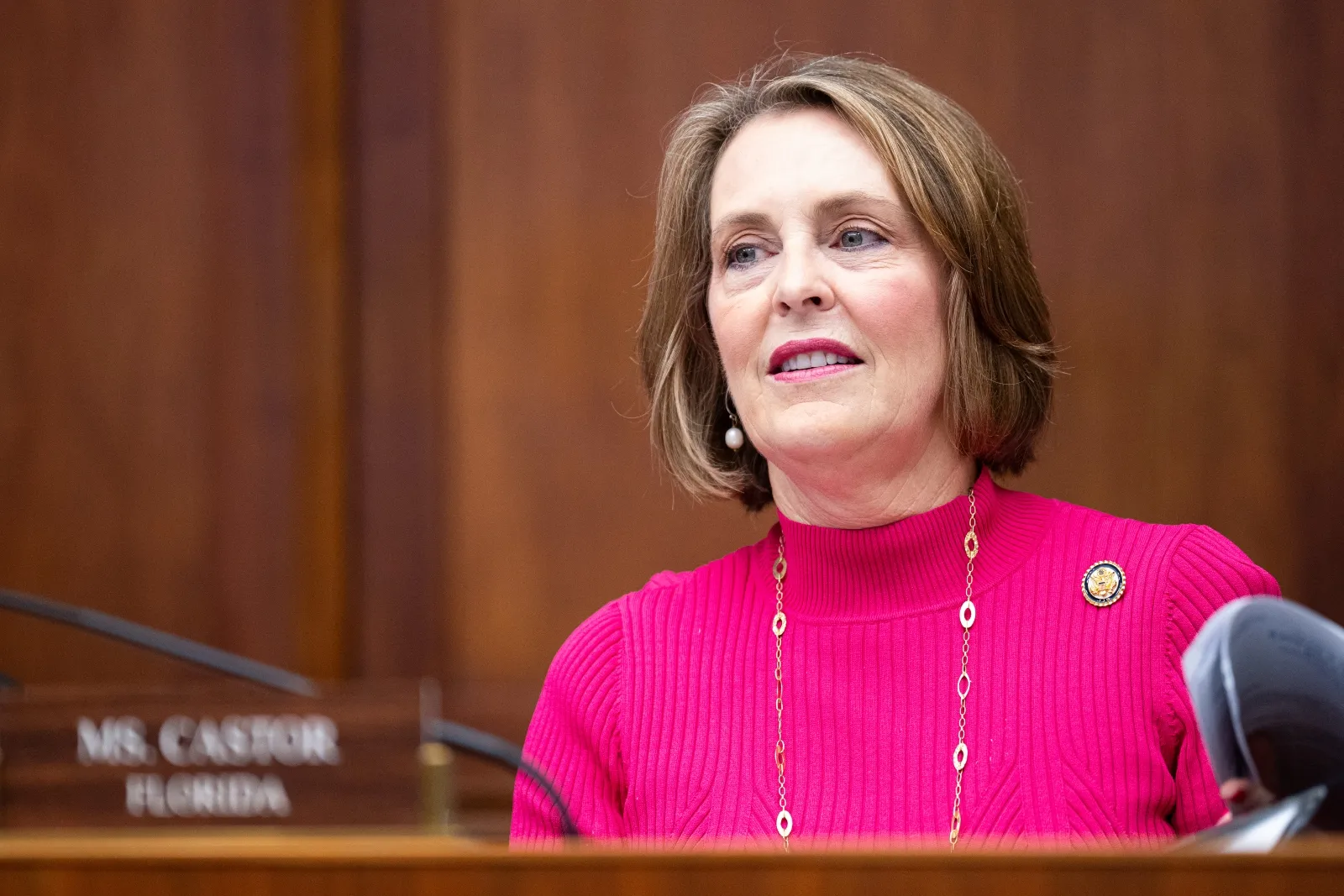
Widely recognized as a leading climate advocate in Washington, Castor spent much of her career raising national awareness regarding global warming. Between 2019 and 2022, she chaired the House Select Committee on the Climate Crisis, cementing carbon pollution reduction and community preparedness as central pillars of her legislative portfolio. Earlier this year, she championed the Energy Bills Relief Act, which sought to restore tax credits for residential energy upgrades and accelerate the integration of clean energy sources onto the national grid. Castor also maintained a vocal opposition to the proliferation of energy-intensive data centers in the Tampa area, warning constituents that such facilities would inflate utility bills and strain municipal water supplies.
Democrats Flip Control of Georgia Utility Commission for First Time in Decades
Voters in Georgia secured victories for both Public Service Commission seats on the ballot, handing Democrats majority control of the influential utility regulation board for the first time in thirty years.
Incumbent Democrat Peter Hubbard successfully defended his District 3 seat against a challenge from former commissioner Fitz Johnson, while fellow Democrat Shelia Edwards defeated Republican Josh Tolbert to claim the District 5 seat.
The Public Service Commission holds sweeping authority over the state’s utility sector, giving commissioners final approval over how major energy providers like Georgia Power generate electricity and how much consumers are billed. The regulatory board has faced intense public scrutiny in recent years following a succession of steep rate hikes and a scramble to meet soaring electricity demands projected by utilities to feed the regional data center boom. Georgia Power’s current long-term resource plans rely heavily on fossil fuels to satisfy this surge in demand, making the commission’s newfound political balance a critical turning point for the state’s energy future.
A Flip in an Area Devastated by Helene
In the mountains of western North Carolina, where Hurricane Helene inflicted billions of dollars in catastrophic infrastructure damage two years ago, Democrat Jamie Ager defeated Republican Jennifer Balkcom for an open seat in the House of Representatives.
Ager, a longtime local farmer, made the region’s sluggish recovery from the disaster the focal point of his campaign. He sharply criticized the previous congressional leadership for failing to deliver adequate federal relief to Asheville and surrounding communities. While President Trump campaigned heavily in the region on the eve of the election, pledging additional disaster aid exclusively under the condition that voters elected Republicans, the electorate rejected the ultimatum. Voters in the 11th congressional district chose Ager, while former North Carolina Governor Roy Cooper easily won a concurrent Senate race, flipping a seat previously held by the GOP.
Democrats Win After Attacking Republicans on Data Centers
At least three legislative seats flipped to the Democratic column after candidates aggressively targeted Republican opponents for their cozy relationships with the booming data center industry.
In Ohio’s special Senate election, Democrat Sherrod Brown defeated Republican Jon Husted after state Democrats blanketed the region with billboards reading, "See that data center? Jon Husted did that." In Pennsylvania’s 8th congressional district, Democrat Paige Cognetti unseated Republican Representative Rob Bresnahan by running television advertisements comparing tech infrastructure projects to heavily polluting mining operations, while highlighting Bresnahan’s personal stock holdings in data center companies. Meanwhile, in South Carolina, Dr. Annie Andrews achieved a surprise victory over Senator Darline Graham by calling attention to a pro-data center super PAC that poured $1.5 million into supporting her opponent, whom critics dubbed "Data Center Darline."

Public polling indicates that massive data development facilities are deeply unpopular across the political spectrum due to their immense electricity consumption and reliance on fossil fuel generation. Candidates who embraced these projects found themselves vulnerable to a unified populist backlash.
A FEMA Defender Sails to Victory in Florida
Representative Jared Moskowitz easily defended his congressional seat, turning back a challenge from Trump-backed Republican Scott Singer in Florida’s redrawn 25th congressional district. Moskowitz’s victory preserves the platform of one of Capitol Hill’s most vocal reformers of emergency management systems.
Previously appointed as Florida’s emergency management director under Republican Governor Ron DeSantis, Moskowitz has championed bipartisan legislation to detach the Federal Emergency Management Agency from the Department of Homeland Security, proposing to elevate it to an independent, cabinet-level agency. This legislative push comes as the Trump administration attempts to curtail federal disaster funding and shift a larger financial burden onto state governments. Moskowitz has also introduced proposals allowing states to voluntarily administer federal housing and public assistance block grants, alongside a federal reinsurance backstop aimed at lowering homeowner insurance premiums following catastrophic hurricanes.
Michigan Gets Utility Money Out of Politics
Michigan voters approved an ambitious ballot measure designed to restrict corporate spending in state elections, striking a historic blow against the political influence wielded by electric and gas utilities.

Supporters of Proposal 2 capitalized on mounting ratepayer frustration over rising power bills, chronic service unreliability, and the rapid, resource-intensive construction of data centers across the state. The measure prohibits utility-funded political action committees and utility corporate executives from contributing directly to state political campaigns. Although corporate opponents have argued that the law infringes upon free speech protections established under the 2010 Citizens United Supreme Court ruling, and legal challenges are widely anticipated, advocates view the initiative as a crucial step toward institutional accountability.
A Governor Who at Least Acknowledges Climate Change in Florida
Republican Byron Donalds defeated Democrat David Jolly to secure the Florida governor’s mansion, making history as the state’s first Black governor. While Donalds does not attribute global warming to human activity, his willingness to publicly discuss the reality of environmental shifts marks a distinct rhetorical departure from outgoing Governor Ron DeSantis, who signed the state’s controversial restrictions on discussing climate change.
This nuanced positioning is vital in a vulnerable coastal state facing severe sea level rise, erosion, and intensified storm cycles. Property insurance premiums dominated the gubernatorial debate, with Donalds pledging to lower costs by expanding private insurance market competition. In 2025, Donalds co-introduced bipartisan legislation alongside Democratic Representative Jared Moskowitz to reform federal disaster response structures. In the final weeks of the campaign, he also committed state funds toward the restoration of vulnerable coastal habitats. Observers expect Donalds to maintain many of the environmental policies of his predecessor, including support for data center expansion coupled with skepticism toward wind and solar energy installations.
A MAGA Loyalist Who Says No to Drilling in Florida
Republican Senator Ashley Moody defeated progressive Democrat Angie Nixon to retain the Senate seat to which she was appointed last year. Moody’s brief time in Washington signaled her legislative priorities: she introduced resolutions to overturn Biden-era efficiency standards and supported federal tax credit repeals for clean energy installations such as rooftop solar and battery storage. Previously, as Florida’s attorney general, she joined litigation challenging federal highway emissions reduction targets.
Yet, political realities in Florida—where coastal erosion and rising seas directly threaten local economies—created rare bipartisan agreement on environmental preservation. Last year, even as the federal administration advocated for expanded offshore oil and gas drilling, Moody introduced the American Shores Protection Act, successfully securing commitments to ban drilling off Florida’s coastline through 2032.