
When the sun dips below the horizon in central New Mexico, the wind picks up. It whips through arid canyons with a ghostly howl that, for centuries, local residents have likened to the wails of La Llorona, the weeping spirit of Southwestern folklore.
A few hours east of Albuquerque, those same gusts began powering the largest wind farm the Western Hemisphere has ever seen. More than 900 colossal steel turbines—each standing as tall as the Statue of Liberty—now spin across a stretch of desert roughly the size of Chicago. They plug into a 550-mile high-voltage transmission line stitched across the American Southwest, successfully delivering clean electricity to more than 1 million homes as far away as California and Phoenix.
The SunZia Wind and Transmission project represents a rare 21st-century triumph of American infrastructure, an engineering marvel that generates more electricity than the Hoover Dam. When the turbines came online this spring, they immediately broke records for wind-generated power in California’s energy grid. While solar energy dominates daylight hours across the region, the persistent winds of New Mexico are increasingly fueling the night.
After years of stagnant power growth, the United States is desperately starving for more electricity. Overall electricity demand is projected to rise by 25 percent by the end of this decade, and by a staggering 78 percent by 2050. Enormous as this challenge might seem, it may ultimately serve as the catalyst the country needs to dramatically expand its renewable energy infrastructure, ensuring that future power comes not from gas or coal, but from clean energy sources like the sun and the wind. By next summer, the SunZia project will have prevented approximately 9 million metric tons of carbon dioxide from entering the atmosphere, according to Pattern Energy, the project’s developer.
For decades, however, it seemed the project would remain little more than a spectral dream.
"It works!" is the call Hunter Armistead, Pattern Energy’s CEO, remembers getting from his head engineer when the turbines came online for the very first time. "We were creating power, and it was showing up 550 miles away in Phoenix, almost as if it was magic."
During the ribbon-cutting ceremony for the massive wind farm, some construction workers showed off newly minted tattoos of the turbines. "It’s their pride that for the rest of their lives, they can drive by and tell their kids, ‘I did this,’" Armistead said.
Yet, SunZia almost didn’t get built at all. It is not just the project’s immense physical scale that makes it remarkable, but the absolute regulatory and legal morass its developers slogged through to bring it online. The project spanned five presidential administrations, weathered an ownership change, underwent a major route redesign, and survived a tense standoff with a critical U.S. military base.
It also faced a series of lawsuits from local tribal communities and environmental advocates, some of which remain pending in federal courts even as the giant turbines finally whirl. Building any renewable energy megaproject requires vast amounts of space and hyper-specific natural conditions, such as wind that reliably blows at night or sun-soaked desert plains. Transporting that energy to major metropolitan areas means traversing some of the most pristine and spectacular natural corridors remaining in the nation, particularly in the Southwest, where projects frequently brush up against the ancestral and sacred lands of local tribal communities.
The decades-long saga required to navigate these tensions has turned SunZia into a critical lesson. For many observers, whether deservedly or not, it became the ultimate poster child for the national debate over permitting reform. For many years, the country’s overall need for power did not appear to justify such a wildly ambitious and expensive undertaking. But in the interim, as the energy landscape changed, SunZia changed too, evolving into a more collaborative project than it was when it first was conceived. Now, with a nation finally focused on building more clean energy megaprojects, SunZia offers a glimpse of what lies ahead, serving as a blueprint for future infrastructure developments.
The Real Reasons It Took So Long for SunZia to Get Built
When SunZia was first proposed back in 2006—the same year Twitter debuted online—coal remained the dominant source of electricity in America, and the nation’s overall appetite for power had remained virtually flat year after year.
For the next 17 years, SunZia largely flailed, failing to break ground as it bounced between financial and regulatory purgatories. Most commentators have attributed these delays to endless permitting bottlenecks. There were severe state-level permitting debacles, most notably in 2018 when the New Mexico Public Regulation Commission rejected SunZia’s initial transmission line route. Even after major interstate power lines secure federal approval, developers often must wait years longer for individual approvals from every state along the project’s path.
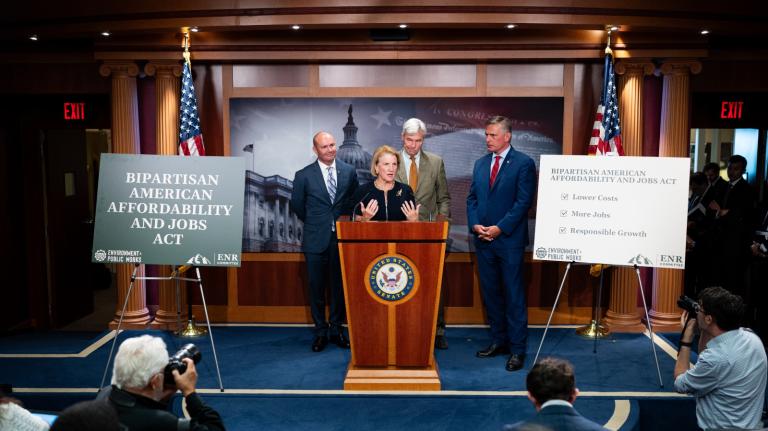
Senator Martin Heinrich of New Mexico has frequently cited SunZia as a primary impetus for his co-sponsoring the Senate’s recent legislative push for permitting reform. Such reforms aim to make it easier for the federal government to coordinate approval processes for interstate transmission lines, ensuring that reviews happen concurrently and preventing individual states from dragging their heels.
Early on, the project faced a particularly sticky hurdle: securing a path to route power through the White Sands Missile Range. But that obstacle, along with other federal hurdles, was eventually resolved relatively quickly. According to David Hayes, who served as deputy secretary of the Department of the Interior during the Obama administration, this history suggests that financing constraints ultimately hamstrung the project far more than bureaucratic red tape alone.
"The facts are the facts, and they got their permit," Hayes noted, recalling when the Obama administration placed SunZia on a "fast track" to approval all the way back in 2015. "So we finally got the permit done. Hooray, right? And then nothing happens. Nothing happens."
Part of the delay stemmed from the fact that the two states where SunZia intended to build its transmission lines were not entirely on board. But it was also the sheer expense of constructing the project, particularly given that federal approval required burying specific portions of the transmission line near the military missile range. Moreover, even if everything had gone perfectly with the permitting process, building SunZia back then might have been commercially unviable, according to Armistead. "We really didn’t have the market need for it," he explained.
The United States simply was not as hungry for new electricity as it is today, and the long-term importance of building out clean energy infrastructure was not enough on its own to entice skeptical private investors.
Refusing to die a slow death of a thousand permitting blockades and financial setbacks, SunZia instead evolved. Pattern Energy, initially responsible only for developing the wind farm portion of the project, took over the transmission line development entirely in 2022. Around that same time, SunZia applied for a revised federal permit designed to circumvent the missile range. Within less than two years—a veritable sprint by federal bureaucratic standards—the project secured its new approval.
Soon after, the project locked down $11 billion in financing from a coalition of global financial institutions, pension funds, and clean energy investors. After a few years of intensive construction, the largest wind farm in the Americas was finally switched on.
Today, more massive infrastructure projects of this scale are urgently required because, as Armistead noted, the old excuse of a market unready for high volumes of clean energy no longer applies. "It is game time," he said, "and we’re supposed to get this done."
What America’s Biggest Clean Energy Project Got Right
One of the primary secrets to SunZia’s ultimate success in New Mexico was the developer’s newfound ability to strike meaningful compromises, even with its fiercest early critics. In some cases, that meant addressing the concerns of bird conservationists.
Migratory birds, such as the crimson-capped sandhill crane, regularly arrive at their Southwestern wintering grounds near some of SunZia’s newly operational high-voltage transmission lines.
The sandhill crane had nearly gone extinct in the past, driven in part by the rapid expansion of hydroelectric dams in the early 20th century, the construction of which dried out vital local wetlands. Birders feared that SunZia’s initial route—planned directly across one of the most congested avian flyways in the country—would threaten the cranes and other migratory species, which might accidentally fly into the new power lines. Overhead power lines are believed to kill millions of birds nationwide each year.
While SunZia’s original developer, the Southwestern Power Group, was largely unresponsive to those environmental concerns, the National Audubon Society found an unusually receptive partner when Pattern Energy took over the project.
"They took their role as a project developer really seriously," said Sarah Rose, vice president of climate at the National Audubon Society. "I think they engaged with us with a lot of integrity and a lot of good faith."
Under a revised rerouting plan, original power lines were shifted northward, erected directly adjacent to existing infrastructure, or outfitted with visual warning systems and specialized bird diverters. These adjustments satisfied bird advocates and helped convince the New Mexico Public Regulation Commission—which had rejected SunZia’s initial application years earlier partly due to wildlife concerns—to unanimously approve the project in 2022.
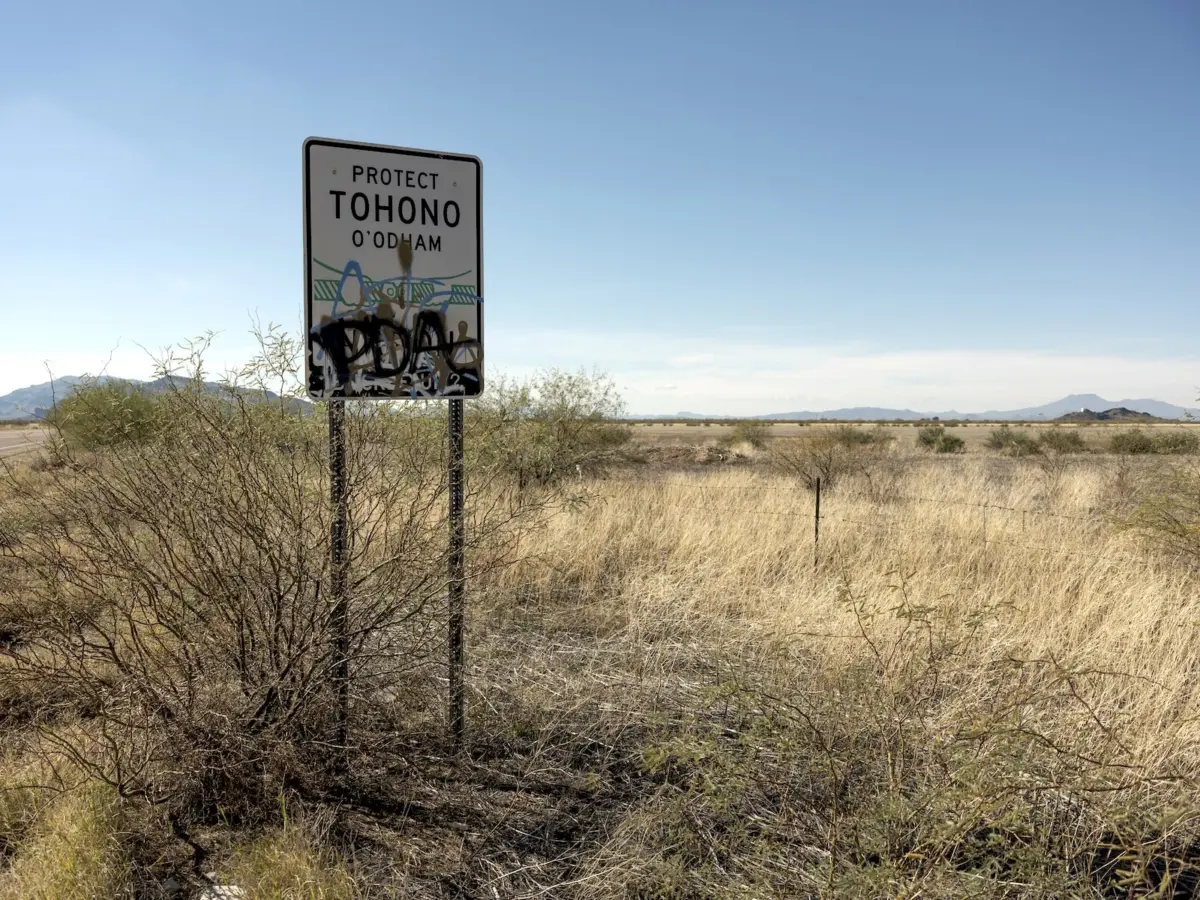
However, not everyone believes Pattern Energy made adequate compromises everywhere. In Arizona, SunZia’s route remained largely unchanged under the new management. Peter Else, a local environmentalist, has spent years fighting SunZia in court over its intrusion into the scenic San Pedro Valley, a region considered sacred to Indigenous communities including the Tohono O’odham Nation and the San Carlos Apache Tribe. Seeing the landscape altered by new power lines has felt, to Else, "like mourning a death, like an ecological homicide."
Else argued that SunZia should have attempted to run the valley’s new power lines alongside existing infrastructure, just as it managed to do in parts of New Mexico. Armistead countered that such a move was impossible in Arizona because that portion of the line "was already put to bed," and the original federal permit had identified the valley as the least impactful and optimal route. A federal lawsuit filed by the Tohono O’odham Nation and the San Carlos Apache Tribe, accusing SunZia and the Department of the Interior of failing to protect the culturally significant valley, remains pending in court.
Of course, ongoing climate change threatens many of these Southwestern ecosystems far more severely than a single power line. Over the two decades it took SunZia to begin pumping clean energy across state lines, repeated waves of extreme heat have claimed tens of thousands of American lives, and the entire Southwest has continued to suffer through a megadrought unlike any seen in the region over the past 1,200 years.
These intersecting crises are precisely what the SunZia project seeks to combat. If the nation hopes to avoid even more heat-related deaths, extreme droughts, flash floods, and wildlife habitat destruction, experts agree the U.S. will likely need many more facilities of a similar scale, some of which will inevitably require difficult trade-offs.
Future megaprojects are not necessarily doomed to repeat every misstep. It may have taken SunZia over a decade to learn that lesson, but a clearer blueprint may now exist for upcoming developments. The nearby 280-mile high-voltage Southline Transmission Project, spanning parts of Arizona and New Mexico, is set to begin construction next year. It has been so proactive in minimizing its ecological and cultural impacts that even local critics like Else have praised the approach as a step in the right direction.
This collaborative model could pave the way for other essential large-scale energy projects across the country. "If more folks could come to the table looking for solutions as opposed to expecting conflict," Rose said, "I think we would be able to move a lot more quickly." Ideally, future clean energy transitions will not require another 20 years.