
Every week, the anonymous submissions that flood into online parenting spaces arrive like a random grab bag of modern life. They capture the micro-moments of domestic existence—little wins, lingering relationship woes, the everyday trials of modern parenting, and the universal friction of dealing with in-laws. This week, true to form, those familiar themes are present in abundance. Yet, beneath the ordinary complaints about household friction and the endless mental load, a darker, more pervasive sentiment dominates the conversation. It would be impossible to ignore the single emotion that keeps resurfacing across the latest batch of confessions: a profound, heavy fear.
The collective anxiety of the week is deeply tied to broader cultural and societal events, most notably the discussions surrounding high-profile cases of misconduct and campus violence, such as the widely discussed actions of the "Cornell 7." For many mothers writing in, these headlines have served as painful triggers, unearthing their own traumatic pasts and forcing them to confront memories they may have spent years trying to suppress. Beyond personal trauma, a prevailing sense of dismay centers on the complicity of bystanders—the other young men allegedly involved in group chats or silent witness—raising urgent, valid concerns about how society is raising its sons and what that trajectory means for the safety and future of daughters.
Consequently, this week’s batch of anonymous dispatches is heavy with fear, accompanied by a simmering, entirely appropriate anger over being told once again that this is simply how the world works. Mothers are expressing fury at the systemic forces that normalize hostility toward women, with one anonymous submitter capturing the mood by declaring she is ready to resort to "vigilante s*** if men don’t start showing tf up for women."
Yet, to look only at the macro-level dread would be to misunderstand the multifaceted reality of contemporary womanhood. Mothers contain multitudes, and even while struggling under the crushing weight of alarming headlines, they are juggling the mundane irritations and private triumphs of daily life. They are simultaneously annoyed by their husbands’ overblown "man-colds," celebrating major health milestones, or quietly wishing that someone—anyone—other than them would make the decision about what is for dinner for a single evening. As always, experiencing these conflicting emotions simultaneously does not mean a woman is "too much" or overly dramatic. It simply means she is paying attention, and these anonymous forums continue to serve as a designated space to pour it all out.
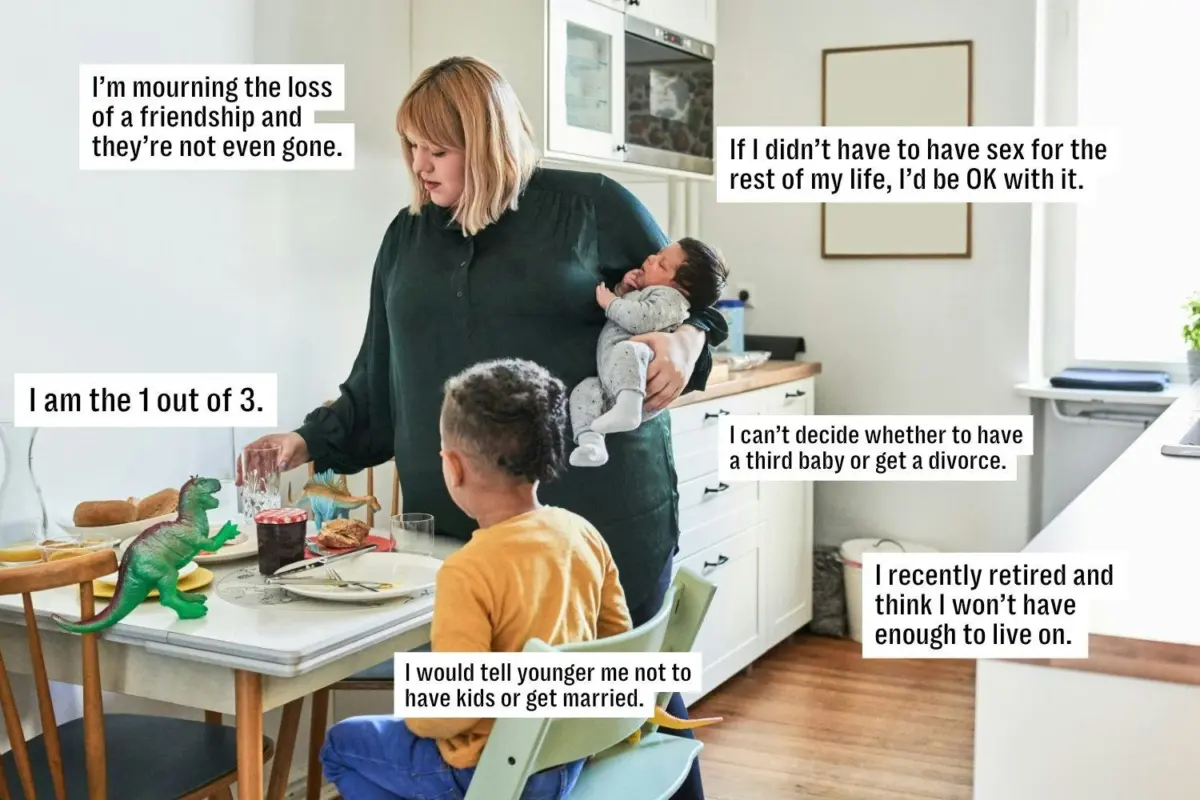
The weekly haul of confessions, shared anonymously by women seeking an outlet for their innermost thoughts, paints a vivid and often heartbreaking portrait of the psychological landscape of motherhood. For many, the sanctuary of marriage has become a source of quiet desperation. Confessions frequently touch on deep marital disillusionment, ranging from the mundane realization that a partner treats them more like a roommate or a babysitter than a wife, to the painful admission of waning intimacy. One mother confessed that sex with her husband has not been the same since the birth of their second daughter, while another starkly admitted that she would be completely fine if she never had to have sex for the rest of her life.
For others, the cracks in their relationships run much deeper, touching on the agonizing calculus of divorce. Several women articulated the feeling of being utterly trapped, noting that while they desperately wish they had never gotten married or had children, the personal and financial sacrifices they made early on to raise their families now make separation nearly impossible. One confession simply stated a desire for a divorce, hindered by the reality of having sacrificed everything to raise babies at the start, while another wrestled with the terrifying prospect of committing to a split after years of doubt, questioning who else could possibly want them.
The complexities of family dynamics extend well beyond the marital bed, often spilling over into extended family and the profound difficulties of raising children in an increasingly complex world. While some mothers expressed affectionate exasperation at the temporary strain of hosting in-laws, others dealt with more acute alienation, noting the pain of watching grandparents treat their children like second-class citizens. Parenting challenges are further compounded by developmental struggles, with mothers voicing exhaustion over trying to support neurodivergent children in a system where experts seemingly offer few answers, and managing the unique pressures of raising kids with an absent co-parent.
Underpinning these domestic trials is a persistent undercurrent of existential dread about the world outside the home. The fear for their children’s futures—particularly daughters growing up in a cultural climate perceived as actively hostile toward women—remains a dominant theme. References to safety, systemic misogyny, and the terrifying realities of modern society echo across multiple submissions. Mothers question whether they are doing enough to raise respectful sons while simultaneously grappling with their own past traumas, noting that decades-old assaults have been dragged back to the surface by the news cycle.
Amid the heavy burden of fear, professional stress, and relational fatigue, the confessions also reveal moments of personal reckoning and transition. Women are confronting long-ignored mental health struggles, with some admitting to finally seeking help for crippling anxiety later in life, or recognizing the overwhelming impact of untreated obsessive-compulsive disorder when faced with an unorganized home. Others are navigating career anxiety, facing the terror of impending job cuts, escaping toxic workplace environments under a shadow of nervous anticipation, or reckoning with deep dissatisfaction after decades in the same career path.
These anonymous dispatches, collected weekly through community callouts, function as a collective release valve for women carrying the invisible weight of society. They reflect a demographic caught between the intense demands of domestic caregiving, the psychological toll of external events, and the private processing of grief, aging, and personal identity. Far from being isolated complaints, they form a collective narrative of endurance, capturing what it means to pay attention, worry deeply, and attempt to survive and protect one’s family in a world that often feels overwhelmingly heavy.