
The 70th edition of the BFI London Film Festival (LFF) is officially drawing to a close on Sunday night, highlighted by the prestigious U.K. premiere of Jesse Eisenberg’s star-studded feature The Debut. The grand finale arrives just hours after the festival unveiled its comprehensive slate of 2026 award winners during an afternoon ceremony, celebrating a diverse group of international filmmakers, boundary-pushing documentaries, and poignant cinematic achievements.
Topping this year’s honors in the official competition was Sergei Loznitsa’s Imperium, which secured the coveted best film award. Meanwhile, Asmahan Bkerat’s deeply resonant documentary Concrete Land was named the winner of the esteemed Grierson Award in the LFF documentary competition, capping off a remarkable festival run that highlighted stories of displacement, historical preservation, and human resilience.
Archival Exploration and Soviet Realities in ‘Imperium’
Sergei Loznitsa’s winning feature Imperium takes audiences on a compelling historical journey by utilizing rare Italian archival footage filmed across what was then the USSR during the early 1970s. The resulting film offers a fascinating, multi-layered look at the vast diversity of the country, intentionally contrasting everyday realities with the official Soviet portrayals and state-sanctioned productions of the same era.
The LFF jury praised the project in a glowing statement, noting that Imperium is an extraordinary cinematic achievement.

"Imperium is an extraordinary film that explores the Soviet Union in the early 1970s from a rich archive with a wide-ranging perspective that looks at life in a country with an extraordinary social and cultural landscape that has rarely been seen," the jury said. "The film is richly evocative and emotionally engaging on all levels, giving us a visually arresting perspective of life before the Soviet Union was broken apart."
‘Concrete Land’ Captures the Grierson Award
In the documentary competition, the Grierson Award went to Concrete Land, directed by Palestinian-Jordanian filmmaker Asmahan Bkerat. The film offers an intimate and moving chronicle of a Palestinian Bedouin family that has been displaced within Jordan. Bkerat recently shared in an interview with The Hollywood Reporter that the close relationship she built with the family featured in the project instrumentalized her deep, enduring passion for documentary filmmaking.
The LFF jury lauded the film’s mastery and emotional depth, highlighting the technical and human triumphs behind its production.
"This was a beautifully observed portrait filmed with mastery and confidence," the jury emphasized. "In image creation, sound design, scene building and, most importantly, the deep and trusting relationship with the films’ characters, the filmmaker proved themselves a worthy recipient of the Grierson award. It takes a tremendous cinematic skill and maturity to bring the audience to feel so close to each and every character of this remarkable family, across generations and in a very different part of the world, yet the warmth we feel for each is profound."
The jury added that against the backdrop of a noisy and often polarized global landscape, the film offered a refreshing and humbling reminder of human grace. "In a noisy and often polemical world, it was refreshing, humbling and deeply relevant to see the quiet resilience and dignity of this family in the face of the erasure of their culture and traditions. This is filmmaking which never gets in the way of itself and will surely take its place in the annals of observational greats."

Additionally, a special mention within the documentary competition was awarded to Queer Edward II by director Theo Rollason. The film explores the behind-the-scenes archival reality of Derek Jarman’s seminal Edward II film set, framing the narrative against the turbulent backdrop of anti-LGBTQIA+ legislation in 1980s Britain. The LFF jury described it as a "spirited and tightly constructed portrait of Jarman as both an artist and an activist," praising how the integration of broader political archives created a timely and defiant tribute against prejudice.
First Feature Competition and International Submissions
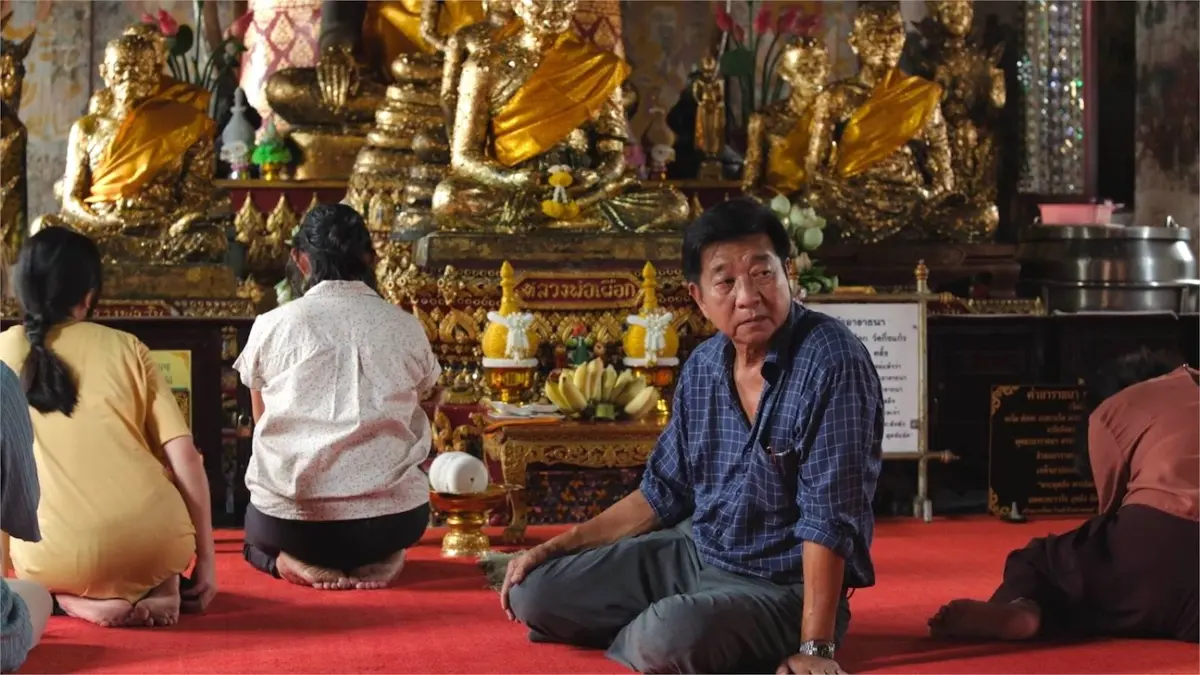
The festival’s Sutherland Award, presented in the first feature competition, went to 9 Temples to Heaven, directed by Sompot Chidgasornpongse. Serving as Thailand’s official international feature film submission for the Academy Awards, the road movie follows an aging grandmother who embarks on a traditional nine-temple pilgrimage alongside her children and grandchildren after a prophecy disrupts their daily lives.
The jury commended the project as an "accomplished first feature paving his own path in the well-established tradition of filmmaking in the Southeast Asian region," noting that the film is visually outstanding, spiritual, and meditative, successfully bridging borders and generations through a universal story of life and death.
A special mention in the first feature category was given to Bertil Nilsson’s MASC. The narrative follows a character named Robin as he navigates temporary jobs and tentative relationships in his search for a sense of belonging. The jury lauded Nilsson as a strikingly original voice within contemporary British cinema, praising his innovative storytelling, strong performances, and humorous script.
Short Film Recognition
In the LFF short film competition, the top honor was awarded to Rahul Roye’s Aman. The story follows a transgender man whose life takes an unexpected, emotionally complex turn on the eve of his scheduled gender-affirming surgery when he discovers that he is pregnant.

The LFF jury expressed deep admiration for the project’s execution. "We were deeply impressed by Aman’s accomplished filmmaking, tackling knotty themes through authentic and nuanced characters we felt compelled to follow," the jury stated. "We were struck by the film’s painterly cinematography and expansive and assured storytelling, which guided us through the world with care. Aman’s finely drawn narrative is made all the more engrossing by the film’s refusal to provide easy answers to the complexities it presents us with."
Meanwhile, a special mention in the short film category was presented to Elizabeth Hobbs for Daughters of the Late Colonel. The film centers on two middle-aged sisters who find themselves adrift and at a loss following the death of their ill-tempered and controlling father. The Short Film Competition jury praised the work for its singular and inventive visual style, along with its deft balance of humor, pathos, and provocation.
As the 70th edition of the BFI London Film Festival comes to a close with Jesse Eisenberg’s The Debut, organizers noted that public voting for the remaining LFF Audience Awards is scheduled to close on Wednesday.