
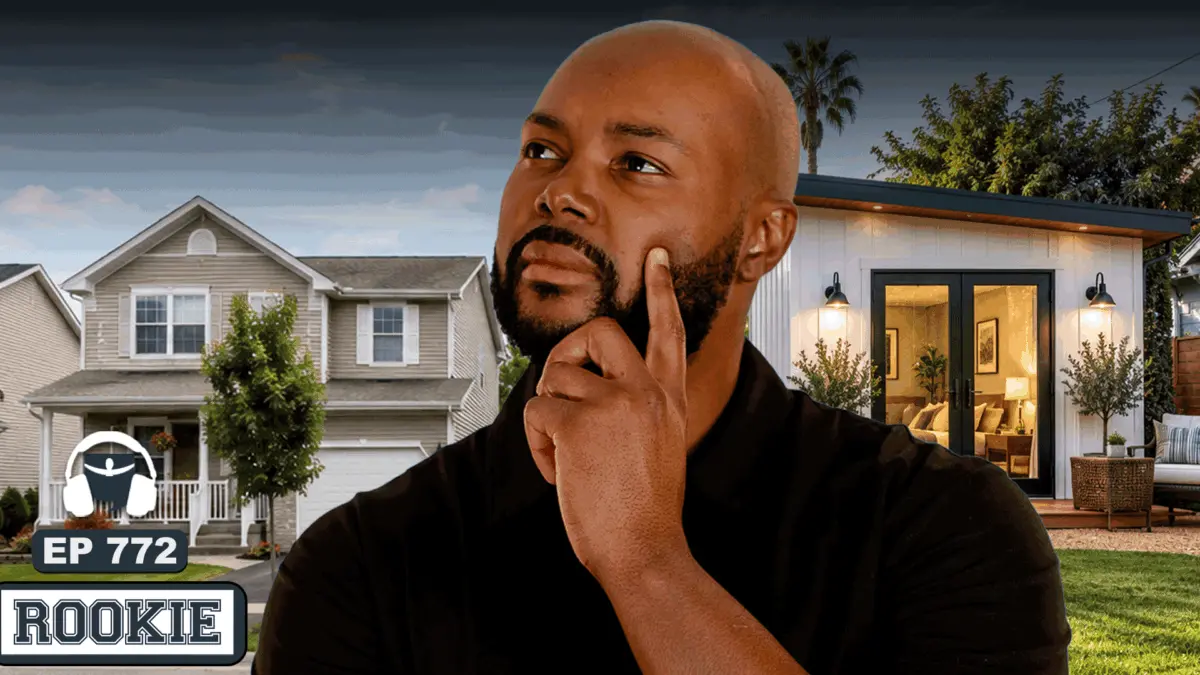
For many aspiring real estate investors, the sheer volume of available strategies can quickly lead to analysis paralysis. Between house hacking, long-term rentals, short-term rentals, duplexes, and out-of-state investing, beginners frequently find themselves stuck comparing paths rather than making a definitive move. In a recent installment of the Real Estate Rookie podcast, hosts Ashley Kehr and Tony J. Robinson sat down to tackle three distinct real estate dilemmas pulled directly from the BiggerPockets forums, offering practical frameworks to help beginners evaluate their options.
The episode addressed three unique scenarios: a Southern California investor weighing in-state versus out-of-state long-term rentals; a South Florida beginner trying to decipher the crucial numbers behind a first house hack; and a W2 earner torn between a traditional duplex and a mountain vacation home.
Weighing Local Appreciation Against Cash Flow for Long-Term Wealth
The first question came from Bryan, a beginner based in Southern California with a healthy amount of savings. Bryan’s primary objective is long-term wealth building, prompting him to ask whether he should invest locally despite high prices and low initial cash flow, or look out of state where properties are cheaper.
Tony J. Robinson pointed out that Bryan’s focus on long-term wealth—defined in real estate as accumulated equity and appreciation—changes the calculus. If history repeats itself over a 20- or 30-year horizon, Southern California real estate is expected to appreciate significantly. Building a small portfolio of properties in the region that benefit from massive appreciation alongside loan paydown can result in substantial equity.
However, because negative cash flow should generally be avoided, Tony suggested alternative strategies that can help high-cost markets break even or better. Investors might explore renting by the room, establishing sober living or assisted living facilities, master-leasing to operators running those strategies, or pivoting to mid-term rentals to capture increased cash flow without jumping into full short-term rentals.
Ashley Kehr added another layer to the property type debate, noting her observation that single-family homes historically appreciate faster than small multifamily properties in certain markets. She explained that a duplex comes with a more limited buyer pool—attracting primarily investors or other house hackers—whereas a single-family home appeals to a broader spectrum of buyers, making future exits easier. She advised beginners to examine historical market appreciation over the past 10 to 30 years to determine which property type aligns best with their wealth-building goals.
Analyzing a First House Hack: Beyond the Obvious Metrics
The discussion then shifted to house hacking, one of the most popular strategies for newcomers entering the market. Another rookie listener in South Florida wanted to know how to properly analyze a duplex versus a single-family home using a conventional loan with a 3.5% to 5% down payment, without getting overwhelmed by every possible metric.
Tony and Ashley emphasized that the foundational analysis for a house hack should mirror that of a traditional investment property. Every single expense—including property taxes, insurance, and maintenance—must be factored in, without assuming that living on-site excuses certain costs. Even if the initial analysis results in a negative cash flow, the deal may still make sense if the out-of-pocket housing cost is lower than renting a comparable apartment elsewhere.
To evaluate a house hack effectively, investors should analyze four key pillars: market appreciation, potential mortgage paydown driven by tenants, comparative living costs, and the "supermax" house hacking strategy. The supermax approach involves purchasing a small multifamily property, living in one unit while renting out its individual rooms, and renting out the separate units entirely, thereby maximizing rental income.
Tony also noted the importance of underwriting the property for the future. An investor should ensure that the deal can at least break even once they move out and rent the space they previously occupied. If the property can sustain itself and the current living expense matches or beats local rental rates, the house hack accomplishes its primary mission of acquiring an asset while reducing personal expenses.
Choosing Between a Duplex and a Vacation Home
The final scenario addressed a complex decision faced by Chris, an investor in his early 40s with a 35% tax bracket, a strong W2 income, and a background in commercial real estate. Sitting on the sidelines for 20 years, Chris narrowed his choices down to two paths: purchasing a local duplex or triplex for long-term rental income, or buying a mountain or lake house an hour away to use personally for a few weeks a year and short-term rent the rest of the time.
Tony emphasized that after waiting two decades to enter the market, the priority should be execution speed rather than overanalyzing the perfect strategy. Whichever option allows Chris to close a deal faster will have a greater impact than minor variances in performance, provided the deal makes financial sense.
Ashley, however, highlighted a major tax advantage leaning toward the short-term rental option. Given Chris’s high W2 income and 35% tax bracket, acquiring a short-term rental could allow him to utilize the short-term rental tax loophole. By conducting a cost segregation study and utilizing bonus depreciation, high-earning taxpayers can potentially offset their W2 income, provided they meet material participation requirements.
This led to a crucial nuance regarding property management. Tony and Ashley noted that in order to qualify for the tax loophole, an investor must meet IRS material participation tests, such as spending at least 100 hours on the property while ensuring no one else spends more time, or logging 500 hours annually. Because Chris mentioned using a property management company, proving material participation becomes significantly more difficult unless the investor remains heavily involved in maintenance, repairs, or guest communication.
Ultimately, the discussion underscored that there is no single universal path for real estate beginners. Whether an investor pursues a long-term rental, a house hack, a duplex, or a short-term rental, success depends entirely on aligning the numbers, understanding the risks, and choosing the strategy that best fits the operator’s financial profile.