
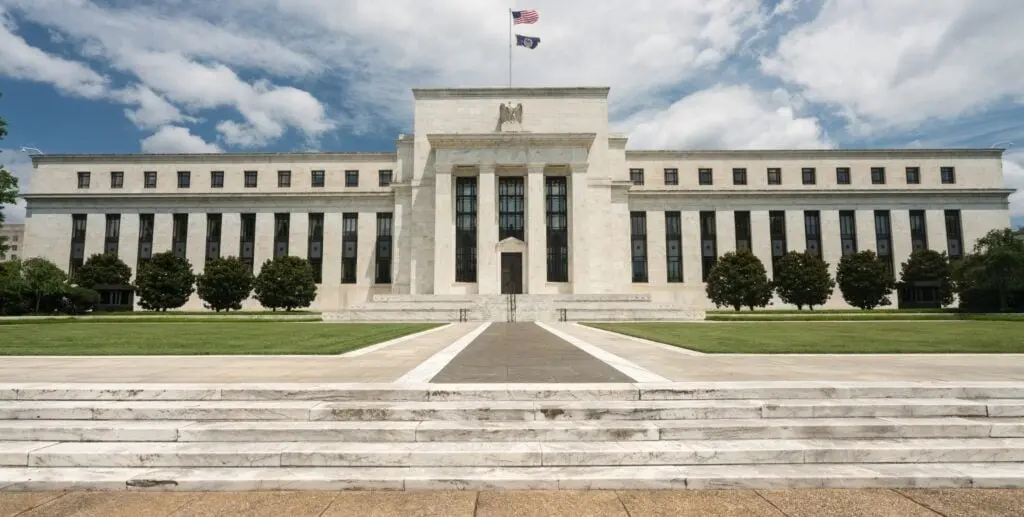
Just when real estate investors thought the worst of high interest rates was behind them, the landscape has shifted once again. As Al Pacino famously remarked in The Godfather III, "Just when I thought I was out, they pull me back in!"
For many property investors who anticipated a steady decline in borrowing costs under new Federal Reserve leadership, the reality of a fresh quarter-percentage-point rate hike has arrived like a nightmarish fever dream of negative cash flow. With mortgage rates hovering stubbornly above the 7% threshold, this latest policy shift has added fuel to an already challenging financial fire.
This latest development follows a turbulent period for monetary policy. Amid rising inflation sparked principally by geopolitical conflict in the Middle East and ongoing supply chain pressures, the central bank opted to raise interest rates for the first time in three years following its September meeting. For leveraged investors navigating tight margins, the timing could hardly be worse.
However, market dynamics are rarely one-dimensional. For small-scale investors with ready capital and a long-term horizon, the obvious silver lining of higher interest rates is the potential for cooling home prices. In a climate defined by subdued competition and robust rental demand, the opportunity to secure discounted assets represents a golden window for portfolio growth.
To understand the full scope of the situation, market participants must distinguish between the federal funds rate and consumer mortgage rates. The Federal Reserve does not directly set mortgage rates. Instead, retail borrowing costs are tied more closely to long-term bond yields, shifting inflation expectations, and broader market demand for mortgage-backed securities. This fundamental economic mechanism explains why consumer interest rates have continued to climb even during periods when the central bank held its benchmark rate steady. While the Fed’s actions exert a powerful indirect influence on borrowing costs, mortgage rates do not always move in lockstep with changes to the federal funds rate.
A Familiar Sequel in a Changing Economic Landscape
In many ways, the current economic drama feels like a movie franchise seen many times over, albeit with a revolving cast of central bankers and political leaders. From the era of Jerome Powell working alongside the Biden administration, to Powell navigating policy under the first Trump administration, and now to the tenure of Kevin Warsh, the core script remains largely unchanged. Despite shifting leadership, the fundamental challenges persist: securing positive cash flow on leveraged rental properties and helping retail buyers qualify for house-flipping projects or primary residences has become an uphill battle.
Industry experts note that while the broader market is cooling, this deceleration presents distinct strategic advantages for prepared buyers. Benjamin Cohen, a prominent mortgage executive, recently pointed out to Realtor.com that a slower market can actually cultivate opportunity. According to Cohen, buyers today benefit from extended decision-making timeframes, increased negotiating leverage, and a greater willingness among sellers to offer concessions.
Regional Divergence: Not All Housing Markets Are Slowing Alike
The American housing market is far from monolithic, and the impact of the recent rate hike varies significantly by geography. Data compiled by Realtor.com illustrates a fragmented national landscape where regional economic drivers dictate localized trends.
In the Midwest, pending sales fell by 4.3% in August compared to the same period a year earlier, creating fertile hunting ground for disciplined buyers searching for discounted inventory. Similarly, pending sales in the West contracted by 3.3%. In stark contrast, activity moved in the opposite direction in other parts of the country. Pending sales ticked up by 1.8% in the South and 1.1% in the Northeast. Consequently, sourcing viable deals has become an intensely localized, state-by-state endeavor.
Price adjustments are following a similarly uneven pattern. In the Northeast, price reductions affected approximately 14.15% of active listings, whereas the West and South both saw price cuts exceeding 20% of total inventory. Beyond evaluating the direct impact of Federal Reserve policy, active investors must calculate potential cash flow through a localized lens, factoring in regional negotiating power alongside traditional carrying costs such as property taxes, homeowner insurance, and local rent trajectories.
Nevertheless, the overarching effect of a Federal Reserve rate hike on the broader U.S. housing market is profound, primarily because it prices a substantial cohort of retail owner-occupants out of active competition. Beau Keenan, a broker-owner at Dickson Realty, emphasized this dynamic in a recent market sentiment report published by HousingWire.
Keenan noted that while historical interest rates have certainly been higher during past economic cycles, the current market is burdened by all-time high property prices. Piling elevated borrowing costs on top of record valuations creates a compounding barrier. Keenan observed that a seemingly modest shift—such as mortgage rates moving from 6.75% up to 7%—immediately eliminates a significant swath of prospective buyers from the market pool.
The Power of Liquidity and Cash Reserves
The old hip-hop adage popularized by the Wu-Tang Clan, "C.R.E.A.M. (Cash Rules Everything Around Me)," has proven remarkably prophetic for modern real estate cycles. For buyers equipped with substantial liquidity, market corrections and falling asset prices represent the classic conditions under which long-term fortunes are built. The prolonged slowdown in homebuyer demand has opened up distinct pockets of opportunity, drawing motivated investors eager to deploy capital.
Anna-Marie Ellison, vice president of sales at John R. Wood Properties Christie’s International Real Estate, highlighted this phenomenon in discussions with HousingWire. Ellison noted that a large portion of active buyers in the current market are coming to the table with equity from recently sold properties or are executing all-cash transactions, insulating them entirely from the immediate chill of higher interest rates. For these cash-ready participants, a rate hike is merely a background noise that deters retail competition rather than a barrier to acquisition.
Rental Demand Remains Robust Amid Financing Pressures
For real estate investors, the current monetary tightening cycle acts as a classic double-edged sword. On one hand, conventional leveraged investing strategies—including the popular BRRRR (Buy, Rehab, Rent, Refinance, Repeat) method—face severe headwinds as higher debt service requirements compress profit margins. On the other hand, the very same high rates that sideline prospective homebuyers simultaneously fuel robust rental demand.
As traditional homeownership remains financially out of reach for a vast segment of the population, demand for rental housing stays elevated. This ensures that well-managed properties are absorbed quickly by the market and can command maximum rental rates. Recent economic data released by the Federal Reserve Bank of New York underscores this trend, revealing that consumer inflation expectations and rent growth metrics remain firm, reflecting persistent housing demand across both urban and suburban submarkets.
Reinvesting in Existing Portfolios for Long-Term Stability
For established landlords locked into favorable, low-interest-rate mortgages secured during previous years, the temptation to utilize creative financing or high-cost debt to aggressively expand portfolios can be strong. However, industry veterans suggest that caution may be the most prudent path forward. Rather than chasing new acquisitions in a turbulent environment, directing the cash flow generated by existing rental properties toward property upgrades and deferred maintenance may offer a safer and ultimately more profitable strategy. Stabilizing existing assets with reliable, long-term tenants carries significantly less risk and operational stress than diving headfirst into an unpredictable market.
Strategic Realignment for Portfolio Owners
For multi-property portfolio owners who have spent recent years focused on rapid expansion, current market conditions suggest it may be time to pause, evaluate operational metrics, and determine which assets are truly performing. If an investor was banking on near-term interest rate cuts to refinance high-rate bridge loans or short-term debt, the prolonged high-rate environment requires a reassessment.
Using operational cash flow to methodically pay down existing debt balances can reduce overall vulnerability. In cases where specific assets are generating negative cash flow that cannot be sustained indefinitely, executing a strategic sale to trim underperforming properties—even if it means taking a temporary financial haircut—can preserve a smaller, healthier core portfolio and significantly reduce day-to-day operational stress.
Markets inevitably fluctuate, and savvy operators understand the value of living to fight another day. In the relentless pursuit of financial growth, the journey itself demands careful stewardship, ensuring that the management of existing wealth remains as balanced as the ambition to acquire more.