
The first and most important thing that Brightline wants the traveling public to know about its recent financial restructuring is that the trains will continue to run without interruption.
"Business as usual," read a reassuring message sent directly to customers and commuters after the privately operated higher-speed rail company officially filed for Chapter 11 bankruptcy protection. This significant legal and financial maneuver followed months of intense, behind-the-scenes discussions with bondholders, according to reports by the Financial Times. The restructuring process is designed to grant the company the financial breathing room and operational time it needs to secure an additional $490 million in borrowing. This capital injection is crucial as Brightline strives to scale up its ridership sufficiently to keep pace with scheduled payments on a staggering $4.4 billion in debt accumulated over years of designing, building, expanding, and operating the railroad network.
Despite the severity of a Chapter 11 filing, passengers commuting between Orlando and Miami will experience no disruption. Sleek trains will continue zipping along the tracks at speeds of up to 125 miles per hour because the legal bankruptcy filing specifically excludes Brightline Trains Florida, the distinct corporate division responsible for managing and operating the active passenger line. Furthermore, the financial restructuring has no legal or operational bearing on Brightline West, the ambitious sister division currently developing a high-speed passenger rail corridor intended to connect the greater Las Vegas area directly to Southern California.
The journey of Brightline Florida began when it first offered regular service between Miami and West Palm Beach in 2018. It later extended that service northward to Orlando starting in 2023, capturing widespread national attention. For years, the system has been held up by transportation advocates and policy experts as a pioneering example of how the private sector can successfully introduce high-speed rail to the United States—particularly in regions historically characterized by a severe lack of public transit options and a corresponding scarcity of public financing mechanisms to build them.
The appeal of the system is clearly reflected in its operational metrics. The system saw a notable 14 percent increase in passenger ridership and a 17 percent jump in overall revenue between January and August, compared to the exact same period during the previous year. Buoyed by this growing demand, the company is actively moving forward with preliminary and advanced plans to expand its service footprint further to the west toward Tampa, as well as adding a strategically positioned station in Cocoa, Florida.
"Brightline is a critical part of Florida’s transportation network that has changed the way people move around the state," Patrick Goddard, CEO of Brightline Florida, said in a formal corporate statement issued following Friday’s bankruptcy filing. "This transaction will be a catalyst for further growth in ridership and revenue."
Yet, the core of Brightline’s current financial predicament lies in a widening gap between initial projections and commercial reality. Brightline currently serves approximately 3.5 million passengers a year and generates roughly $240 million in annual revenue. According to Tim Hynes, head of Global Credit Research at Debtwire, who spoke with the Associated Press, these figures represent less than half of the projected ridership and only about one-third of the income the company had anticipated generating by 2024. That severe revenue shortfall is precisely what forced Brightline to aggressively rework its massive debt obligations and seek fresh external financing to stay solvent.
Beyond its ongoing financial struggles, Brightline has also faced intense public scrutiny and safety concerns regarding its operating environment. As of January, public records indicate that 182 people had been killed by the company’s high-speed trains since service commenced in 2018. Many of these tragic fatalities occurred in collisions at public or private grade crossings or involved individuals trespassing along the active railway tracks. In response, Brightline has consistently maintained that none of the incidents were caused by mechanical failure or improper train operations, pointing instead to hundreds of millions of dollars it has proactively invested in infrastructure safety improvements, signage, and community outreach campaigns.
Even with these profound financial and safety challenges, Brightline continues to enjoy a dedicated base of enthusiastic riders who value the speed and convenience of the service.
Ivan Reich is one such regular traveler. Enjoying the comforts of modern rail travel, Reich frequently rides Brightline for his 40-minute daily commute from his home in West Palm Beach to his office in Fort Lauderdale, where he practices bankruptcy law—a professional background that gives him a distinct perspective on the company’s current legal restructuring. He also relies on the train when heading down to Miami to attend Miami Heat professional basketball games. However, Reich candidly concedes that at around $35 per ticket for shorter hops, the service remains too expensive for everyday commuting for many working-class residents, while a round-trip ticket between Miami and Orlando can start at a baseline of $120.

"Brightline is literally like going to the airport and being on a plane," Reich said, describing the onboard experience. "It’s a luxury experience. It’s nice. It’s pleasant. It’s comfortable." Aside from the occasional sticker shock associated with ticket prices, he added, "there’s nothing to complain about."
With national passenger carrier Amtrak simultaneously smashing historic ridership records and Brightline’s own passenger numbers steadily climbing, contemporary American travelers appear increasingly willing—and even eager—to travel by train when viable options are presented to them. However, Brightline’s high-profile financial troubles and subsequent Chapter 11 filing have forced a much more difficult and systemic question into the national spotlight: Who should ultimately pay to build the massive, capital-intensive infrastructure needed to give more Americans that travel option?
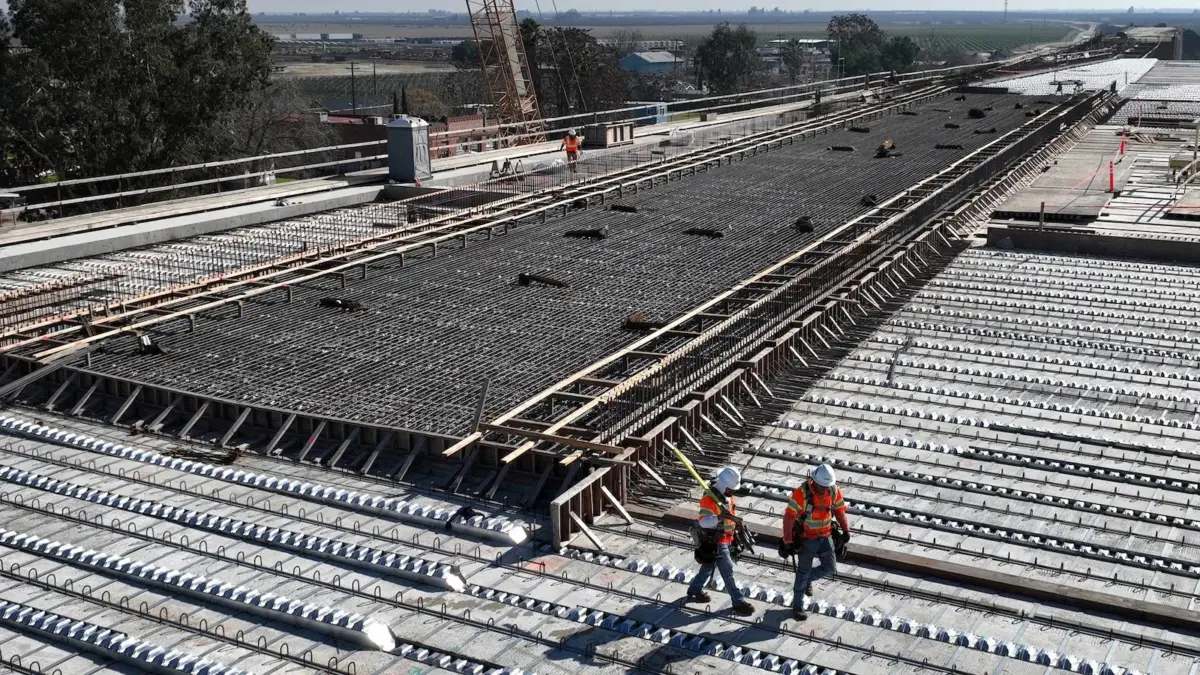
This dilemma is acutely visible on the opposite side of the country. Brightline West is currently developing a 218-mile high-speed rail line designed to run between Las Vegas and the Los Angeles suburb of Rancho Cucamonga. Under the current structural plan, passengers arriving from Nevada would be able to connect seamlessly to an existing Southern California regional commuter line for the final leg of the journey into downtown Los Angeles. The roughly $21 billion project has already secured a significant $3 billion federal grant and is actively seeking an additional $6 billion federal loan as part of its grueling efforts to lock down the multi-billion-dollar financing package required to construct the line.
Meanwhile, California’s own notoriously long and complicated journey toward establishing a statewide high-speed rail system connecting San Francisco and Los Angeles approached the structural funding problem from the exact opposite direction. Having spent nearly two decades relying almost exclusively on public funding streams and state allocations, the California project is now actively exploring private investment and funding partnerships to help cross the finish line.
Jim Mathews, who leads the Rail Passengers Association, views Brightline’s Chapter 11 restructuring as a structurally beneficial move that "probably gives Brightline breathing room" to finally get out from under what he described in an email to Grist as a "crushing" debt load. Improving the private company’s long-term financial outlook will ultimately benefit passenger rail service overall by ensuring that more citizens retain access to alternative transportation modes.
That said, Mathews emphasizes that federal and state governments must ultimately play a much stronger, more direct role in financing major rail initiatives. The massive, sustained capital investment required to launch complex rail projects from scratch is routinely beyond the financial means of the private sector alone, even when structured as public-private partnerships. "Building a railroad is very hard and very expensive," Mathews noted. "This is a good example of why governments always have a legitimate role to play."
Money, however, is far from the only formidable challenge facing private rail developers. Private operators must also successfully integrate their proprietary systems with pre-existing public transportation infrastructure, according to Alon Levy, a research scholar at the New York University Marron Institute. Brightline West’s strategic decision to terminate its high-speed run in Rancho Cucamonga rather than pushing directly into the heart of Los Angeles vividly illustrates this structural difficulty, Levy explained. Reaching the major urban core directly would require vastly greater institutional coordination and track-sharing agreements with regional agencies like Metrolink. Building a cohesive, truly integrated national passenger rail network will ultimately require coordinated, top-down federal action.
Rick Harnish, executive director of the High Speed Rail Alliance, argues that passenger rail transit should fundamentally be funded and treated much more like other traditional forms of public transportation infrastructure. Commercial airlines, for instance, do not pay out-of-pocket to build municipal airports, and major commercial trucking companies do not pay to construct the interstate highway system. Those foundational networks are built and maintained by taxpayers because, as Harnish points out, "private capital will not invest in the kind of infrastructure you need to fund public transit."
For Harnish, the surging ridership numbers witnessed across both Brightline and Amtrak demonstrate conclusively that public demand for passenger rail is undeniably present. What is missing, he contends, is a commensurate level of robust public investment in the physical tracks and pathways required to safely and efficiently meet that demand. "It’s time for both the feds and states to start investing in good, high-quality tracks," he said.
For Brightline leadership, the immediate, day-to-day challenge remains keeping the trains safely running on schedule for millions of Floridians. But the larger, lingering challenge—for Brightline, its investors, and the broader future of American passenger rail—remains figuring out once and for all who will pay to build the tracks that lie beneath them.