
The clean energy industry has learned a difficult and costly lesson in recent years: having the law firmly on your side does not always guarantee a victory in the face of shifting political winds.
Since taking office for his second term, President Donald Trump has repeatedly attempted to delay, scale back, or outright cancel dozens of major wind and solar energy projects across the United States. These renewable energy installations had all successfully navigated rigorous, multi-year environmental reviews and secured official federal approval to move forward. Yet, the Department of the Interior and other federal agencies have systematically frozen their permits, citing vague and sweeping "national security" rationales or, in many cases, offering no administrative explanation whatsoever.
This sustained pressure campaign has severely damaged the domestic offshore wind industry, leaving developers hesitant to commit capital and driving many to accept financial buyouts from the administration rather than face protracted legal battles over their permits.
This regulatory hostility is a primary catalyst behind why major solar and wind companies have thrown their weight behind congressional negotiations for a bipartisan energy "permitting reform" package. Earlier this month, a bipartisan group of senators reached a tentative compromise on comprehensive legislation formally titled the Bipartisan American Affordability and Jobs Act (BAAJA). While lawmakers are not scheduled to hold a floor vote on the package until after the upcoming midterm elections, the renewable energy sector has enthusiastically hailed the compromise as a crucial legislative win.
The sprawling bill is designed to accelerate environmental reviews for a broad spectrum of energy infrastructure projects—ranging from high-voltage transmission wires to conventional oil and gas pipelines. Crucially, the legislation also incorporates a series of specific provisions explicitly drafted to deter current and future executive administrations from unilaterally blocking clean energy deployment. Reports indicate that President Trump told congressional aides just before the legislative compromise became public that he would be willing to ease up on wind energy projects in order to secure a broader permitting deal.
However, deep cracks are already emerging in the fragile political coalition backing the agreement. While the renewable energy industry remains steadfast in its support of the bill, a growing chorus of energy policy experts and key climate advocates are arguing that the legislation’s so-called "project certainty" provisions are fundamentally toothless. They contend these measures would do little to prevent President Trump—or any future chief executive—from effectively blocking solar farms and offshore wind turbines if they choose to do so.
Underscoring these skepticism, the Trump administration itself delivered a direct challenge to the compromise bill by announcing that it would launch formal reviews of three separate permits for wind farms situated off the Atlantic Coast, including one high-profile project that is already fully constructed and operational.
"The administration’s action against these wind projects just further demonstrates the lengths they will go to to obstruct clean energy progress, especially offshore wind," said Elizabeth Klein, who formerly led the Bureau of Ocean Energy Management, the federal agency that oversees offshore wind permitting, during the Biden administration.
The Anatomy of "Project Certainty"
The project certainty section of the Senate’s bipartisan bill rests on two core pillars. First, the legislation declares that the federal government "shall not take any new action that would revoke, rescind, withdraw, terminate, suspend, amend, or alter" any energy project that has already been issued a valid federal permit.
In practice, this provision is largely a forceful restatement of the existing legal status quo, given that legally issued federal permits are not supposed to be canceled arbitrarily or without cause. However, the bill attempts to give this status quo more teeth by offering project developers two primary legal remedies if the government does choose to violate these prohibitions and take prohibited actions against their facilities.
The first remedy is the judicial reinstatement of the revoked permit. Yet, energy lawyers note that this mechanism is somewhat redundant. Federal courts have already repeatedly shot down the Trump administration’s past efforts to halt authorized wind projects, but the administration continues to pursue permit revocations regardless. If the Bipartisan American Affordability and Jobs Act passes into law, the courts would essentially be armed with more explicit statutory language to order the administration to restore the permits.
The second remedy is a substantial cash payout. Under the proposed legislation, federal courts would be empowered to order the government to refund a project developer between 25 and 50 percent of the total capital costs incurred for their project. For a massive commercial offshore wind farm, these cost figures can easily scale into the billions of dollars.
Funding for these payouts would be drawn directly from the Judgment Fund, a specialized federal government account routinely utilized to disburse legal settlements and court judgments against the United States. The Judgment Fund typically pays out approximately $2 billion in settlements annually, and successful claims stemming from blocked renewable energy projects under the new permitting bill could trigger a sharp spike in federal disbursements.
Anti-Discrimination Clauses and Investment Risk
The second major component of the bill’s project certainty framework is a sweeping anti-discrimination clause. This provision would legally ban "disparate treatment" of any specific energy source by federal regulators, placing solar panels, wind turbines, and coal-fired power plants on an equal regulatory footing.
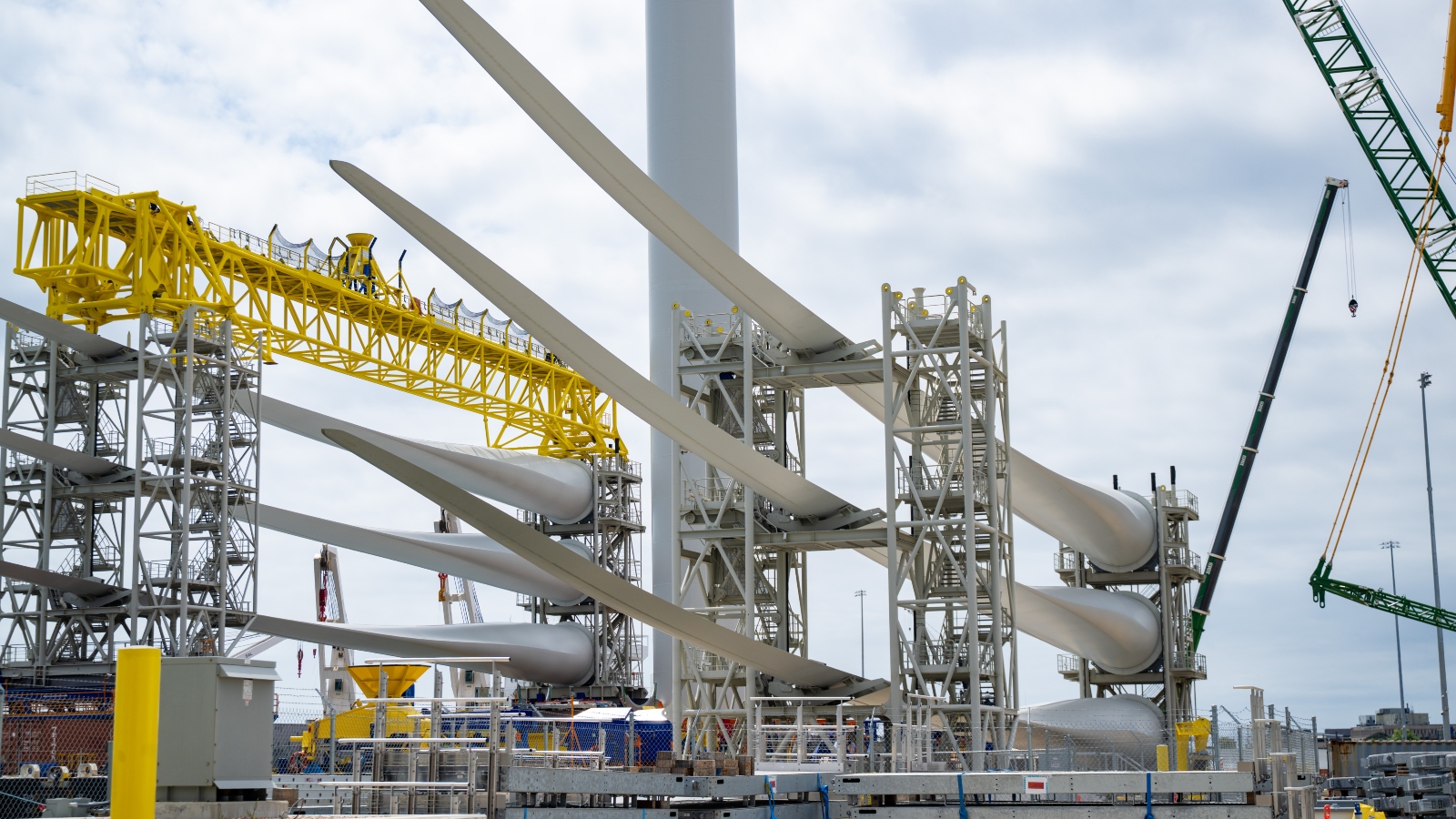
Under this mechanism, if a wind energy developer uncovers clear evidence that the federal government denied their permits as part of a systematic, anti-wind pattern of discrimination, they could present that evidence to a federal judge. If the judge is persuaded by the arguments, they would be required to order the government to restore the disputed permit and compensate the developer for the entire construction cost of the wind farm—provided that the developer has already completed construction on the facility.
Proponents of the legislation argue that the promise of substantial financial relief will help restore confidence and lure institutional investors back to the renewable energy market, which has been thrown into severe turmoil under the current administration. This dynamic is particularly acute for the offshore wind sector. Major international energy corporations such as Ørsted and Equinor invested billions of dollars to construct capital-intensive wind farms along the Atlantic seaboard during the Biden administration. However, their financial burdens ballooned rapidly after the COVID-19 pandemic snarled global supply chains, followed swiftly by the Trump administration’s aggressive efforts to dismantle their existing investments.
Consequently, many of these developers now view the United States market as largely uninvestable. At the same time, densely populated Northeastern states still desperately require vast quantities of new offshore wind generation capacity to comply with their legally mandated state-level climate change targets and secure long-term grid reliability.
Supporters maintain that the cash payout provision is essential for recalibrating the risk profile of the United States, helping to project an image of regulatory stability to global financial markets. The American Clean Power Association, a prominent trade organization representing wind and solar developers, emphasized in a recent analytical report on the legislation that "greater certainty lowers financing risk before construction and reduces the chance that years of development and investment will be stranded by a later policy reversal."
Ongoing Doubts and Administrative Workarounds
Despite the potential for federal financial reimbursements, industry critics and legal experts remain deeply skeptical that the bill will succeed in compelling the executive branch to permit more clean energy construction. Opponents of the permitting reform compromise point out that the Trump administration has already demonstrated a willingness to utilize public funds to halt renewable power development, albeit on a different financial scale.
The president has previously negotiated several bespoke agreements to buy back offshore wind leases directly from energy developers in exchange for those companies agreeing to redirect their capital toward fossil fuel infrastructure projects elsewhere. While those specific arrangements are currently facing separate legal challenges in federal courts, they effectively serve as retroactive buyouts for leases that the administration sought to obstruct from the outset.
"The project certainty provisions are unlikely to deter the Trump Administration from continuing to mess with clean energy permits, since this administration has shown an eagerness to use the public’s money to advance its own policy goals," said Matthew Littleton, a former attorney at the U.S. Department of Justice who specialized in environmental law matters.
Littleton also highlights a critical structural flaw within the bill’s anti-discrimination provision. The baseline metric established in the legislation for calculating "disparate treatment" is defined as the average pace of project approvals recorded over the most recent five-year period. Because the Trump administration will have spent four full years expediting oil and gas leasing and permitting while systematically delaying or denying nearly all major solar and wind initiatives, that statistical baseline will be heavily skewed. Consequently, renewable developers may find it nearly impossible to successfully prove a discrimination claim, while the baseline would simultaneously act as a shield preventing any future presidential administration from walking back federal support for new fossil fuel extraction.
Legal Showdowns and Uncertain Futures
Highlighting the immediate urgency and persistent risks surrounding these policy debates, the White House confirmed in federal court filings over the past week that it is actively seeking to rescind operating permits for three separate offshore wind projects located off the Atlantic Coast.
Among these is the 700-megawatt Revolution Wind project, a major installation that is already fully completed and actively delivering electricity to homes and businesses in Rhode Island. The other two targeted projects remain in the earlier stages of development. In each official court filing, the administration has offered minimal explanation, stating only that it intends to "reevaluate … compliance" with underlying federal environmental statutes.
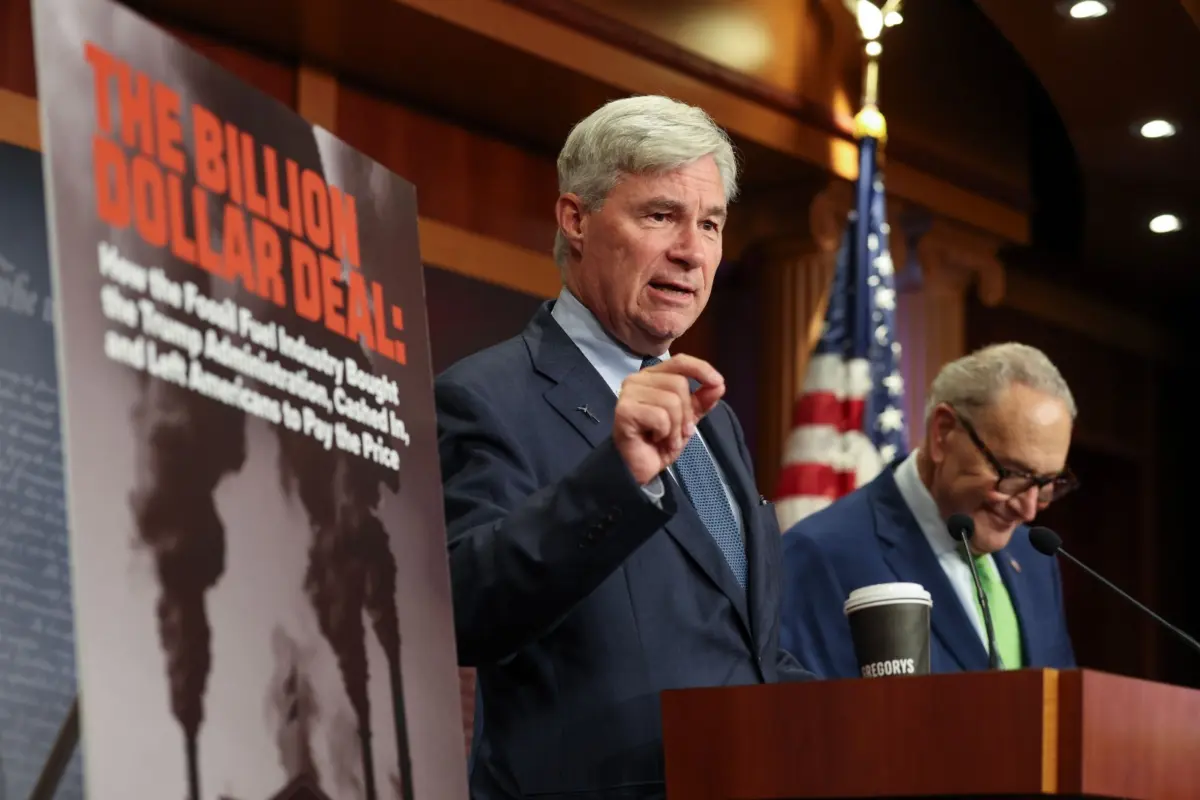
Over the past year, key Democratic negotiators in the Senate had repeatedly warned that aggressive administrative maneuvers of this nature would instantly torpedo any prospects for a bipartisan legislative compromise. Senator Sheldon Whitehouse, a Democrat from Rhode Island and one of the principal architects of the permitting reform bill, declared publicly in the spring that he would refuse to endorse any bipartisan package unless the administration ceased its campaign against operational wind farms.
Yet, following the latest administration filings, Whitehouse appeared to pivot his strategic approach, framing the administration’s aggressive posture toward Revolution Wind not as a reason to abandon talks, but as definitive proof that statutory reform is desperately required.
"Frankly, we need to get permitting certainty in law, and this proves it," Whitehouse said in a statement.
If enacted, the Bipartisan American Affordability and Jobs Act would undeniably introduce a robust layer of financial protection for major energy developers like Ørsted, ensuring that a sitting president could not arbitrarily destroy billions of dollars in private investment without facing substantial monetary consequences. Whether that legislative framework can genuinely put an end to the federal government’s prejudicial hostility toward offshore wind, however, remains an open question. The ultimate resolution of this political and legal standoff could determine how millions of residents across the Northeast keep their lights on and heat their homes in the years ahead, leaving the future of the nation’s clean energy transition hanging in the balance.