
A new residential development rising along the base of Colorado’s Front Range is serving as the testing ground for an unusual and potentially transformative industry partnership that could soon reshape home heating and cooling practices across the United States.
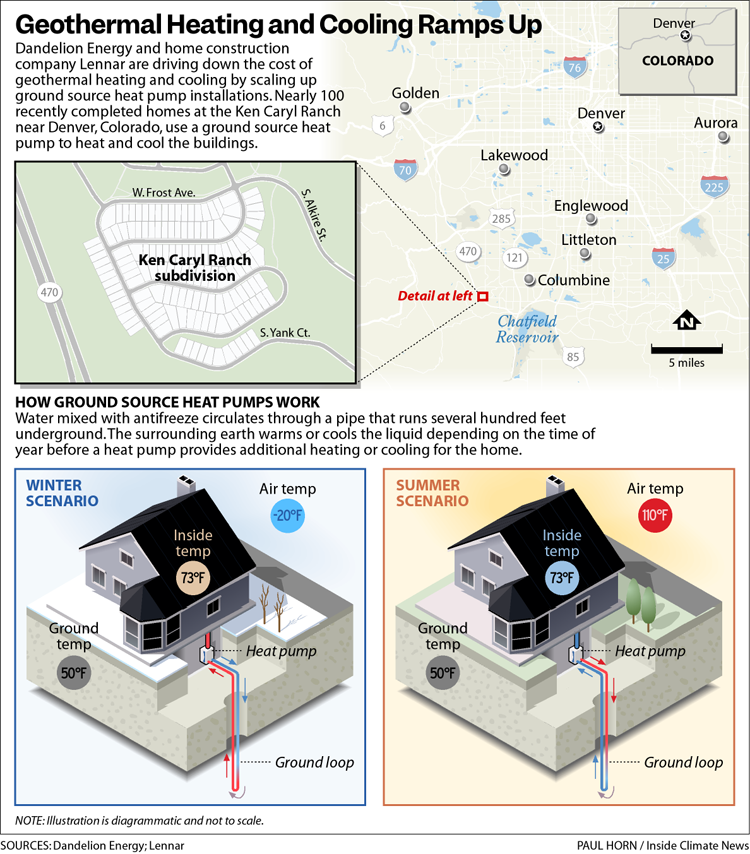
Dandelion Energy, a geothermal energy startup, and Lennar, one of the nation’s largest homebuilders, have recently completed construction on nearly 100 homes at the Ken Caryl Ranch housing development in Littleton, Colorado. Every single residence in this cluster is equipped with its own dedicated ground-source heat pump system. These advanced systems draw upon the steady, moderate temperatures found beneath the Earth’s surface to provide highly efficient climate control. According to industry experts and project developers, these installations consume significantly less electricity than even the most efficient air-source heat pumps on the market today. This reduction in energy consumption is expected to help Colorado make meaningful progress toward its aggressive state climate goals while simultaneously reducing peak energy demand on the local electrical grid and eliminating the need to install costly new gas pipeline infrastructure for the neighborhood.
While ground-source heat pumps have long been recognized for their exceptional efficiency, their widespread adoption has historically been hindered by prohibitive upfront expenses. Traditional installations require custom engineering designs and extensive drilling, with individual homes typically needing one or more boreholes drilled several hundred feet deep into the ground. The drilling process alone frequently costs more than $10,000, driving total setup costs for a single home to an average of around $25,000 according to a recent report by the U.S. Department of Energy.
Dandelion Energy, a company that originally got its start at X, the famed "moonshot" research and development subsidiary of Google’s parent company Alphabet, believes it has found a way to break through these financial barriers. By streamlining the installation process and applying mass-market efficiency to what has traditionally been a custom, high-end product, Dandelion asserts that it can complete geothermal heating and cooling projects twice as fast and at roughly half the cost of traditional, one-off installations.
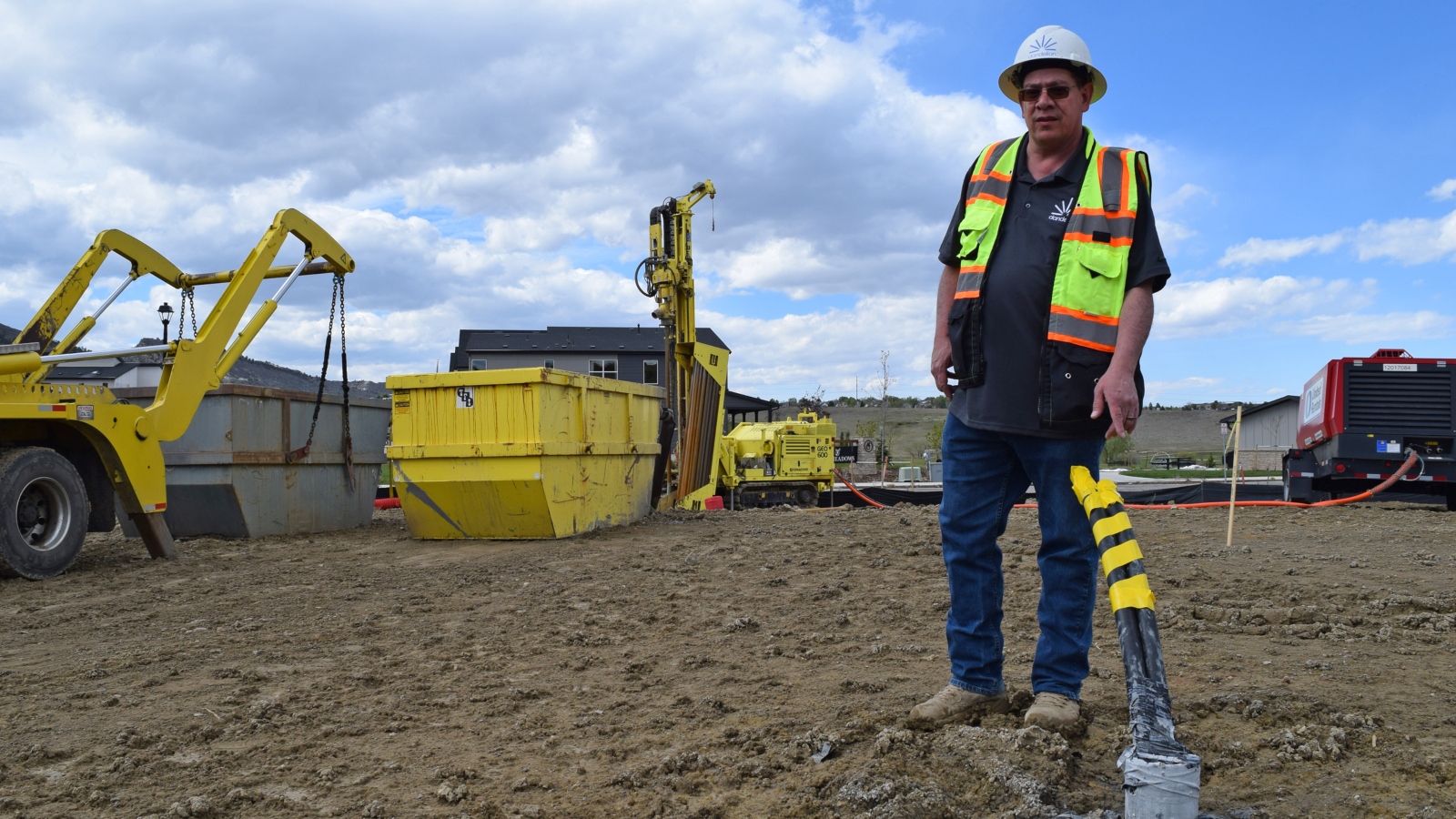
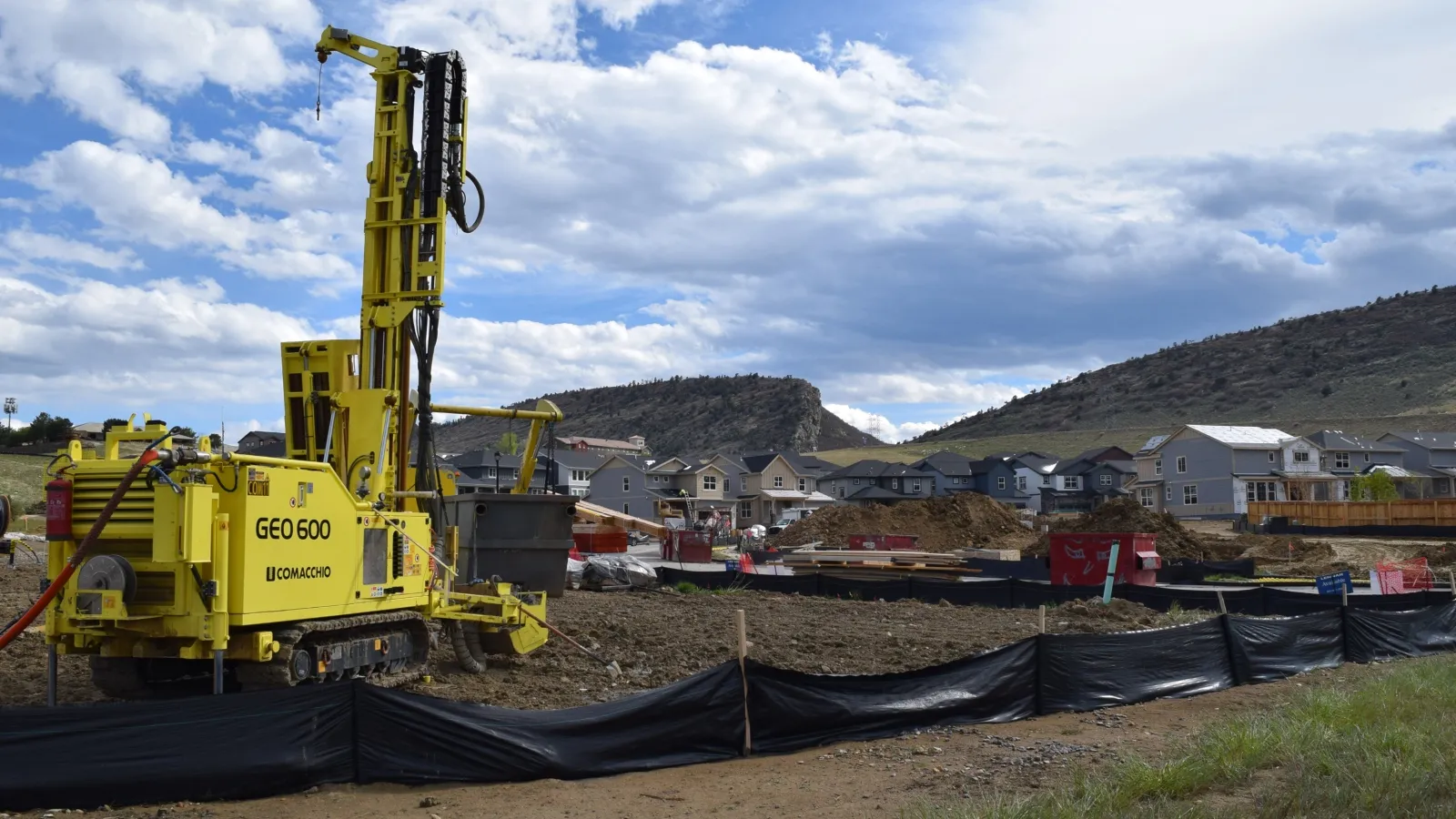
Dan Yates, the chief executive officer and chairman of Dandelion Energy, explained that the company is taking a mass-market and maximally efficient lens to a technology that was once reserved for custom luxury builds. Earlier this year at Lennar’s Ken Caryl Ranch development, Dandelion’s specialized drilling teams demonstrated this approach by deploying lightweight, highly mobile drilling rigs. These rigs are designed to quickly move from lot to lot across a sprawling housing development, boring holes and installing durable polyethylene pipes before the building foundations are even poured.
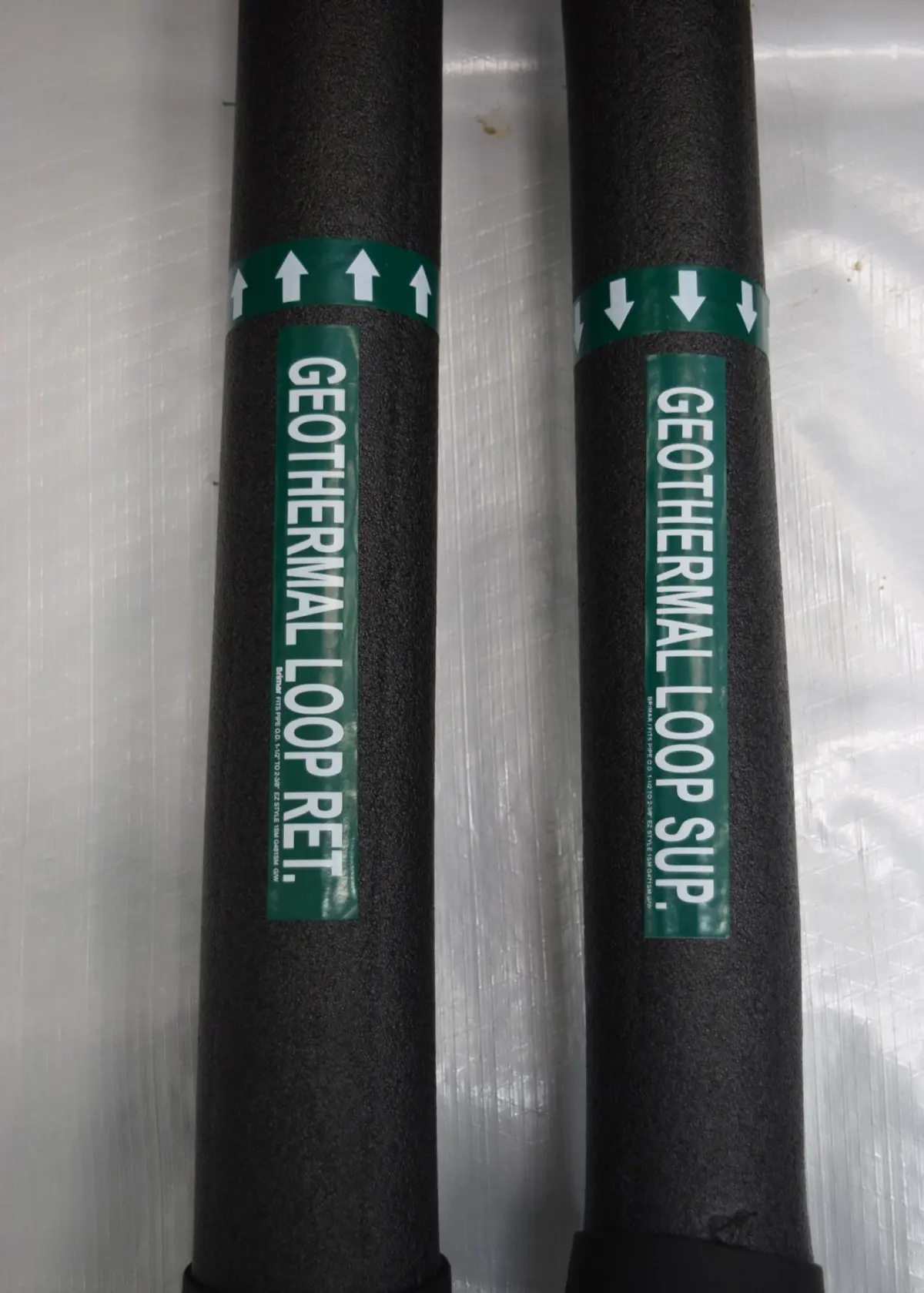
Under this neighborhood-scale approach, each newly constructed home receives a single borehole ranging between 200 and 500 feet deep. At these depths, subterranean temperatures remain a remarkably consistent 50 degrees Fahrenheit year-round. Water circulating through the buried polyethylene loop is naturally warmed or cooled by the surrounding earth. Once that water reaches the basement of the home, a compact heat pump provides the final touch of heating or cooling depending on the seasonal requirements of the inhabitants.
By operating within a master-planned community rather than jumping between isolated job sites, Dandelion’s drilling crews can complete boreholes for one or multiple homes every single day. If those same crews had to service an isolated single-family building elsewhere, they could easily lose an entire workday simply transporting heavy equipment to and from the site. Furthermore, installing the technology across dozens of nearly identical new homes at the same time eliminates the need to draft custom engineering plans for every individual structure and bypasses the potentially disruptive and costly retrofits that older buildings require when transitioning their heating, ventilation, and air conditioning systems.

The resulting operational performance is striking. Dandelion reports that its systems easily outcompete both traditional air-source heat pumps and conventional natural gas heating systems. This advantage becomes particularly pronounced during severe winter cold snaps when local energy demand reaches its absolute peak. During these high-stress periods, ground-source heat pumps consume only a quarter as much electricity as standard air-source heat pumps. Yates emphasized that it is currently the only system on the market that successfully reduces peak electrical grid demand while simultaneously electrifying residential homes.
The completion of the Ken Caryl Ranch development represents a major milestone in a larger initiative launched by Dandelion and Lennar in 2025. The collaborative effort aims to install geothermal heating and cooling systems in more than 1,500 new homes across Colorado over a two-year period. Looking beyond the Centennial State, Dandelion has set its sights on scaling its operations to support up to 10,000 homes per year nationwide in the near future. Yates noted that the overarching corporate mission is to mainstream geothermal energy, expressing his belief that the market conditions and technological readiness have finally aligned to make that vision a reality.
Despite their immense efficiency, ground-source heat pumps currently account for only a small fraction of the residential heating and cooling market in the United States. According to a U.S. Department of Energy report published in January 2025, just over one million American homes currently utilize ground-source heat pumps, with roughly 100,000 new systems installed annually. However, the federal agency’s findings suggest that geothermal heating and cooling could expand dramatically to reach 7 million homes by the year 2035. Achieving that level of deployment would reduce winter peak energy demand nationwide by more than 40 gigawatts, translating into approximately $4 billion in annual savings for the U.S. electric grid.
In contrast, air-source heat pumps have experienced explosive growth. Yara van Ingen, an associate with BloombergNEF’s building decarbonization team, pointed out that 3.6 million air-source heat pumps were sold across the United States last year, marking the fourth consecutive year that sales of air-source heat pumps outpaced traditional gas furnace sales.
Even so, a comprehensive study published in the journal iScience demonstrated that ground-source heat pumps are economically viable across the entire continental United States when factoring in modern financial incentives, local energy costs, regional climates, and subsurface geological conditions. Juliet Simpson, a former research engineer at the National Laboratory of the Rockies and the lead author of the study, confirmed that the technology is technically possible everywhere and possesses genuine economic potential in every state.
Nevertheless, significant hurdles remain for the broader adoption of geothermal systems. Beyond the historically steep upfront costs cited by the Department of Energy, van Ingen noted that physical space constraints—particularly in densely populated urban environments—along with a patchwork of varying local permitting requirements across the country can complicate the borehole drilling process.
To help overcome these financial and logistical hurdles, developers and startups are increasingly leaning on public policy support, utility programs, and financial incentives. In Colorado, an energy efficiency program administered by Xcel Energy, the state’s largest gas and electric utility, provides approximately $25,000 per home for newly constructed, high-efficiency buildings that incorporate ground-source heat pumps. This funding is designed to offset the added capital expenses associated with advanced building techniques and specialized geothermal equipment. An Xcel spokesperson stated that for large neighborhoods comprising hundreds of homes, homebuilders can receive seven-figure rebate amounts through the program.
These substantial utility rebates allow Xcel to make meaningful progress toward its corporate sustainability plans and comply with Colorado’s Clean Heat Standard, a state mandate requiring gas utilities to reduce greenhouse gas emissions by 22 percent below 2015 levels by the year 2030. Additionally, the state of Colorado offers a $2,000 tax credit specifically for ground-source heat pump installations and enforces regulations requiring homebuilders to cover the infrastructure costs of new gas service expansion pipes—expenses that developers can avoid entirely if they choose to construct all-electric communities.
Will Toor, executive director of the Colorado Energy Office, explained that these policy frameworks are deliberately crafted to incentivize high-efficiency electric heating and cooling while actively discouraging the expansion of fossil fuel reliance in residential housing, ultimately aiming to drive down greenhouse gas emissions from the building sector.
Similar momentum is building in other parts of the country. A growing number of states and utility companies have established dedicated financial incentives for ground-source heat pumps. For instance, Maryland recently launched a new initiative, leading Dandelion Energy to announce plans to install geothermal systems in 129 newly constructed homes in the state. Furthermore, commercial-scale ground-source heat pump projects are now eligible for federal tax credits that can cover 30 percent or more of total installation expenses.
Jessica Silber-Byrne, senior manager of thermal energy networks for the Building Decarbonization Coalition, a nonprofit organization dedicated to eliminating fossil fuel use in buildings, observed that the macroeconomic and regulatory landscape is shifting favorably for the industry. She noted that the combination of targeted government incentives and clear market signals suggests the sector is on the verge of a major takeoff.