
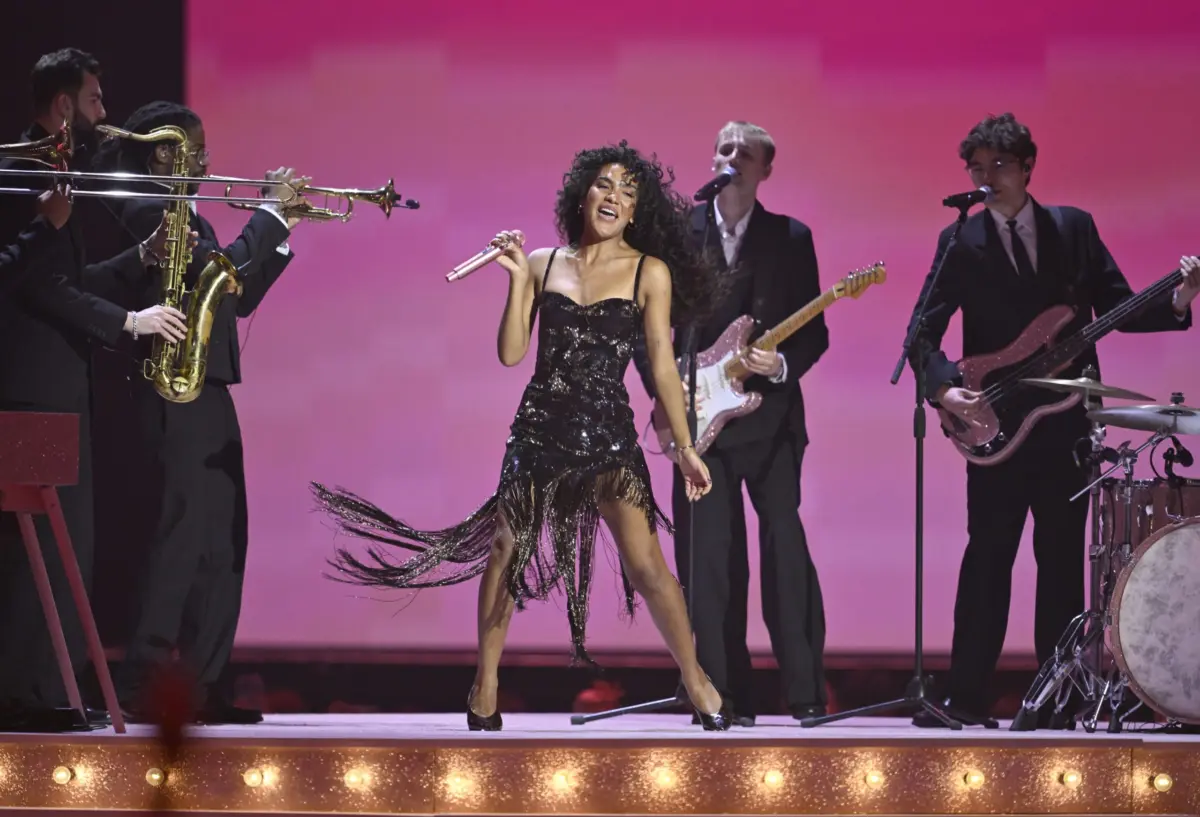
A fresh legal battle has struck the music industry, centering on allegations that rising British singer-songwriter Olivia Dean borrowed a bit too heavily from one of the most enduring R&B tracks of the twentieth century. According to a copyright infringement lawsuit filed in a California federal court, Dean’s song “I’ve Seen It,” a standout track from her breakout album The Art Of Loving, unlawfully incorporates key elements of Bill Withers’ iconic 1981 masterpiece, “Just the Two of Us.”
The legal action was formally initiated by Mattie Music Group, the publishing entity that controls and oversees the prestigious catalog of the late, legendary soul singer Bill Withers. In court documents filed on Thursday, attorneys for the publisher pulled no punches, asserting that the musical and structural similarities linking Dean’s recent release to Withers’ generational hit are far too precise to be dismissed as mere coincidence, stylistic homage, or independent artistic creation.
According to the complaint filed with the court, the overlapping musical features found in both tracks are so stark, numerous, and intricately arranged that they point definitively toward unauthorized borrowing. The lawsuit contends that these unmistakable parallels support a clear legal inference of copyright infringement, setting the stage for a potentially high-stakes courtroom showdown over melody, composition, and intellectual property rights in modern pop and R&B music.
The origins of the legal dispute trace back to late summer. Representatives for Mattie Music Group state that they first encountered Olivia Dean’s “I’ve Seen It” during the month of August. Intrigued and immediately struck by what they perceived as a familiar harmonic and melodic trajectory, representatives listened to the track several times to evaluate its compositional structure. Recognizing what they believed to be a glaring infringement upon their valuable intellectual property, the publisher took the formal step of retaining an expert in the field.
That expert was Alexander Stewart, Ph.D., a qualified musicologist tasked with performing a comprehensive, scientific musicological analysis and detailed comparison of both songs. Following his review, Stewart determined that Dean’s track had copied in large and significant part from Withers’ enduring composition. Specifically, the musicological breakdown alleged that “I’ve Seen It” had unlawfully lifted the distinctively protectable melody of “Just the Two of Us,” wrapping a contemporary production around a core musical structure that rightfully belongs to the creators of the 1981 original.
Armed with the findings of the musicological report, Mattie Music Group attempted to resolve the matter quietly and directly before escalating the dispute to the federal court system. The publisher alleges that it reached out to the major music companies involved in the distribution and commercial exploitation of Dean’s album in August, putting them on formal notice regarding the alleged infringement.
However, according to the lawsuit, those warnings fell on deaf ears. The corporate entities listed as defendants in the legal complaint—spanning major global music conglomerates Capitol Records, Universal Music Group, Sony Publishing, and Kobalt Music Publishing America, Inc.—reportedly failed to halt their commercial activities. Instead, the publisher claims, the defendants continued unabated in reproducing, distributing, licensing, publicly performing, and otherwise commercially exploiting Dean’s song across streaming platforms, physical media, and broadcast channels, leaving the publisher with little choice but to seek legal remedy through the judicial system.
Notably, Olivia Dean herself is not named as a defendant in the newly filed lawsuit, nor are her co-writers on the track, Bastian Langebaek and Max Wolfgang. While the songwriters are spared from direct defendant status in this particular complaint, the legal filing nevertheless explicitly implicates the trio. The document asserts that Dean, Langebaek, and Wolfgang possessed a reasonable opportunity to encounter and listen to Bill Withers’ legendary song prior to sitting down to compose and pen “I’ve Seen It.” Given the global cultural footprint and enduring radio presence of the Withers track over the decades, the lawsuit frames the prior exposure of the writers as an inescapable reality of navigating the modern musical landscape.
“Just the Two of Us,” which stands as one of the defining sonic statements of the early 1980s, was originally brought to life through the creative partnership of Bill Withers, Ralph MacDonald, and William Salter. Upon its commercial release, the track captured the imagination of music lovers worldwide, becoming an instant radio staple and a massive commercial success. It climbed all the way to No. 2 on the prestigious Billboard Hot 100 chart, cementing its status as a crossover pop and R&B phenomenon. The song’s cultural resonance and artistic merit were further validated when it was awarded the Grammy Award for Best R&B Song, securing Withers, MacDonald, and Salter a permanent place in music history.
Bill Withers enjoyed a legendary career defined by timeless soul anthems including “Lean on Me,” “Ain’t No Sunshine,” and “Lovely Day,” earning the admiration of generations of artists across multiple genres. Following a long and celebrated life dedicated to the craft of songwriting, Withers passed away at the age of 81 in March 2020, nearly forty years after the initial release of his landmark collaboration with MacDonald and Salter. His musical catalog has since remained a treasured cornerstone of American soul music, fiercely protected by publishers and estate managers dedicated to preserving the integrity of his work.
As the case moves forward through the federal court system, Mattie Music Group is not seeking an injunction alone, but is pursuing substantial financial damages. The exact scope and total amount of monetary compensation requested will ultimately be determined at trial, where legal teams for the major music publishers and the copyright holders are expected to present competing expert testimony regarding music theory, compositional originality, and the fine line between musical inspiration and unlawful appropriation.