
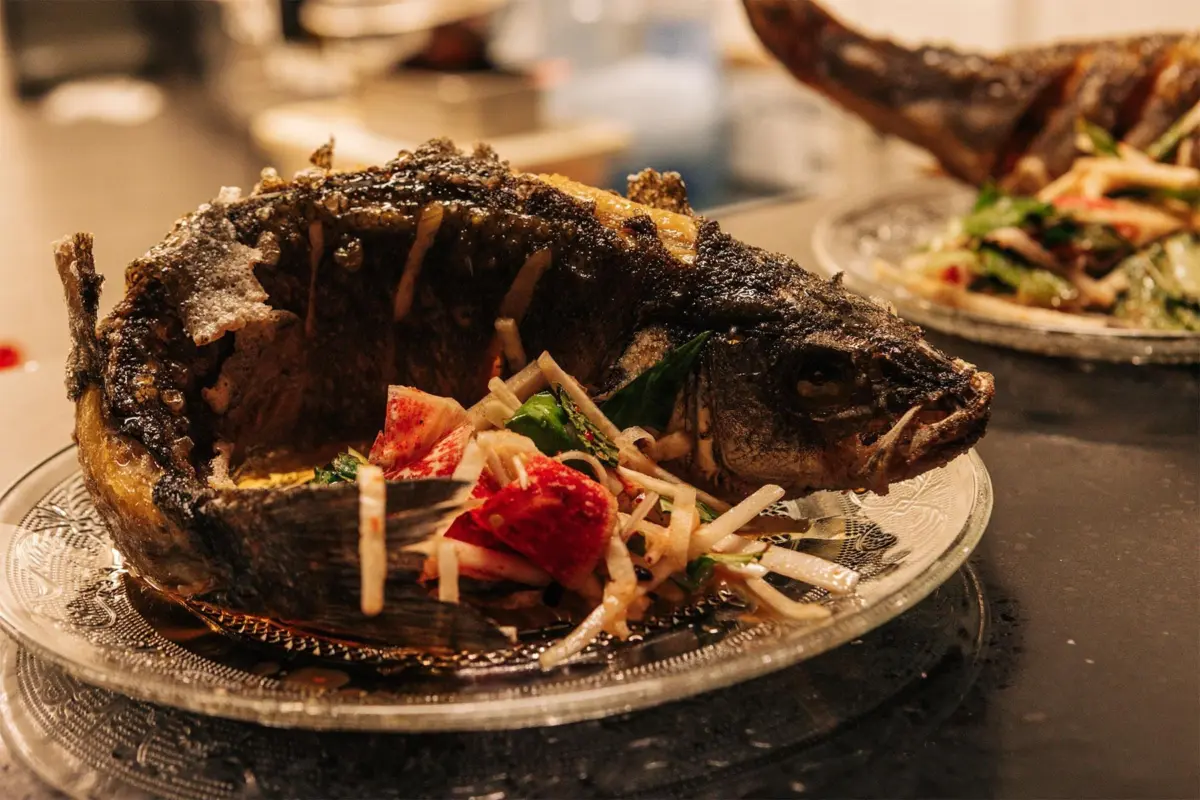
When Chanita Chayaluk decided to open her restaurant and wine bar, Taan, in Chicago, her vision was clear and uncompromising: she wanted to showcase Thai cuisine in an entirely different light than what local diners had grown accustomed to over the decades. Reflecting on the local culinary landscape, Chayaluk points out that the first major wave of Thai immigration to Chicago occurred back in the 1970s, and much of the Thai food available in the city still feels heavily anchored to that era. When she launched Taan in September, she introduced a carefully curated menu featuring dishes like miang—a traditional Northern Thai dish made with fermented tea leaves—and a whole, deep-fried fish served in a complex fish-sauce caramel.
However, operating a contemporary dining establishment in the Midwest comes with its own unique set of cultural hurdles. According to Chayaluk, the region is still deeply defined by a prevailing ethos of "Midwest nice," where businesses constantly strive to overaccommodate and appease the masses at nearly any cost. During Taan’s early days of service, Chayaluk and her small kitchen staff were routinely hit with a barrage of requests for sweeping substitutions and custom modifications driven by individual preferences and dietary restrictions.
The constant back-and-forth began to take a heavy toll. Chayaluk explains that handling endless bespoke adjustments severely slowed down service speed and kitchen efficiency. This bottleneck not only negatively impacted back-of-house operations but ultimately diluted the overall guest experience. With a compact kitchen and a lean team, keeping up with the relentless customization demands felt unsustainable. It reached a point where Chayaluk felt like her independent, thoughtfully concepted restaurant was operating like a fast-casual assembly line. The ultimate tipping point arrived when a customer placed an order for green curry mussels, but with a specific caveat: they wanted the dish prepared completely without the mussels.
Faced with a dilution of her culinary vision, Chayaluk decided to draw a firm line in the sand. She implemented a strict limited substitution policy at Taan, taking to Instagram to communicate directly with her clientele. In her public announcement, she emphasized that foundational ingredients like fish sauce and shrimp paste are not mere additions, but rather "the fabric that defines our cuisine." Consequently, those core elements could no longer be removed from any dish that inherently included them.
Taan’s struggle with customization culture is far from an isolated incident. A decade or so ago, asking for heavy menu substitutions was generally frowned upon in the restaurant industry and frequently derided in food culture as bad manners. In recent years, however, independent restaurants across the country report that substitution culture has bubbled back up, and this time it has returned in full force.
A complex swirl of cultural and economic factors has primed the industry for this shift. The proliferation of lunch slop-bowl spots and fast-casual build-your-own concepts has successfully conditioned consumers to expect a granular, highly detailed level of customization with every single order they place. Meanwhile, the widespread cultural influence of books like Unreasonable Hospitality inadvertently amplified an already intense "the customer is always right" mentality. Compounding this pressure is the modern ecosystem of social media influencers entering the food-review space, where public criticism of a restaurant—including a business choosing not to honor a diner’s specific dietary preferences—can instantly trigger a viral online takedown. Pair all of this with the precarious financial reality of keeping a restaurant afloat in a difficult economic climate, and many operators have felt pressured to cave, either bowing to hyper-specific guest requests or fundamentally altering their menus altogether, a phenomenon recently mirrored in the widespread trend of de-spicifying restaurant menus.
Despite these intense pressures, a growing cohort of independent dining establishments is choosing to stand their ground. Restaurants like Taan in Chicago and Ha’s Snack Bar in New York—which proudly announces right in its Instagram bio that everything on its menu contains fish sauce—are refusing to compromise their culinary identities for the sake of mass appeasement.
A similar battle over expectations has played out at Lom Wong in Phoenix, Arizona, where chef-owners Yotaka “Sunny” Martin and Alex Martin have experienced a sharp uptick in substitution and modification requests following a wave of national media attention. Last year, Yotaka Martin received high honors from the James Beard Awards, and in August, Lom Wong was awarded a prestigious Michelin Bib Gourmand.
Following that wave of accolades, Alex Martin notes that the restaurant began welcoming a different caliber of guests who were more prone to picking things apart. Diners started asking the kitchen to modify traditional dishes or expressing confusion over the restaurant’s distinct service style, often wondering why courses weren’t being fired and dropped in a traditional European fashion. According to Alex Martin, there remains a rigid European distinction of what an award-winning restaurant is supposed to look like, leading many diners to incorrectly equate culinary recognition with the formal environment of a white-tablecloth establishment. The response from the ownership team was unequivocal: that style of dining is simply not who they have ever been, nor is it what their restaurant will ever become.
Like Taan, Lom Wong utilized social media to reset diner expectations before they even stepped foot in the door. The restaurant published clear guidelines stating that it would not make substitutions simply to make a dish more familiar to Western palates, and explicitly noted that certain rustic choices—such as beef featuring gristle or fish served entirely whole—are fully intentional elements of the dining experience. Alex Martin credits his co-owner and chef as the driving force behind this authenticity. He notes that Sunny Martin serves as their guiding light of cultural context, constantly evaluating whether altering any single component of a dish would ultimately compromise its structural and cultural integrity. For instance, while Lom Wong will accommodate a request to place shrimp on the side of a mango salad, they steadfastly refuse to remove foundational components like beef or shrimp paste from dishes where those ingredients are chemically and culturally required.
Chayaluk has adopted a remarkably similar philosophy at Taan. To accommodate diners with legitimate dietary needs without altering the soul of her core menu, the restaurant consistently offers a dedicated vegan and gluten-free option—currently a fried rice dish—that Chayaluk describes as a comprehensive catchall for guests who cannot consume other items on the menu. She is careful to note that this alternative is engineered to be genuinely substantial and deeply flavorful. It is never treated as a mere afterthought or relegated to a simple appetizer.
At both Taan and Lom Wong, front-of-house and back-of-house staff are actively encouraged and empowered to uphold these operational boundaries. Both Chayaluk and Alex Martin emphasize that these policies are designed just as much to protect their employees’ daily peace of mind as they are to ensure rigorous quality control for the dining public.
While implementing these boundary lines has inevitably generated a minor degree of online pushback, the proactive expectation-setting occurring before and at the start of the meal has been overwhelmingly well-received by the vast majority of patrons. When addressing guests who request modifications, the approach relies on kindness and clarity rather than confrontation. As Alex Martin explains, their philosophy is grounded in respectfully acknowledging a diner’s personal preferences while gently reminding them that those are their own preferences, subsequently steering them toward existing menu items that naturally align with their tastes.