
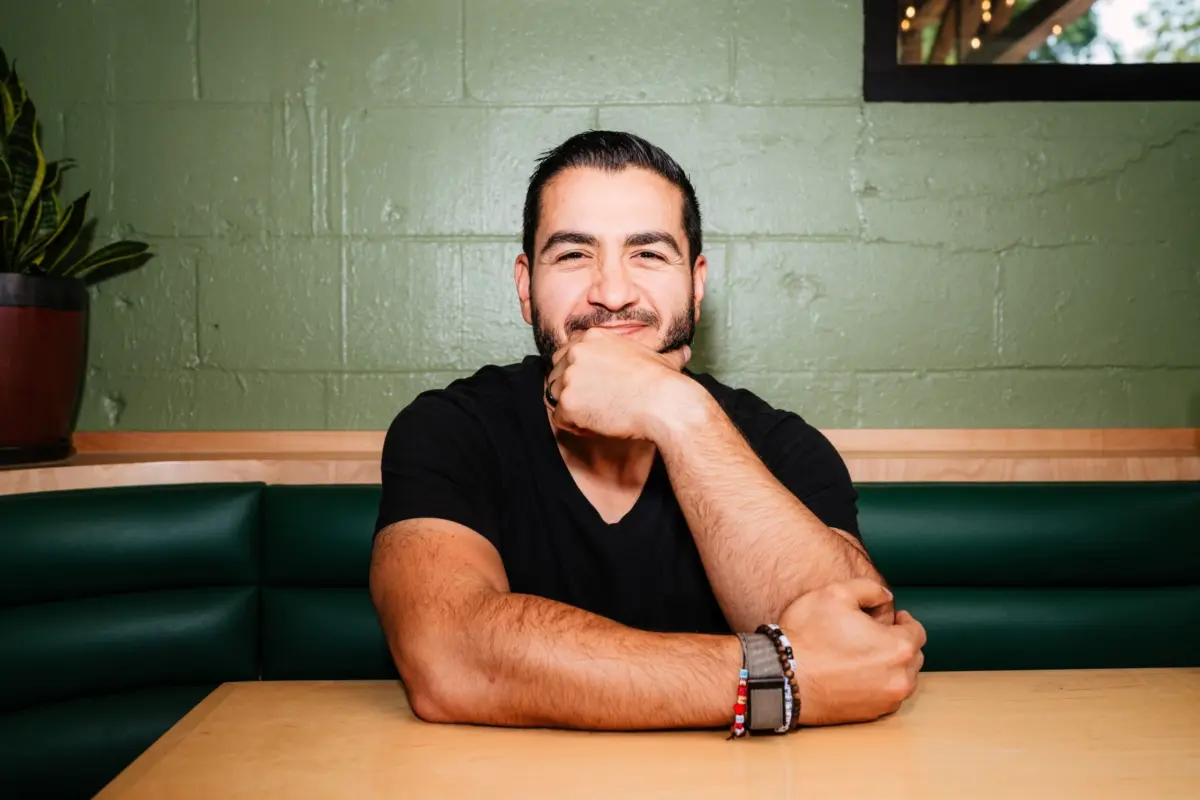
In the closing weeks of a high-stakes political campaign that could reshape representation in Washington, Michigan Senate candidate Abdul El-Sayed is finding common ground with voters through a universally understood language: food. As he navigates the final stretch of his campaign, the former Detroit health director and progressive candidate is leaning heavily into bread-and-butter economic issues, utilizing his platform to address grocery affordability, the evolution of metro Detroit’s vibrant culinary ecosystem, and the personal culinary traditions that shaped his upbringing.
The intersection of El-Sayed’s political messaging and Michigan’s rich food culture recently took a lighthearted, viral turn on social media. In an April cooking video published on TikTok, the Egyptian American U.S. Senate candidate donned a Detroit Lions apron to collaborate with Lebanese American food creator Summer Homayed. Together, they prepared beef shawarma—a beloved staple of metro Detroit’s expansive Arab food scene.
As they stood over a grill cooking marinated flank steak, draining potatoes, and mixing garlic and herbs, Homayed peppered El-Sayed with pointed political questions while noting the informal nature of their cooking method. El-Sayed responded with food-adjacent commentary that mirrored his broader political platform. He pointed out that the steak had been purchased entirely without corporate money, drawing a direct parallel to the funding model of his grassroots campaign. While he joked that he might be willing to compromise on how to prepare shawarma, he emphasized that he would never compromise on his core policy goals, such as Medicare for All.
The lighthearted video also touched upon more serious political headwinds. El-Sayed is campaigning on a platform focused on getting money out of politics, putting financial relief directly into people’s pockets, and establishing universal healthcare. Meanwhile, his Republican opponent, former congressman Mike Rogers, has sought to cast suspicion on El-Sayed’s Muslim identity by invoking alleged ties to extremist groups—claims that have been thoroughly challenged and debunked by independent fact-checkers.
Addressing these political attacks directly within the context of the cooking video, Homayed asked El-Sayed about public anxiety regarding religious law.
"People are worried about that Sharia law, especially Michiganders. What do you have to say about that?" Homayed asked.
El-Sayed countered with a quick-witted punchline that quickly resonated across social media platforms. "Look, I was born and raised in America. I believe deeply in the U.S. Constitution. So Sharia law? No, I’m here for Shawarma law," he quipped.
The upcoming November election carries massive political implications, as it could determine control of the United States Senate while simultaneously making El-Sayed the country’s first Muslim senator. Born to Egyptian immigrants, El-Sayed was raised in suburban Detroit by his father and stepmother, a white woman born in Michigan. His childhood culinary landscape was a unique blend of these two worlds. He grew up eating his stepmother’s traditional American meatloaf for dinner and his father’s ful medames—an Egyptian fava bean dish—for breakfast.
In an extensive interview, the former Detroit health director sat down to discuss how these early experiences shaped his perspective, how Michigan’s food culture has evolved over the decades, and what policy solutions are needed to tackle the mounting crisis of grocery affordability.
When asked where he would choose to meet for an interview over a meal, El-Sayed highlighted the rich and diverse culinary tapestry of his home region, offering a curated list of local favorites.
"I’ll give you four spots," El-Sayed said. "There’s a place near my house called Ricewood, a barbecue joint. They have a Friday and Saturday burger special, and they always rotate it. It’s one of the best burgers I’ve ever had. Then, there’s Dearborn Meat Market, a butcher shop with a grill in the back with these two guys grilling up some of the best kebabs you’ve ever had. Third would be Sicily’s Pizza in Detroit. I think it’s the best Detroit-style pizza. It’s a three-ingredient, aged fermented sourdough, but they figured out how to make Detroit-style pizza without making it oily or too heavy. And then a fourth one would probably be going out for ice cream. I love Midwestern-style ice cream, just the joy of eating it outside on a summer day. It’s the joy of childhood and one of my favorite things to do with my kids."
Reflecting on his early childhood food memories, El-Sayed recalled the sensory experiences of visiting local markets with his family and the central role that food played in his household.
"As a child, some of my favorite memories were going down to the Eastern Market and picking up our groceries," he shared. "We’d go to the cheese counter, sample everything, and pick one to bring home. My dad would spend Saturday afternoon cooking, and we’d have a meal together as a family. Food is how my parents said I love you, and it’s a profoundly universal human language."
He noted the distinct cultural fusion present in his family’s kitchen during his youth. While his mother prepared traditional Midwest comfort foods like meatloaf and tuna noodle casserole, his father anchored Sunday mornings with ful, a traditional Middle Eastern fava bean paste. When the family made burgers, they were always kofta in a bun. However, El-Sayed noted that childhood desires often lean toward the conventional, leading him to appreciate and prepare traditional pizza, burgers, and steak in his adult life. With his wife being Indian American, he added that his own children now overwhelmingly prefer spiced foods.
Metro Detroit has transformed significantly over the years, evolving into a nationally recognized culinary destination boasting an abundance of halal restaurants and diverse eateries. Reflecting on this evolution, El-Sayed noted how much the landscape has changed since his youth.
"When I was a kid, that whole ecosystem of halal burger shops and pizza didn’t exist," he said. "It was a rare treat to be able to have a straight-up burger. A lot of that’s changed and is catering to all kinds of different taste buds now."
He emphasized that food, art, and music share a unique capacity to fuse diverse emotions and backgrounds, pointing to establishments ranging from traditional burger joints to innovative fusion spots like Warda Patisserie. For El-Sayed, food is more than just sustenance; it is an essential tool for political and cultural communication.
"The job of a campaign is to communicate about shared values, and food is a tool for communication," El-Sayed explained. "When we share food, we’re also sharing history, culture, and traditions with each other. It’s an amazing way to gather community and talk about where we’ve been, and where we’re headed."
Beyond cultural appreciation, El-Sayed regularly centers his campaign on the concrete economic pressures facing everyday families, specifically focusing on inflation and the soaring cost of groceries. When asked what legislative steps he would take if elected to the Senate to provide relief to struggling Michiganders, El-Sayed pointed to systemic supply chain bottlenecks and corporate concentration within the agricultural sector.
"There are a few reasons why groceries are so expensive right now that we should put an end to immediately: the war in Iran and the tariffs," El-Sayed said. "Diesel is at an all-time high because of the war; every item in your grocery store was shipped there by truck and needed diesel. Our local farmers need potash fertilizer. A lot of it comes from Canada, which is now being tariffed."
Furthermore, El-Sayed argued that corporate monopolies hold an unhealthy amount of power over the American food supply, directly harming both producers and consumers.
"Additionally, few corporations dominate our food space," he noted. "Eighty-five percent of our meat supply comes from four meatpackers who are able to suppress the prices they pay farmers and raise the prices you pay at the grocery store. We need to stand up to monopolies who use their power to suppress our markets."
To foster a more sustainable and equitable food economy, El-Sayed advocates for robust investments in local agriculture, creating direct pathways for local farmers to supply public school districts, and protecting the legal right of farmers to repair their own heavy machinery, such as tractors. He also highlighted the cascading economic pressures making it increasingly difficult to operate a profitable small business or restaurant in the current economic climate.
As the American workforce continues to shift toward freelancing, gig work, and independent contracting, navigating government assistance programs has grown increasingly complex. With shifting documentation requirements for safety net programs like the Supplemental Nutrition Assistance Program (SNAP) and Medicaid, many workers face severe administrative hurdles just to prove eligibility. Addressing how he would ensure these workers maintain access to essential social safety nets, El-Sayed criticized the bureaucratic bloat inherent in means-tested welfare programs.
"It’s a crazy thing that we’ve put so much time and effort into telling people what they can’t have, rather than just creating good universal programs for everybody," El-Sayed said. "Medicare for All would address all of the time that people have to put into figuring out how to provide paperwork, to then give that paperwork to somebody employed specifically to tell people they can’t have the service."
Looking ahead to impending policy changes and stricter work requirements set to take effect for Medicaid and SNAP, El-Sayed warned that low-income workers and independent contractors will face mounting systemic burdens. He argued that the nation must shift its focus toward building a comprehensive and universal safety net rather than erecting bureaucratic barriers.
"We need to be building out a much broader safety net. Things like childcare should be free. Education should be free. Healthcare should be free," El-Sayed said. "Think of the waste, fraud, and abuse being created to keep people off these programs, rather than making sure folks have the food they need—it’s backwards. All to cut taxes for the richest people and fight wars we have no business fighting."