
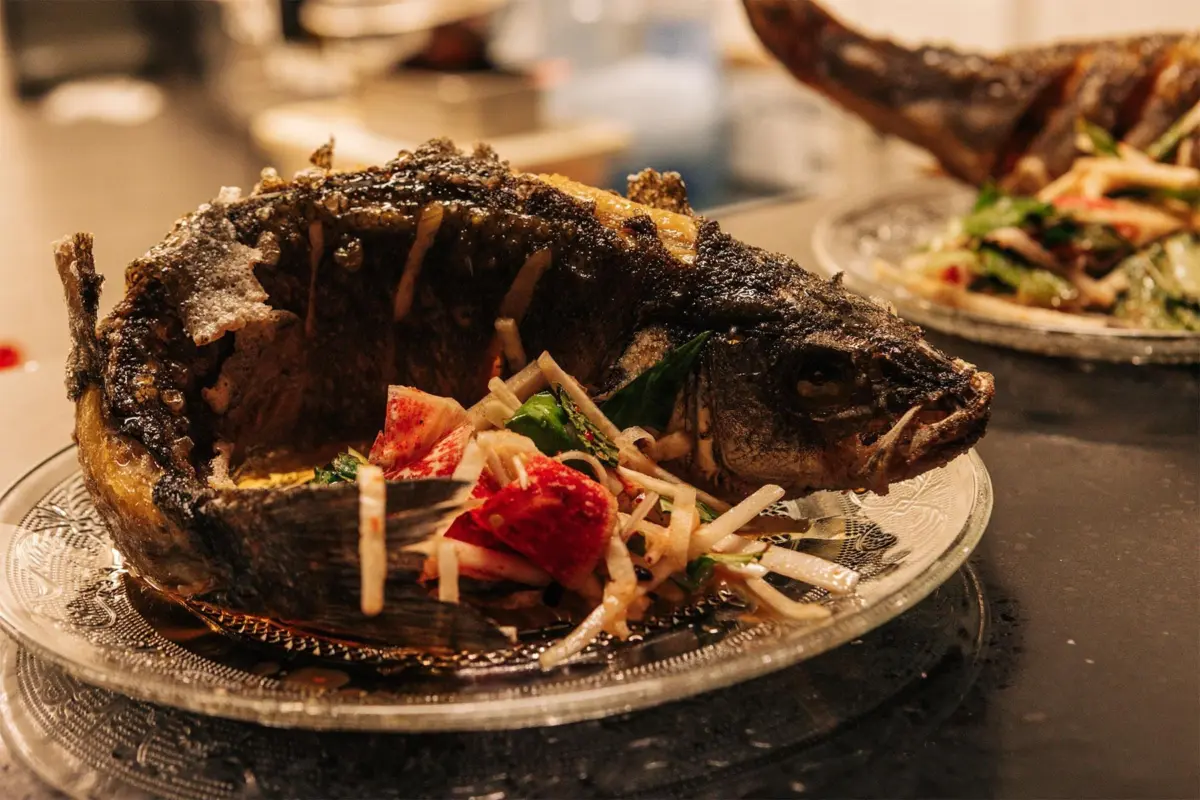
When Chanita Chayaluk set out to open her Chicago restaurant and wine bar, Taan, her vision was explicitly clear: she wanted to showcase Thai food in a different light. Reflecting on the local culinary landscape, she noted that the first major wave of Thai immigration to Chicago occurred in the 1970s, leaving behind a persistent perception that much of the Thai food available in the city remains frozen in that era. When Taan opened its doors in September, its menu boldly rejected those outdated confines, offering dishes such as miang—a traditional Northern Thai delicacy made with fermented tea leaves—and a whole, deep-fried fish coated in a rich fish-sauce caramel.
However, operating an independent restaurant in Chicago presented unexpected cultural hurdles alongside its creative ambitions. According to Chayaluk, the region’s characteristic "Midwest nice" ethos often translates into an urge to overaccommodate and appease the masses. During the early days of service, Chayaluk and her small kitchen staff were met with a relentless stream of requests for modifications, ingredient omissions, and dietary substitutions.
These constant alterations began to take a heavy toll on kitchen operations. The modifications slowed down service speeds, affecting not just the back-of-house workflow, but the overall guest experience. With a compact kitchen and a lean team, keeping pace with bespoke orders proved unsustainable. Chayaluk likened the chaotic kitchen pace to that of a fast-casual assembly line, remarking that it often felt as though they were running a Chipotle rather than an intimate, thoughtful restaurant. The breaking point arrived when a diner placed an order for green curry mussels, but requested the dish "without the mussels."
Faced with mounting operational strain and the risk of compromising the food’s identity, Chayaluk drew a firm line. She implemented a strict substitution policy at Taan, utilizing Instagram to communicate to diners that foundational ingredients like fish sauce and shrimp paste form the very fabric that defines their cuisine and therefore cannot be removed from dishes that incorporate them.
Taan’s struggle reflects a broader, rapidly growing tension across the contemporary restaurant industry. A decade or so ago, substitution culture was generally frowned upon and frequently derided in food circles as a breach of dining etiquette. Recently, however, restaurant operators report that customization requests are bubbling back up in full force, driven by a convergence of cultural and industry shifts.
Several factors have combined to create this modern landscape of hyper-customization. The proliferation of lunch "slop bowl" and fast-casual concepts has primed customers to expect an exhaustive level of granular personalization with every order. Meanwhile, the mainstream popularity of hospitality philosophies like those championed in the book Unreasonable Hospitality has reinforced an intensified "customer is always right" mentality. Compounding this is the modern social media ecosystem, where food influencers and online reviewers can subject a restaurant to an immediate viral takedown simply for declining to honor a specific dietary preference or modification request. Couple all of these pressures with the harsh economic realities of keeping an independent restaurant afloat in the current financial climate, and many operators find themselves reluctantly giving in—either by accommodating endless special requests or by fundamentally altering their menus altogether, a phenomenon evidenced by the ongoing trend of the "great de-spicification" of restaurant menus.
Amid this wave of pressure, a growing number of independent operators are choosing to stand their ground. Alongside Taan in Chicago, establishments like New York’s Ha’s Snack Bar proudly announce in their social media biographies that virtually everything on the menu contains fish sauce, signaling early to prospective diners that authenticity will not be compromised for the sake of convenience.
A similar dynamic unfolded at Lom Wong in Phoenix, Arizona, where chef and co-owner Alex Martin and his wife, chef Yotaka “Sunny” Martin, witnessed a sharp uptick in substitution and modification requests following a wave of national acclaim. Last year, Chef Sunny Martin was recognized by the James Beard Awards, and in August, the restaurant earned a Michelin Bib Gourmand designation.
According to Alex Martin, the accolades brought a new demographic of diners who were unfamiliar with the restaurant’s operational style. Diners began picking apart dishes, demanding modifications, or expressing confusion over why the kitchen did not course meals in a traditional European fashion. Martin observed that there is a prevailing European distinction of what an award-winning restaurant is supposed to look like, leading some guests to incorrectly equate high culinary recognition with the formality of a white-tablecloth establishment. Their response to these misconceptions was unwavering, maintaining that such a formal style is not who they have ever been, nor what the restaurant will ever become.
Following the playbook of restaurants like Taan, Lom Wong took to social media to clearly set expectations for their diners. Their messaging emphasized that the kitchen would not make substitutions simply to make a dish more familiar to Western palates. Furthermore, they made it clear that certain culinary choices—such as serving beef with a bit of gristle or serving fish completely whole—are entirely intentional and reflective of genuine cultural traditions.
Alex Martin credits his co-owner and wife as the restaurant’s primary guide, noting that Chef Sunny serves as their guiding light of cultural context. When evaluating requests, the kitchen considers whether altering an element of a dish would fundamentally compromise its culinary integrity. While Lom Wong permits minor adjustments—such as serving the shrimp on the side of their mango salad—they steadfastly refuse to remove foundational components like beef or shrimp paste from dishes where those ingredients are necessary.
At Taan, Chayaluk takes a parallel philosophical approach to accommodating genuine dietary restrictions without watering down the menu. Rather than haphazardly altering complex dishes, Taan consistently offers a dedicated vegan and gluten-free option—currently a fried rice dish—designed to serve as a reliable catchall for diners who cannot consume other items on the menu. Chayaluk emphasizes that this specific dish is crafted to be exceptionally flavorful and substantial, ensuring it functions as a complete meal rather than a mere appetizer or an afterthought.
Behind these boundary-setting policies is a shared commitment to protecting the well-being and peace of mind of restaurant staff. Both Chayaluk and Martin emphasize that establishing these firm operational boundaries is just as important for preserving the mental health and workflow of their kitchen and front-of-house teams as it is for maintaining quality control for guests.
Although establishing these rules has occasionally sparked minor pushback from diners accustomed to total customization, proactive communication—both through social media announcements and gentle guidance at the table—has largely been met with understanding. Explaining the policy to guests relies on a combination of hospitality and clear limits. As Martin describes their approach, the staff gently informs guests that while the restaurant fully respects their personal preferences, those preferences belong strictly to the individual, and steers them instead toward menu items that naturally align with their dietary needs.