
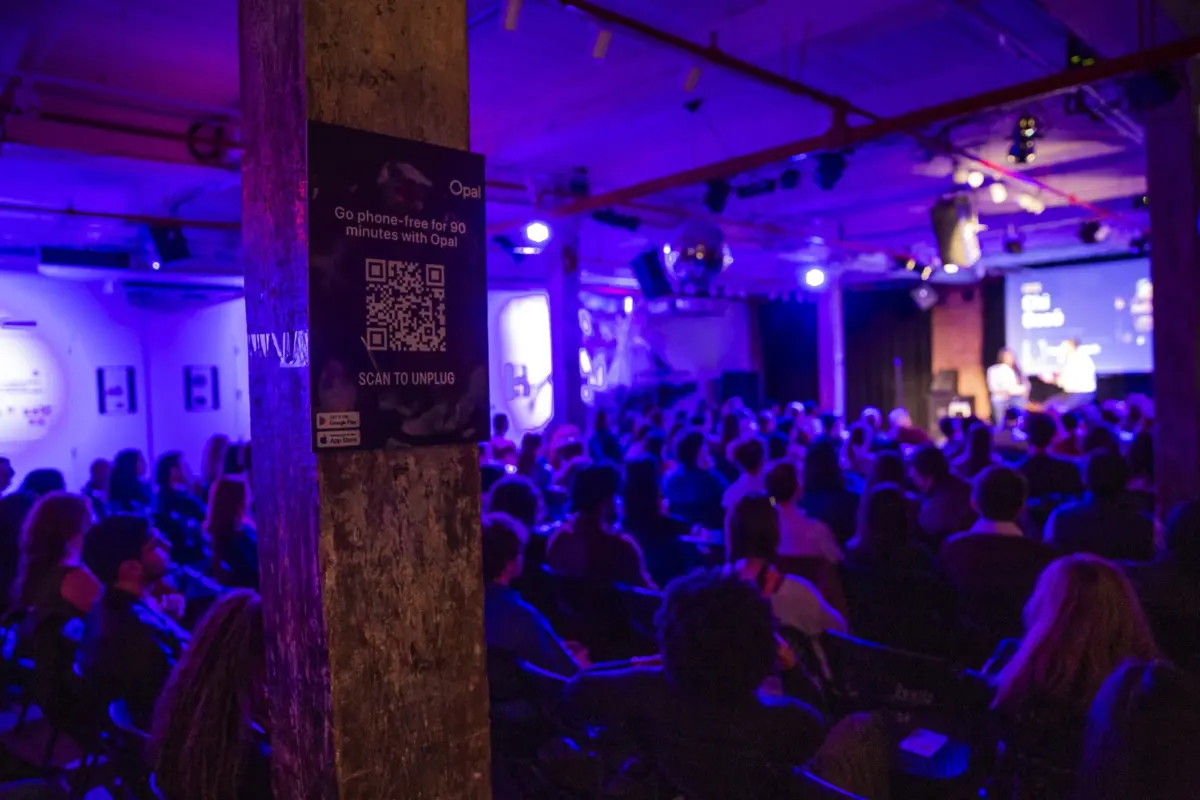
On a brisk Thursday evening in Brooklyn, the ambient lighting of a converted warehouse cast a cool blue hue over a room packed with media personalities, tech founders, policy advocates, and political strategists. Stepping into the venue wearing neon yellow heels and a floral mini dress, the atmosphere immediately underscored the unique cultural blend of New York City, where professional boundaries often blur and attendees can wear whatever they please to a high-profile political gathering.
The event, titled “Midterm Madness” and hosted by the media company Newsreel—founded by former Forbes and Newsweek reporter Jack Brewster—drew a heavy-hitting lineup just five days ahead of the midterm elections. The agenda featured a range of discussions designed to dissect the political landscape. Kenneth Schlenker, co-founder of the focus application Opal, sat down for a fireside chat examining the contemporary state of human attention. Aryan Banjan, creator of the campaign management software Barza, delivered a detailed midterm forecast. Meanwhile, panels delved into pressing infrastructure and policy questions, including the rapidly escalating debate surrounding data centers.
Brewster noted that the core ambition of the gathering was simple: to encourage people to put their phones away and engage in direct conversations about the impending election. Yet, as the evening progressed, nearly every private discussion, casual chat, and stage debate converged on a single, dominant theme: artificial intelligence, the sprawling footprint of data centers, and a growing, palpable backlash against the rising technocracy.

For tech reporters immersed daily in Silicon Valley circles, the chasm between the tech industry and the general public can easily become obscured. Surrounded by builders and visionaries who are relentlessly ambitious and fundamentally optimistic about the societal benefits of AI, it is easy to forget how jarring and aggressive the technological shift appears to outsiders. Beyond the tech bubble, data centers and AI infrastructure have transformed from abstract engineering concepts into intense, localized ballot-box issues capable of swaying competitive midterm races.
Recent industry data highlights the scale of this friction. A report from Data Center Watch revealed that nearly $200 billion worth of data center projects were delayed, stalled, or outright blocked in the first half of the year due to fierce political and community opposition. States including Pennsylvania, Georgia, Texas, New York, and Virginia are actively weighing new regulatory guardrails and transparency mandates to manage the frantic pace of development. Virginia, already widely recognized as the data center capital of the world, faces hundreds of proposed new facilities, triggering fierce local debates over land use and resources.
The evening’s tone was firmly established during a fireside chat featuring New York City Council member Chi Ossé just before the data center panel. When the conversation turned toward artificial intelligence near the end of his session, Ossé admitted that he rarely uses the technology himself. Rather than positioning himself as strictly pro-AI or anti-AI, he emphasized the urgent need to hold technology executives more accountable and advocated for higher taxes on trillionaires like Elon Musk. Describing his political stance as that of a "law and order" democratic socialist, Ossé argued that when corporate leaders publicly discuss technologies carrying risks as severe as the potential depletion of a significant portion of human civilization, those executives should be formally called to testify before Congress.
The subsequent panel focused directly on the physical realities of data centers. Moderated by a technology reporter, the session featured Maia Woluchem, a technology and human rights researcher, and Hilary Flint, an environmental and public health advocate. Stepping onto the stage to gauge the sentiment of the crowd, the moderator posed a direct question to the audience: “Who here is pro-AI data center?” The inquiry was met with immediate and resounding boos.

The ensuing conversation traversed a wide spectrum of complex emotions and grievances. Chief among them was the mounting frustration over major technology companies allegedly cutting secret deals with local officials to fast-track billion-dollar developments. In many regions, outdated or opaque zoning rules mean local residents remain entirely unaware of what is being constructed in their neighborhoods until it is far too late to mount an effective protest.
At the same time, everyday citizens grappling with rising costs of living are fighting to preserve what remains of the American Dream, while tech executives casually discuss scenarios where AI replaces human workers or even humanity itself. Residents frequently report feeling entirely stripped of agency over their local communities, plagued by anxieties regarding environmental degradation and public health risks. The panelists generally agreed that massive data centers have effectively become the physical embodiment of widespread public fear and anger directed at the tech class and the relentless, unyielding pace of innovation.
When the discussion touched upon the economic benefits and temporary jobs that some communities have experienced from data center construction, Flint offered a sharp rebuttal. “What is a life worth?” she asked, explaining why citizens continue to organize fierce protests even when promised financial windfalls. People oppose these projects, she noted, because they value their lives and communities far more than a temporary paycheck.
The following panel featured NewsNation host Batya Ungar-Sargon, political strategist Morris Katz—who worked on Zohran Mamdani’s campaign—and Vox journalist Astead Herndon. Though ostensibly scheduled to discuss the future of the Democratic Party, the conversation inevitably gravitated back toward data centers and labor dynamics. Ungar-Sargon pointed out that certain labor unions support data infrastructure due to the immediate promise of construction jobs, even though industry studies show that employment levels plummet significantly once building concludes and facilities become operational.

Drawing a parallel to historical industrial shifts, Ungar-Sargon observed that communities in the Rust Belt historically took immense pride in enormous, visually stark industrial buildings because they guaranteed stable employment, prosperity for families, and a tangible stake in the American Dream. Herndon noted a similar dynamic played out when political figure Vivek Ramaswamy was booed after making parallel observations in Ohio. Emphasizing the core issue of consent, Herndon pointed out that a distinct lack of community input is a shared grievance he has witnessed among working-class voters, including Republicans in industrial regions. Katz echoed this skepticism, arguing that the institutional powers responsible for stripping away traditional union jobs over the decades are now returning to build automated facilities, effectively completing the displacement of labor.
Along the walls of the venue, sticky notes left by attendees posed pointed questions about the political system, including whether big money could ever be successfully removed from politics—to which one anonymous responder wrote, “God, I hope so.”
As the panels concluded, attendees surged toward the bar while energetic techno music began to echo through the warehouse. Small groups formed to continue debating the implications of artificial intelligence and data infrastructure in more intimate settings. Reflecting on the evening, Jack Brewster expressed little surprise at how thoroughly the topic dominated the event.
Noting that data centers and AI emerged in every stage conversation and ranked as the second most common topic in RSVP submissions, Brewster highlighted the broader cultural shift. Even in a metropolitan center like New York, where massive server farms are largely out of sight, AI has firmly established itself as a front-burner issue for regular voters. In rural communities, the backlash centers around the deep-seated fear of economic and personal replacement, whereas in dense urban environments like Brooklyn, the contention revolves around equity, power, and who ultimately profits from the technological boom.

Before departing the venue, attendees engaged in casual conversations about the most eccentric developments in the tech sector over the past year. Tech founders pointed to the rapid rise of AI assistant startups like Instinct, while others highlighted the cultural saturation of Sam Altman. Non-tech attendees noted a noticeable public fatigue regarding deepfakes and generative AI art, observing that synthetic imagery is increasingly associated with cheapness and a lack of authenticity. This cultural pushback may explain why high-end luxury brands are steering in the opposite direction; Prada’s holiday marketing campaign prominently features hand-drawn illustrations, while Hermès has utilized social media to spotlight traditional, handmade artisan crafts.
Outside the venue, a software engineer recounted how a Halloween manicure in orange prompted a joking query from a friend about whether it was a tribute to an Anthropic public offering—a moment that mirrored the modern ubiquity of tech branding in everyday life. She noted that data center developments are increasingly encroaching on her Southern California hometown, springing up within a tight-knit Chinese immigrant community where local residents have begun posting yard signs depicting stylized dragons choking a data center. These signs, she noted, have already been translated into multiple languages to ensure widespread neighborhood solidarity. Stepping out into the cool New York night, the image of those community warning signs lingered as a striking testament to how deeply the physical footprint of the digital age has penetrated the American consciousness.